
Batumi beaches & nearby: Mahinjauri, Gonio, Kvariati, Sarpi
Beaches in Batumi and the Adjara coast: the city beach, quiet villages and wild coves from Mahinjauri to Sarpi, and how to reach them.
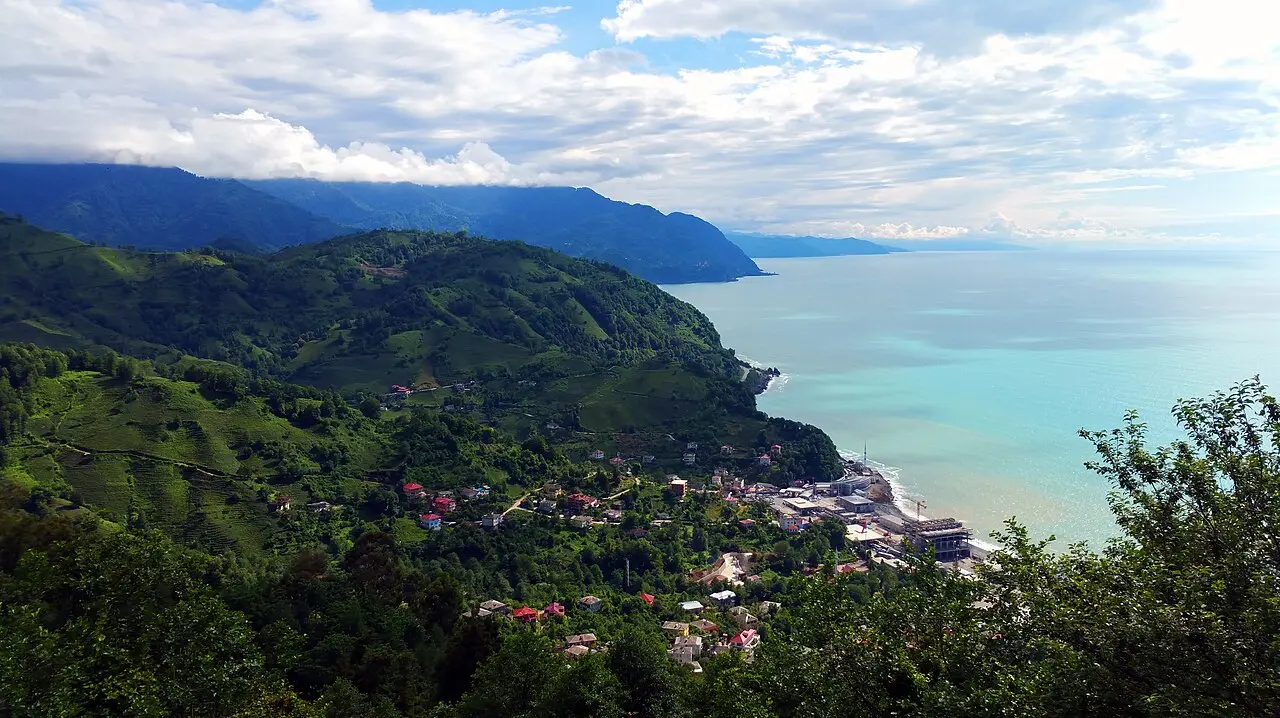
Batumi is Georgia’s main seaside resort, and a beach holiday here isn’t limited to the city seafront. Within about 50 km along the Adjara coast lie several beaches of very different character — from the lively city one to quiet villages and wild coves with clear water right up at the Turkish border. This section covers what they’re like and how to reach them; the swimming season on this coast runs roughly from June to September, and the warmest months are July and August.
One important detail up front: all of Adjara’s beaches are pebble, not sand — so good shoes for getting into the water are worth bringing. The water grows noticeably clearer as you head south, towards Gonio, Kvariati and Sarpi, while sandy (and even magnetic) beaches begin well to the north — around Ureki, beyond this radius. And bear in mind that Batumi is the rainiest city in Georgia: a short downpour can blow in even at the height of summer.
Batumi city beach
The city’s main beach stretches along Batumi Boulevard — a long seafront promenade with palm trees, cycle paths, cafés and singing fountains. It’s a pebble beach right in the centre: everything is on hand, but in season it draws the biggest crowds on the coast. It’s easy to step straight onto it from the city, between a walk along the boulevard and sightseeing.
North of Batumi
Mahinjauri lies about 6–7 km north of the centre and is considered a calmer alternative to the city beach: the pebbles here are finer and there are fewer people. Batumi’s main railway station (Mahinjauri station) is nearby, so you can get there by train or marshrutka (shared minibus) in just a few minutes.
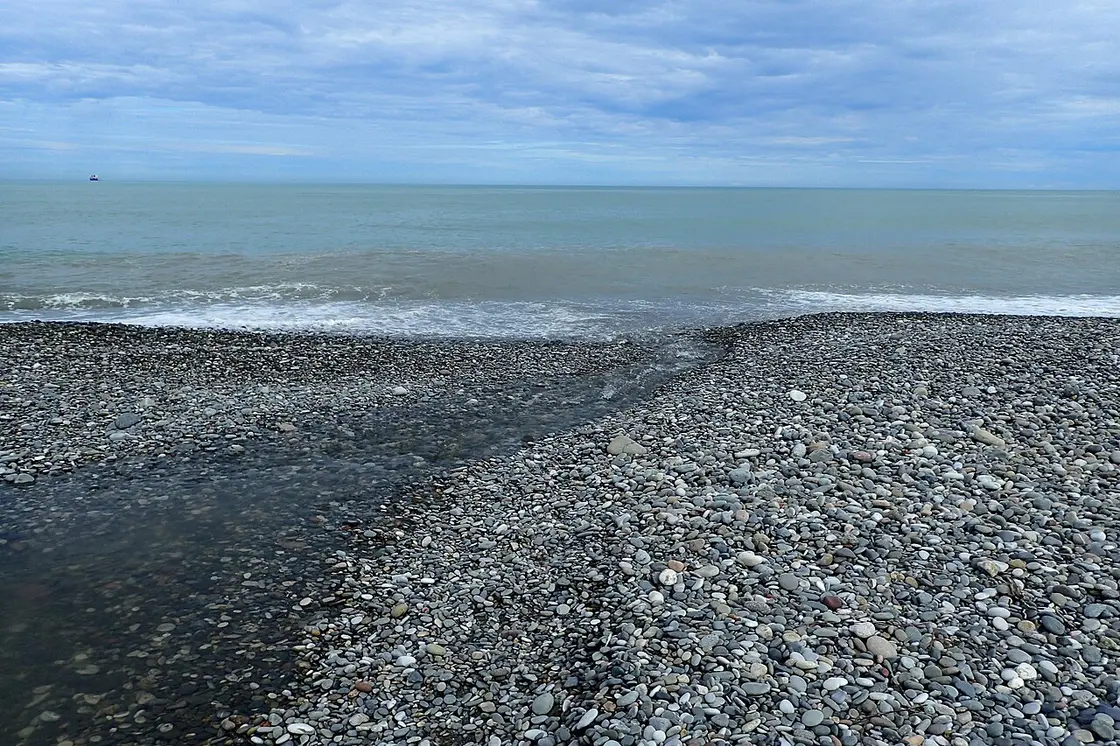
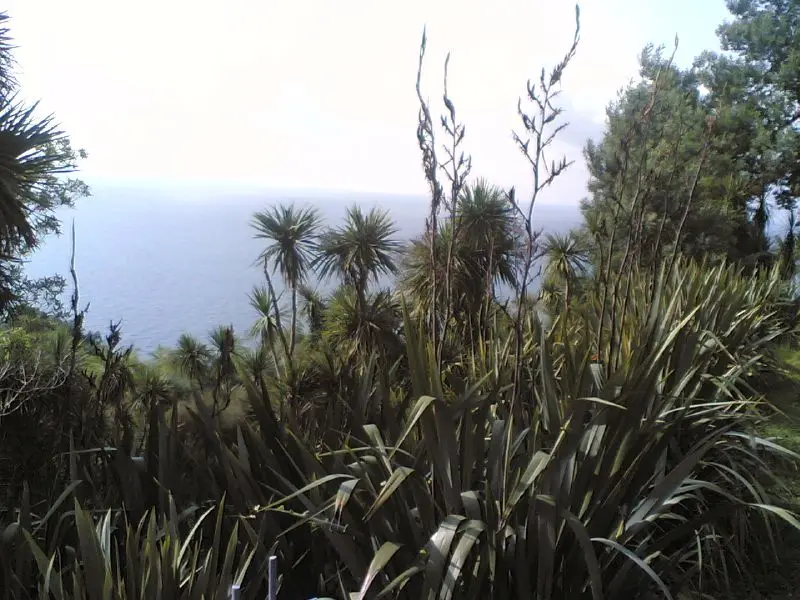
Green Cape (Mtsvane Kontskhi) is about 9 km north, by the famous Batumi Botanical Garden. Beneath the cape’s green slopes hide quiet wild beaches — undeveloped pebble coves that people come to for solitude and clean water. There are usually no facilities here, but no crowds either.
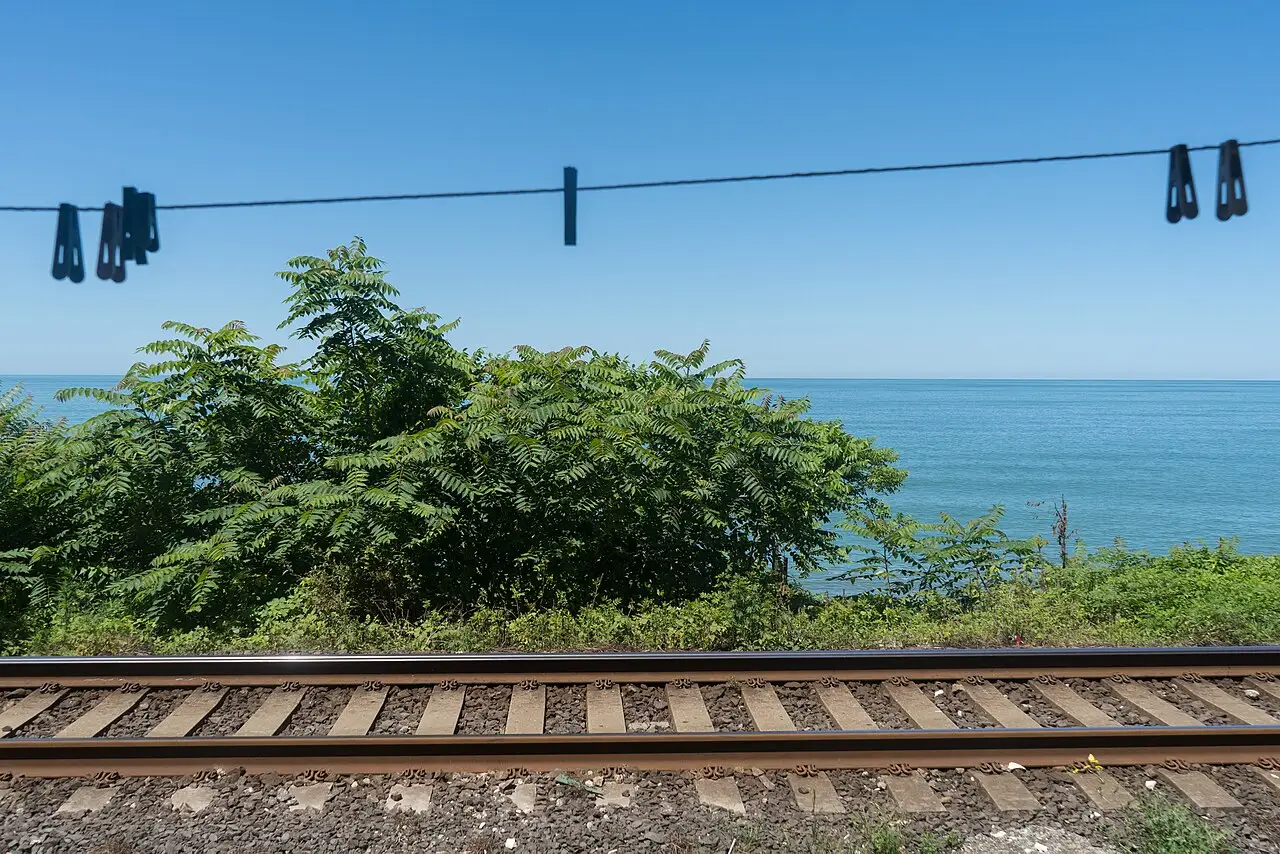
Chakvi is a village about 15 km north, set among tea plantations. The coastal railway runs along the shore here, with the train passing right by the water; the beach is pebble and quiet.
Tsikhisdziri is about 20 km north, on a green cape with cliffs; above the sea here stand the ruins of the Byzantine fortress of Petra. The beaches below the cliffs are quiet and the water is clean, and there’s a view from here along the long Kobuleti beach.
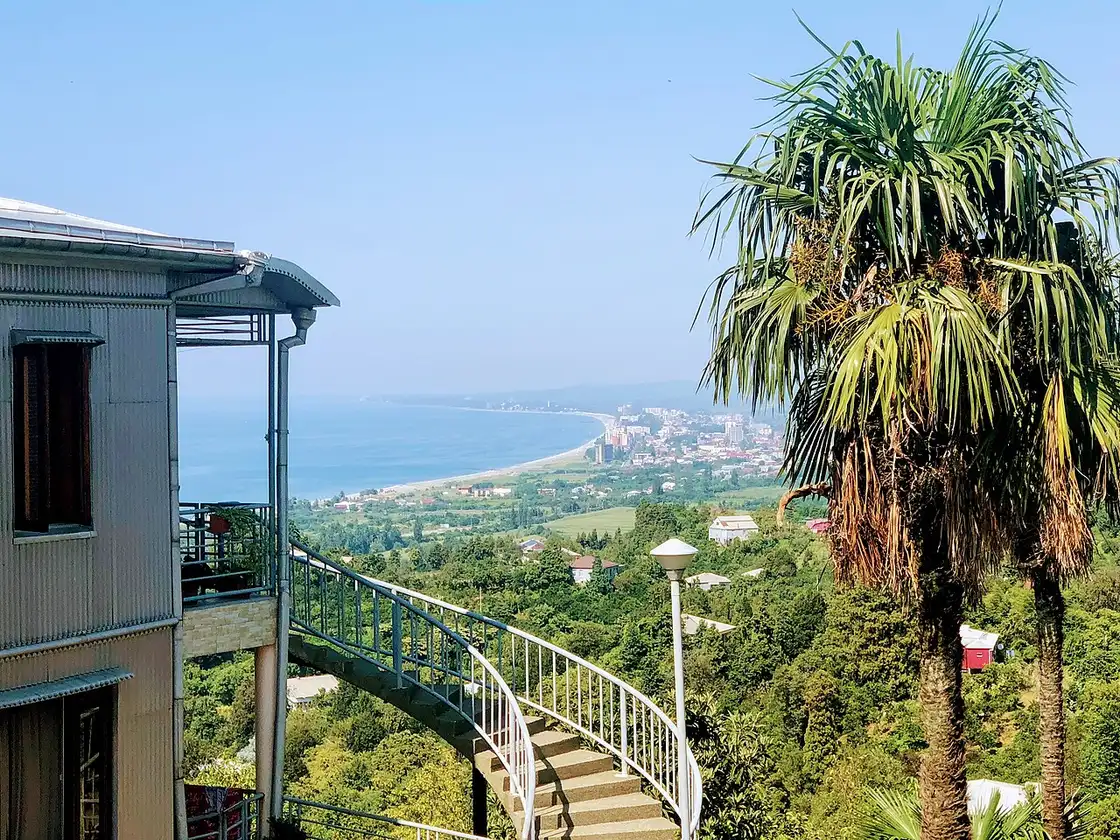
Kobuleti is a resort town about 25 km north with the longest beach in this stretch of coast. It’s calmer and more family-oriented than Batumi, with a gentle entry into the water; the beach is pebble-and-sand. The same coastal train makes it easy to reach.
South of Batumi
Gonio is about 12 km south — a long pebble beach and a rare combination of sea and history for this coast. Right by the beach stands Gonio-Apsaros fortress: an ancient stronghold known since Roman times. The water here is already cleaner than in the city.
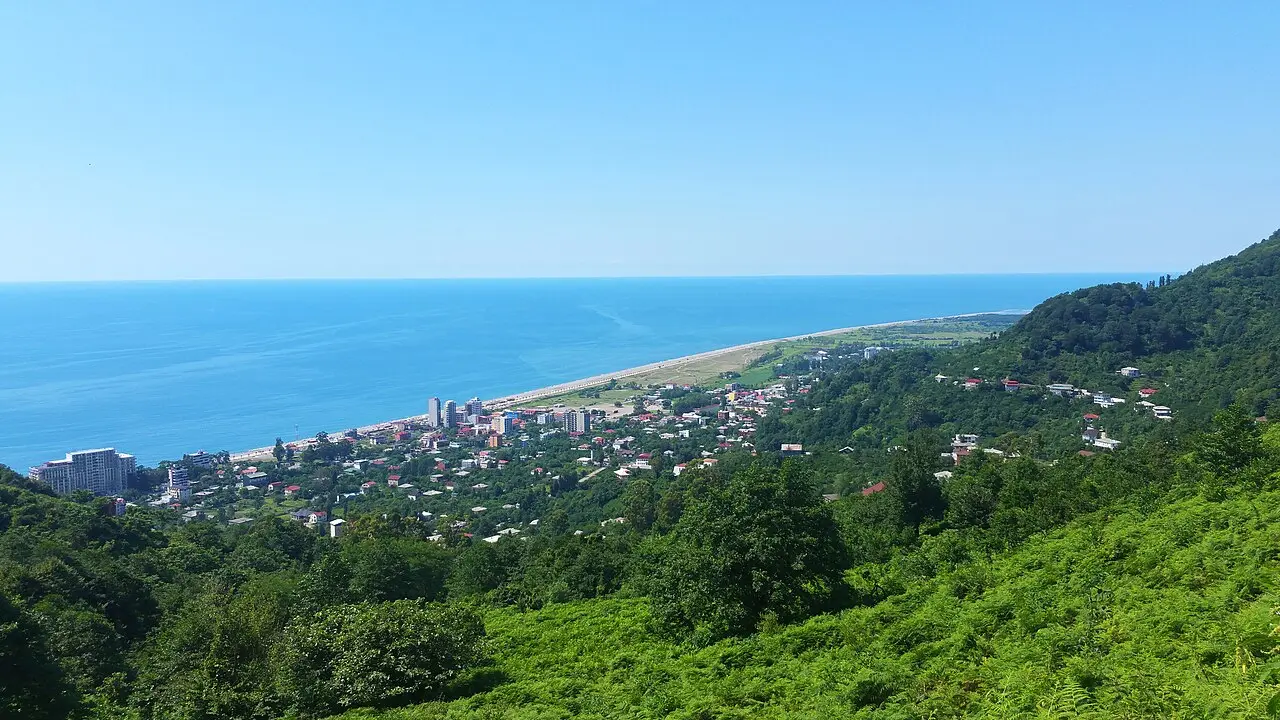
Kvariati is about 15 km south, between Gonio and Sarpi. The shore here turns rockier, and the water by the headlands is clean and clear — which is why Kvariati is loved by people who come to snorkel or dive. It’s a quiet village without the city bustle.
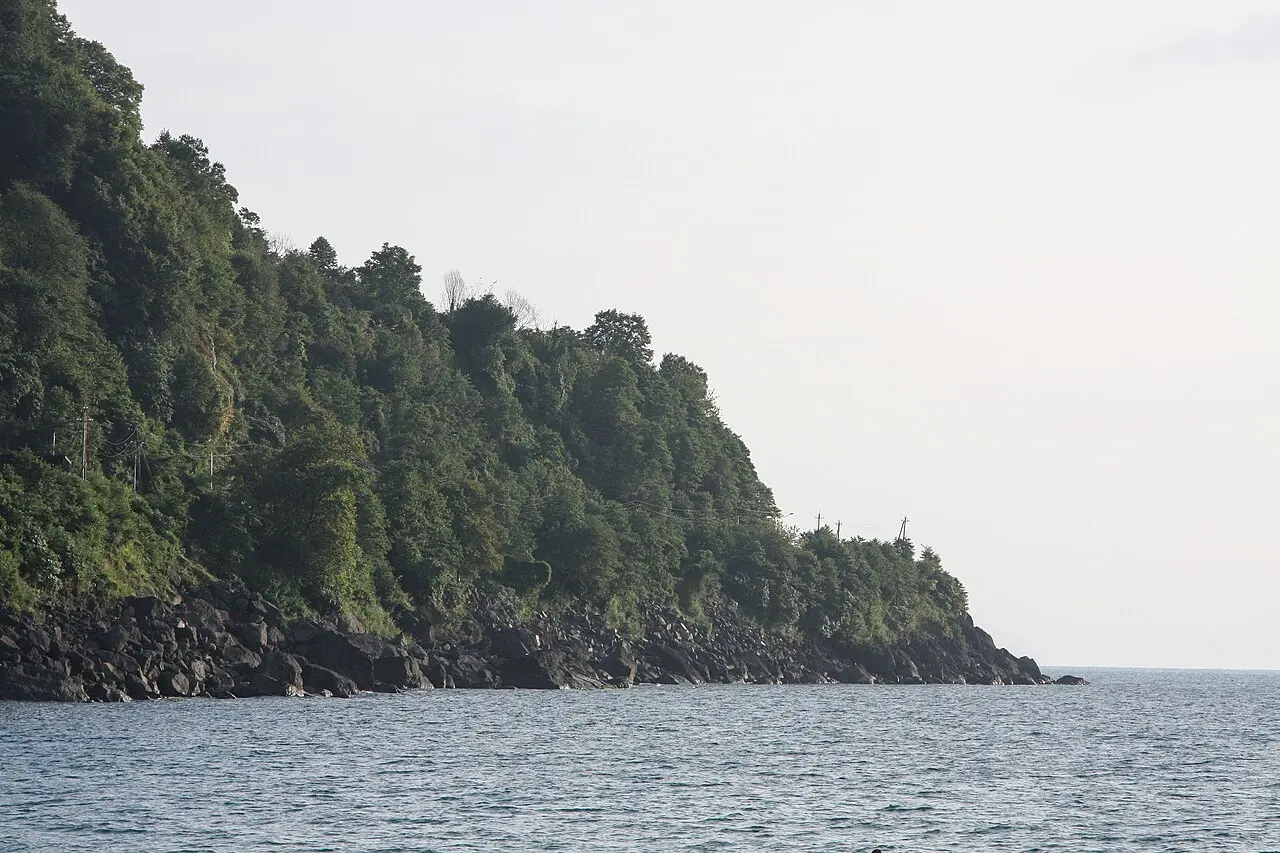
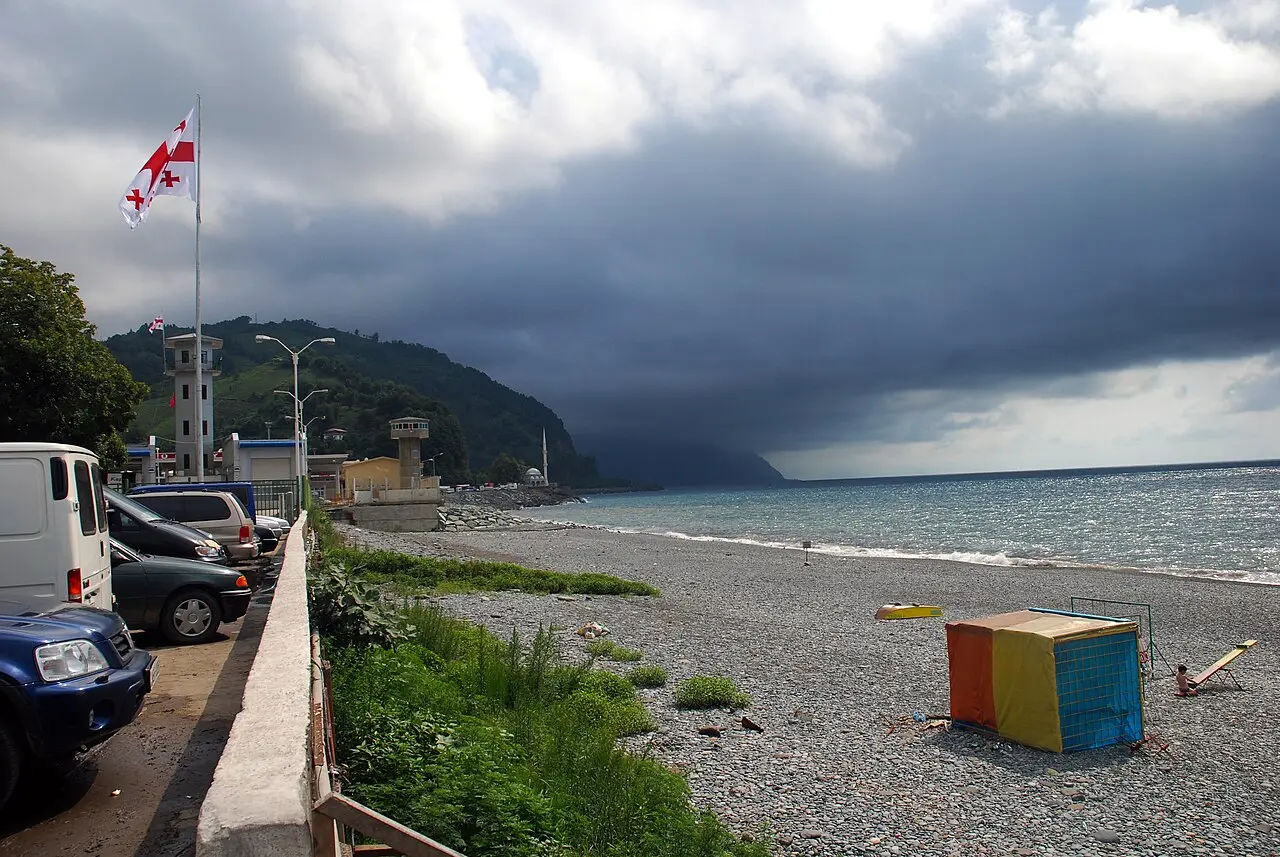
Sarpi is the southernmost beach on the coast, about 18 km from Batumi, right at the border crossing with Turkey. The beach is narrow and pebble, but the water here is the most turquoise and clear on the whole coast, and the cliffs squeezed between the sea and the green slopes make the scene especially striking. Nearby is the landmark building of the Sarpi border checkpoint.
How to get there
The coast is conveniently strung along a single road and railway line, so reaching the beaches is easy even without a car:
- To the north (Mahinjauri, Green Cape, Chakvi, Tsikhisdziri, Kobuleti) runs the Batumi–Kobuleti coastal train, which goes almost right along the water, plus marshrutkas towards Kobuleti.
- To the south (Gonio, Kvariati, Sarpi) marshrutkas run from Batumi towards Sarpi and the border — they stop in all three villages.
- Marshrutka numbers and the train timetable change over time, so check them on the spot or at the stop. For freedom to move along the coast, a car hire comes in handy.
What to keep in mind
Entry to the beaches is free — these are public pebble beaches. Only the sunbeds and umbrellas at the beach bars are paid; changing rooms and toilets aren’t everywhere, especially at the wild beaches, so it’s best to check their availability and prices on the spot. Because of the pebbles, a pair of beach shoes is handy.
For more on the city itself, see our guide to Batumi; for other ideas, the things to do section; and for nature spots and fortresses nearby, the things to see section.
Photos
Admission and opening hours
- Admission price
- City and village beaches are free to enter
Sunbeds and umbrellas at the beach bars are paid; changing rooms and toilets are not everywhere. Check prices and facilities on the spot.
Details checked: June 14, 2026
Read also

Teatro — nightclub in Batumi: shows & parties
Updated · June 18, 2026Teatro is a premium nightclub and show venue in Batumi: guest artists, DJs, show ballet, tables and a lineup. Opening hours, bookings and how to get there.
Casinos in Georgia: where, legality and entry rules
Updated · June 17, 2026Casinos in Georgia: is it legal, where they actually are (Batumi, Tbilisi), age rules (foreigners 18, citizens 25), online play and responsible gambling.
Batumi Botanical Garden: what to see and how to visit
Updated · June 14, 2026Batumi Botanical Garden on Green Cape: nine zones of world flora and sea views, one of the region's largest. Price, hours, how to get there.
Turtle Lake in Tbilisi: cable car and lakeside relaxing
Updated · June 14, 2026Turtle Lake above Tbilisi: a cable-car ride up from Vake Park, lakeside walks, cafes and pedal boats. Cable-car price, hours and how to get there.