
Racha road trip: Oni, Utsera and Shovi valley
A 2-day Racha road trip from Kutaisi: Nikortsminda, Ambrolauri wine, Barakoni, the old Oni synagogue, Utsera and the Shovi valley.
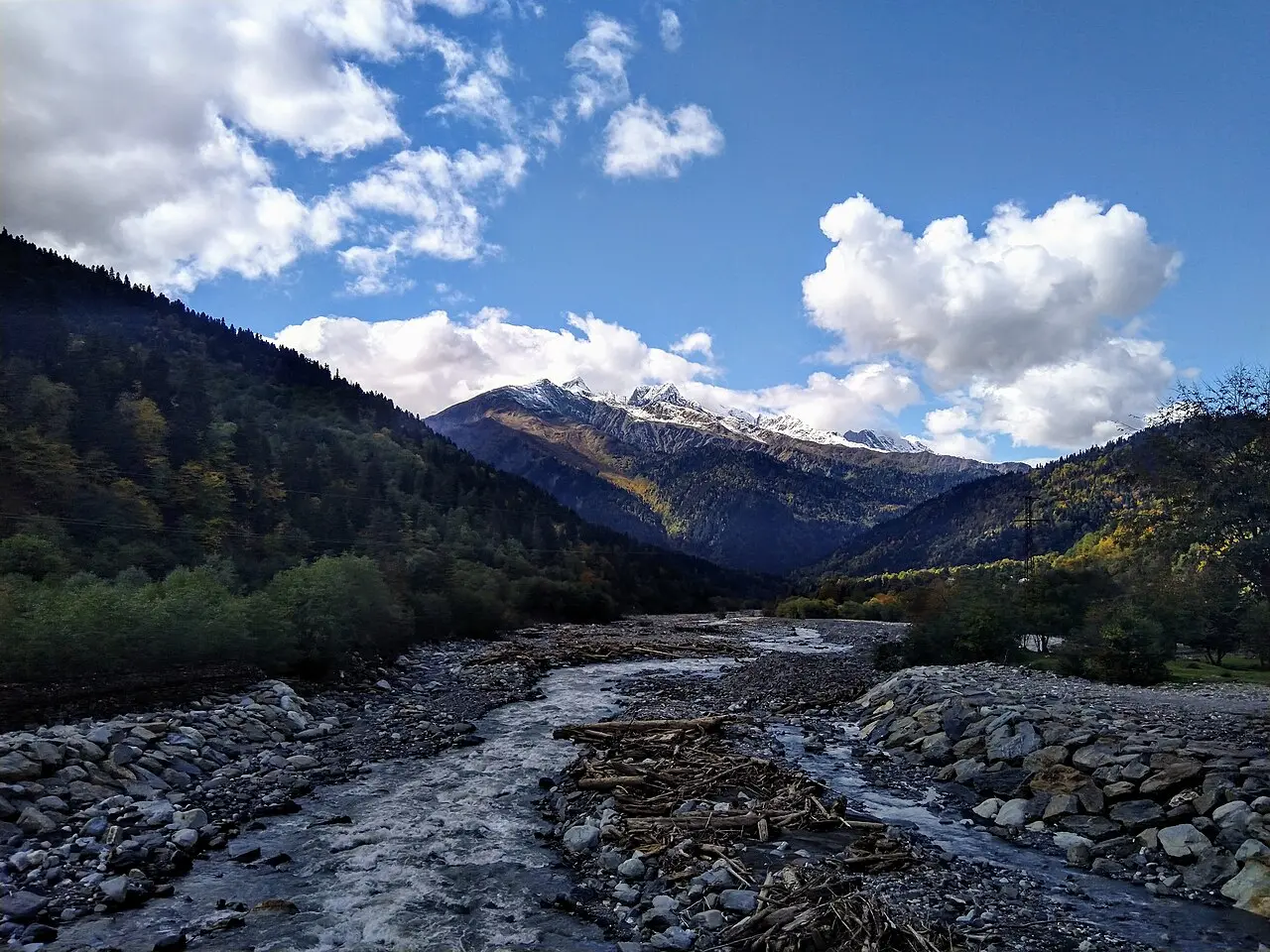
Racha is the quietest, most forested corner of Georgia, a place tour buses barely reach. This is the country’s northwest: the Rioni valley climbs from Kutaisi into the mountains, and strung along it are the Nikortsminda cathedral, the wine town of Ambrolauri, an old synagogue in Oni and high-altitude mineral spas. Two days is enough for Racha with a night in Oni or Ambrolauri: it’s about 110 km from Kutaisi to the town of Oni, but on mountain roads that’s half a day with stops. Below is a stop-by-stop breakdown of where to pull over, what the road is like, and why Shovi needs to be talked about separately and honestly.
.jpg)
What Racha is, and how much time to give it
Racha is quiet and green: pine slopes, wooden houses, old monasteries and almost no crowds. That is exactly why people who have already seen Kazbegi and Svaneti come here for something calmer. Racha has always been a place apart: no major through-road ever crossed it, and that is exactly why the old churches and the unhurried village life have survived here. The flip side of that quiet is distance and road time. From Kutaisi to Ambrolauri, the regional capital, it is about 70-75 km and roughly an hour and a half; beyond that, up to Oni and higher, the road narrows and runs along the Rioni gorge. You can also come from Tbilisi - about 210 km and three and a half hours via Sachkhere - but coming in from Kutaisi makes more sense: it’s closer, and the international airport with its budget flights is right there.
Here is what that means in practice. Lower Racha - Nikortsminda, Ambrolauri, the wine villages - is normal sealed road, and an ordinary car is fine. The real mountains start above Oni: there you hit gravel sections, and Upper Racha is sadly known for landslides, so before setting out it is worth checking road conditions on the GeoRoad service, and for the higher villages a 4x4 is the smarter choice. You cannot cover Racha from Kutaisi in a single day without rushing: plan an overnight - in Ambrolauri if you want wine and comfort, or in Oni if Upper Racha is the point.
The season here’s short and hard. The lower part is open from spring to autumn, but the upper roads to Utsera and Shovi hold snow from around mid-November to March, and you simply can’t get through then. The best window is July, August and September for the mountains, and October, when the forest turns gold and the villages bring in Rtveli, the grape harvest.
Nikortsminda and the road up
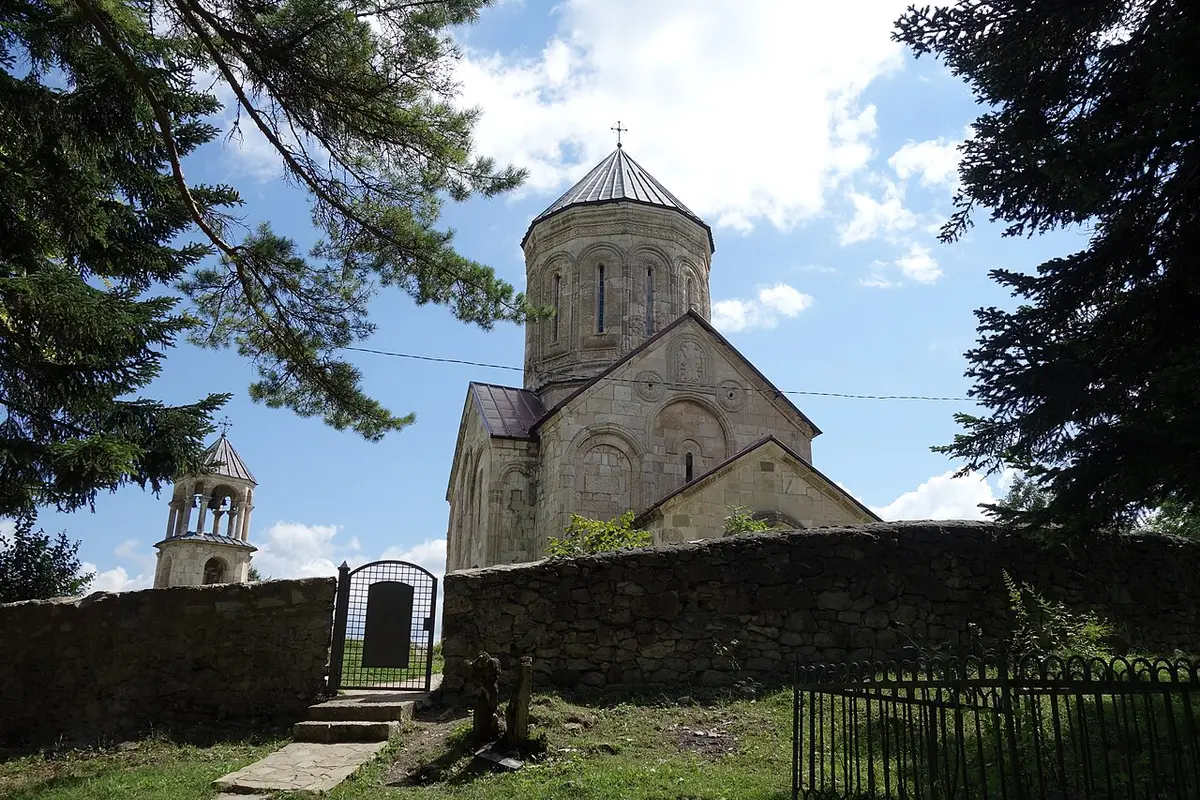
From Kutaisi the road climbs onto a plateau through Tkibuli and past the Shaori reservoir - a man-made lake from the 1950s set in pine forest, lovely in autumn (though swimming isn’t allowed). The first big stop is Nikortsminda cathedral, and it alone is worth the drive. The church was built in 1010-1014, and outside it’s covered in the finest stone carving: beasts, crosses, interlace, faces. Inside are 16th-17th century frescoes, including a huge Last Judgment on the west wall. This is not a roadside chapel but one of the most ornate churches in the country, and it’s usually near-empty.
_Nikortsminda.jpg)
Ambrolauri and Khvanchkara wine
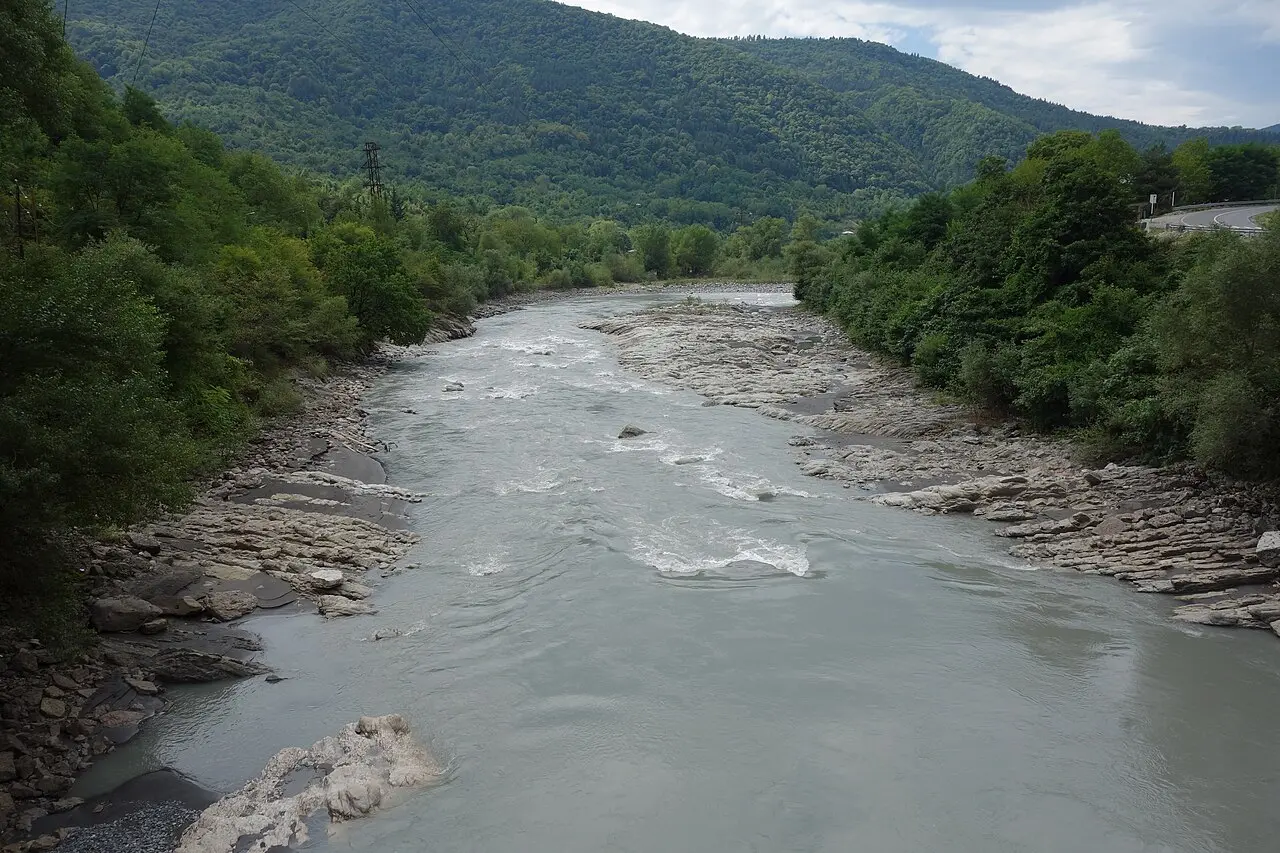
Another fifteen kilometres downhill and you’re in Ambrolauri, the regional capital (about 550 m), sitting on both banks of the Rioni. The town is tiny and sleepy, but it has a big name: it’s the capital of the Khvanchkara zone. The famous semi-sweet red is made here from the local Aleksandrouli and Mujuretuli grapes that grow on the surrounding slopes, and the village of Khvanchkara itself is about fifteen kilometres away. Family wineries in the nearby villages pour and tell their story; at the large winery near Ambrolauri a tasting with a tour is cheap, but check the exact price and hours on the spot - they shift with the season. Khvanchkara is often called Stalin’s favourite wine - impossible to verify now, but the legend still does half the local tourism work; the wine itself is dense, with a raisiny note, nothing like the dry Kakhetian reds.
The practical point of Ambrolauri for this route is simple: it’s the best overnight stop if you’re travelling at an easy pace. There are guesthouses and cafes, and in the morning it is equally handy to drive up to Oni or back down to Kutaisi.
_Ambrolauri-Oni_road_Rioni.jpg)
Barakoni: a church above the river
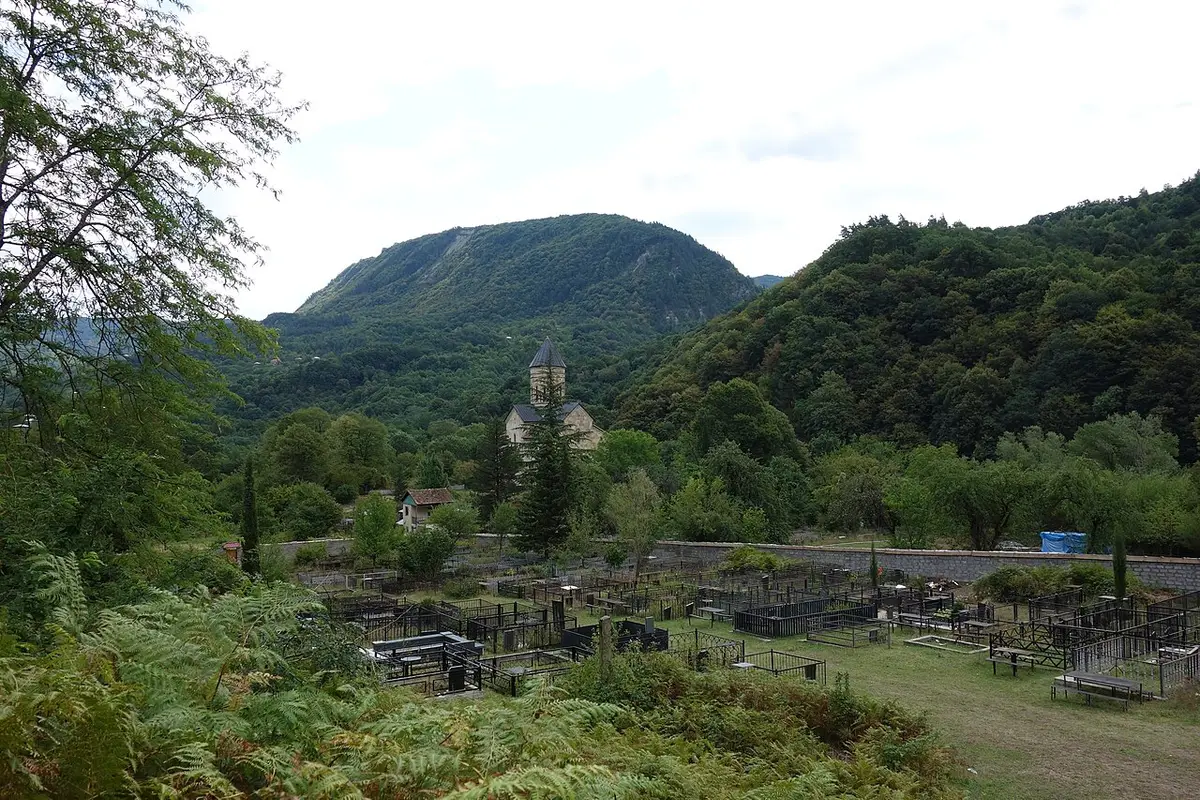
Between Ambrolauri and Oni, in the village of Tsesi, Barakoni stands by the road - a Church of the Mother of God from 1753. It was built by the architect Avtandil Shulavreli, and it is a rare example of late-Georgian building: a tall church drawn upward on a terrace above the river, with fine proportions you rarely see in earlier churches. The stop takes twenty or thirty minutes and fits neatly into the drive, a good place to stretch your legs at the halfway mark.
_Barakoni.jpg)
Oni: a town in the gorge and an old synagogue
Oni is the main town of Upper Racha, wedged into a deep gorge of the Rioni at about 830 m. It feels noticeably harsher and higher than Ambrolauri, and it’s the easiest place from which to head into the mountains. Its main sight is a surprise for a Georgian backwater - a large synagogue from 1895, the oldest working synagogue in the country. Jews had lived in Oni for centuries and, before the mass departure of the 1970s, made up as much as a third of the town; the synagogue with its patterned facade is a memory of that community. There’s a local history museum nearby, and the town itself, with its quiet streets and mountain views, is worth a wander. Roads run from Oni to remote highland villages of Upper Racha - Chiora, Glola, Ghebi; people go there for real wilderness, but you already need a 4x4 and time to spare.
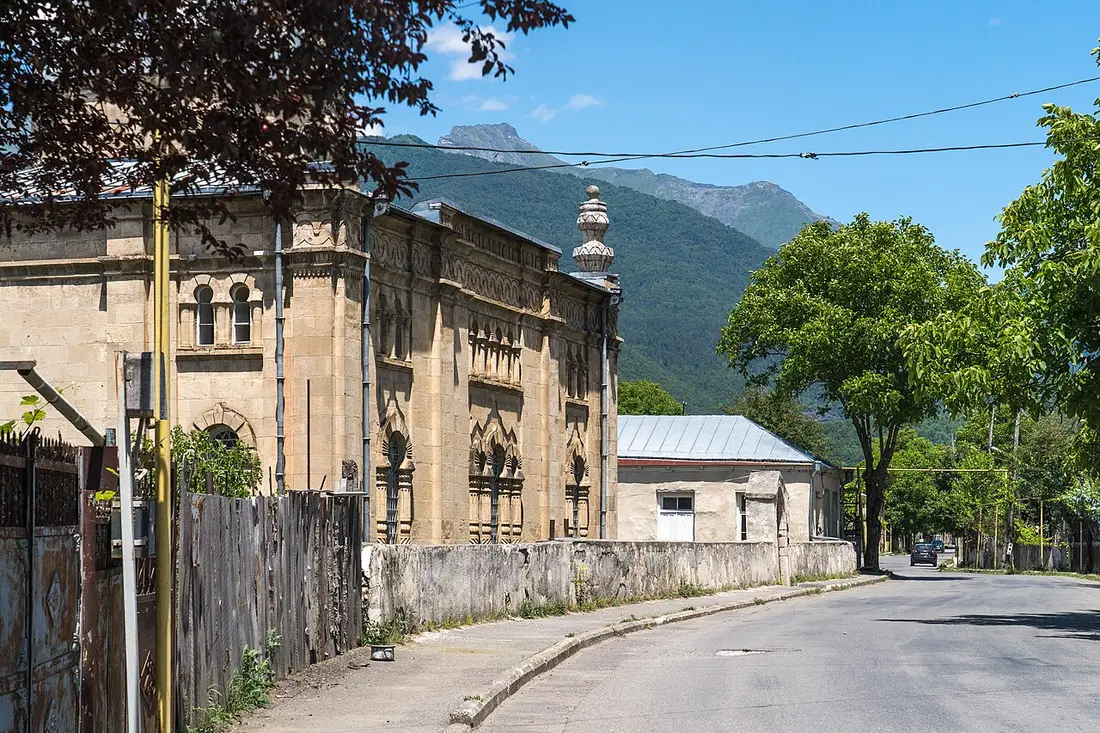

Utsera and the upper valley
Above Oni the road follows the Rioni into a narrow wooded gorge, and about twenty kilometres on you reach Utsera, an old spa town. Its mineral springs have been used since the late 19th century, and the water from the local sources is sour and iron-rich; some are freely accessible for a taste. Utsera itself is understated: pines, the sanatorium feel of the last century, mountain air. There’s not much to actually do here - people stop to fill bottles from the springs, walk in the pines and feel how far below the rest of the world has dropped away. It is the last inhabited point before Shovi, and beyond it the valley narrows sharply.
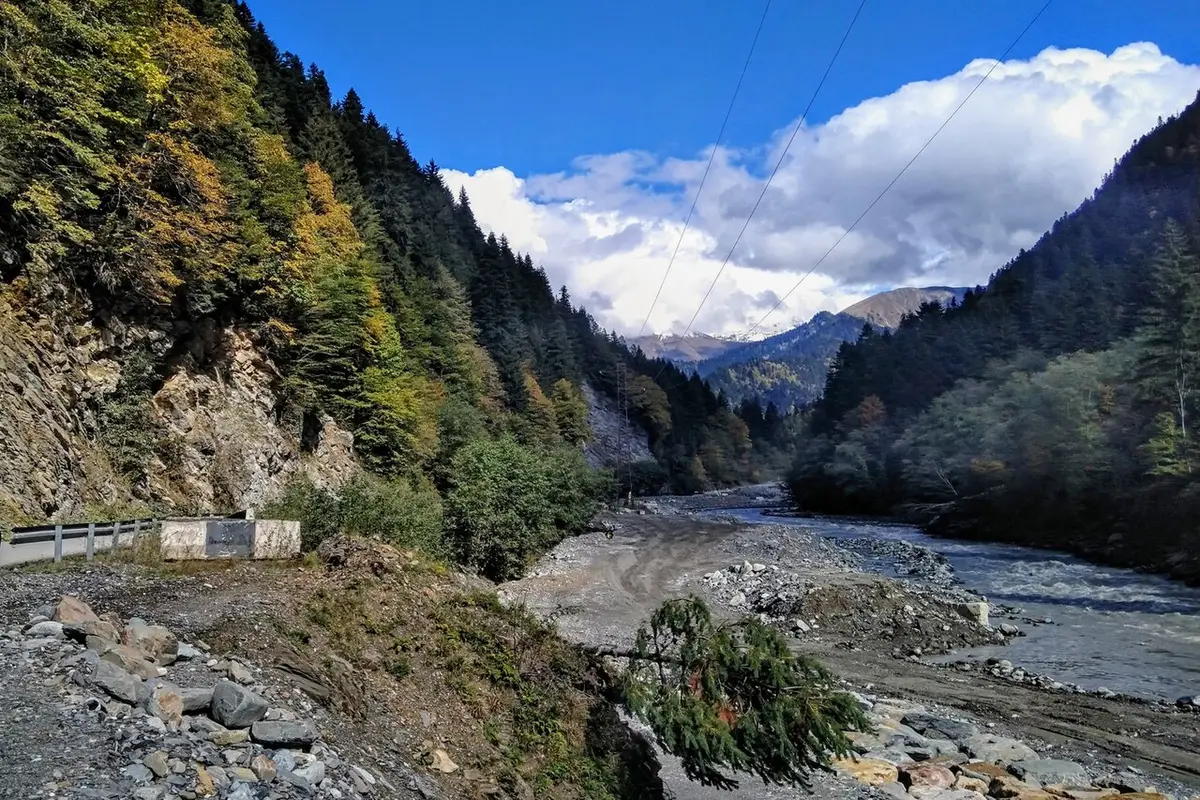

Shovi: a valley with a heavy memory
Shovi has to be described plainly, not as the resort of the old guidebooks. It’s a valley at about 1600 m among pine forests below the glaciers, where people came from Soviet times to take the mineral water and breathe the pine air; there were wooden sanatoriums and dachas here, including the well-known “Stalin’s summer house”.
On 3 August 2023 everything changed. A powerful debris flow came off the slopes above the valley - a wall of mud, rock and water that buried part of the resort in minutes. Thirty-three people were killed, and houses, roads and bridges were swept away. It was one of the worst natural disasters in Georgia’s recent history. Two years on, the resort has still not been rebuilt: the site sits abandoned, and the talk is of a memorial to the dead rather than of revival. You can no longer walk up the valley or hike to the Buba glacier as before.
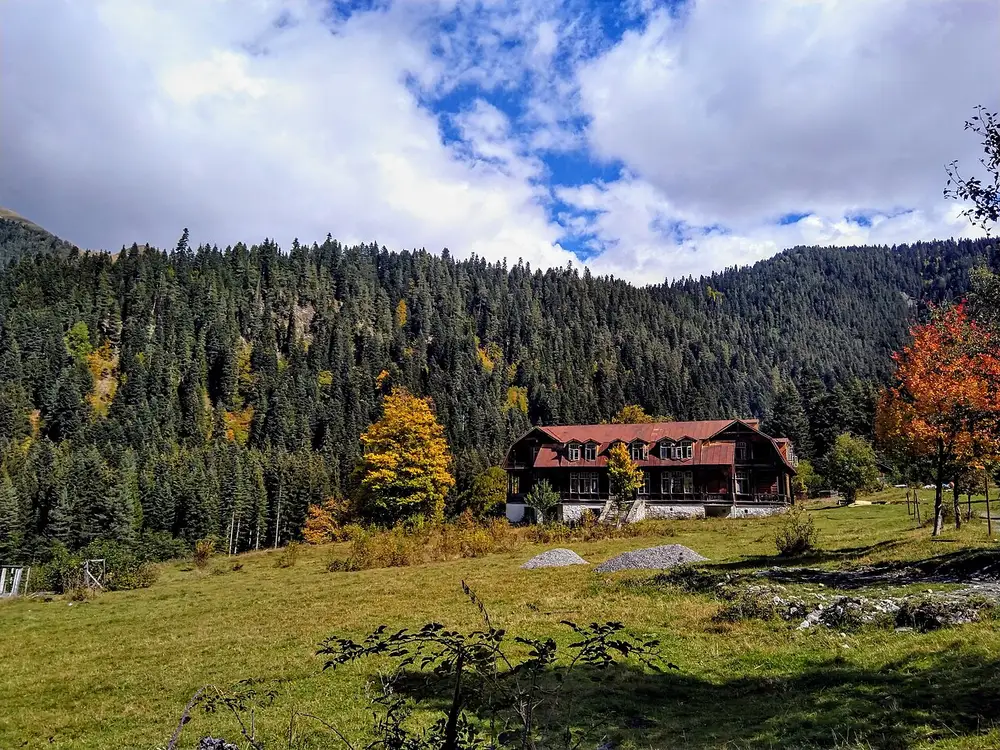

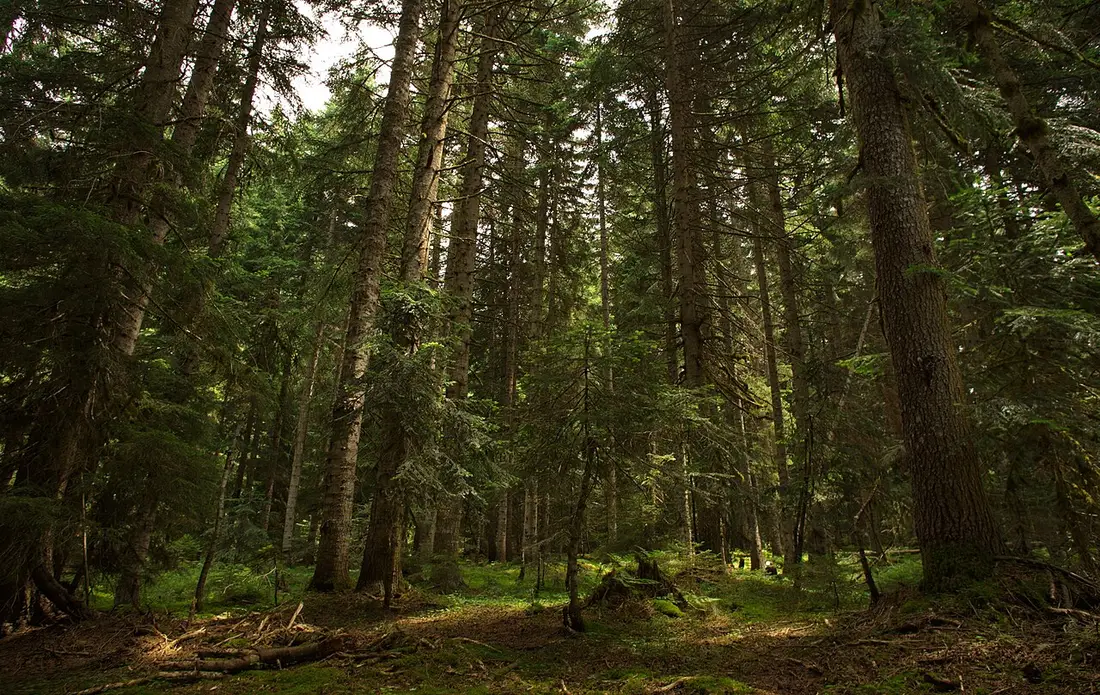
Whether to go is up to you, but it calls for respect and a level head. The forest and mountains around are still there and still beautiful, but this is no longer a place for a carefree break - it’s a valley you have to check for access before you go: the state of the road to Shovi changes, and the stretch may be closed. Do not rely on old reviews and tips about “the sanatorium in Shovi” - many of them were written before 2023.

What to keep in mind
- Kilometres and times are rounded guides. Real figures depend on the road, roadworks and how many stops you make; Upper Racha is slow going.
- Check the roads before you leave. Upper Racha is prone to landslides; look at GeoRoad, and take a 4x4 for the higher villages. Access to the Shovi valley itself should be checked separately - it may be restricted.
- Season. The upper roads to Utsera and Shovi are closed by snow from roughly mid-November to March. Plan the mountains for July-September, wine and colour for October.
- Fuel and cash. There are few petrol stations or ATMs above Ambrolauri; fill the tank and take cash in advance.
- Signal. In the upper villages internet and phone signal can be patchy; download offline maps in advance and don’t count on constant navigation.
- Two possible bases. Ambrolauri for wine and comfort, Oni if Upper Racha is the goal; one day from Kutaisi isn’t enough to do it calmly.
It’s easier to arrange a car in advance - see the car rental section. If you want rougher mountains, Svaneti with Mestia and Ushguli is close in spirit, and from the same Kutaisi base it’s easy to visit the canyons and caves of Imereti; other plans are in the routes section.
Route day by day
- Days on the road
- 2
- Distance
- ≈150 km
- Budget from
- 120 GEL
- Best season
- June, July, August, September, October
The route at a glance
-
Kutaisi
Route startThe base for the trip and the nearest airport. The road heads north up the Rioni valley - the same river that flows through Kutaisi - into Racha.
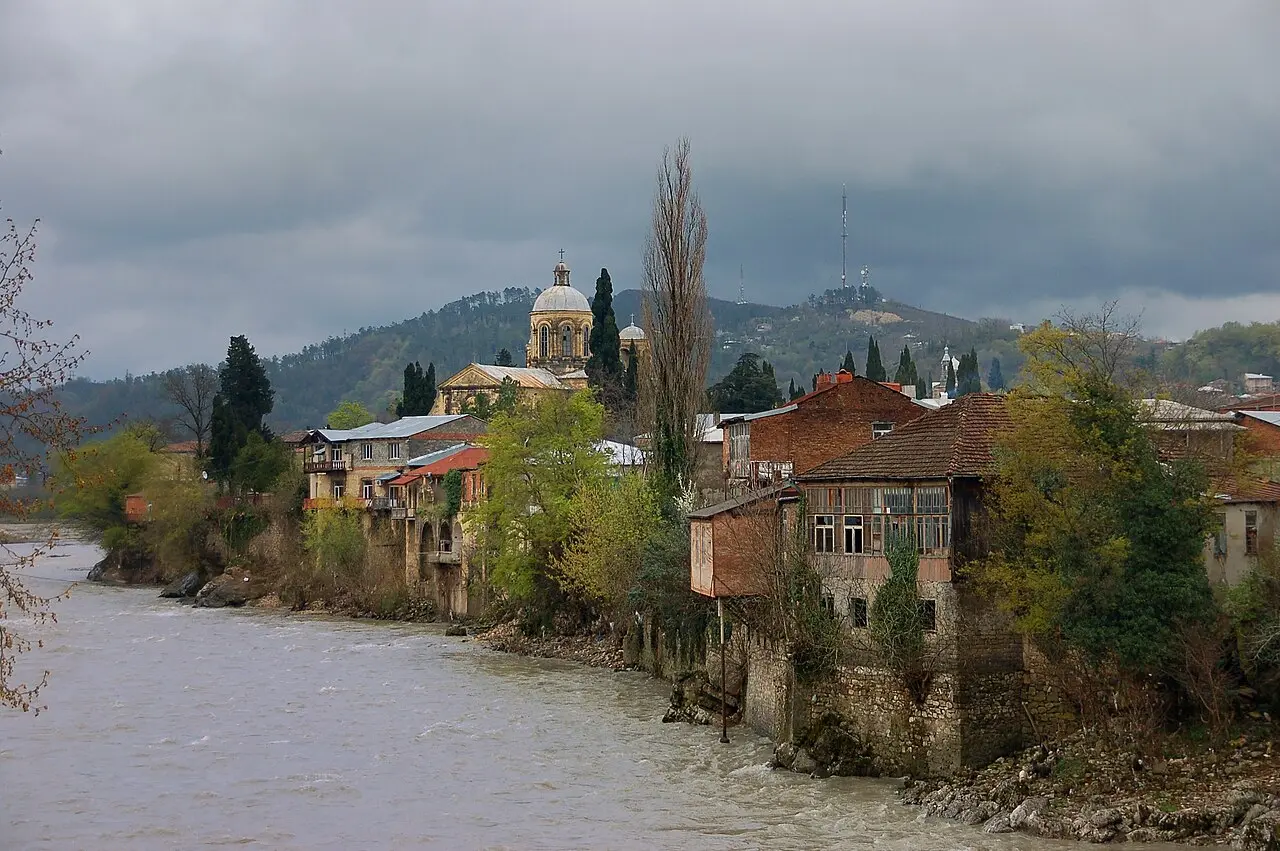
Photo: Matthias Bethke / Wikimedia Commons, CC BY-SA 4.0 ( source) -
Nikortsminda
60 km from the startstop ≈45 min
An 1010-1014 cathedral famous for its stone carving outside and 16th-17th century frescoes inside, including a large Last Judgment. It stands right by the road before Ambrolauri.
Photo: Yasuhiro Kojima / Wikimedia Commons, CC BY-SA 2.0 ( source) -
Ambrolauri
75 km from the startstop ≈40 min
The regional capital, about 550 m, on both banks of the Rioni. The capital of the Khvanchkara wine zone and a handy overnight base before Upper Racha.
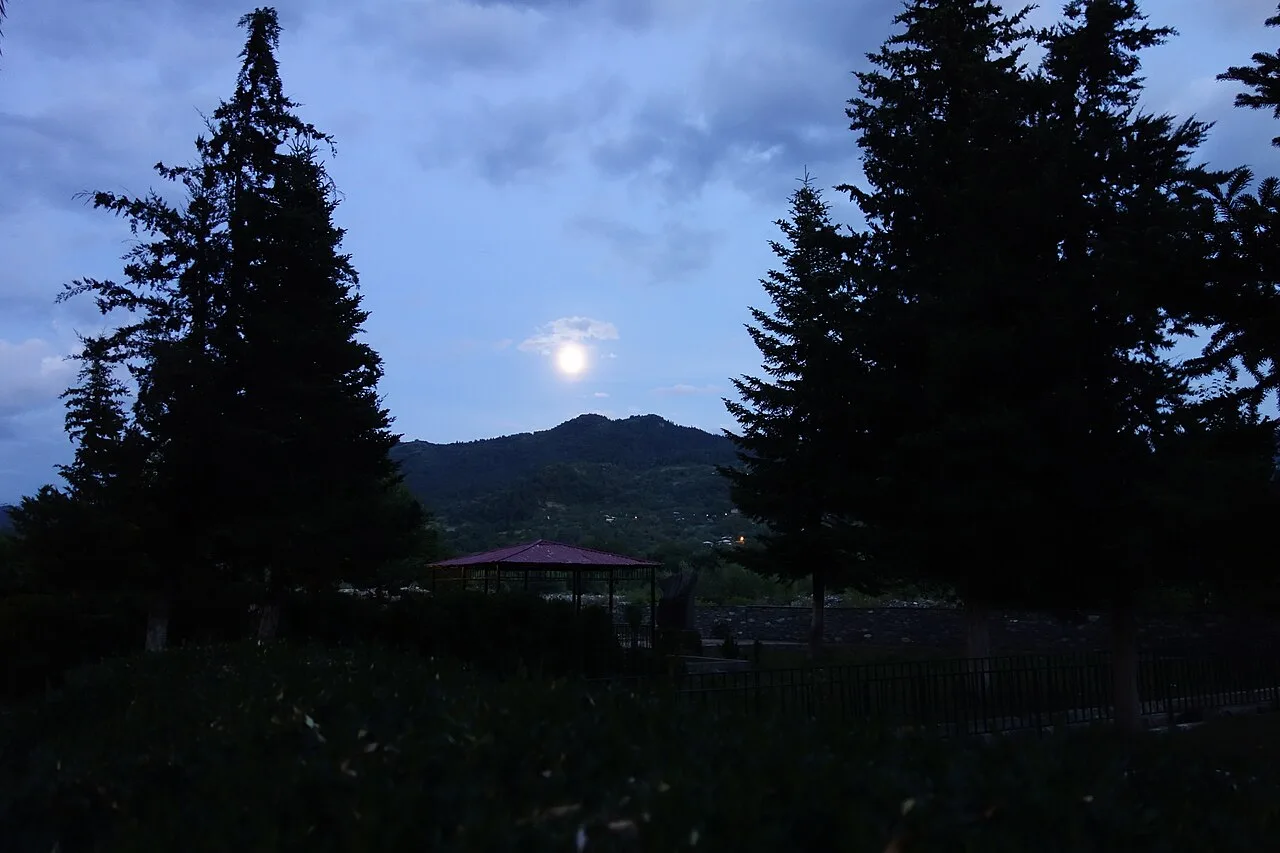
Photo: Yasuhiro Kojima / Wikimedia Commons, CC BY-SA 2.0 ( source) -
Barakoni
88 km from the startstop ≈30 min
A Church of the Mother of God from 1753 in Tsesi village - the work of architect Avtandil Shulavreli, an elegant late-Georgian church above the river.
Photo: Yasuhiro Kojima / Wikimedia Commons, CC BY-SA 2.0 ( source) -
Oni
110 km from the startstop ≈90 min
A small town deep in the Rioni gorge, about 830 m. Its 1895 synagogue is the oldest working one in Georgia; Jews once made up a third of the population. The best base for Upper Racha.
Photo: Alexkom000 / Wikimedia Commons, CC BY 4.0 ( source) -
Utsera
130 km from the startstop ≈30 min
An old spa town in the upper Rioni valley: mineral springs, pines, silence. From here the road climbs on toward Shovi.
Photo: Jelger Groeneveld / Wikimedia Commons, CC BY 2.0 ( source) -
Shovi
147 km from the startA former Soviet resort at about 1600 m among pines below the glaciers. On 3 August 2023 a debris flow hit it and killed 33 people; the resort has not been rebuilt and access is restricted - check road conditions before you go.
Photo: Boris Kuznetsov / Wikimedia Commons, CC BY 2.0 ( source)
Route map
The map with stops loads on click - to keep the page lightweight.
The map didn’t load. Check your connection and refresh the page.