
Alaverdi Monastery in Kakheti: cathedral, wine and access
Alaverdi Monastery in Kakheti: founded in the 6th century, one of Georgia's tallest cathedrals and its own monastery wine. How to get there.
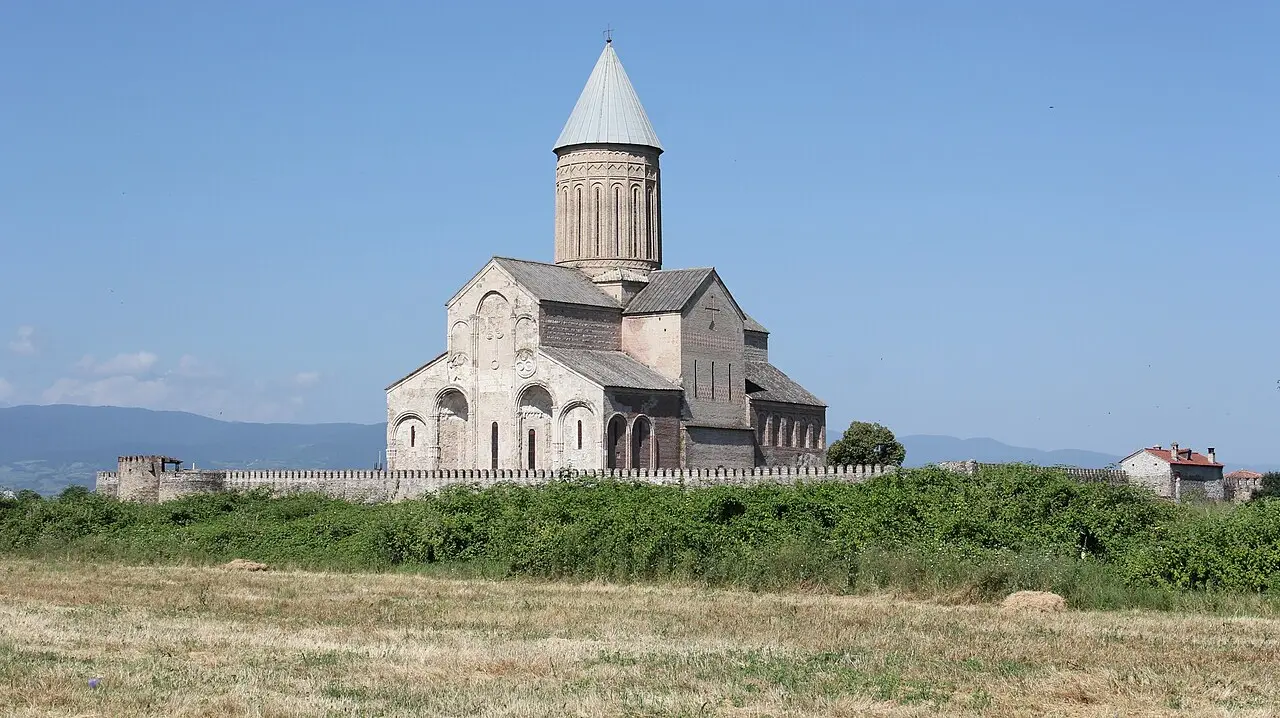
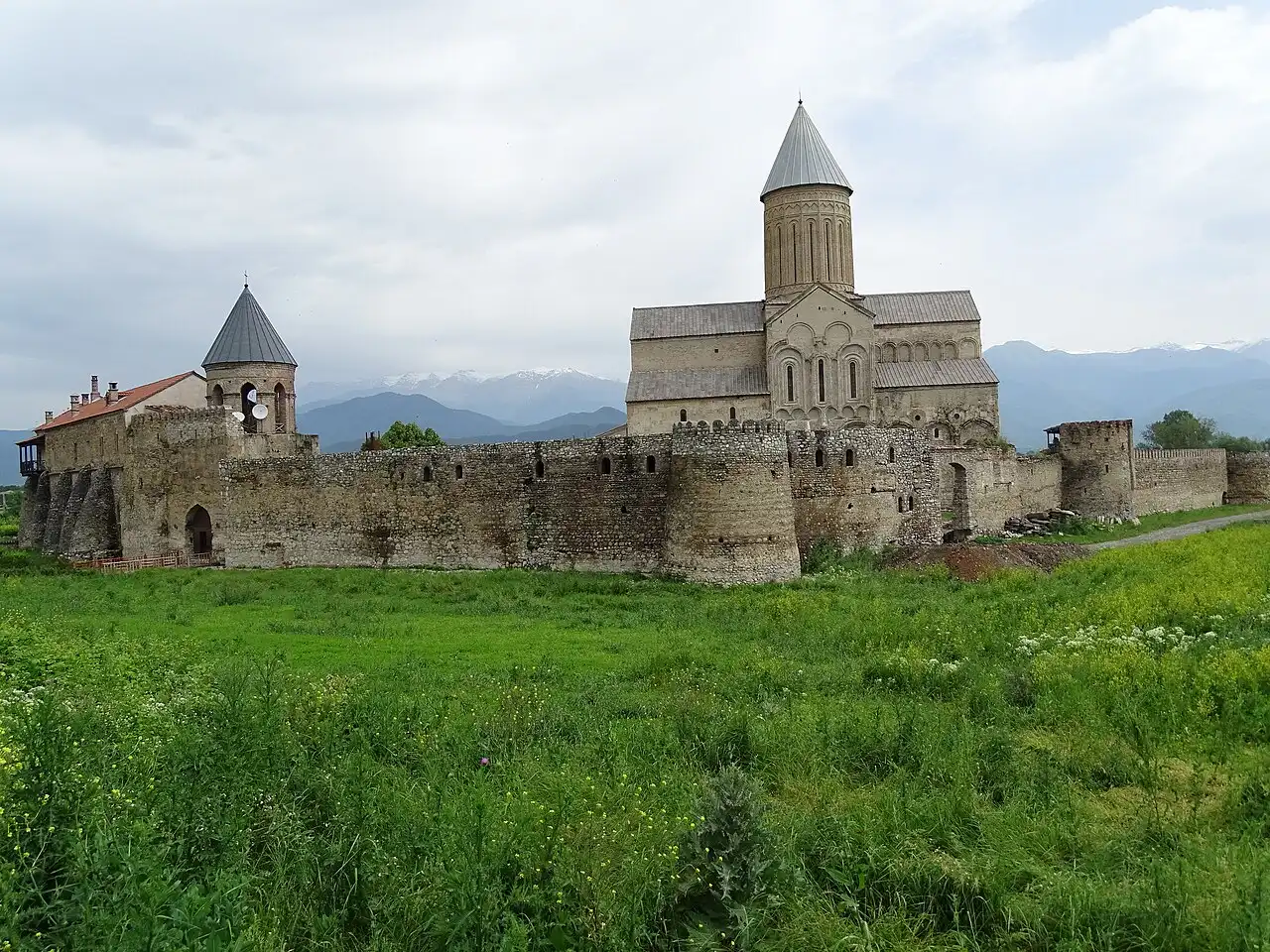
Alaverdi is one of Georgia’s most imposing monasteries: its cathedral rises from the middle of the flat Alazani Valley, and the slender cone of its dome can be seen from far off against the Caucasus range. It’s an ancient monastery of Kakheti, known both as a great church monument and as a place where the monks are reviving the traditions of Georgian winemaking - and the cathedral you see is four centuries younger than the monastery around it.
Why the monastery is famous
Alaverdi was founded in the 6th century by the Assyrian monk Joseph (Yoseb) Alaverdeli, one of a group of monks who arrived from Antioch to preach Christianity across Georgia; tradition holds that the site had been a pagan sanctuary dedicated to the moon before he settled here. The main church, St George Cathedral, went up much later, in the early 11th century, commissioned by the Kakhetian king Kvirike III on the site of that earlier foundation - so the building you see today is roughly four centuries younger than the monastery itself.
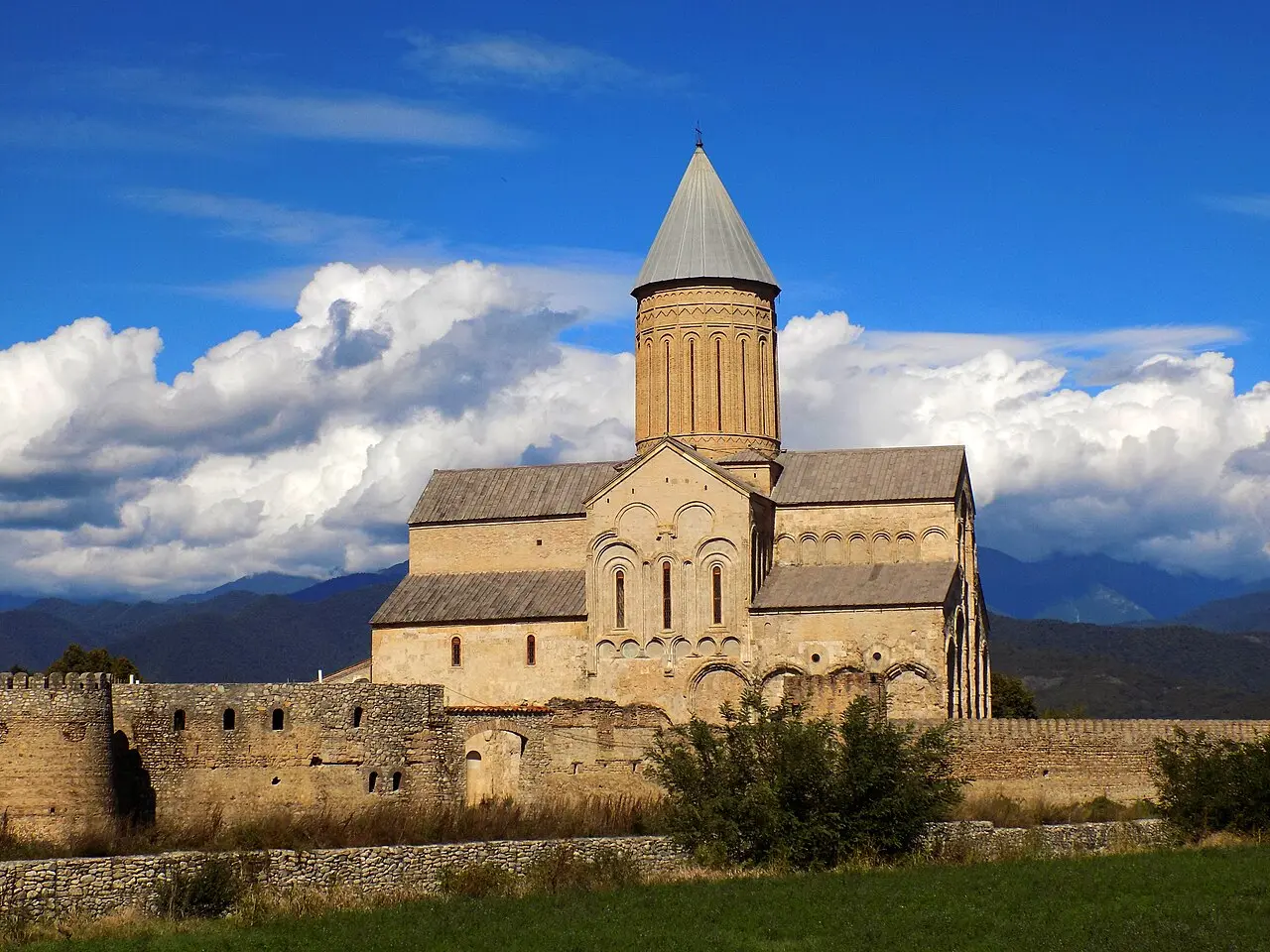
The cathedral’s height is where sources start to disagree, and it’s worth saying so instead of picking one number to sound authoritative. Georgia’s own tourism board describes it as “over forty metres tall, including the dome”, the Georgian encyclopedia gives up to 50 m, and the widely cited English-language figure is “over 55 m”. What all of them agree on is the more interesting point: for centuries this was the tallest church building in the country, a title it held until Tbilisi’s Holy Trinity Cathedral was consecrated in 2004. Whichever number you trust, standing at the base and looking straight up at the dome gives a better sense of the scale than any figure does - and height isn’t the same as size. Wikipedia’s own entry notes that despite being the tallest, Alaverdi’s total volume is smaller than the cathedral of Svetitskhoveli in Mtskheta, so anyone who has already seen Svetitskhoveli and expects Alaverdi to dwarf it in every dimension is in for a slightly different kind of impressive: this building reads as tall and narrow, not tall and vast. Alaverdi is often counted among the four great cathedrals of the Georgian Orthodox world, the big cross-dome churches of the 10th and 11th centuries. Two members of the Kakhetian royal house are buried inside: Queen Ketevan, later venerated as a martyr after her death in Persian captivity, and King Teimuraz I.
Wine and monastery life
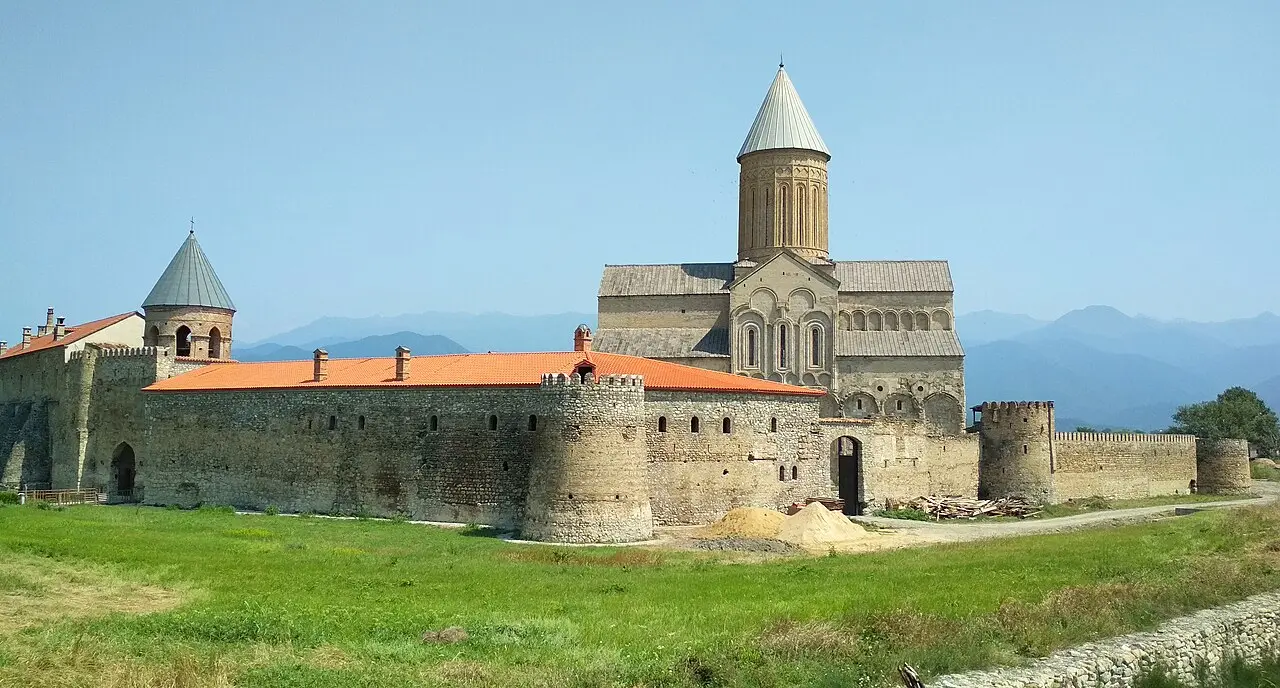
Alaverdi is closely tied to wine, and not in a token, gift-shop way. Kakheti is often described as the heart of the world’s oldest wine-growing region, and the monastery sits right in the middle of that claim, not at its edge. A winery - a marani - dated to the 10th-12th centuries survives within the monastery walls, and the monks here still work in the ancient qvevri tradition: wine ferments and ages in large clay vessels buried in the ground, the same method used across Kakheti for thousands of years and now recognised by UNESCO as part of the country’s intangible heritage. The monastery keeps its own vineyard planted with around 80 grape varieties gathered from across Georgia, effectively a working catalogue of the country’s viticulture, not a single house style - useful context if the only Georgian wines you know are the handful of Rkatsiteli and Saperavi bottles that make it to export markets. There’s a tasting hall near the entrance where visitors can try the monastery’s wine alongside matsoni yogurt with honey and walnuts, a pairing that’s more of a light meal than a quick sip-and-go stop, so it’s worth arriving with some time to spare rather than fitting it in on the way out.
Once a year the monastery holds its major church festival, Alaverdoba: several days in late September, climaxing on the feast day of St Joseph of Alaverdi, the monastery’s founder. Sources disagree by a day on the exact date: Georgia’s National Tourism Administration names 27 September, while English Wikipedia gives the 28th (that is 15 September in the Julian calendar, the feast day of St Joseph of Alaverdi); why the tourism administration lists the 27th, the sources don’t explain. Either way, the date is fixed and doesn’t move from year to year, so it’s easy to plan a visit around it well in advance.
The historical version of the festival was a much bigger affair than a single service. Georgia’s National Tourism Administration describes it as having been called the First, Middle and Last Alaverdoba, running for three weeks and starting on the 28th or the 29th of September (the Georgian Encyclopaedia and georgia.travel disagree here too, again by a day), with the fair growing from the mid- to late 19th century onward - livestock, household goods and farm produce brought in from across the surrounding countryside to sell. That three-part lunar cycle isn’t a coincidence: it echoes the pagan moon shrine that, according to local tradition, stood on this exact spot before Joseph arrived - historically there was less of a strict church holiday here than a village fair with a religious excuse. Today’s Alaverdoba is a far more modest affair, but it’s still one of the monastery’s busiest days of the year - if you’re timing a visit around it specifically, expect crowds and book a place to stay in Telavi ahead of time rather than in the village itself.
What to keep in mind for a visit
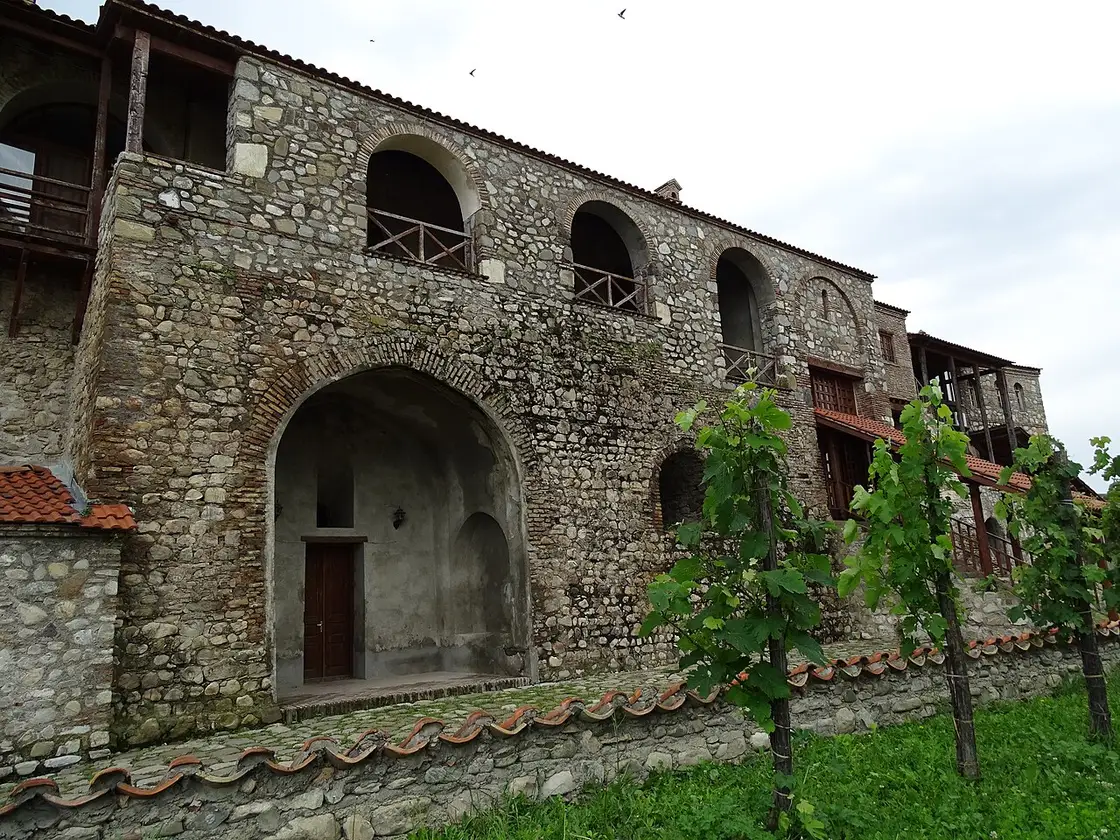
Alaverdi is a working monastery, not a museum piece, and the dress rules follow from that. Dress as at other Georgian monasteries: shoulders and knees covered, a headscarf for women, long trousers for men; wraps and headscarves are usually available at the gate for anyone who arrives unprepared. Inside the church, keep quiet, especially if a service happens to be running - it’s still an active place of worship, and tour groups are expected to work around that, not the other way round. The cathedral and the monastery walls can be viewed freely with no ticket; the monastery publishes no opening hours, so plan for daylight and confirm locally. Allow around an hour for the church, the walls and the vineyard together, longer if you’re stopping for the tasting. Photography outside is fine and the walled grounds photograph particularly well in late afternoon light, when the sun catches the dome from the west; inside the church itself, ask before using a camera instead of assuming it’s allowed, since that depends on whether a service is under way.
How to get there
The monastery sits in the Akhmeta municipality of Kakheti, close enough to Telavi to make it a natural half-day trip, not a destination on its own. From Tbilisi, the usual route runs via Telavi and covers around 117 km, roughly 2 hours 15 minutes of driving - about 97 km and just under two hours to Telavi itself, then another 20-odd km on to the monastery, so splitting the drive at Telavi for a coffee or an early lunch costs you almost nothing in time (the direct road is shorter, about 106 km, but Telavi is where you’d stop anyway). Coming from Kutaisi, budget around 292 km and 4.5 hours by the direct road, which skirts Tbilisi; from Batumi, it’s closer to 428 km and 6.5 hours, long enough that most people heading over from the coast treat it as a stop within a longer Kakheti trip instead of a there-and-back day. Once you’re past Telavi the road flattens out into the Alazani Valley itself, vineyards on both sides for miles, and the cathedral’s dome is visible well before you reach the monastery gate - it’s one of the few Georgian sights you can actually watch getting closer for ten minutes instead of turning a corner and finding it suddenly in front of you.
Marshrutkas to Alaverdi leave from a small lot near Telavi’s main marshrutka station (traveller-reported, with no published timetable), but most visitors still choose a rented car, a taxi arranged from Telavi, or a day tour that bundles it with other Kakheti wineries - useful if you’d rather not be the designated driver on a day built around tasting rooms. Marshrutkas connect Tbilisi with Telavi regularly enough for a self-guided trip; if you take a taxi from Telavi onward, agree the return fare and a rough pickup time before you get out at the monastery gate.
Nearby
Telavi makes a handy base for a trip through wine country, and the royal citadel of Gremi stands nearby, a short drive further along the Alazani Valley - both fit comfortably into the same day as Alaverdi if you’re touring Kakheti instead of making a single-purpose trip. The monasteries and wineries of the region are easier to tour by car - for how to rent one, see the car hire section; other places are in the things to see section.
Photos
On the map
The map loads on click - to keep the page lightweight.
The map didn’t load. Check your connection and refresh the page.
Admission and opening hours
- Admission price
- Free entry
A working church - dress as at other Georgian monasteries: shoulders and knees covered, a headscarf for women; wraps are usually available at the gate. The monastery publishes no opening hours - plan for daylight and confirm locally. Donations are welcome but optional.
Details checked: September 12, 2026
Distance
- Tbilisi ≈117 km · ~2 h 15 min via Telavi
- Kutaisi ≈292 km · ~4.5 h OSRM, direct road, not through central Tbilisi
- Batumi ≈428 km · ~6.5 h OSRM, direct road, not through central Tbilisi
Read also

What to see · 10 min read
Skiing in Georgia: Gudauri vs Bakuriani
Updated · September 5, 2026Gudauri or Bakuriani: 2025/26 day passes 70 vs 55 GEL, elevations, last season dates, who each resort suits and how to get there.

What to see · 7 min read
Svaneti travel guide: Mestia, Ushguli and towers
Verified · August 25, 2026Svaneti mapped: Mestia vs Ushguli, tower villages, season, and how to link town guides, the trek, and the road from Tbilisi.

What to see · 9 min read
Resorts near Batumi: Gonio, Kvariati & Tsikhisdziri
Updated · September 2, 2026Where to stay near Batumi for cleaner, quieter beaches: Gonio and its Roman fort, Kvariati for diving, and secluded clifftop Tsikhisdziri - how to choose.

What to see · 10 min read
Georgia with kids 2026: family beaches & resorts
Updated · July 18, 2026Georgia with kids: sandy, shallow beaches up north (Ureki, Shekvetili, Kobuleti), amusement parks, when to go and how to plan a family trip.