
Bodbe Monastery in Kakheti: relics of St Nino and a visit
Bodbe convent near Sighnaghi above the Alazani Valley: home to the relics of St Nino. Old church, new cathedral, cypresses and a spring. How to get there.
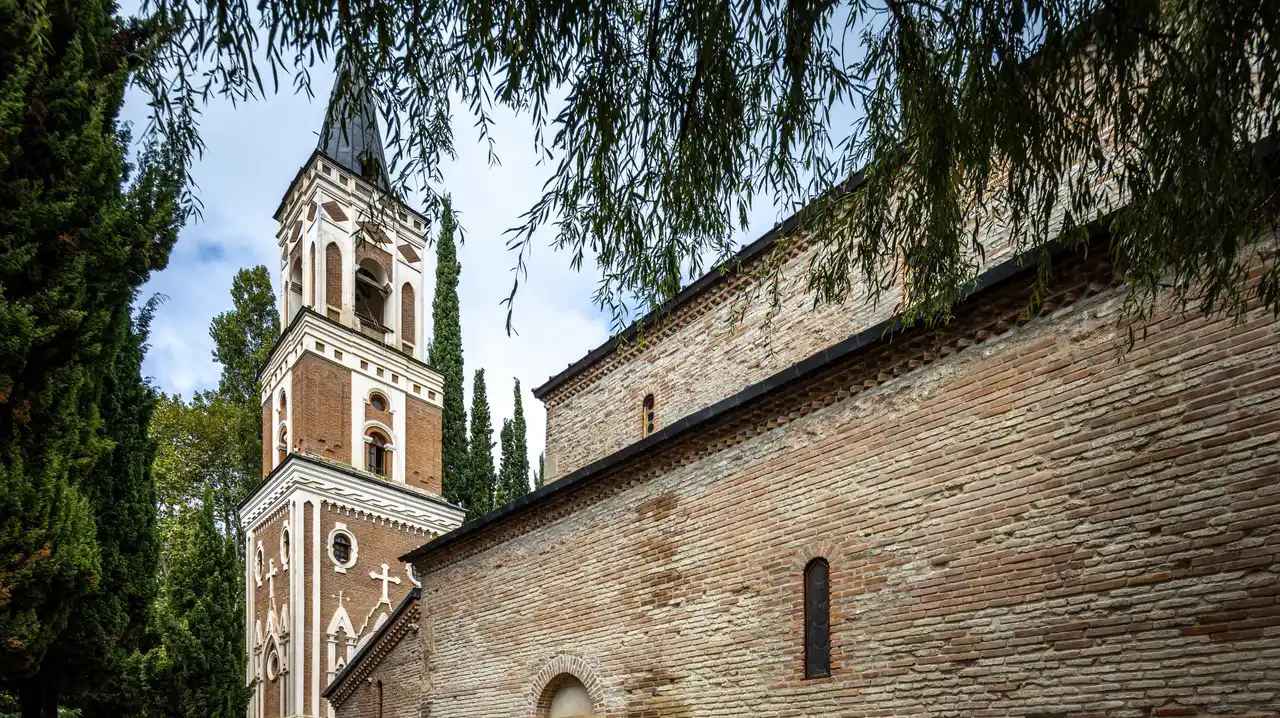
Bodbe is a working convent in Kakheti, 2 km from Sighnaghi, on a slope above the Alazani Valley. People come for the shrine: by tradition the relics of St Nino, the woman who brought Christianity to Georgia, rest here. The monastery stands ringed by tall cypresses, and its terrace opens onto a wide view of the valley and the Caucasus range.
Why the monastery is famous
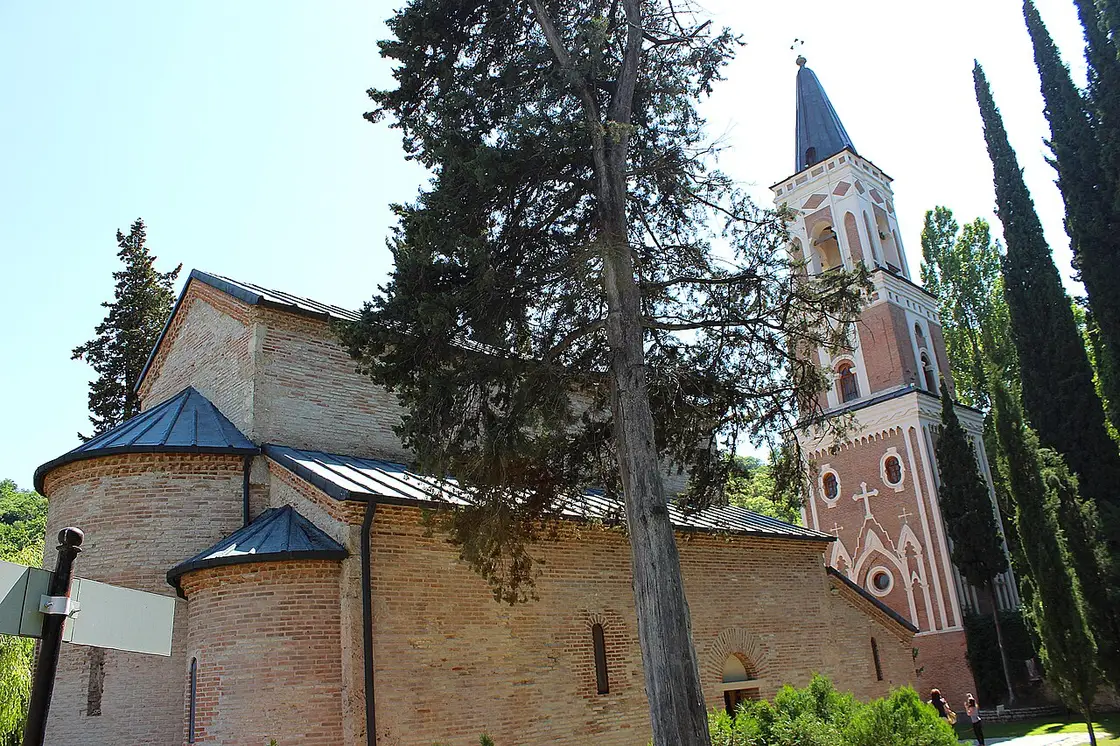
What draws pilgrims to Bodbe above all are the relics of St Nino, the woman who brought Christianity to Georgia in the 4th century. The saint died around 338-340, and a church was raised over her grave as early as the early Middle Ages; tradition links the first church to King Mirian. Because of this shrine Bodbe remains one of the country’s largest places of pilgrimage to this day. That first chapel was never demolished as the monastery grew around it: it survives as a small hall church with its own apse, built directly over the grave and later folded into the larger basilica, so the holiest point on the site is also its oldest surviving stonework.
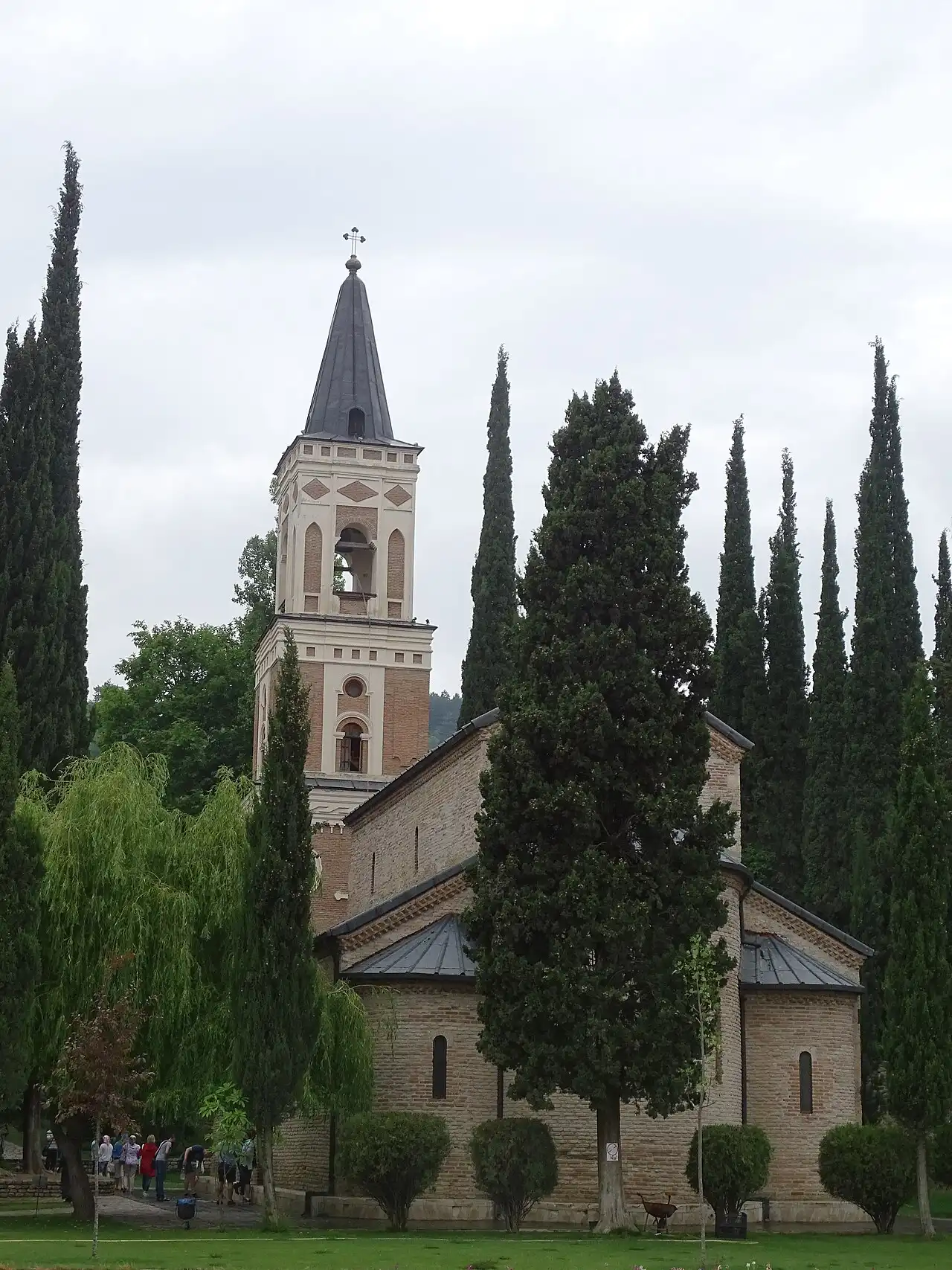
The surviving Church of St Nino is a three-nave basilica with three apses; it’s dated to the 9th-11th centuries, and in the 17th century the building was substantially rebuilt. Beside it stands a separate three-tier bell tower, raised later, in 1862-1885. The monastery operates as a convent; large-scale restoration went on here in 1990-2000 and resumed in 2003.
There’s more to that timeline than the dates alone suggest. Sighnaghi’s own municipal history credits King Vakhtang Gorgasali, one of Georgia’s most celebrated early rulers, with expanding the original chapel in the 5th century - long before the basilica settled into the form standing today. An earthquake in the 14th century did real damage too, and the repair crew of the day patched the west facade with glazed brick instead of plain stone, a detail restorers later chose to keep visible rather than hide. Then came Shah Abbas I’s Persian campaign that flattened Gremi in 1615 and reached Bodbe as well; King Teimuraz I of Kakheti had that damage put right in the decades that followed. In 1823 the local bishop had the interior repainted and installed a new iconostasis made in the workshop at David Gareja monastery, though 20th-century restorers later stripped out that phase’s porches and false dome to reveal the older structure underneath - which is why most of the icons on display today actually date from the 19th century, not earlier.
The convent’s status went back and forth in the same period: Russian imperial authorities downgraded it to an ordinary parish church in 1837, and it wasn’t until 1889, when Tsar Alexander III visited and decreed that a nunnery be opened here, that monastic life properly resumed. That didn’t last either - in 1924 the Soviet government closed the convent and turned the buildings into a hospital. Nuns didn’t come back until 1991, when Catholicos-Patriarch Ilia II personally blessed the convent’s re-establishment, right as the Soviet Union dissolved and the restoration above began to gather pace. The community has grown since: Bodbe is now home to 32 nuns and novices under Abbess Theodora (Makhviladze), according to the convent’s own site, and the sisters run their own farm alongside icon-painting and manuscript workshops - a working community, not a frozen museum piece.
What to see
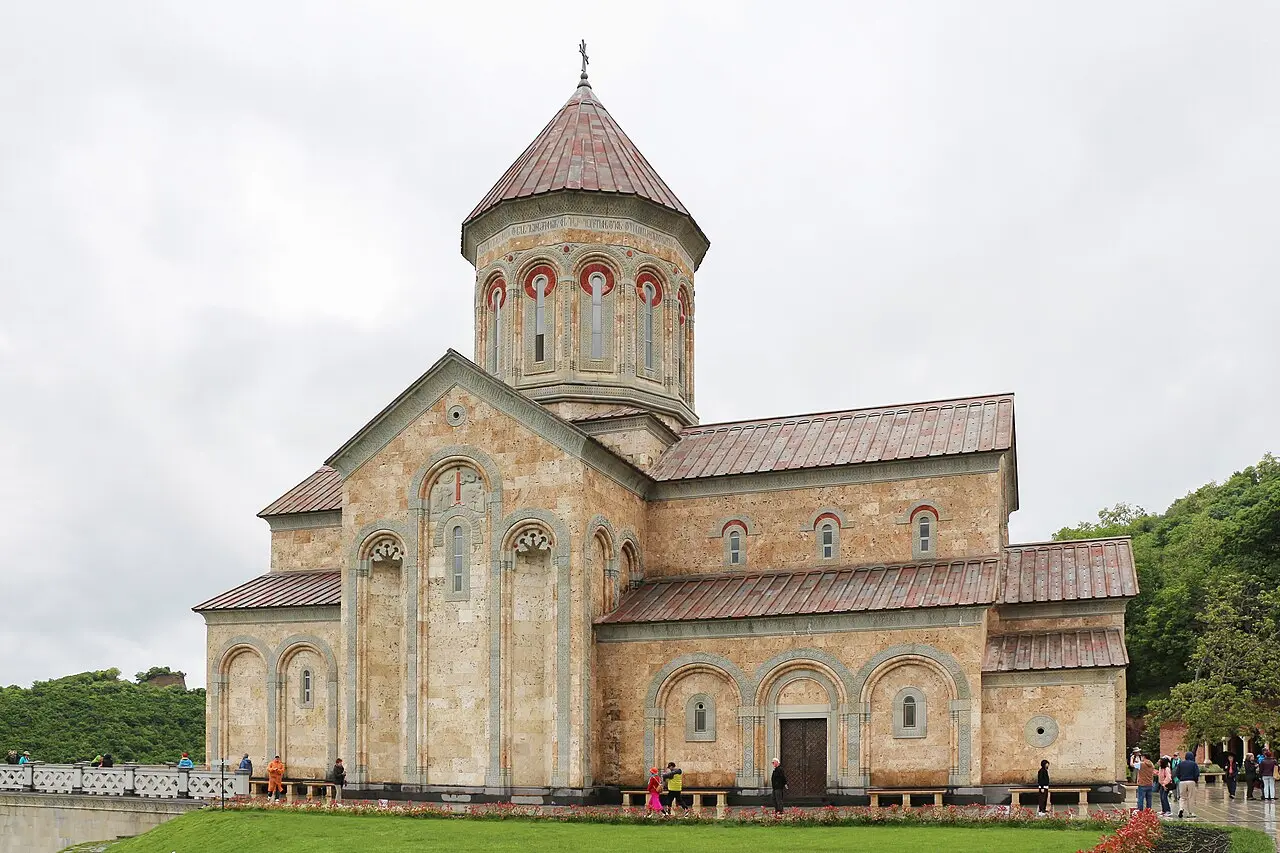
Besides the old church and its bell tower, the grounds are dominated by the large new St Nino Cathedral, built in modern times and formally opened on 9 June 2019 by the Catholicos Patriarch himself, according to Sighnaghi’s municipal records - noticeably bigger than the historic basilica, and proof that Bodbe is still being added to, not just preserved. Two smaller churches share the grounds too, dedicated to St Tamar the Confessor and to St Gabriel the Fool-for-Christ, one of modern Georgia’s best-loved saints - easy to miss if you only aim for the two big buildings. A cypress avenue runs between them, and the terrace at its end is where everyone stops: tall cypress spires frame the drop down to the valley floor, and on a clear day Sighnaghi’s own walls are just visible on the far ridge, a reminder of how close the two sights really sit.
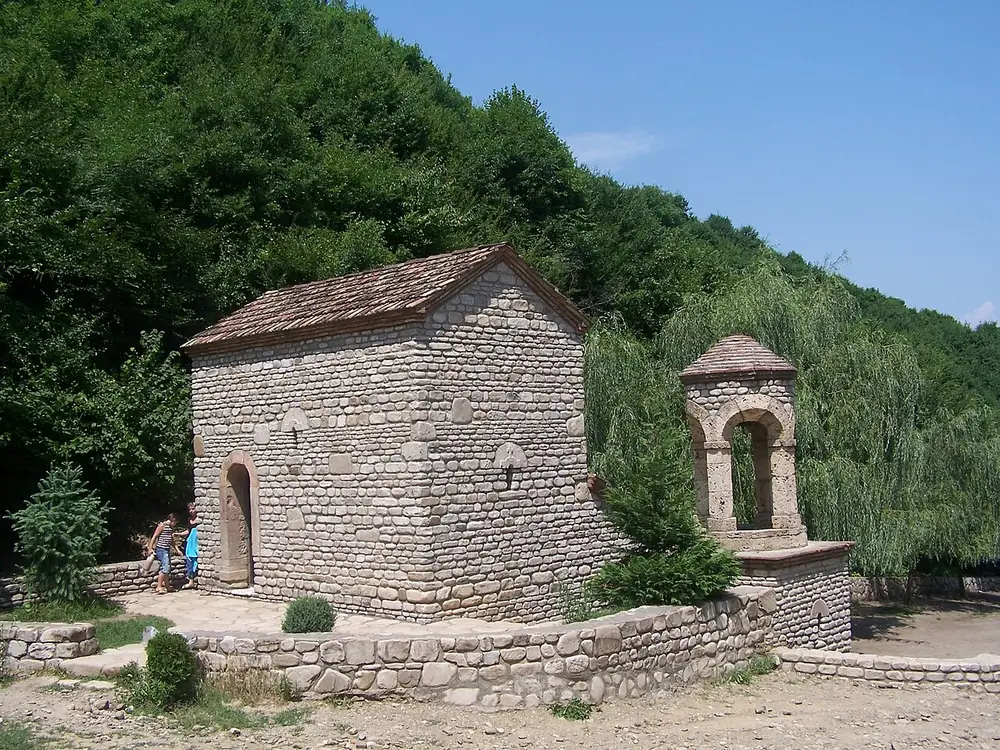
Lower down the slope, about 3 km from the convent by the heritage record cited below, is the spring of St Nino, with its own small church dedicated to her parents, Saints Zabulon and Sosana. Both a footpath and a paved road reach it, so walking down isn’t the only way if you’d rather drive and save your legs for the climb back. At the spring, pilgrims bathe in a covered pool - shoes come off, and a wrap is provided for anyone who needs one - and the water is traditionally credited with healing properties. Queueing at busy times is normal, though the sick and clergy don’t have to wait their turn. Either way, budget real time and effort for the round trip instead of squeezing it in as an afterthought.
How to get there
Most people come to Bodbe from Tbilisi via Sighnaghi - about 110 km and roughly 2 hours by car or on a tour. From Sighnaghi itself it’s a short drive on to the monastery, about 2 km. It makes most sense to combine Bodbe with a walk around Sighnaghi - the hilltop walled town - on a single trip through Kakheti.
If there’s time left after the monastery, the villages of Upper and Lower Bodbe sit a further 15 to 25 minutes on foot, along a lane the national tourism board describes as lined with pomegranate trees and fruiting bushes - a pleasant extension, not a must-see. The same source names August through October as the best window for the drive itself, when the fields on the approach from Sighnaghi fill out with wheat and sunflowers.
What to keep in mind for a visit
Bodbe is a working monastery, and there are dress requirements for a visit. Women need to cover their head and shoulders and wear a skirt, and men should wear long trousers; wraps and headscarves are usually handed out at the entrance. Inside the churches, keep quiet and reserved, especially during services.
Bear in mind that this is a popular place: by midday it can get crowded, especially at weekends and during the pilgrimage season. It’s better to arrive early - both for the calm and for the soft morning light over the valley.
That pilgrimage season has two fixed peaks on the church calendar: 27 January, when Georgians mark St Nino’s death, and 1 June, marking her arrival in the country in 319. Expect the biggest crowds, extra services and noticeably more visitors on and around those two dates specifically, on top of the general weekend rush. Outside them, the grounds are generally open through the day, roughly 10:00 to 18:00, with the path down to the spring closing a little earlier, around 17:00 - though as an active monastery, hours can shift for services without much notice, so treat them as a guide, not a fixed promise.
Nearby
The monastery stands by Sighnaghi - the hilltop “city of love” above the Alazani Valley, which pairs neatly with it for a single day. Gergeti Trinity Church in the north of the country is linked to Bodbe too: by tradition the Cross of St Nino was once hidden there. Other monasteries and places are gathered in the things to see section, and for how to rent a car for a trip around Kakheti, see the car hire section.
Photos
On the map
The map loads on click - to keep the page lightweight.
The map didn’t load. Check your connection and refresh the page.
Admission and opening hours
- Admission price
- Free entry
A working church - follow the dress code: covered shoulders and knees, a headscarf for women. Donations are welcome but optional.
Details checked: June 14, 2026
Distance
- Tbilisi ≈110 km · ~2 h via Sighnaghi
- Kutaisi ≈340 km · ~5 h approximate, via Tbilisi
- Batumi ≈470 km · ~6.5 h approximate, via Tbilisi
Read also

What to see · 10 min read
Skiing in Georgia: Gudauri vs Bakuriani
Updated · September 5, 2026Gudauri or Bakuriani: 2025/26 day passes 70 vs 55 GEL, elevations, last season dates, who each resort suits and how to get there.

What to see · 7 min read
Svaneti travel guide: Mestia, Ushguli and towers
Verified · August 25, 2026Svaneti mapped: Mestia vs Ushguli, tower villages, season, and how to link town guides, the trek, and the road from Tbilisi.

What to see · 9 min read
Resorts near Batumi: Gonio, Kvariati & Tsikhisdziri
Updated · September 2, 2026Where to stay near Batumi for cleaner, quieter beaches: Gonio and its Roman fort, Kvariati for diving, and secluded clifftop Tsikhisdziri - how to choose.

What to see · 10 min read
Georgia with kids 2026: family beaches & resorts
Updated · July 18, 2026Georgia with kids: sandy, shallow beaches up north (Ureki, Shekvetili, Kobuleti), amusement parks, when to go and how to plan a family trip.