
David Gareja: cave monastery and how to get there
David Gareja cave monastery in the Kakheti semi-desert: cells and churches carved into the rock, medieval frescoes. Why it is famous and how to get there.
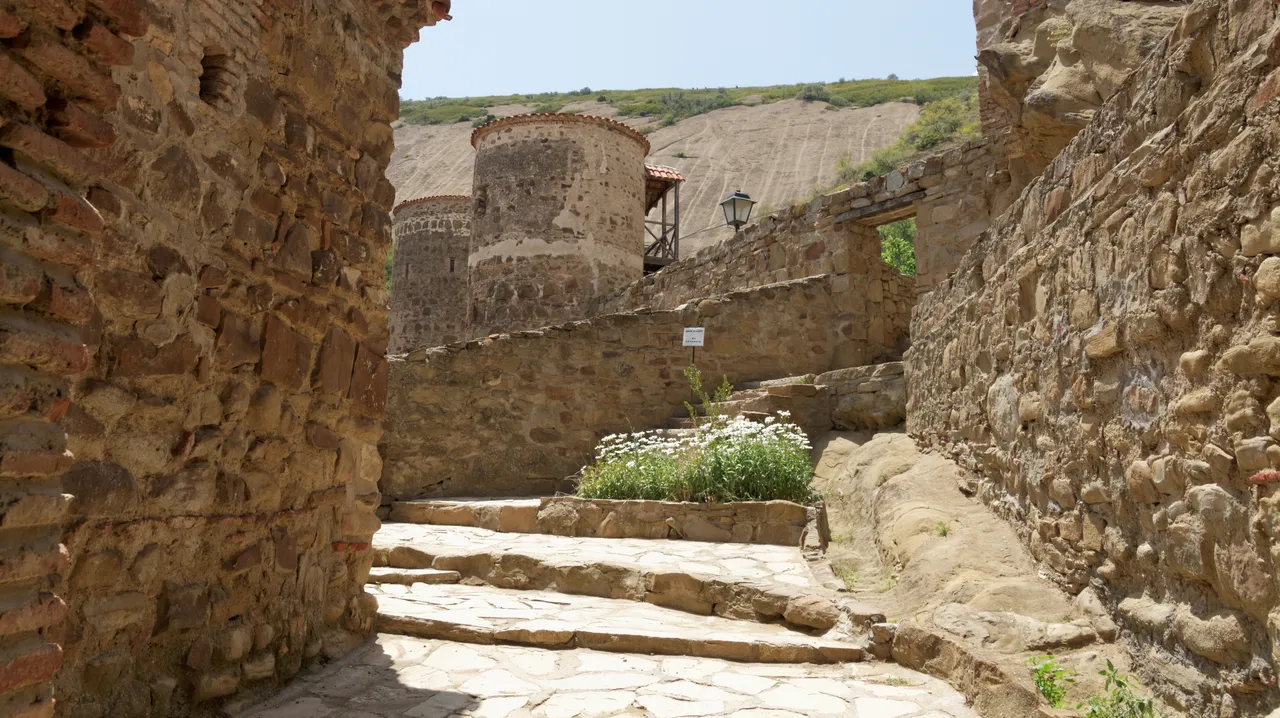
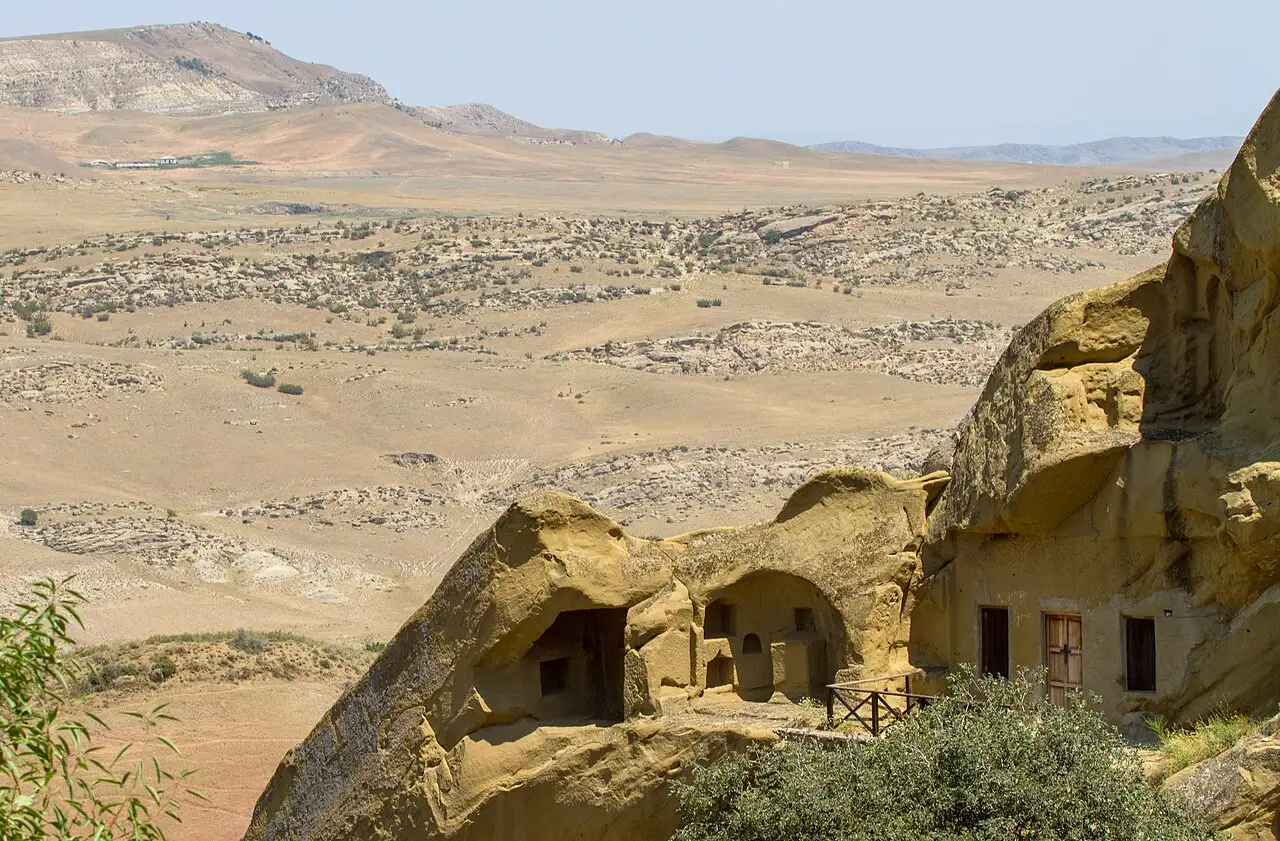
David Gareja is a monastery complex carved straight into the rock on a bare, semi-desert slope near Georgia’s south-eastern border. Hundreds of cave cells and churches, ancient frescoes and sun-scorched striped hills all around make it unlike anywhere else in the country - and people set aside a whole day for it on a trip from Tbilisi.
Why the monastery is famous
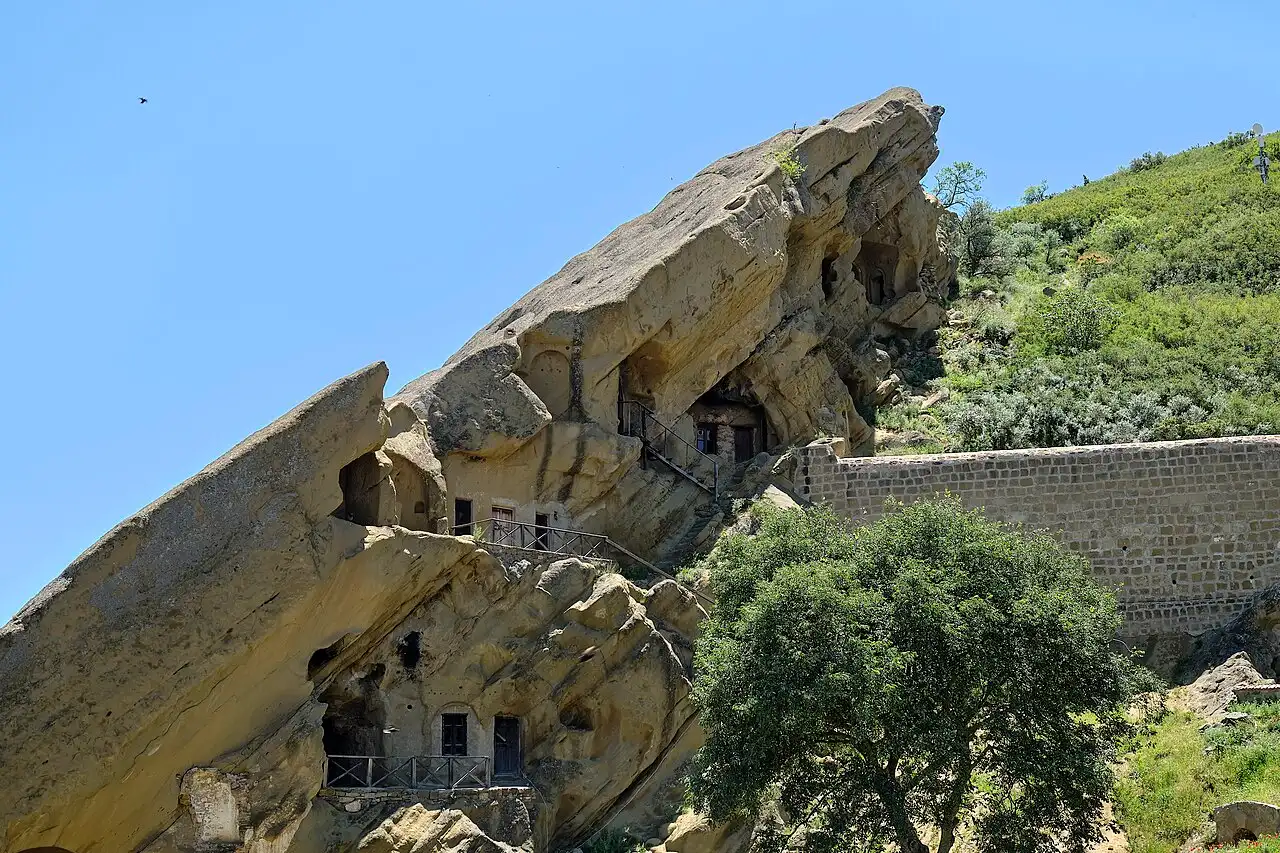
The complex was founded in the 6th century by David Gareja, one of the Thirteen Assyrian Fathers who came to Georgia to preach Christianity. Over time hundreds of cells, churches, chapels and refectories were cut into the soft rock. The first and main monastery is the Lavra; later, Udabno, Bertubani and other hermitages grew up around it.
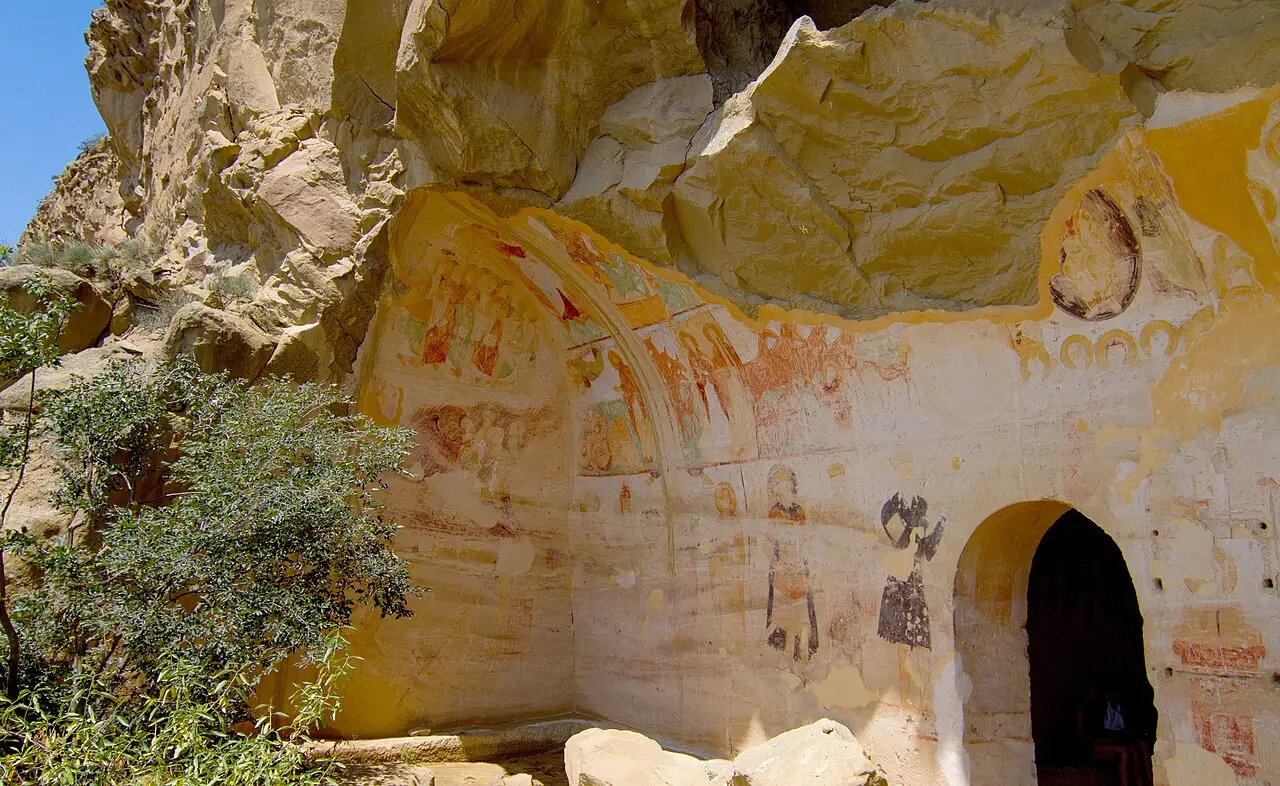
The complex expanded in the 9th century under Ilarion the Georgian and reached its peak from the late 11th to the early 13th century. Hard times followed: in 1265 the monastery suffered during the Mongol invasion, and in 1615, during a Safavid raid, the monks were killed and unique manuscripts and works of art were destroyed. Even so, some of the frescoes survived - especially in the Udabno cave monastery.
What to see
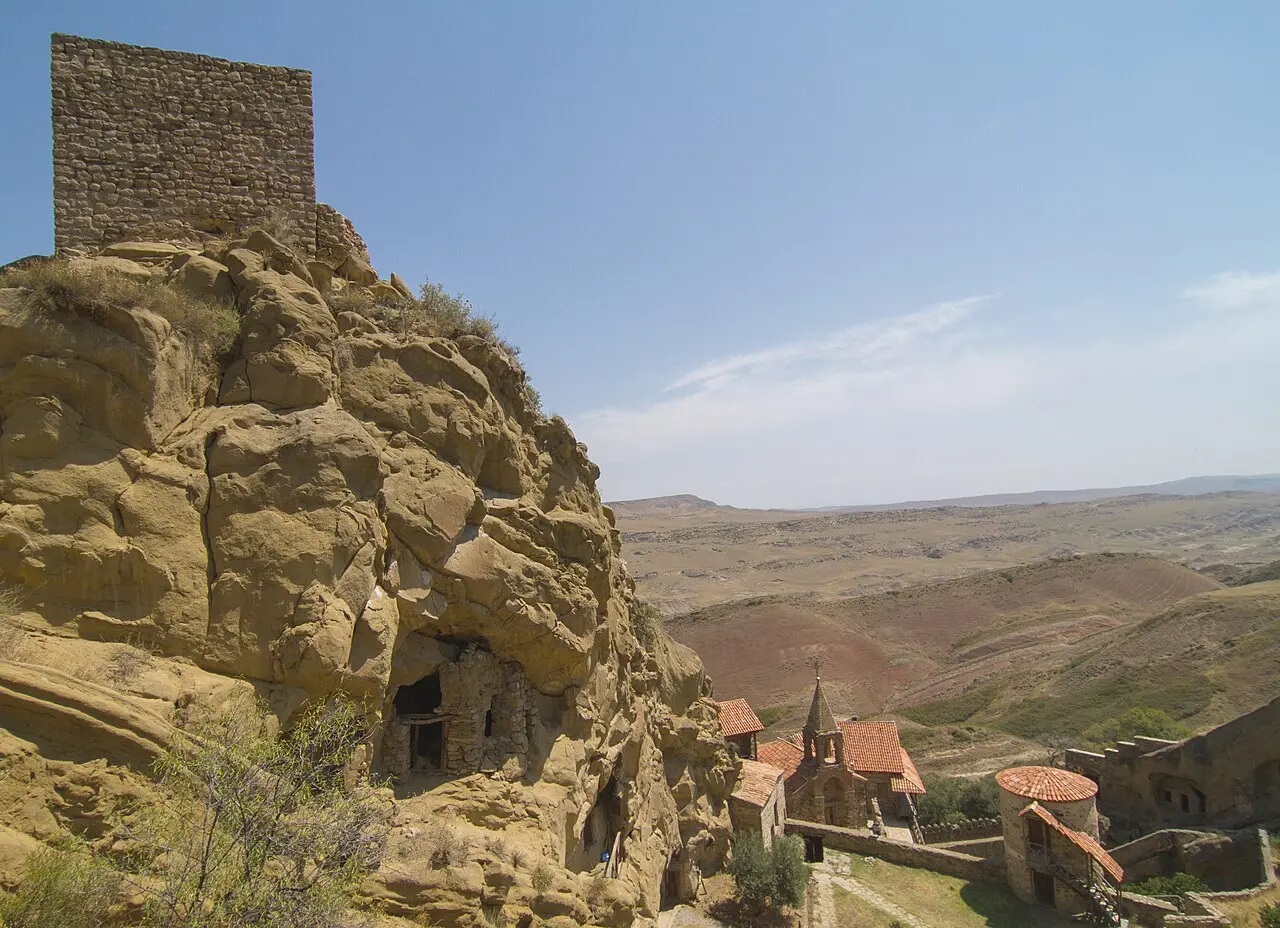
The main draw is the Lavra itself: monastery buildings and cave cells set into the slope, with a bell tower and courtyards. Higher up, over the ridge, lies Udabno with its cave churches and medieval murals, looking out over the endless semi-desert - the distinctive striped hills in reddish and ochre tones. Today the monastery is active again and remains a place of pilgrimage.
What to keep in mind for the trip
This is semi-desert, and the climate here’s harsh: summers are hot, there’s almost no shade, so bring water, a hat and comfortable shoes for the climb up to Udabno. The best time to visit is spring and autumn. There’s also a border nuance to bear in mind: some of the farther caves, including the upper Udabno monastery, lie next to a disputed stretch of the border with Azerbaijan; as of 2026 access to them is closed - check the current situation before you set off.
Nearby
For how to plan the trip as a full day out - tour, shuttle or your own car, drive times and the border catch - see the separate how to get there from Tbilisi day trip route. The trip pairs well with a visit to the capital, Tbilisi, or with the wine country of Kakheti, such as Alaverdi monastery. Reaching Gareja is easiest by car - for how to rent one, see the car hire section; for more places, see the things to see section.
Photos
On the map
The map loads on click - to keep the page lightweight.
The map didn’t load. Check your connection and refresh the page.
Admission and opening hours
- Admission price
- Free entry
A working monastery (the Lavra) - a dress code applies. The upper Udabno cave complex sits in a border zone and is closed as of 2026; check access before you travel.
Details checked: July 25, 2026
Distance
- Tbilisi ≈70 km · ~2 h part of the road is unpaved
- Kutaisi ≈290 km · ~4.5 h approximate, via Tbilisi
- Batumi ≈420 km · ~6 h approximate, via Tbilisi
Read also

What to see · 10 min read
Skiing in Georgia: Gudauri vs Bakuriani
Updated · September 5, 2026Gudauri or Bakuriani: 2025/26 day passes 70 vs 55 GEL, elevations, last season dates, who each resort suits and how to get there.

What to see · 7 min read
Svaneti travel guide: Mestia, Ushguli and towers
Verified · August 25, 2026Svaneti mapped: Mestia vs Ushguli, tower villages, season, and how to link town guides, the trek, and the road from Tbilisi.

What to see · 9 min read
Resorts near Batumi: Gonio, Kvariati & Tsikhisdziri
Updated · September 2, 2026Where to stay near Batumi for cleaner, quieter beaches: Gonio and its Roman fort, Kvariati for diving, and secluded clifftop Tsikhisdziri - how to choose.

What to see · 10 min read
Georgia with kids 2026: family beaches & resorts
Updated · July 18, 2026Georgia with kids: sandy, shallow beaches up north (Ureki, Shekvetili, Kobuleti), amusement parks, when to go and how to plan a family trip.