
Mtatsminda Park in Tbilisi: funicular, rides, views
The amusement park on Mount Mtatsminda above Tbilisi: the historic funicular, the new Rustaveli cable car, rides and the best panorama of the city.
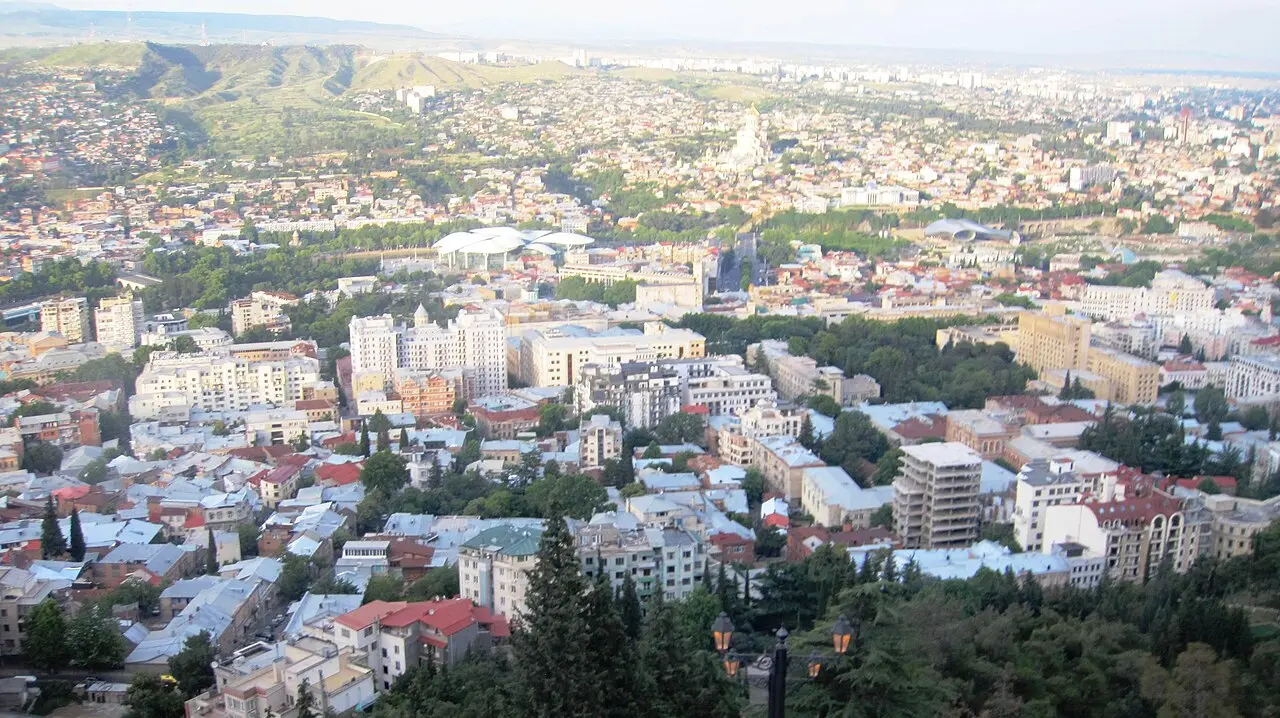
Mtatsminda is the mountain above central Tbilisi (about 770 metres), with an amusement park at the top and the best panorama of the city. It’s a classic spot for a family outing or an evening walk: people come up for the rides, the views and air a little cooler than the city heat. After the ride down, evenings continue below - in bars or at the casinos of the capital.
Up by funicular
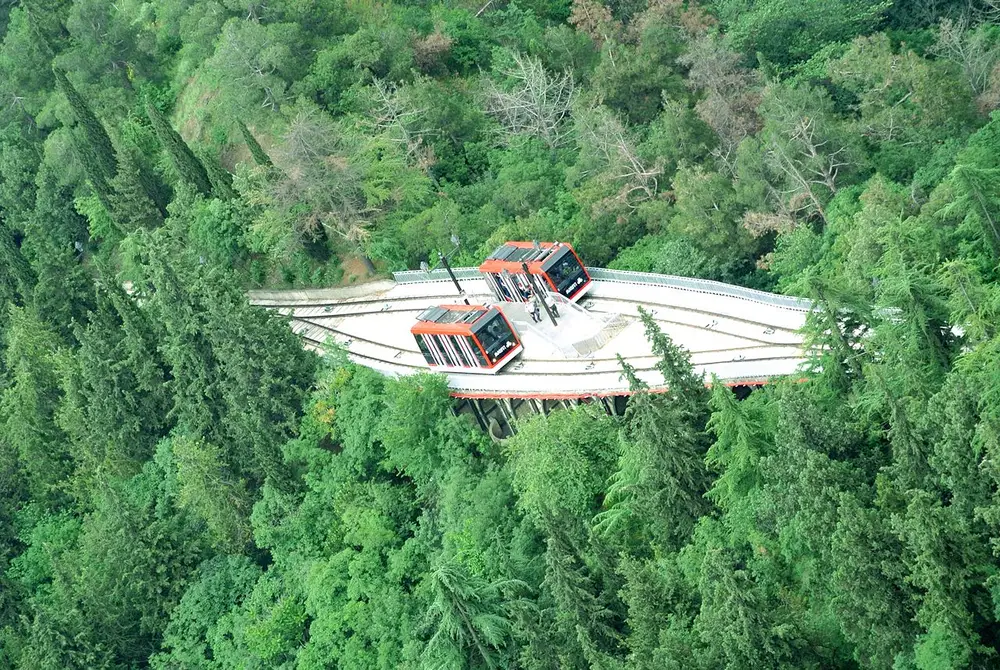
The most characterful way up is the historic funicular. It opened back in 1905 and was fully restored in 2012; the ride takes about 3 minutes by the operator’s own figure and climbs roughly 270 metres over a track 501 metres long, at an incline that runs between 28 and 33 degrees - steep enough that the car feels like it’s climbing a wall, not a hillside. The car creeps up through a pine park, and the views grow wider along the way. The operator does not publish the fare online: visitor reports from summer 2026 put it at about 10 GEL one way, and the ride up and the ride down are charged separately, so budget roughly double for a return - confirm the current price at the ticket office. There’s also a reason to break the ride in half: a middle platform, where the ascending and descending cars pass each other, lets you get off partway and come back for the next car later.
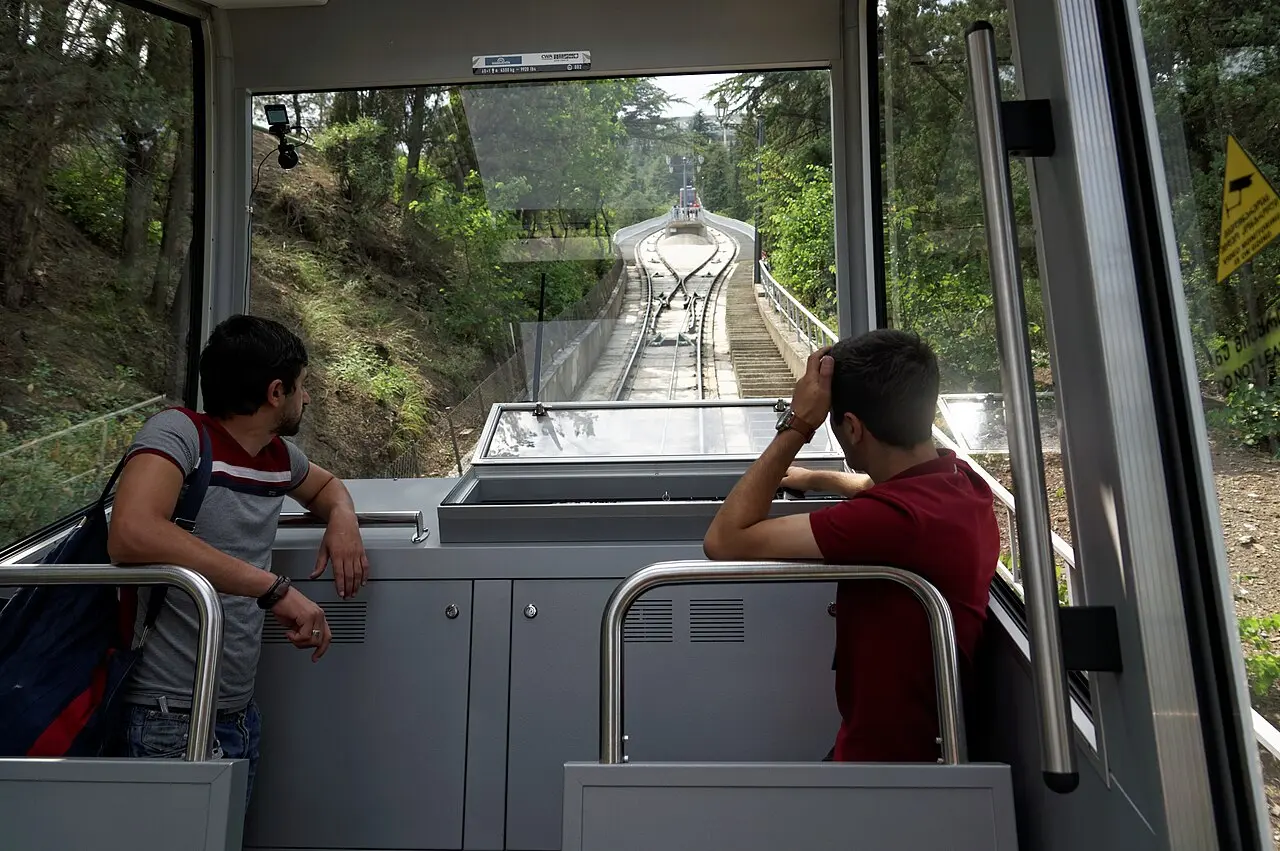
The Pantheon, halfway up
That middle platform is there for a reason: it’s the stop for the Mtatsminda Pantheon of Writers and Public Figures, in the churchyard of St David’s Church (Mamadaviti). The first people buried on the site were the Russian writer Alexander Griboyedov and his Georgian wife Nino Chavchavadze, in the 19th century; the pantheon itself was formally established in 1929, timed to the centenary of Griboyedov’s death. Georgian figures buried there since include the poet Nikoloz Baratashvili, the writer Ilia Chavchavadze, ballet dancer Vakhtang Chabukiani, mathematician Nikoloz Muskhelishvili and the country’s first democratically elected president, Zviad Gamsakhurdia. By 2009 Tbilisi City Hall had announced there was no more room for new graves, though a handful of exceptions were made in the years after.
Entry to the churchyard is free, and you don’t need a ticket beyond whatever you paid for the funicular ride itself. It’s an easy add-on if you’re already riding up, and a strange one to skip entirely - most visitors who go straight to the amusement park at the top have no idea this stop even exists.
By cable car from Rustaveli
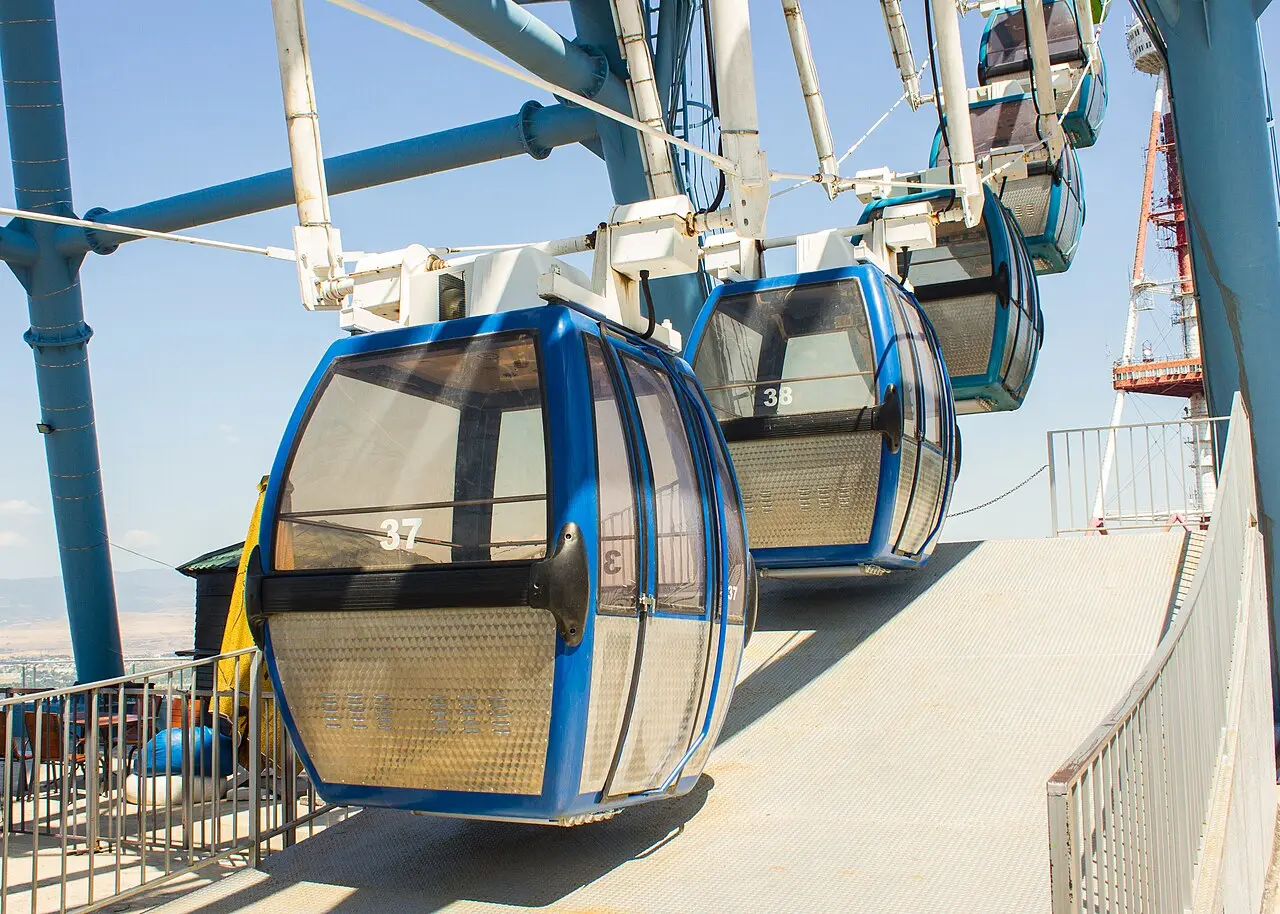
Since 18 October 2024 there’s been a second way up: the rebuilt cable car from Rustaveli Avenue 52, right by the Rustaveli metro station. Twenty-one gondolas cover the line in around five minutes, daily from 11:00 to 22:30; the operator lists the fare at 12 GEL for foreign visitors, 3 GEL for Georgian citizens and residents, free for children under 6 (park.ge, August 2026). If the steep walk up to the lower funicular station puts you off, this is the easier door: you board in the very centre and step out at the park.
“Rebuilt” is the right word, not “new.” A cable car ran this same route from 1958, and it was Tbilisi’s first ever ropeway, until a fatal accident on 1 June 1990 killed 19 people and injured dozens more when a hauling cable failed. The line was dismantled and the route sat empty for 34 years - reconstruction plans came and went from 2012 onward - until the current version, built with entirely new towers, gondolas and an upper station by the Austrian firm Doppelmayr, finally opened in 2024. The restored lower station, with its tall windows and a double-helix staircase, is original; everything that actually moves is new.
At the top
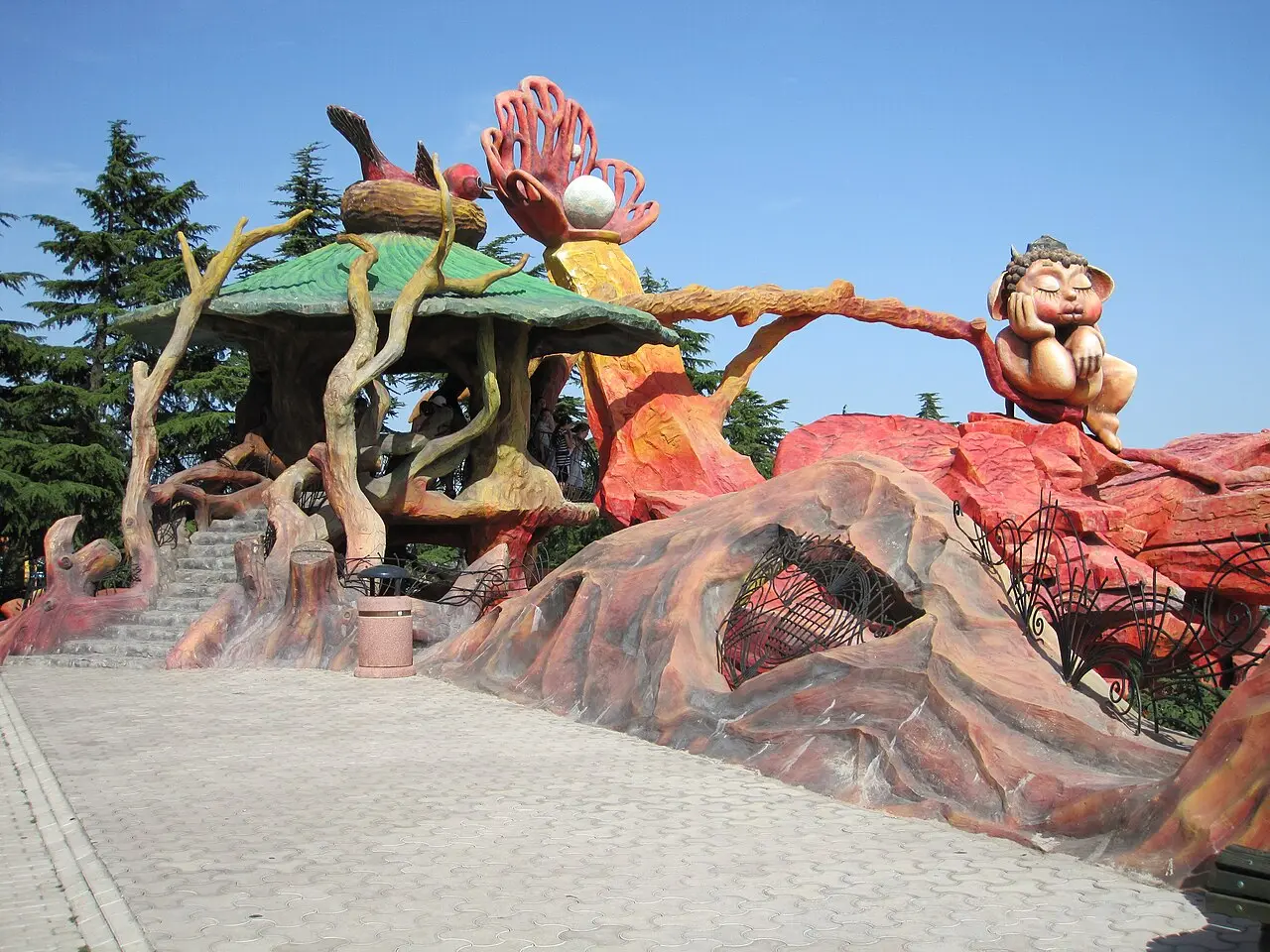
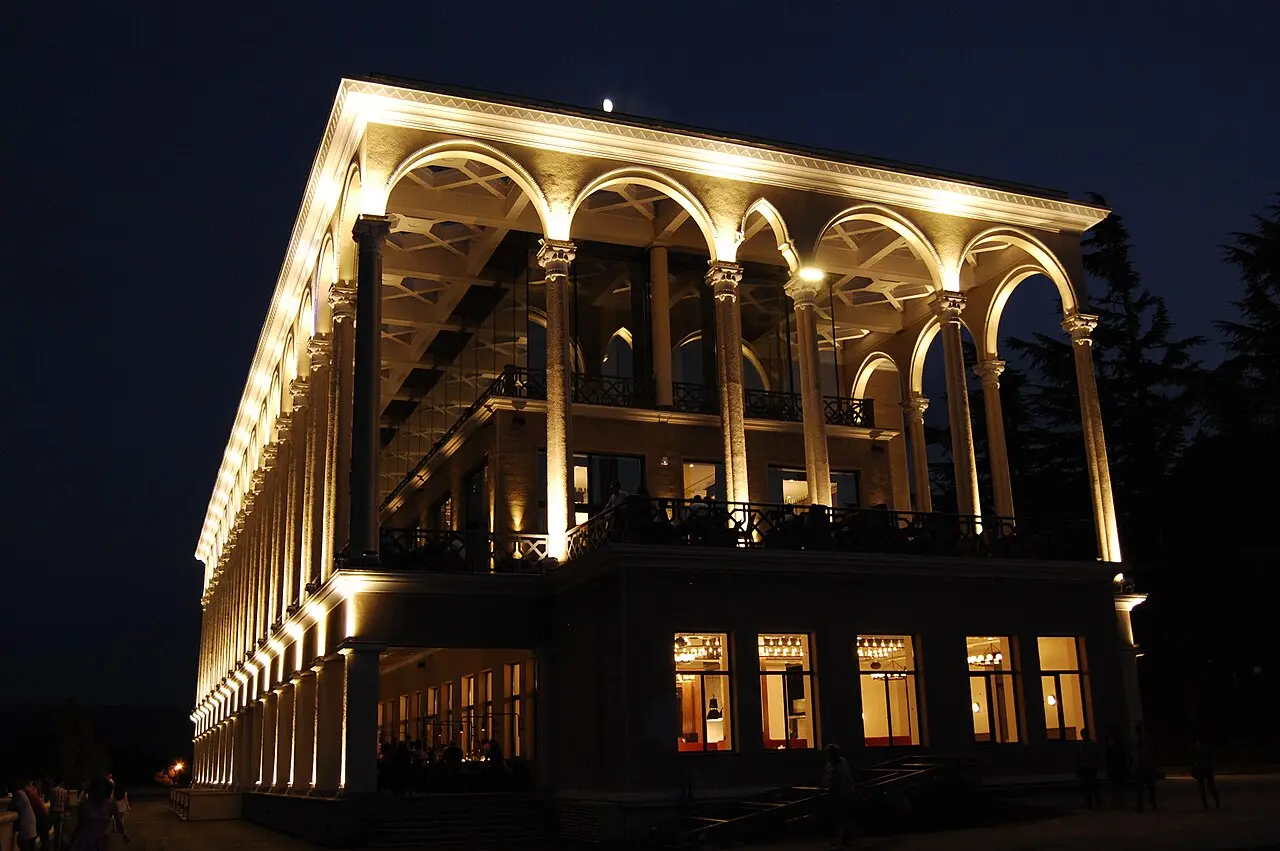
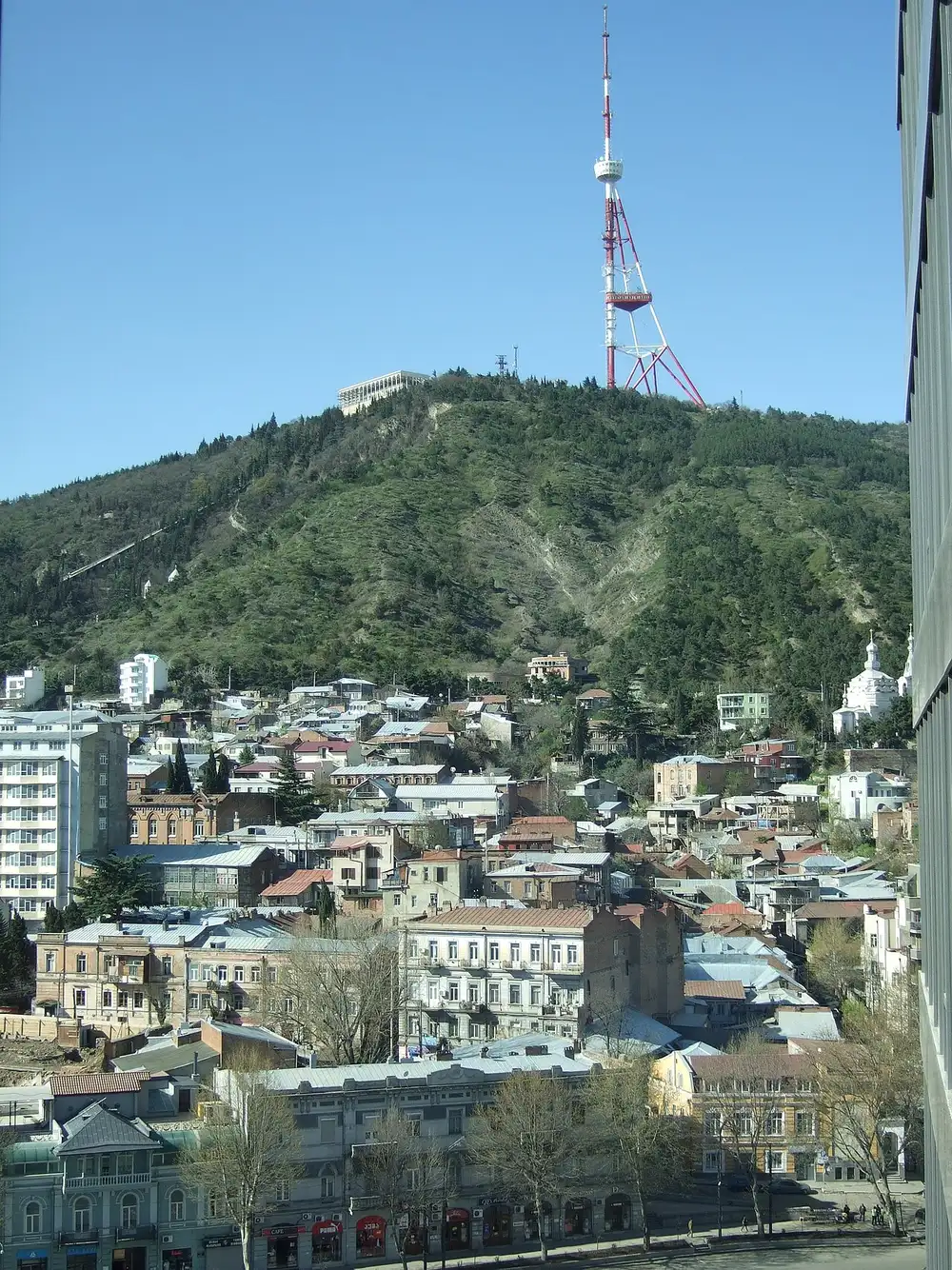
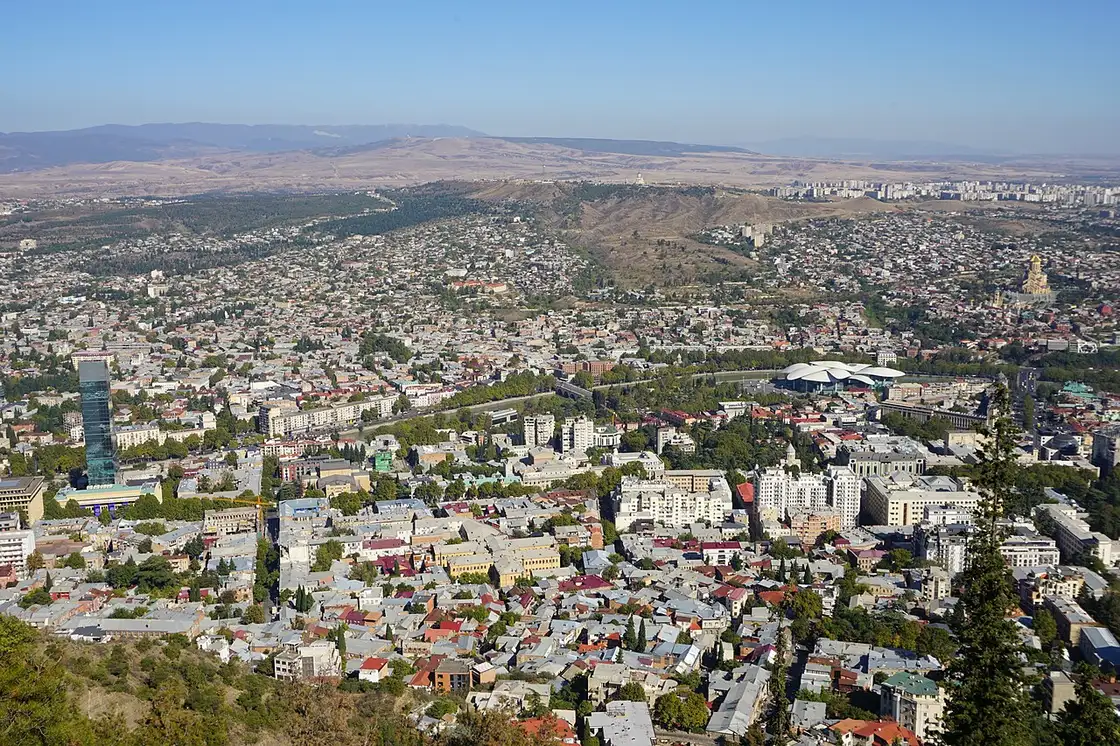
At the top is an amusement park spread across roughly 100 hectares of forested ground, per the national tourism board: a Ferris wheel, roller coasters and carousels, cafes, and the ornate upper-station building with a restaurant that’s become a symbol of Mtatsminda. The 64-metre Ferris wheel is the tallest ride and takes 10 to 12 minutes for one full turn, which is long enough to watch the light change over the city if you catch it near sunset. The dark ride inside the three-storey building, done up as a haunted castle, was bought secondhand from an Italian amusement park under its original name before Mtatsminda gave it a new one - not the kind of detail that makes it into the park’s own marketing, but a fair sign of how the place has been assembled piece by piece over the decades rather than built all at once. Away from the big rides, a circular fountain built around a golden tree-shaped centrepiece - locally promoted as the dancing tree, and labelled the Wishing Tree in the gallery below - draws a steady crowd of its own, with benches and snack stalls around it; a train-style tour vehicle and rental quadricycles cover the wider grounds for anyone who’d rather ride than walk. The Tbilisi TV tower rises above the park. Entry to the park grounds is free; the rides are paid separately, and the operator doesn’t publish a price list for them online - budget for a few of them once you’re through the gate. But the main thing here is the view: all of Tbilisi lies spread out below, and it’s especially beautiful at the top at sunset and in the evening, when the city lights up.
The park itself dates to the 1930s, when Soviet authorities first laid it out, and it went through a serious modernisation from 2001 that gave it most of the rides you’ll ride today. Ownership got complicated along the way - the state took the park over in 2007, and a legal dispute over it wasn’t settled until 2011 - but none of that history is visible now beyond the mix of old Soviet-era structure and newer rides bolted onto it.
The tourism board also lists hiking paths running down from the park grounds toward Turtle Lake, with picnic spots along the way - a way to link the two hillside spots on foot instead of coming back down to the city and back up the other side by cable car.
Funicular, cable car or taxi
Both cable lines end up at the same park, so the choice mostly comes down to where you’re starting from and whether the Pantheon stop matters to you.
| Way up | Starts from | Time | Stops at the Pantheon |
|---|---|---|---|
| Historic funicular | Chonkadze Street, near the centre | About 3 minutes | Yes - middle platform |
| Cable car | Rustaveli Avenue 52, by Rustaveli metro | About 5 minutes | No - direct to the park |
| Taxi or driving | Anywhere in the city | Depends on traffic | No - road bypasses it |
Pick the funicular if the Pantheon is part of the plan or you just want the more atmospheric ride; pick the Rustaveli cable car if you’re already on or near the avenue and want the shortest possible route to the rides; take a taxi if the queue for either cable line looks long or you’re travelling with a stroller and stairs are a problem. For more on the city, see our Tbilisi guide; for getting around the country, the transport section; and for other ideas nearby, the entertainment section.
Photos
On the map
The map loads on click - to keep the page lightweight.
The map didn’t load. Check your connection and refresh the page.
Admission and opening hours
- Admission price
- Park entry is free. The funicular fare is not published online - visitor reports from summer 2026 put it at about 10 GEL one way (+ a reusable card ~2 GEL), with up and down charged separately. Cable car from Rustaveli - 12 GEL for foreign visitors. Rides are paid separately.
- Opening hours
- The funicular runs daily from morning until late evening (the operator publishes no timetable); the Rustaveli cable car - daily 11:00-22:30; park hours depend on the season
The funicular is paid with a card bought at the ticket office. Fares and times here are as of August 2026 - confirm on site.
Details checked: August 20, 2026
Read also

Entertainment · 11 min read
Cooking Classes in Tbilisi: What to Pick and What It Costs
Verified · October 17, 2026Khinkali and khachapuri classes in Tbilisi from 110 GEL: family home or food walk, prices from operators' own sites, kids, vegetarians, how to book.

Entertainment · 9 min read
Georgian Folk Shows in Tbilisi: Where to Go and Prices
Verified · October 19, 2026Georgian dance and polyphony in Tbilisi: Erisioni at the Sports Palace on 30 October 2026, Ethno Tsiskvili nightly, lari prices and what the dances mean.

Entertainment · 9 min read
Paragliding in Gudauri: tandem flights, prices, season
Verified · October 10, 2026Tandem paragliding in Gudauri: the three launch sites, summer and winter prices in lari, weight limits, insurance and what happens if the weather turns.

Entertainment · 13 min read
Tbilisi Nightlife: Techno Clubs, Bars and Door Rules
Verified · October 6, 2026Tbilisi nightlife in 2026: Bassiani, KHIDI and Left Bank, entry prices in lari, how registration and the door work, where to drink first and getting home.