
Tbilisi: what to see, where to eat, how to get there
 Verified · June 15, 2026 against the operator’s own page 10 min read
 Georgia's capital Tbilisi on the banks of the Kura: sulphur baths, Narikala fortress, Sameba cathedral, the Bridge of Peace. What the city offers.
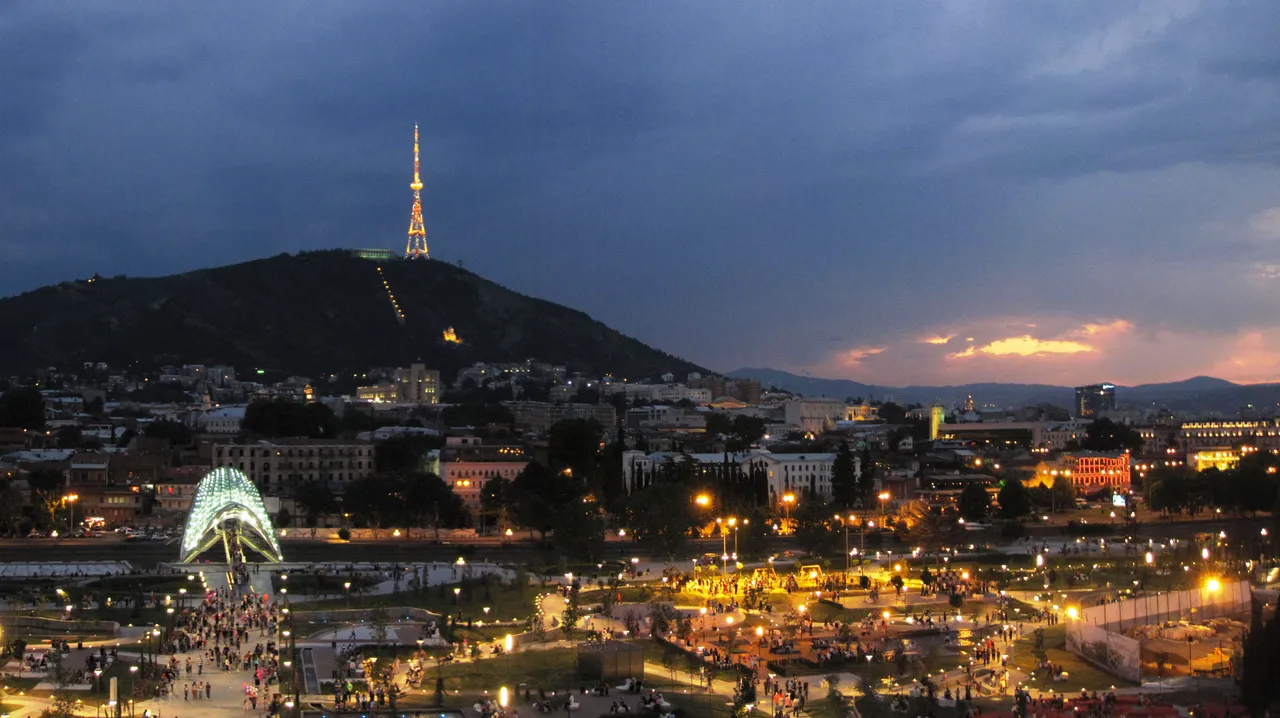
Tbilisi is the capital and largest city of Georgia, home to almost a third of the country’s population. It sprawls across both banks of the Kura (Mtkvari), surrounded by hills, and easily blends the incompatible: medieval lanes with carved balconies, sulphur baths, Soviet avenues and brand-new glass architecture. For most trips around Georgia, Tbilisi’s the main gateway and starting point, and almost everyone who comes to the country passes through it at least once.
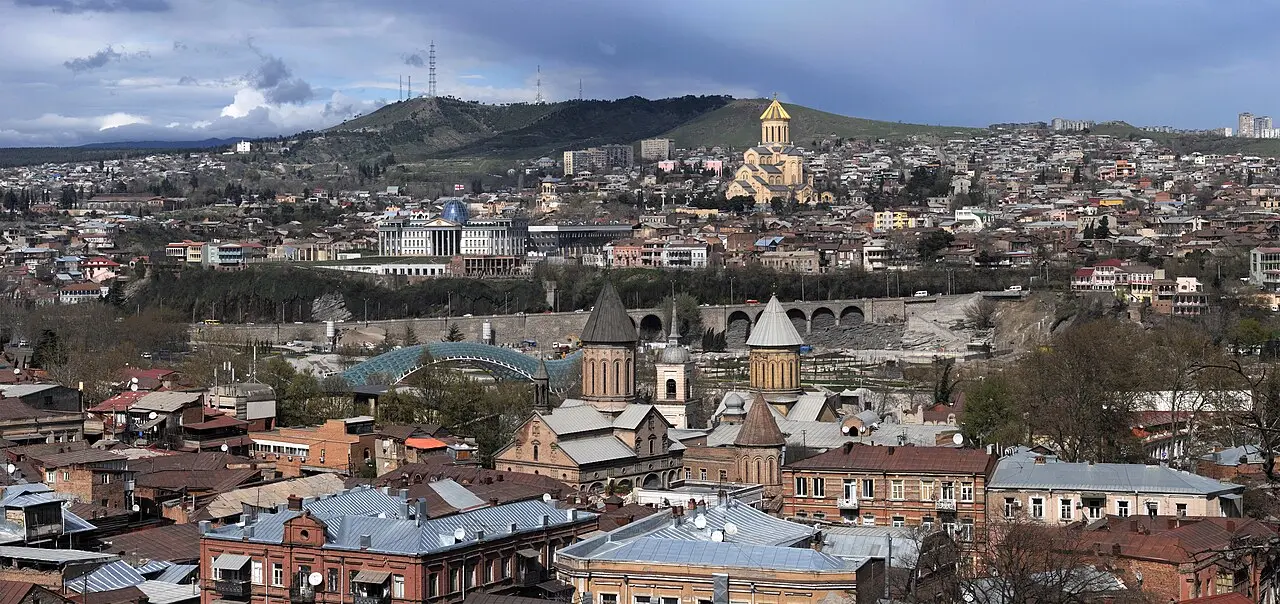
A little history
The city was founded in the 5th century by King Vakhtang Gorgasali, and it became the capital under King Dachi in the 6th century, when the centre was moved here from Mtskheta. Legend has it that Tbilisi was founded on the site of hot sulphur springs: the Georgian “tbili” means “warm” - hence the city’s name (the official name was changed from “Tiflis” to “Tbilisi” in 1936).
For centuries Tbilisi was a crossroads of routes between Europe and Asia, destroyed and rebuilt more than once. Its heyday came in the 12th-13th centuries, the era of Georgia’s “golden age”. This colourful history shows in the architecture - it mixes medieval, neoclassical, art nouveau, Stalinist empire and modernist styles, and for centuries a mosque, a synagogue and Armenian churches stood alongside the Orthodox churches. It’s exactly this layering that makes walking around the city so interesting.
The Old Town and the river
The heart of Tbilisi is the Old Town on the right bank of the Kura. Above it rises Narikala fortress, at its foot lies the quarter of sulphur baths Abanotubani, and on a cliff above the river stands the Metekhi church with its equestrian statue of Vakhtang Gorgasali.
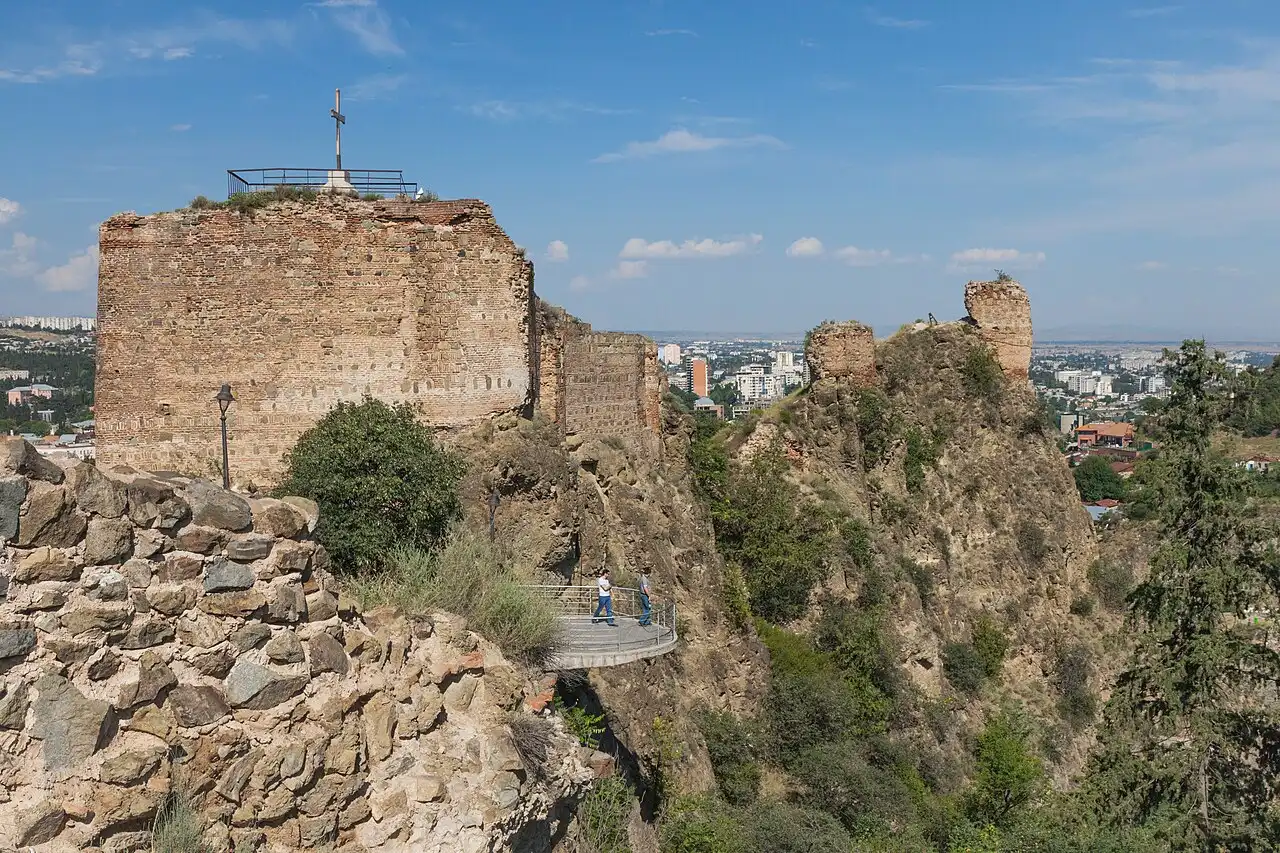
Narikala fortress has stood on the ridge above the city since the early Middle Ages and has been rebuilt many times; today a cable car runs up to its walls from Rike Park, and from the viewing point you’ll see the whole centre open up.
Right below the fortress steam rises from the Abanotubani sulphur baths - brick domes beneath which gush the hot springs that gave the city its name. That’s the most recognisable corner of old Tbilisi. For the order to walk it in - baths, fortress, then Shardeni - see our Old Tbilisi walking route.
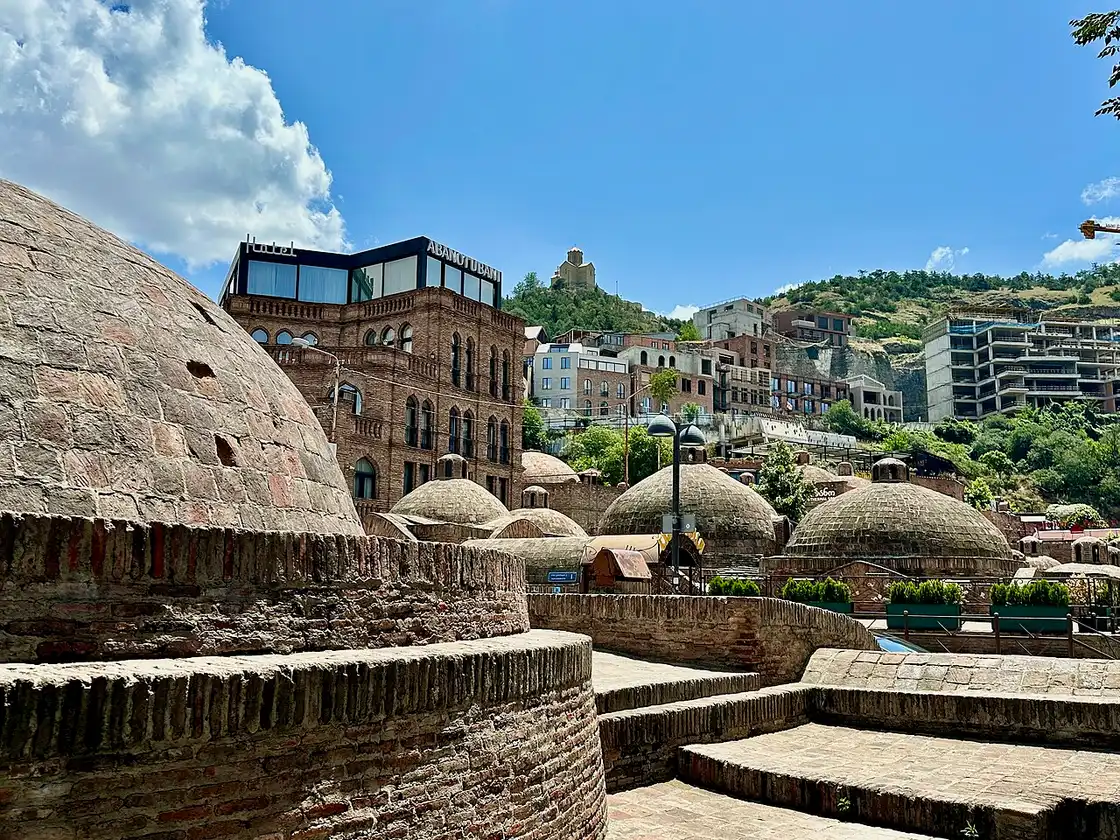
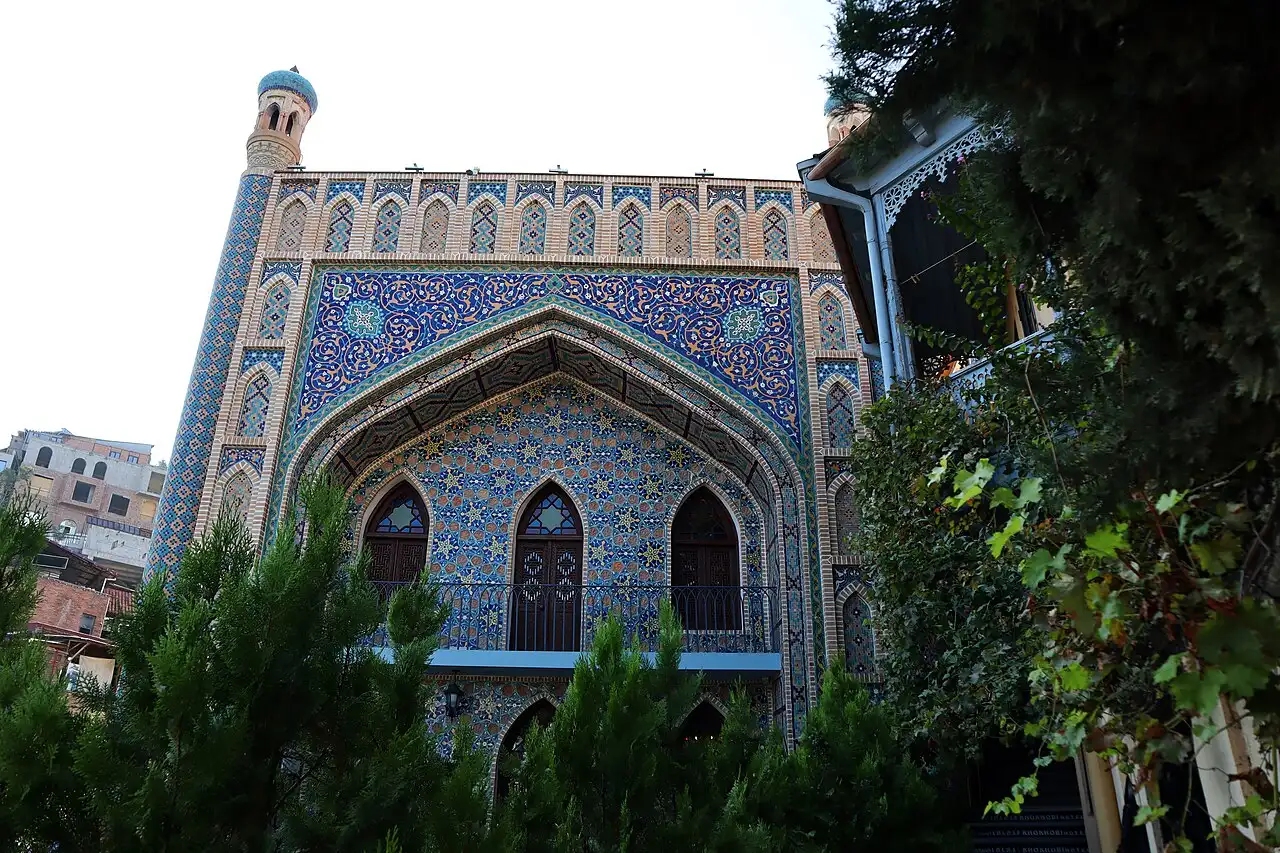
One bathhouse stands out among the rest - the Orbeliani Baths, or “Chreli Abano” (the Colourful Bath): its façade is decorated with blue tiled mosaic in the Persian style.
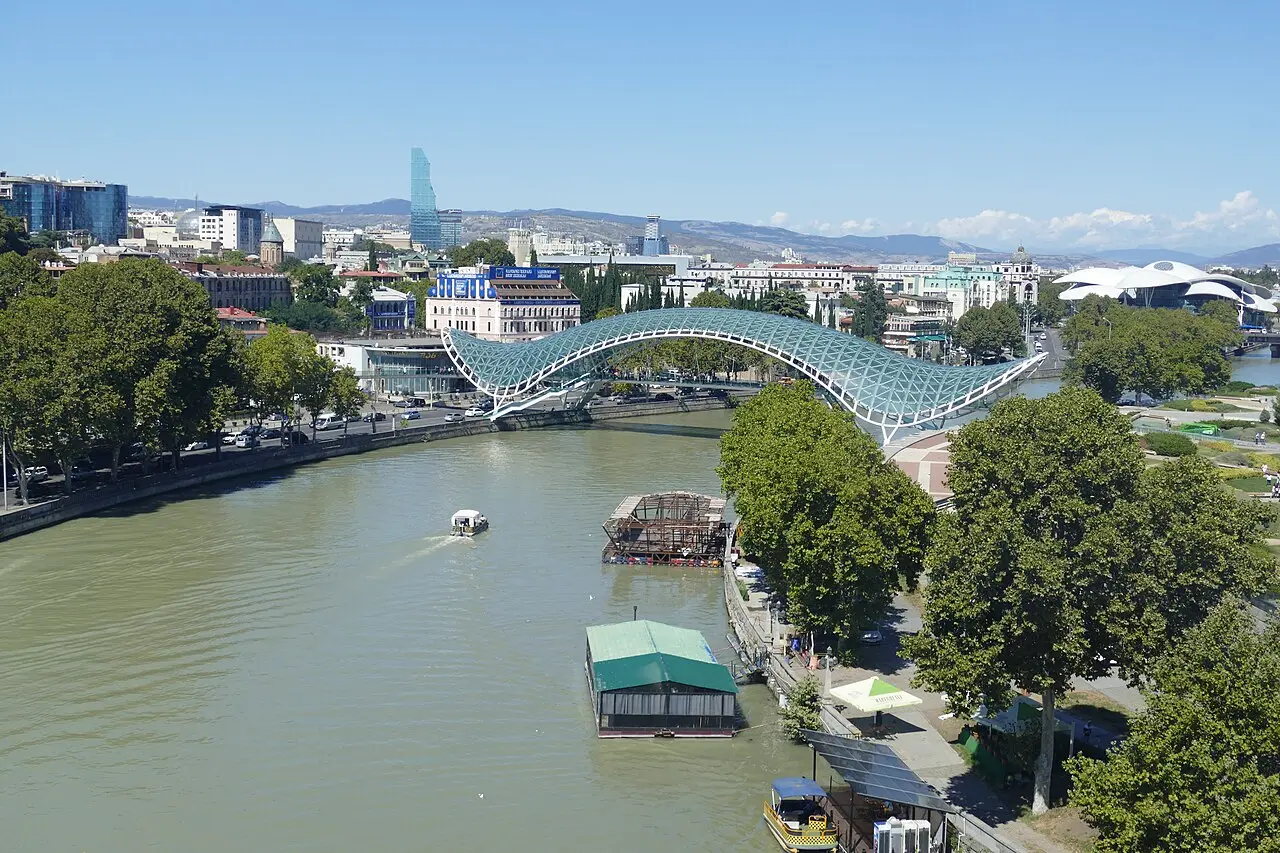
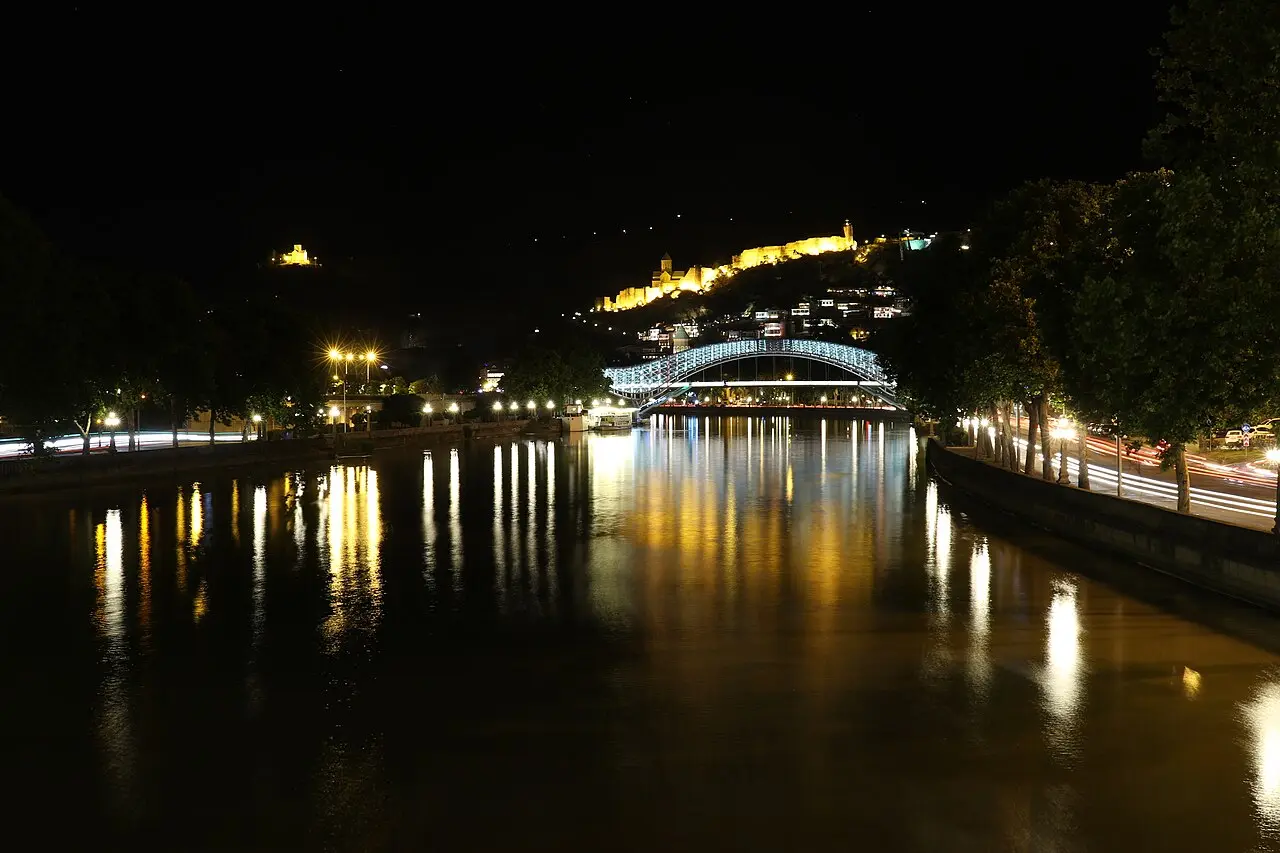
The modern Bridge of Peace crosses the Kura - a pedestrian bridge of glass and steel (opened in 2010) linking the Old Town with Rike Park; from here, too, the cable car climbs up to the walls of Narikala.
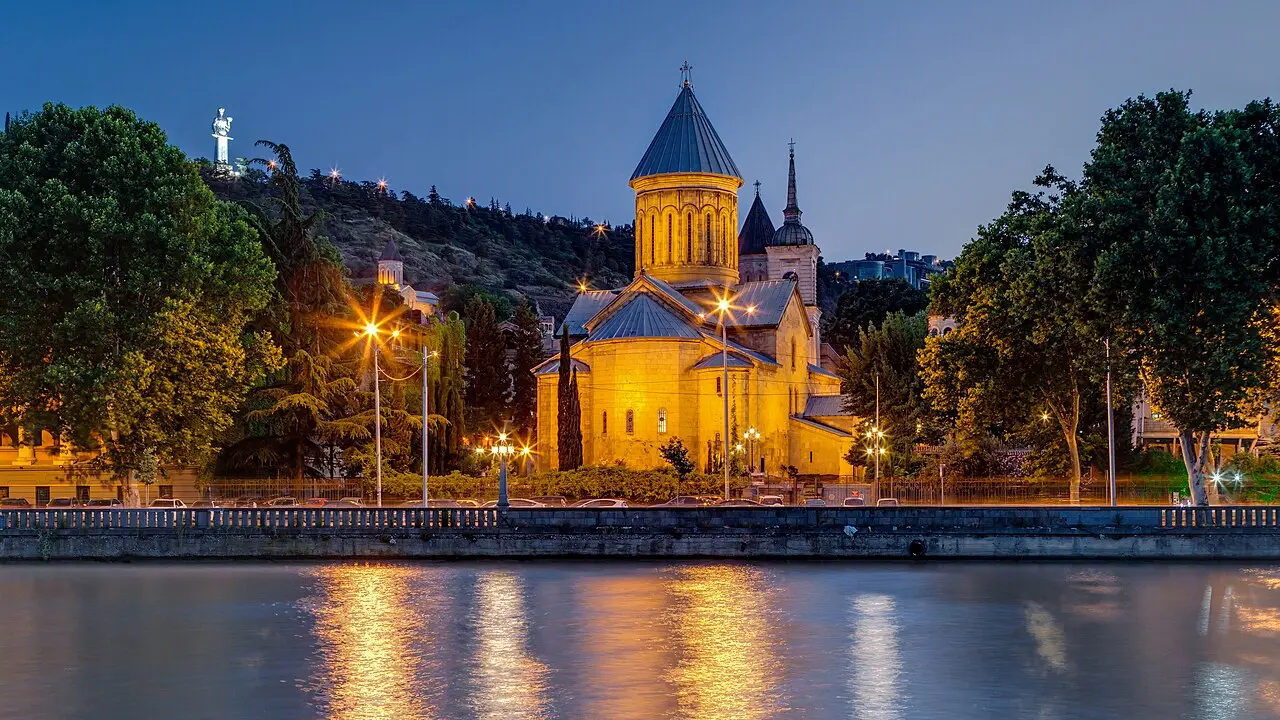
Ancient churches also hide in the maze of the Old Town: Sioni Cathedral right by the Kura, and the Anchiskhati Basilica - the oldest church in Tbilisi (6th century). And above the quarters, next door to Narikala, rises the aluminium statue of Mother of Georgia (Kartlis Deda) - one of the city’s symbols.
Rustaveli Avenue and the centre
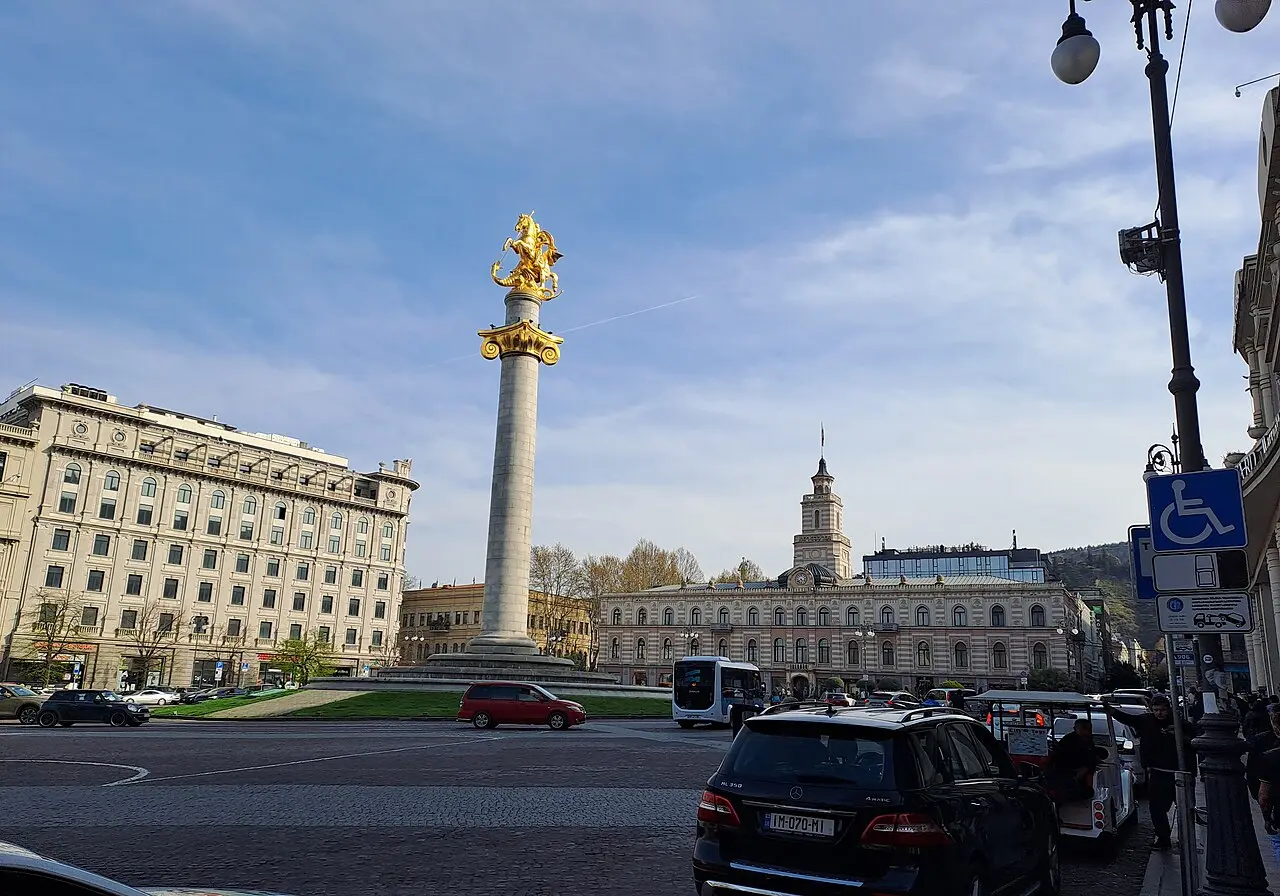
The city’s main artery is Rustaveli Avenue, lined with theatres, museums and grand buildings (the Academy of Sciences, the opera house, the parliament). It leads out to Freedom Square - the capital’s central square, with a gilded statue of St George slaying the dragon on a column in the middle. For an evening of Georgian dance and song, see Georgian folk shows in Tbilisi.
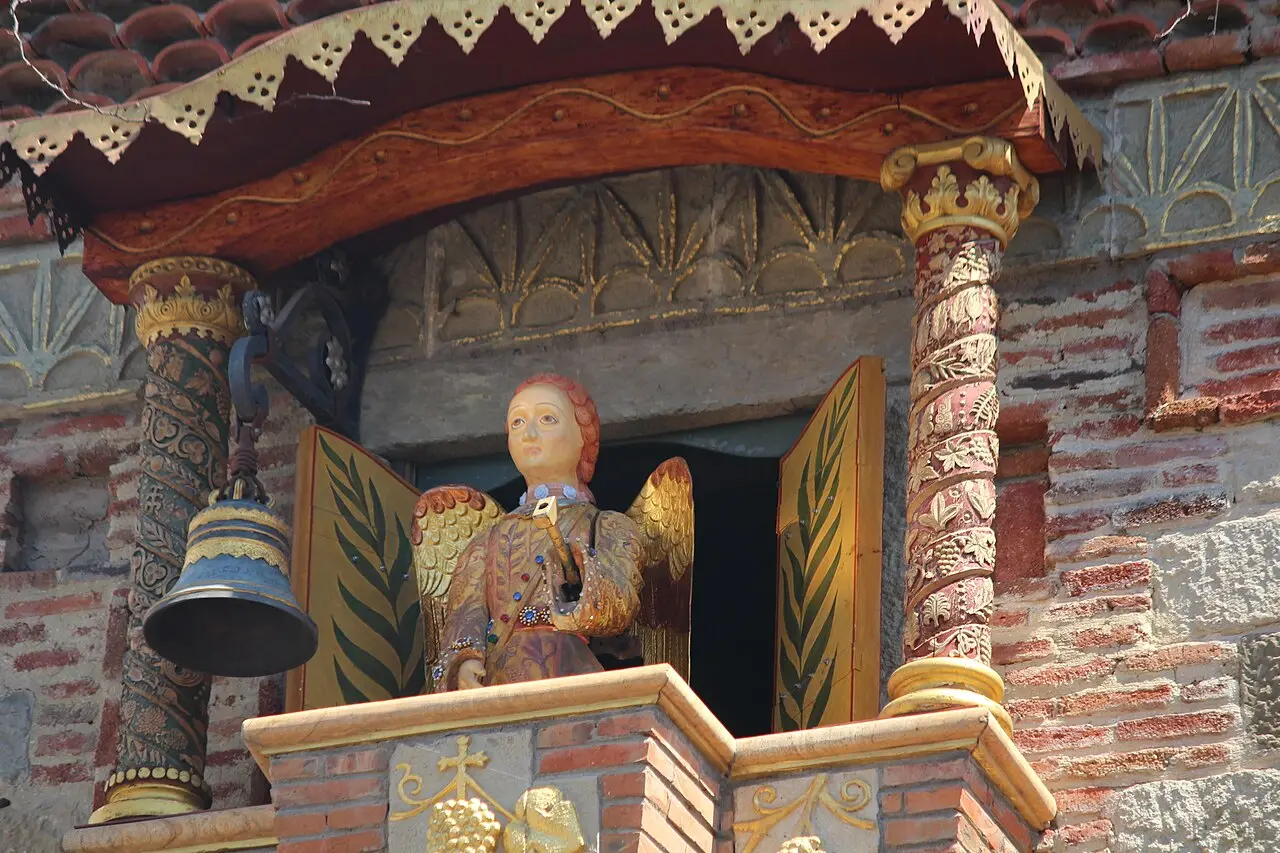
One of the most charming sights you’ll spot in the lanes of the Old Town - the leaning clock tower of the Rezo Gabriadze puppet theatre. Every hour an angel comes out of a little door beneath the clock and strikes a bell with a small hammer.
Avlabari and Sameba Cathedral
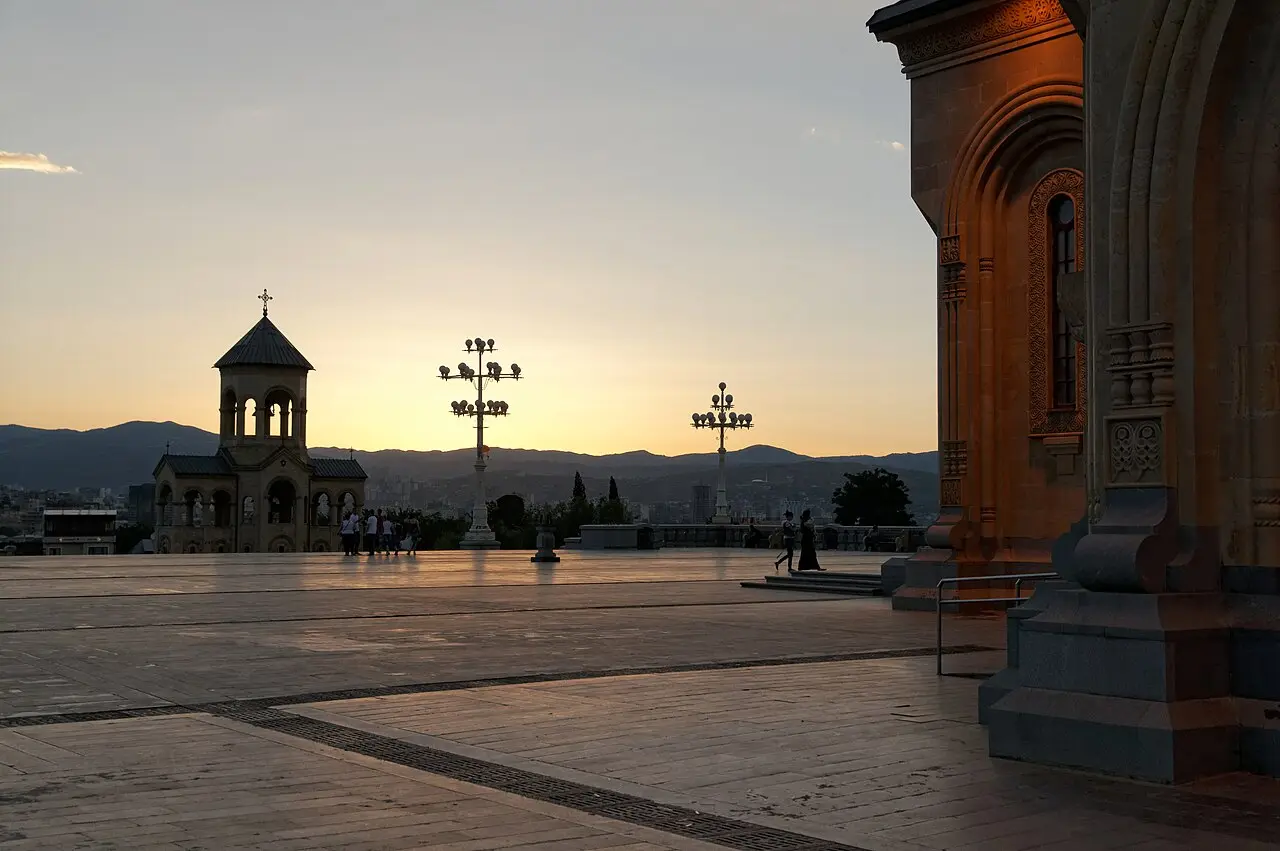
On the left bank, in the Avlabari district, rises the Tsminda Sameba Cathedral - one of the largest Orthodox churches in the world; you’ll see its golden dome from almost any point in the centre.
Mount Mtatsminda
A funicular from a street near Rustaveli takes you up Mount Mtatsminda - home to an amusement park, a TV tower and the best panorama of the city. It’s especially beautiful at sunset and in the evening, when the centre lights up. Funicular prices, the rides and the Pantheon are covered in our separate guide to Mtatsminda Park.
The districts of Tbilisi
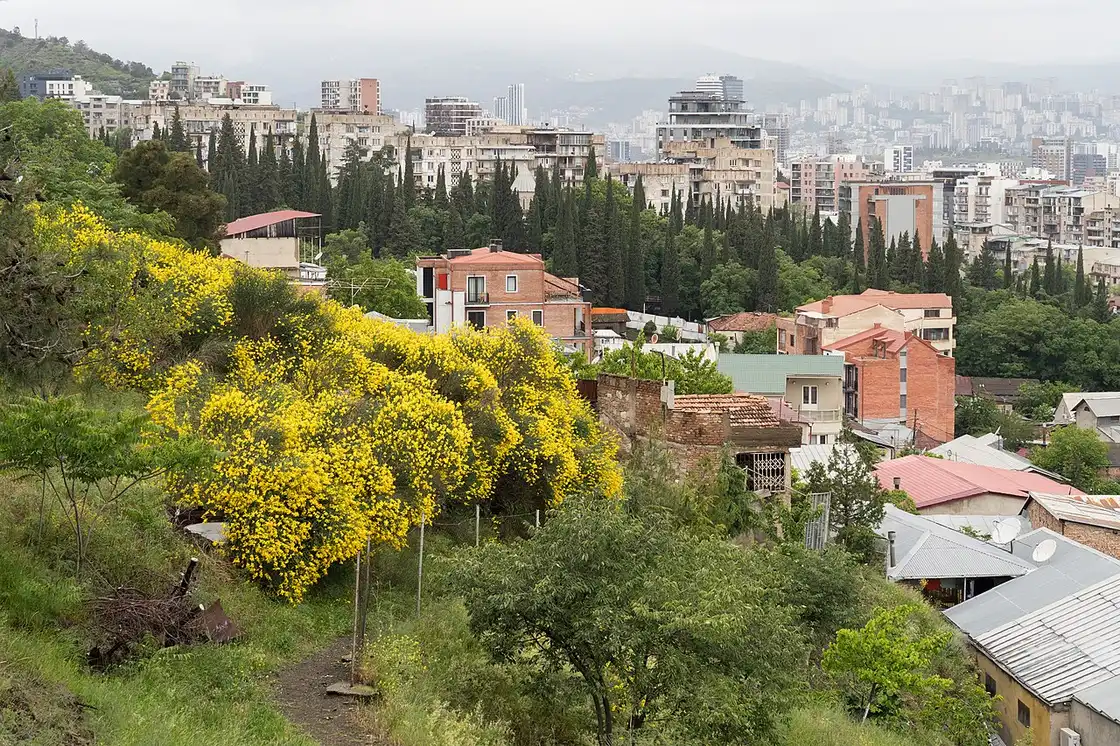
It helps to picture Tbilisi by its districts - each has its own character. If you’re deciding where to actually sleep, our separate Where to Stay in Tbilisi guide breaks it down by metro access, noise and hill climbs.
The Old Town (Kala) - the historic core on the right bank: Narikala fortress, the Abanotubani sulphur baths, carved balconies, the Sioni and Anchiskhati churches, narrow cobbled lanes. The most touristy district in the city.
Sololaki - a prestigious historic quarter at the foot of the Sololaki ridge (which the Mother of Georgia statue stands on). It’s famous for its grand art nouveau entrance halls with stained glass and murals; today it’s full of trendy cafés, wine bars and boutiques.
Avlabari - an old district on the left bank, historically Armenian; Sameba Cathedral rises above it, with the presidential residence nearby and a way down to the Metekhi church.
Chugureti and the Marjanishvili area - a multicultural left-bank district that is now being renewed: here you’ll find the Fabrika art space (a former sewing factory - a hostel, cafés, workshops and a courtyard), trendy bars and street art.
Vera - a green central district by Rustaveli Avenue: quiet streets, cafés and wine bars, with the main museums and theatres nearby.
Vake - a prestigious green district with the large Vake Park, restaurants and coffee shops; popular with locals and long-stay visitors alike.
Saburtalo - a large modern business and residential district across the Vere River: less touristy, but convenient for its location and transport.
Mtatsminda - the mountain above the city, with a funicular, an amusement park, a TV tower and a pantheon; this is where you’ll get the best panorama of Tbilisi.
Atmosphere, food and the evening
The main impression Tbilisi leaves isn’t a single monument but the very fabric of the city: courtyards draped in vines, carved balconies, sulphur steam over the baths, cafés and wine bars in the old quarters. This is the capital of the Georgian feast and of wine, and trying the local cuisine is a must - we’ll round up where exactly in our where to eat guide. And for vintage trinkets and Soviet curiosities, head to the flea market by the Dry Bridge - we cover it and the Deserters’ Bazaar in a separate guide to the markets of Tbilisi. In the evening the city transforms: the embankments, the bridges and Narikala all light up. After midnight the techno clubs take over, and Tbilisi nightlife explains how their tickets and doors work. In the second half of July the best evening in town is uphill instead: the open-air Ethnography Museum above Vake holds the Art-Gene folk festival - craft stalls and a wine zone from around six, ensembles on stage from 20:00 and everyone walking back down the hill after midnight. You’ll find the city’s whole events year, from the Alilo procession on 7 January to Tbilisoba, laid out month by month in our events calendar. How the city sees in the New Year, and where to watch the midnight fireworks, is covered in New Year in Georgia.
What to keep in mind
The best time for walks is spring and autumn: in summer the city gets hot, especially during the day. You’ll explore the centre best on foot, while public transport (the metro, buses and cable cars) is paid for with a Metromoney card, which you can buy and top up at metro stations. Tbilisi is a safe and welcoming city, but in tourist spots, as everywhere, keep an eye on your belongings.
Nearby and beyond
You’ll find Tbilisi a handy base for day trips: the ancient capital Mtskheta is close by, and along the Georgian Military Road lie Ananuri fortress and the mountains of Kazbegi with Stepantsminda; to the south-east, a full day out takes you to the cave monastery of David Gareja. For a longer trip south, drivers can continue on the Tbilisi to Yerevan road trip. And to unwind within the city itself, ride the cable car up to Turtle Lake above Tbilisi. For trips out of town see the car hire section, and find the country’s other cities in the cities section. The full list of places is in the things to see section. For where to eat, see our where to eat in Tbilisi selection; for how to get around, see the transport section: from the airport to the centre and Tbilisi city transport. Weighing the capital against the coast instead - or alongside it? Our Tbilisi or Batumi guide lays out the climate, prices and rainy-day backup plan for both.
Photos
On the map
The map loads on click - to keep the page lightweight.
The map didn’t load. Check your connection and refresh the page.
Distance
- Tbilisi The capital and main gateway - an international airport, plus trains and buses across the country
- Kutaisi ≈230 km · ~3.5 h train or car
- Batumi ≈370 km · ~5.5 h train, car or plane
Read also

Cities · 10 min read
Ureki: black magnetic sand and a shallow sea
Updated · July 20, 2026Ureki, Guria's sandy resort: black magnetic sand, a shallow warm sea and easy family beaches. Where to stay, when to go and how to get there.

Cities · 10 min read
Borjomi town: the spa resort and a mountain base
Updated · June 16, 2026Borjomi spa town in its wooded gorge: the mineral-water park, the Likani palace, the old railway and a base for Bakuriani and Borjomi-Kharagauli.

Cities · 12 min read
Batumi: beaches, boulevard, what to see and where to stay
 Verified · June 15, 2026
 Batumi, Georgia's Black Sea resort: beaches, the palm boulevard, Alphabet Tower, Piazza and skyscrapers. What to see, where to stay and how long.

Cities · 4 min read
Gori: Stalin Museum and the Uplistsikhe cave city
Updated · June 14, 2026Gori in Shida Kartli, where the Kura meets the Liakhvi: a hilltop fortress, the Stalin museum and the Uplistsikhe cave city nearby.