
Turtle Lake Tbilisi: 1 GEL Cable Car, Free Lakeside Day
Turtle Lake above Tbilisi: ride the cable car up for about 1 GEL, then walk the shore, grab a cafe and rent a pedal boat. Hours and how to get there.
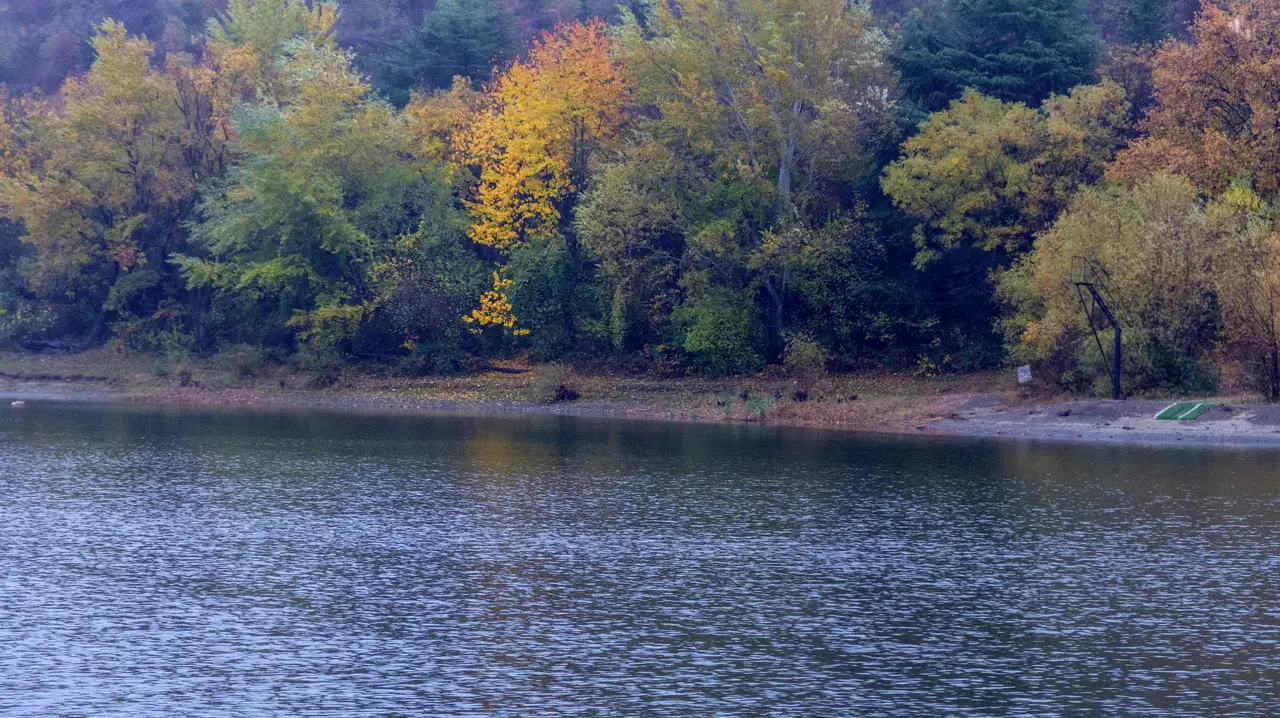
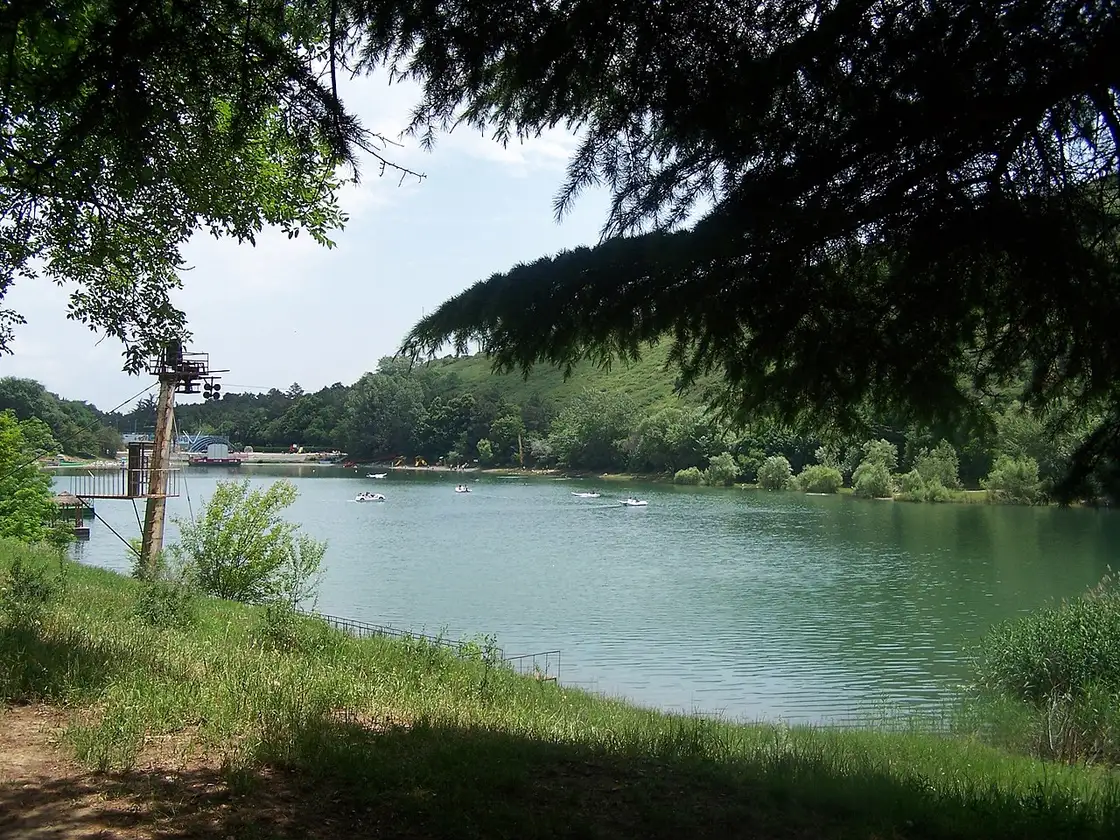
Turtle Lake (Kus Tba in Georgian) is a small lake in the hills above Tbilisi, about 687 metres up, and a popular spot for both locals and visitors to cool off. It’s a fraction of the size you might expect for somewhere this well known: roughly 180 by 50 metres, with a maximum depth of just 2.6 metres. Small enough to walk around in half an hour, big enough to fill a whole afternoon.
For residents of Vake, the leafy neighbourhood just downhill, this is closer to a local park than a tourist attraction - the kind of place people come after work rather than the kind that shows up on a bucket list. That’s worth knowing before you go: expect regular Tbilisi life alongside whatever visitors happen to be up there with you, not a polished resort set up purely for tourists.
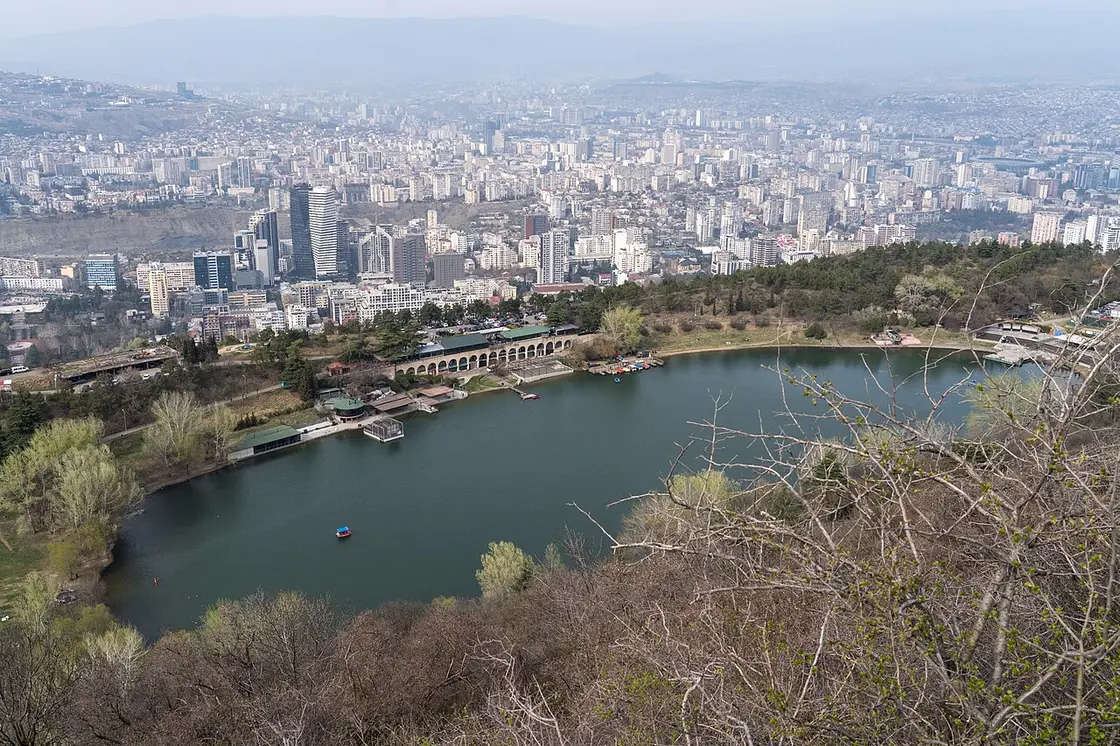
The name has two competing explanations, and nobody’s settled on either: some say turtles used to live here in real numbers before the surroundings changed, others say it’s simply because the lake’s outline looks like a turtle from above. Either way, the lake itself sits in a natural hollow left by an old landslide, topped up by the small Varaziskhevi stream along with rain and groundwater rather than being dug or dammed on purpose.
Getting up: cable car, old and new
The cable car is the obvious way up, and it’s had two lives. An earlier aerial lift ran this same route from the mid-20th century until 2009, when it closed. What’s running now dates only to 2016: two gondolas, each holding 10 to 12 people, covering the climb from the lower station near Vake Park (Chavchavadze Avenue) in about 6 minutes. The fare is genuinely small - the operator, Tbilisi Transport Company, lists it at 1 GEL one way, paid with a Metromoney card, the same card used across the city on the metro, buses and minibuses (and on the separate Rike-Narikala cable car near the old town); a bicycle rides up for another 1 GEL. If you don’t already have a card from getting around the city, they cost 2 GEL to buy at any metro station payment office and aren’t tied to a name, so one card covers everyone in a group taking turns through the barrier. Budget roughly double the one-way fare for a return trip and confirm the current price on site, since operators do adjust fares without much notice.
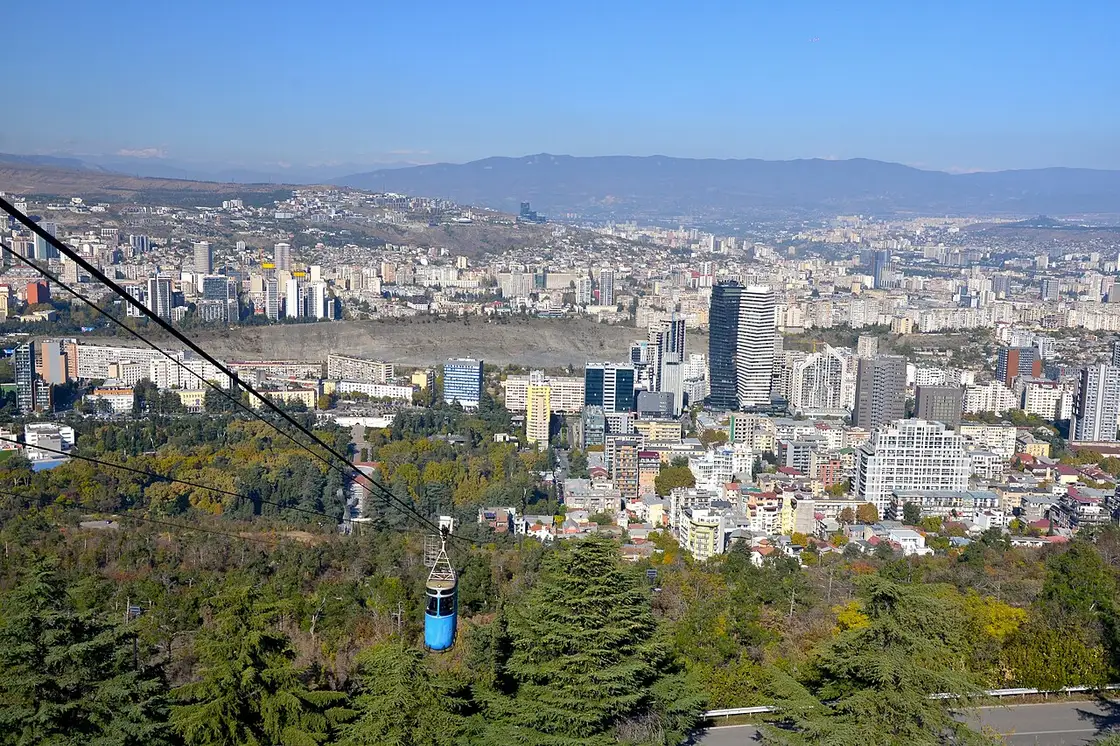
Driving or taking a taxi up the road works just as well if the cable car queue looks long or you’d rather skip the climb entirely. Either way takes only a few minutes from Vake, since the whole point of this spot is how close it sits to the city below - it’s a quick hillside escape, not something that needs a full day set aside.
At the water
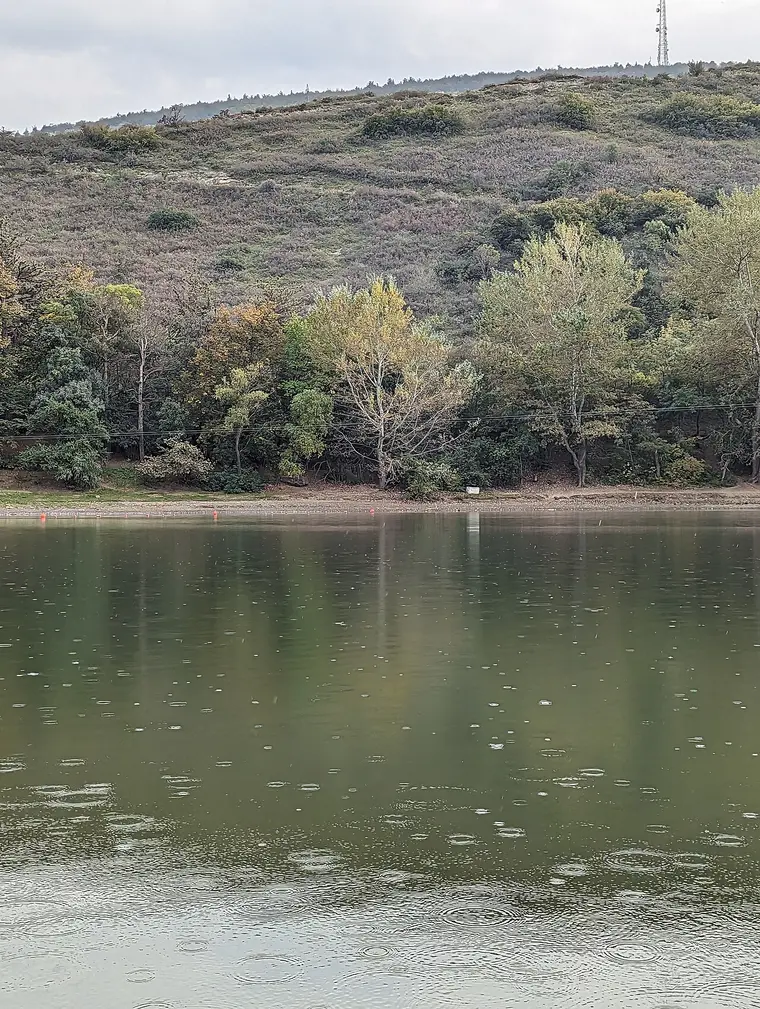
Once you’re up, the setup is simple: a beach, cafes, pedal-boat and catamaran rental, a roughly kilometre-long path around the shore, plus a mini-football pitch, a children’s playground and a stage on a pontoon that hosts weekend performances in season. That path around the water does double duty as a running loop early in the morning, well before the cafes and boat rentals open for the day, so don’t be at all surprised to see it busy with joggers and dog walkers if you happen to be up here at sunrise. Swimming is the main summer draw - the water warms up enough by June, and the surrounding pines keep the air noticeably cooler than downtown even on the hottest days.
None of the cafes here publish a joint menu or price list, so treat it the way you would any lakeside spot in the city - reasonable by local standards, nothing that counts as a splurge. The tourism board also lists hiking paths connecting down from Mtatsminda Park on the neighbouring hill, with picnic spots along the way, if you’d rather walk between the two than backtrack through the city centre.
It’s worth knowing there’s a second, much bigger swimming spot near the city: the Tbilisi Sea, a reservoir built in 1953 out on the Iori Plateau, with a surface area of about 11.6 square kilometres against Turtle Lake’s roughly 0.034 - well over 300 times the size, and deep enough in places (an average of nearly 27 metres) to need real caution rather than the wade-in shallows here. What Turtle Lake trades away in size it makes up for in convenience: it’s a cable-car ride from a central neighbourhood, not a taxi trip out to the edge of town, and at barely two and a half metres deep it’s a far easier place to bring kids.
Next door: the open-air ethnography museum
An easy walk from the lake is the Open Air Museum of Ethnography, founded on 27 April 1966 by the Georgian ethnographer Giorgi Chitaia. It’s a genuinely large site - about 52 hectares, laid out in eleven zones covering Kartli, Kakheti, Samtskhe-Javakheti, Samegrelo, Guria, Imereti, Adjara, Abkhazia and Svaneti among others, with roughly 70 traditional buildings and more than 8,000 smaller items moved here from across the country. Walking from one end to the other is genuinely walking across Georgia’s regions in miniature, in the time it would otherwise take to drive between just two of them. The buildings themselves are the real exhibit: stone darbazi-style houses with their distinctive stepped, pyramid-shaped roofs from eastern Georgia, timber houses and watchtowers from the mountains, along with old wineries, mills and even an early Christian basilica reassembled on site rather than built to look old. Since December 2004 it’s been run by the Georgian National Museum, and the operator’s own listing (last confirmed via an archived copy, since the live site wasn’t reachable while researching this page) puts admission at 5 GEL for adults and 0.50 GEL for schoolchildren and students, with the museum open daily except Monday from 10:00 to 18:00; a guided tour runs 25 GEL in Georgian or 45 GEL in English, and entry is free for children under 6, museum staff and people with disabilities.
The museum and the lake share more than a fence line. Every summer since 2004 the museum grounds have hosted the Art-Gene folk festival, with concerts running into the night through the second half of July - which is exactly when this whole hillside is at its busiest.
A day here works best split in two: swim and cool off at the lake while the sun is highest, then walk over to the museum in the late afternoon once the heat breaks, when the light is better for photos of the old wooden houses anyway. Outside the festival window in July, the same split still works, just without the evening crowd drawn specifically by the concerts - the lake and the museum both keep their normal daily hours through every other month. If it’s festival season, stay on after the museum closes for the concerts, and take the cable car back down once the crowd thins out rather than fighting the queue right after the last set. For more on the city, see our Tbilisi guide, the transport section for getting around, and entertainment for other ideas nearby.
Photos
On the map
The map loads on click - to keep the page lightweight.
The map didn’t load. Check your connection and refresh the page.
Admission and opening hours
- Admission price
- Lake access is free; the cable car costs roughly 1 GEL one way (with a Metromoney card), about 2 GEL return
- Opening hours
- The cable car usually runs from around 08:00 to 22:00
The cable car is usually paid with a Metromoney transport card. Check the fare and hours on site.
Details checked: August 20, 2026
Read also

Entertainment · 11 min read
Cooking Classes in Tbilisi: What to Pick and What It Costs
Verified · October 17, 2026Khinkali and khachapuri classes in Tbilisi from 110 GEL: family home or food walk, prices from operators' own sites, kids, vegetarians, how to book.

Entertainment · 9 min read
Georgian Folk Shows in Tbilisi: Where to Go and Prices
Verified · October 19, 2026Georgian dance and polyphony in Tbilisi: Erisioni at the Sports Palace on 30 October 2026, Ethno Tsiskvili nightly, lari prices and what the dances mean.

Entertainment · 9 min read
Paragliding in Gudauri: tandem flights, prices, season
Verified · October 10, 2026Tandem paragliding in Gudauri: the three launch sites, summer and winter prices in lari, weight limits, insurance and what happens if the weather turns.

Entertainment · 13 min read
Tbilisi Nightlife: Techno Clubs, Bars and Door Rules
Verified · October 6, 2026Tbilisi nightlife in 2026: Bassiani, KHIDI and Left Bank, entry prices in lari, how registration and the door work, where to drink first and getting home.