
Tbilisi to Kazbegi without a car: prices and travel times
Tbilisi to Kazbegi (Stepantsminda): marshrutka from 20 GEL, private transfer from about 210 GEL, or a day tour - schedules, prices and the winter road.
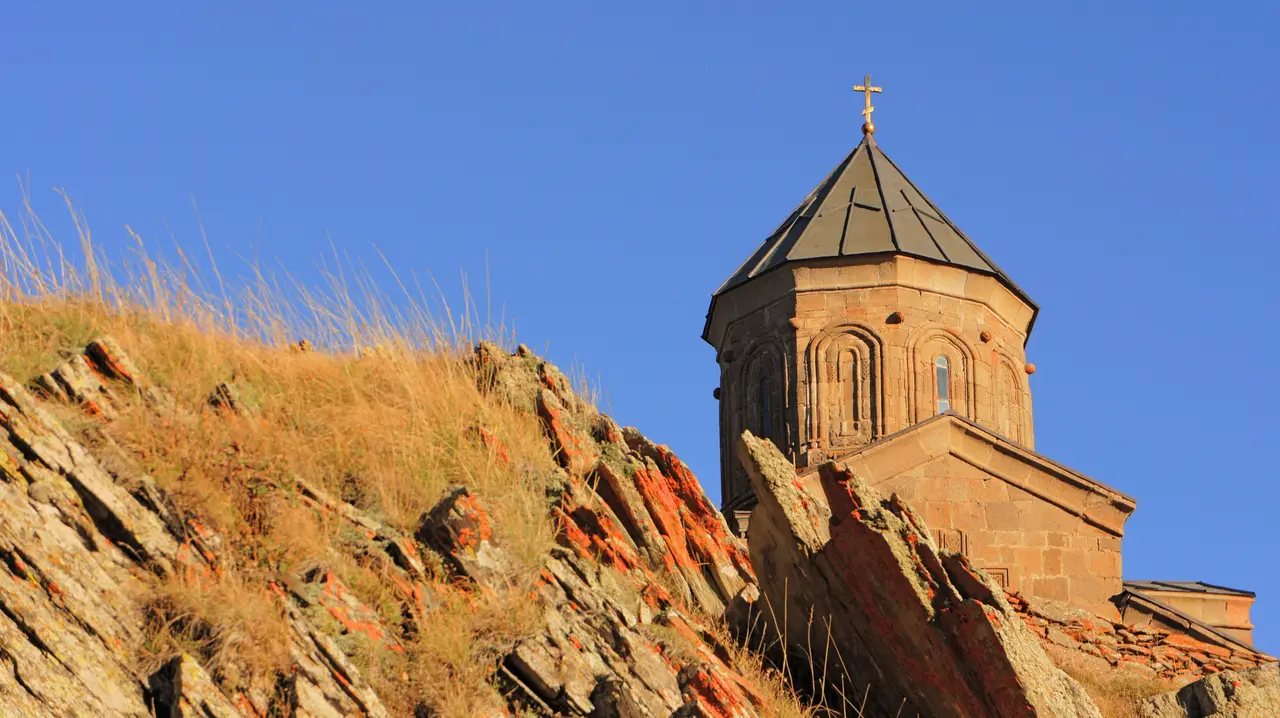
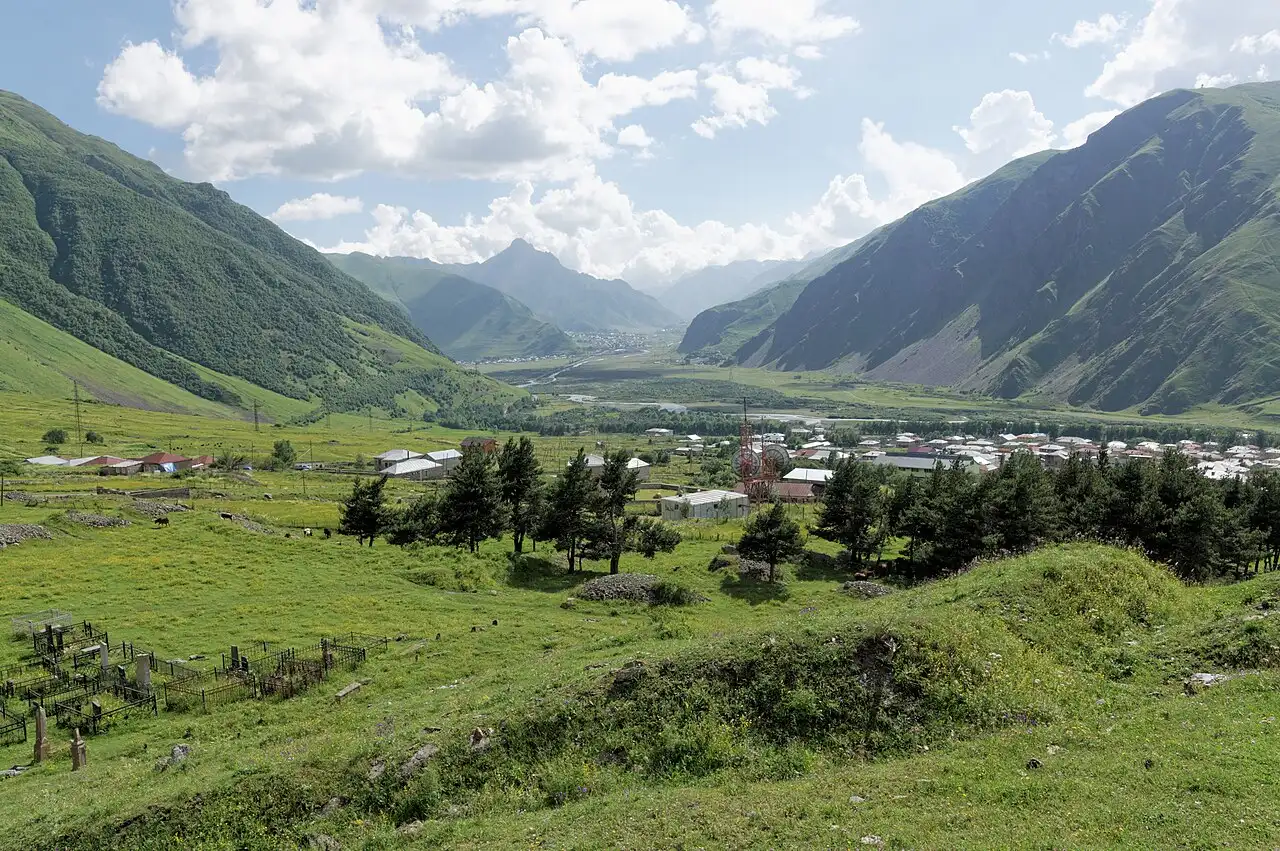
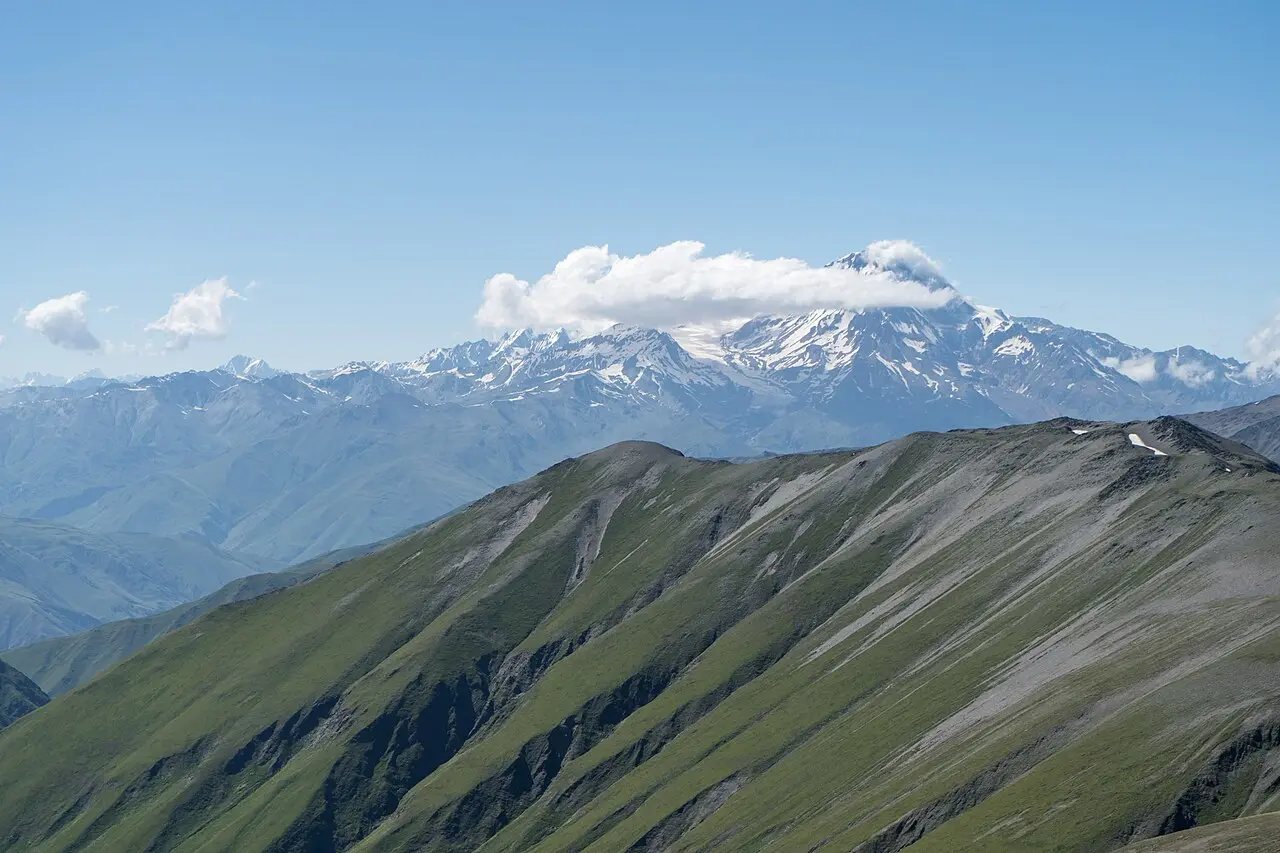
Kazbegi (officially Stepantsminda) is a town at the foot of Mount Kazbek and one of the most popular day trips and overnight stays from Tbilisi. It’s about 150 km north along the Georgian Military Road - OSRM puts the driving distance at about 152 km, and the trip takes from about 2h30 in a private transfer to 3-4 hours by marshrutka or group transfer, depending on stops. You don’t need a car: a seat on a marshrutka runs about 20 GEL (about $8; that’s the 2026 traveller-reported fare, earlier reports say 15), and a private transfer starts around 210 GEL per car (about $80, the cheapest GoTrip offer on 12 September 2026), so the choice really comes down to budget against comfort.
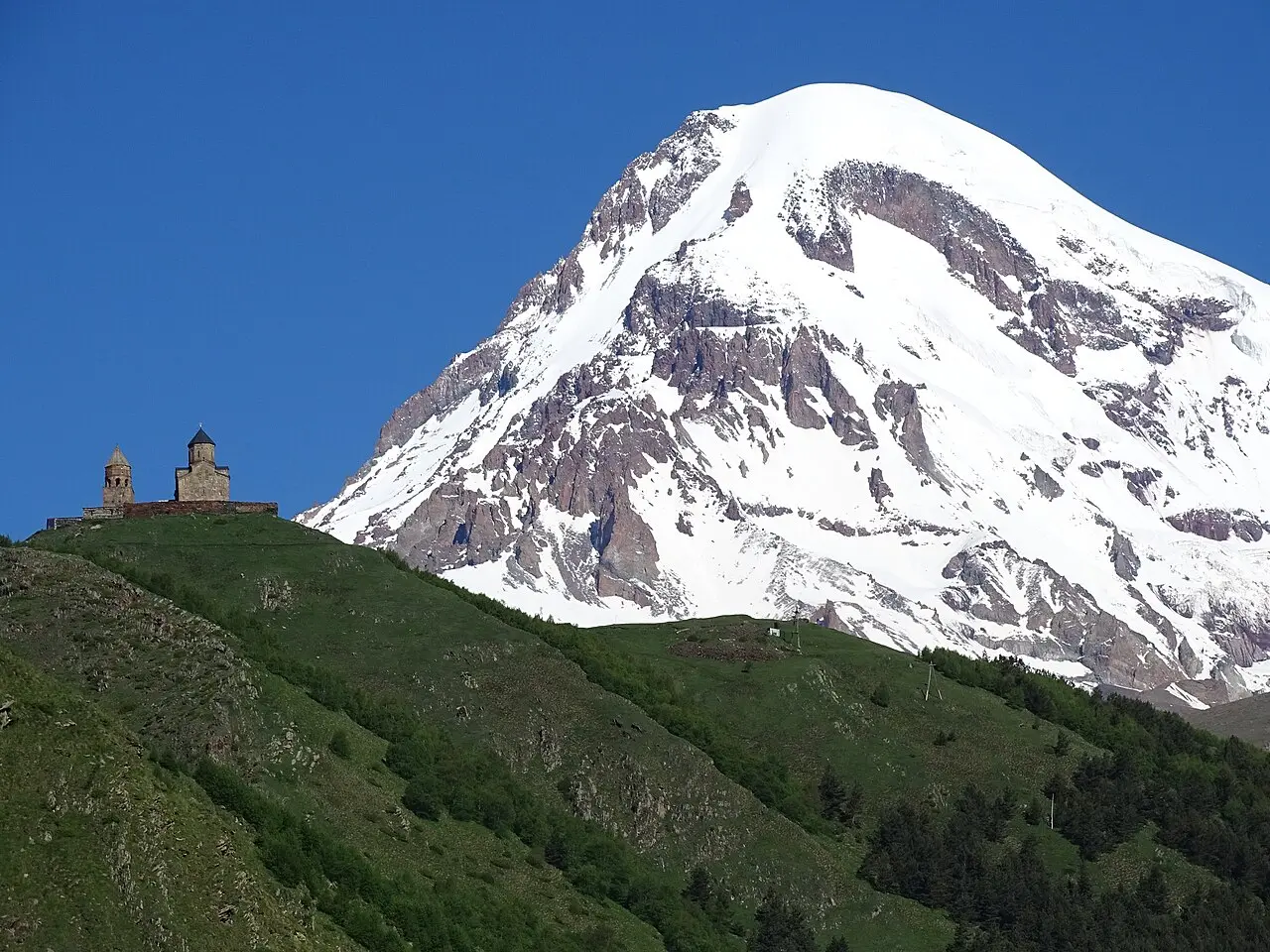
The road itself is most of the appeal. It follows the Aragvi valley past the Zhinvali Reservoir and Ananuri fortress, climbs over the Jvari Pass by Gudauri, then drops into the Terek valley with Mount Kazbek, one of the tallest peaks in the Caucasus at just over 5,000 metres, filling the view ahead. It’s a genuinely scenic few hours whichever way you travel it, which is exactly why so many people turn it into a day trip rather than just a transfer.

Marshrutka from Didube
The cheapest way is the marshrutka (minibus) from Didube station in Tbilisi, also known locally as Okriba: 20 GEL a seat (the 2026 traveller-reported fare - nobody publishes an official price list), plus 5 GEL more if your bag is oversized, paid in cash to the driver. Take the metro’s First Line north to Didube (1 GEL) or a Bolt taxi (around 15 GEL); from the metro exit, head through the underpass and the covered market until it opens onto a car park, where a signboard and a cash window mark the waiting area for Kazbegi vans and list departure times. It’s a busy, slightly chaotic spot and drivers will likely approach you first, but if not, asking anyone nearby for “Kazbegi” gets you pointed at the next van. Vans run seven days a week, though on big holidays (Orthodox Easter Sunday, New Year’s Day and Orthodox Christmas) they may not run at all. The 2026 timetable posted at the stand has them leaving Didube roughly on the hour from 8am to 1pm and then at 2:30pm, 3:30pm, 5pm, 6pm and 7pm - eleven departures, though outside the summer season there’s less demand and gaps can widen. Coming back, vans leave Stepantsminda on a similar pattern from early morning into the evening, but noticeably fewer run late in the day; if you’re on a day trip, check the time of the last return van locally so you’re not stuck. It’s cheap and authentic, but the posted timetable is a guide, not a promise - vans mostly leave once they fill up - and there are no photo stops along a fixed route. One thing worth knowing if you plan ahead: a rule that would have banned minibuses on routes over 150 km, replacing them with buses, was due to take effect in mid-2025 and has since been pushed back to 2027, so for now the marshrutka keeps running as it always has.
Taxi and transfer
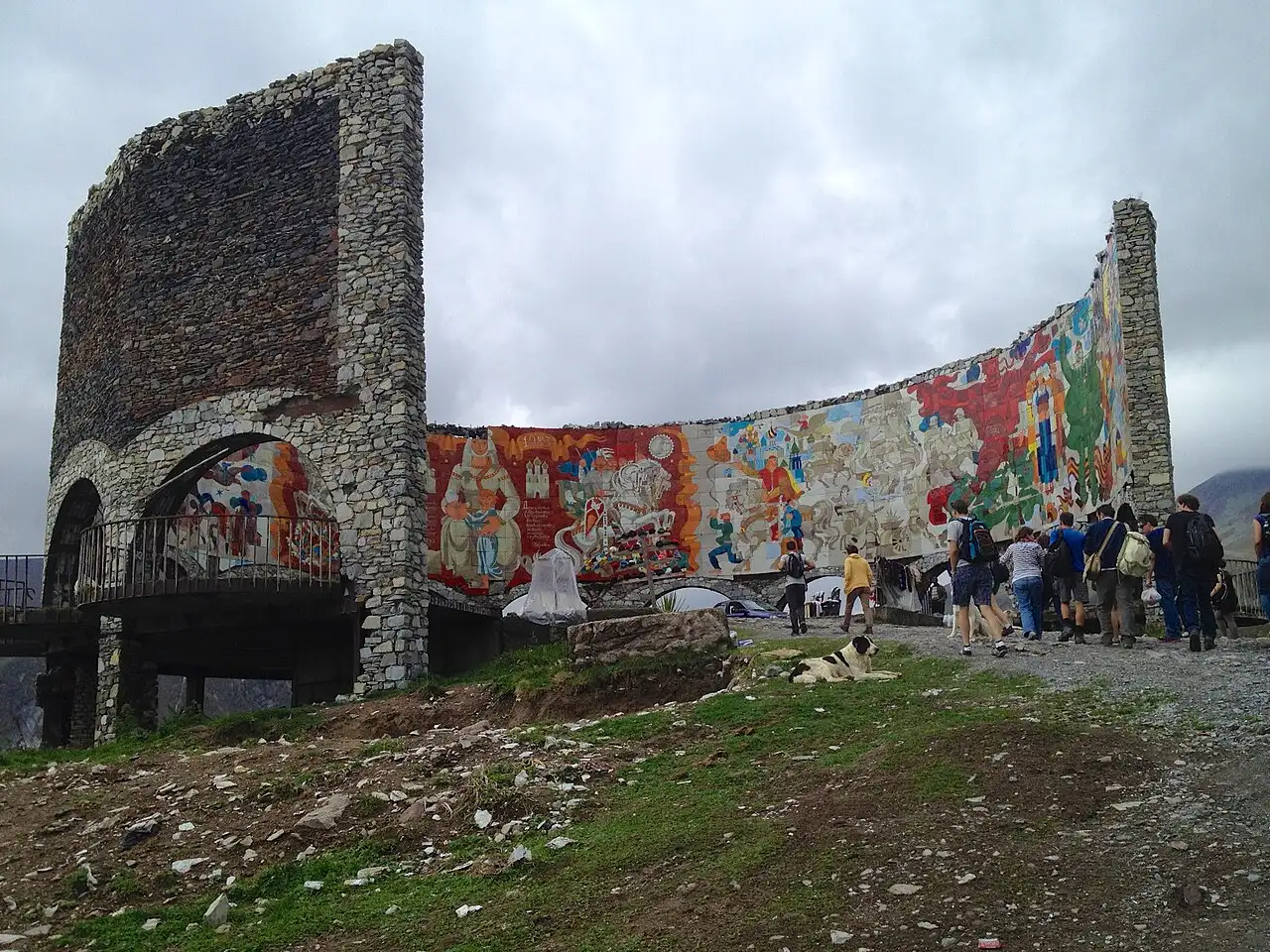
A few different options sit between the marshrutka and a private car, and the price gap between them is bigger than it looks. A shared taxi from Didube costs roughly 40-60 GEL (about $15-23) a seat depending on the car and the driver, but you wait for it to fill up and it isn’t door-to-door - expect to get dropped at a bus station rather than your hotel. A pre-booked private transfer costs more, from around 210 GEL per car (about $80) - that was GoTrip’s lowest offer on 12 September 2026; the Kiwitaxi box above quotes its own price - but it’s door-to-door, takes 2.5 to 3.5 hours, and you can ask the driver to stop wherever you like along the way - at Ananuri fortress, the Gudauri viewpoint or the Friendship Monument. Split between 3-4 people it often works out close to the shared taxi anyway, with far more flexibility. A shared minibus transfer, booked in advance, runs from about $33 a person but only departs in the morning and takes closer to 4 hours. Whichever you book, agree the price and the stops before you set off.
A day tour
Ready-made day tours from Tbilisi usually include the same stops (the Zhinvali Reservoir, Ananuri, Gudauri) and the ride up to Gergeti by 4x4. It’s convenient if you’d rather not plan the logistics yourself and want a guide along the way. The trade-off is a group pace and less say over how long you spend at each stop. Tours run year-round (winter day tours are sold from December to March), but mid-June to the end of September is the safest and most reliable window for this road - outside it, ask what happens to your booking if the pass closes for the day.
The road and the season
The Georgian Military Road is scenic, but it’s a mountain route, and the risk isn’t evenly spread across the year. Between November and February the Jvari Pass section, the highest point on the road, carries real avalanche risk; the pass typically closes for a couple of hours at a time, occasionally for 1 to 3 days, rather than for the whole winter. Georgia’s Roads Department lists a hotline for current conditions (+995 322 313 076), and in the ski season there’s a backup: the 7.1 km, three-section gondola from New Gudauri to Kobi village (about 15 minutes end to end, built by POMA) lets you cross the blocked stretch and pick up a taxi on the other side. It only runs while the lifts do - in 2025/26 that meant 27 December to 19 April, 10:00-17:00 - and it’s a paid ride (prices on our Gudauri page), so in November and early December a closed pass has no workaround. A tunnel between Kvesheti and Kobi has been under construction for years and was meant to start cutting travel time in 2026, though as of this check it wasn’t confirmed open to traffic yet, so don’t count on it without checking current status. Drivers should also know that winter tyres are a legal requirement from 1 December to 1 March on the Mleta-Kobi section of the Mtskheta-Stepantsminda-Lars road - the fine for driving without them is 100 GEL and 5 points off your licence, and police can additionally demand snow chains on the drive wheels in bad conditions. In summer the challenge flips to freight traffic: this road continues north to the Russian border, so lorries queue through the mountain sections and can slow a summer drive almost as much as snow does in winter. Warm clothes come in handy even in summer - it’s cool up top regardless of the season.
On the spot: the climb to Gergeti
From Stepantsminda people walk up to the Gergeti Trinity Church (about 1-1.5 hours uphill) or take a taxi up: the going rate is about 50-70 GEL (about $19-27) per car for the return trip, including around 45 minutes’ waiting at the church, which works out at 15-20 GEL (about $6-8) a head in a full car. The road has been repaired, so ordinary cars make it up now, not only 4x4s. For details on the climb, the season and the dress code, see our article on the Gergeti church.
Which way suits you
Travelling solo or on a tight budget, the marshrutka is hard to beat at 20 GEL a seat, as long as you’re comfortable with a cramped ride and no fixed schedule. A couple who wants to stop for photos and skip the crowding pays for it: split two ways, a 210 GEL car is roughly five times what two marshrutka seats cost, and what that buys is photo stops, door-to-door and your own schedule. Groups of 3-4 get the best value from either a private transfer or a shared taxi, whichever fills first. Travellers who’d rather have someone else handle the logistics, including the drive up to Gergeti, are the target audience for a day tour. And anyone with more than a day to spare and their own or a hired car can turn the same road into a slower, two-day trip with a night in Kazbegi.
If you’re driving
In your own or a hired car you can stretch the route over a couple of days with an overnight stay - see Tbilisi to Kazbegi in 2 days. For how to pick up a car, see the car hire section. For what to see on the spot, see our guide to Stepantsminda.
Read also

Transport · 13 min read
Kutaisi Airport to Gudauri 2026: 4 h, Shuttle, Transfer, Car
Verified · October 24, 2026Kutaisi airport to Gudauri: 309-310 km, about 4 h by road. A 30 GEL coach to Tbilisi and a marshrutka, a transfer timed to your flight, the winter bus.

Transport · 12 min read
Trains in Georgia: routes, tickets, express
Updated · October 17, 2026Georgian Railway in 2026: the Tbilisi-Batumi Stadler in about 4 hours from 35 GEL, how to buy on gr.com.ge, and which other routes still run.

Transport · 12 min read
Tbilisi to Gudauri 2026: Marshrutka, Taxi, Transfer
Updated · August 29, 2026Tbilisi to Gudauri for ski season: marshrutka 15 GEL, transfer 190-320 GEL per car, 120 km in 2-2.5h. Winter tyre law, closures, what to pick.

Transport · 10 min read
Tbilisi to Kutaisi 2026: train, bus, transfer
Updated · August 24, 2026Getting from Tbilisi to Kutaisi: train to Rioni station, marshrutkas from Didube, driving and transfers - times, prices and what to pick in 2026.