
Abanotubani Sulphur Baths in Tbilisi: the legend and a visit
The Abanotubani sulphur bath district below Narikala: hot-spring bathhouses where, by legend, Tbilisi began. History, the legend and how to get there.
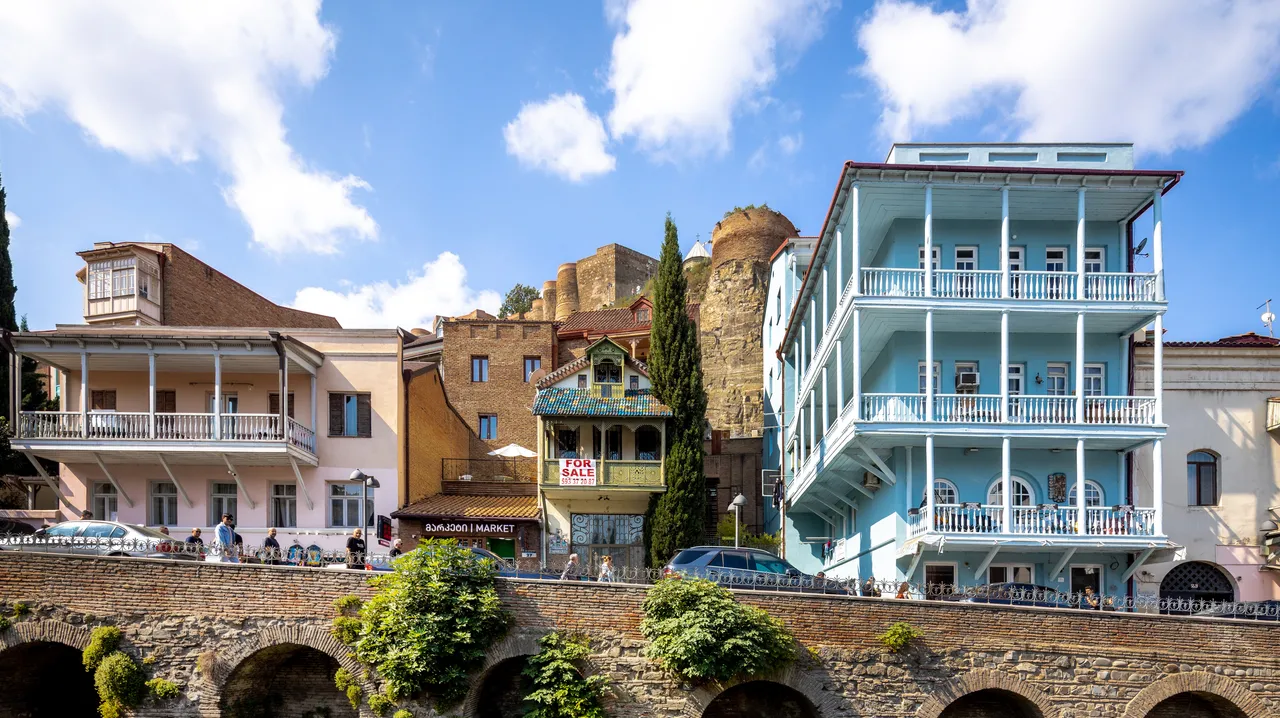
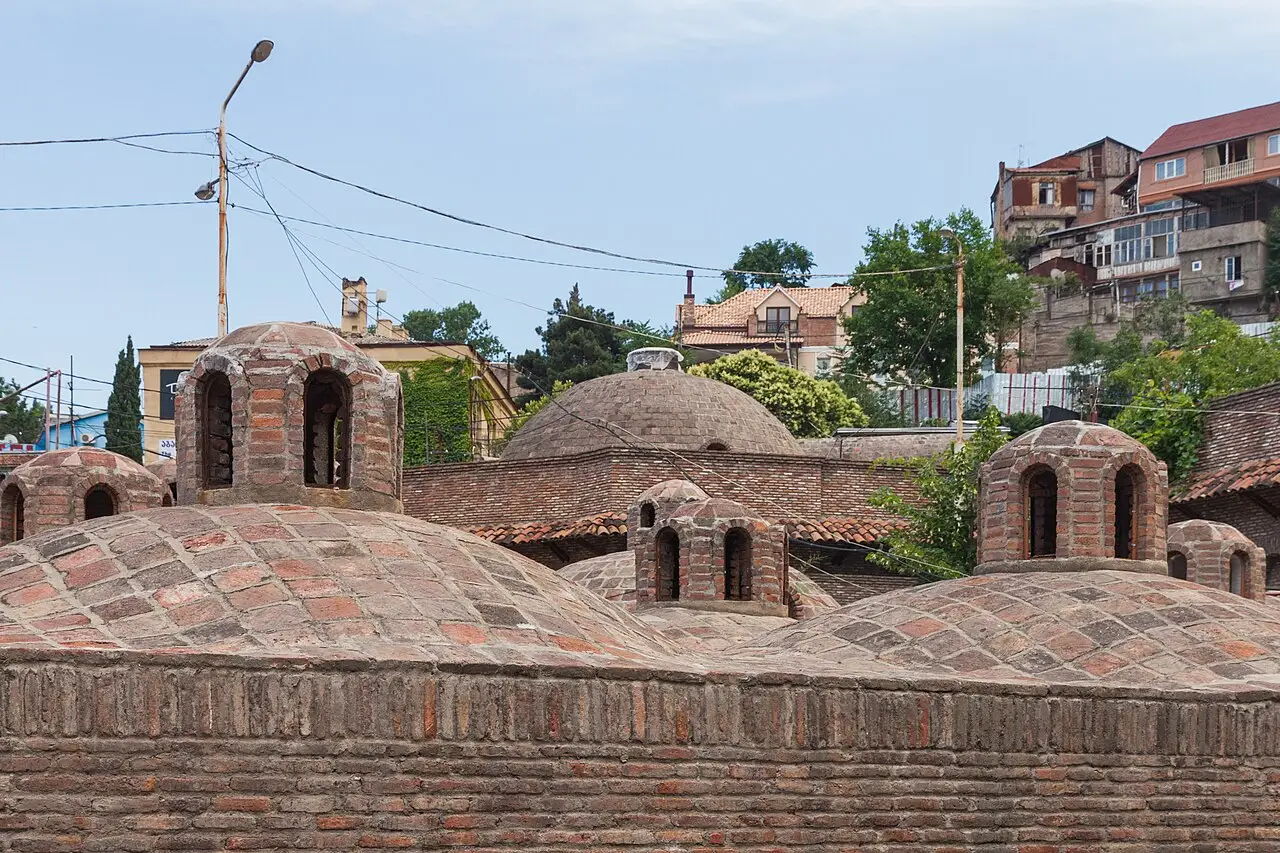
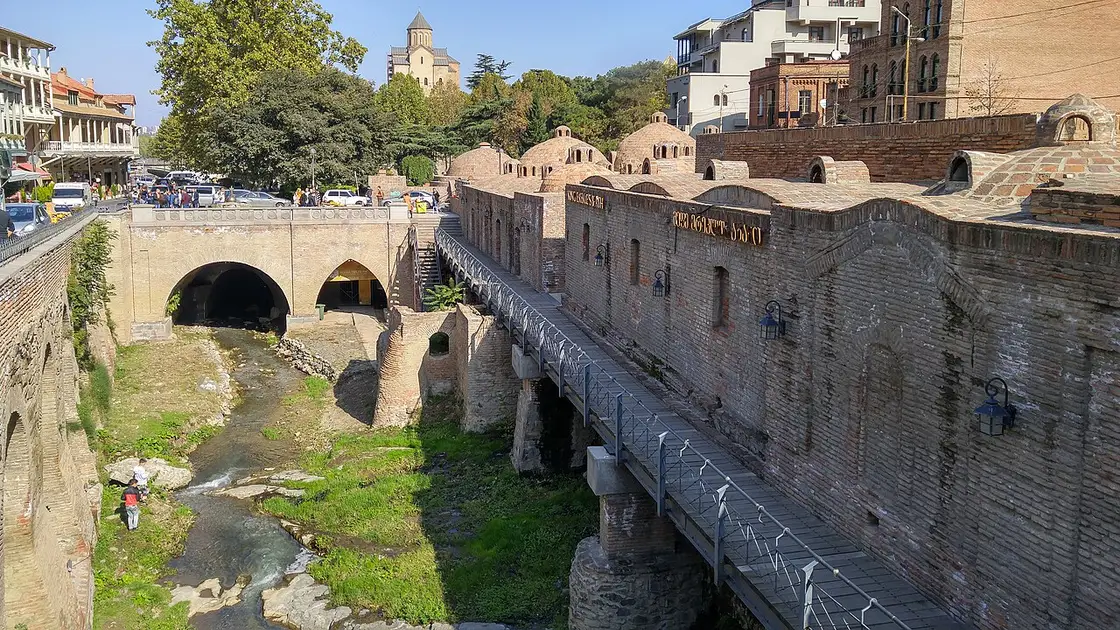
Abanotubani is the historic bathhouse district of Old Tbilisi, on the bank of the Kura (Mtkvari) river at the foot of Narikala. It’s a cluster of low brick domes hiding the halls of sulphur baths fed by natural hot springs. Georgian tradition ties the very founding of the city - and the capital’s name - to this spot.
Where the city began
The name “Abanotubani” literally means “bath district”. By legend, the capital began right here: King Vakhtang Gorgasali was hunting in these woods when his falcon wounded a pheasant, and both birds fell into a hot spring and died of the scalding water. Struck by the warm springs, the king decided to clear the forest and build a city on the site. The capital’s name comes from the same springs: “Tbilisi” derives from the Georgian tbili - “warm” - and was given to the city because of its hot sulphur waters.
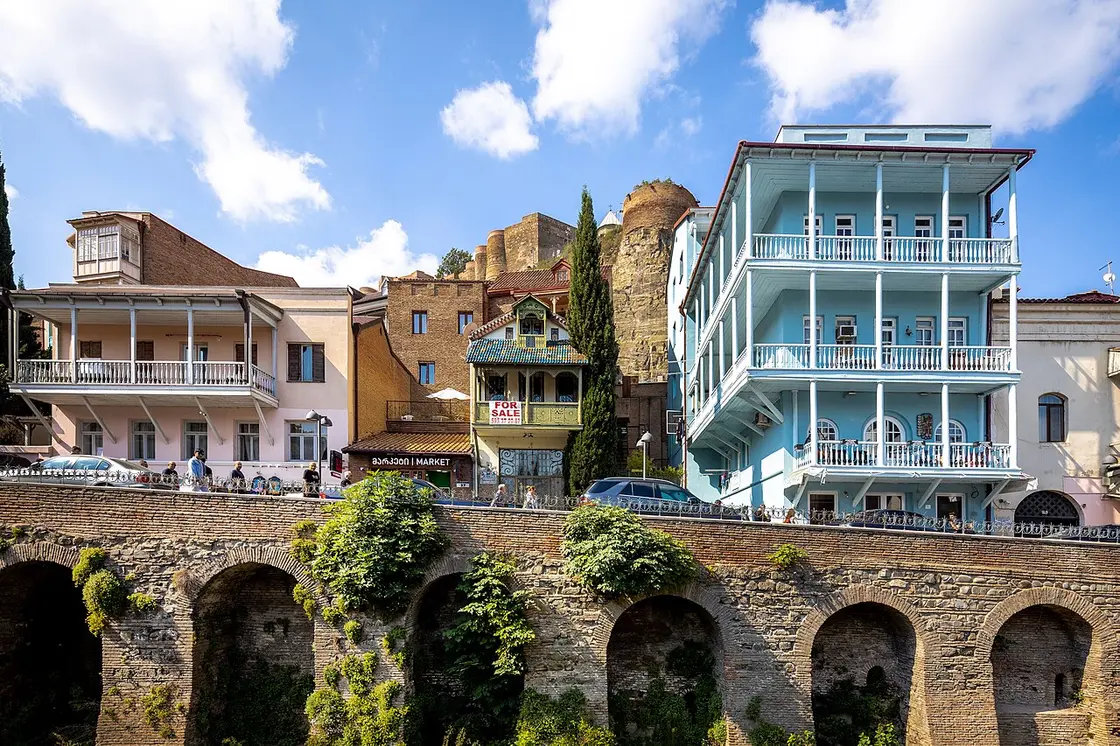
The baths were the heart of city life for centuries. By the end of the 13th century Tbilisi had as many as 65 bathhouses; in that era, entry was free for the city’s Muslim residents. The district sits on the eastern bank of the Kura, directly below the cliff crowned by Narikala fortress.
How the baths are built
The signature feature of Abanotubani is that the bathing halls run underground, and only their domes show on the surface - those low brick “mounds” you’ll recognise the district by in photos. It was done this way for a reason: the hot sulphurous water flows into the baths straight from the springs, with no heating.
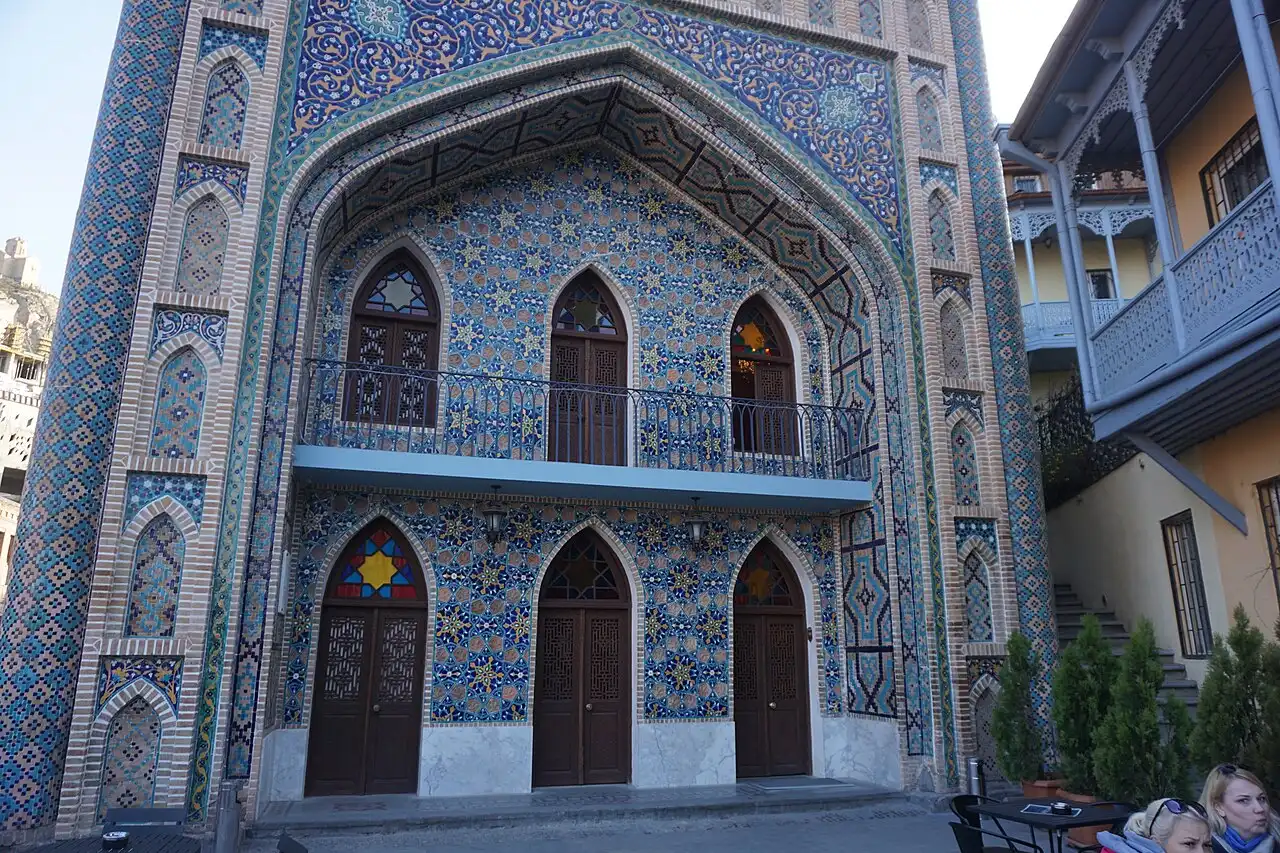
One bathhouse stands out for its ornate facade decorated with blue tiled mosaic in an Oriental style - that’s the one tourists photograph most. Next to it stands a fountain with a figure of a falcon clutching a pheasant: a direct nod to the legend of the founding of Tbilisi.
What to keep in mind for a visit
The baths are working bathhouses. You can take a shared hall or a private room for a set time, and for an extra fee the services of a bath attendant with a traditional scrub-massage (kisa). Exact prices and opening hours vary from one bathhouse to another and change over time, so it’s worth checking on the spot or ahead of time, and booking the popular private rooms - you’ll want that for peak hours.
Be ready for the distinctive smell of sulphur: it’s noticeable, but you get used to it quickly, and the water itself is valued for its mineral content. Even if you don’t plan to bathe, the district’s a pleasant walk in itself - for the domes, the tiled facade and the view up to Narikala looming overhead.
Nearby
Abanotubani lies right at the foot of Narikala fortress, reached from here on foot or by cable car, and the Bridge of Peace crosses the Kura not far away. There’s more about the capital in our Tbilisi travel guide; other places around the country are gathered in the things to see section.
Photos
On the map
The map loads on click - to keep the page lightweight.
The map didn’t load. Check your connection and refresh the page.
Distance
- Tbilisi In the Old Town, at the foot of Narikala - walkable from Meidan Square
- Kutaisi ≈230 km · ~3.5 h approximate, to Tbilisi
- Batumi ≈370 km · ~5.5 h approximate, to Tbilisi
Read also

What to see · 10 min read
Skiing in Georgia: Gudauri vs Bakuriani
Updated · September 5, 2026Gudauri or Bakuriani: 2025/26 day passes 70 vs 55 GEL, elevations, last season dates, who each resort suits and how to get there.

What to see · 7 min read
Svaneti travel guide: Mestia, Ushguli and towers
Verified · August 25, 2026Svaneti mapped: Mestia vs Ushguli, tower villages, season, and how to link town guides, the trek, and the road from Tbilisi.

What to see · 9 min read
Resorts near Batumi: Gonio, Kvariati & Tsikhisdziri
Updated · September 2, 2026Where to stay near Batumi for cleaner, quieter beaches: Gonio and its Roman fort, Kvariati for diving, and secluded clifftop Tsikhisdziri - how to choose.

What to see · 10 min read
Georgia with kids 2026: family beaches & resorts
Updated · July 18, 2026Georgia with kids: sandy, shallow beaches up north (Ureki, Shekvetili, Kobuleti), amusement parks, when to go and how to plan a family trip.