
Bridge of Peace in Tbilisi: glass, light, how to get there
The pedestrian Bridge of Peace over the Kura in central Tbilisi: a 150 m glass-and-steel arch with 1,208 LEDs, opened in 2010. How to get there.
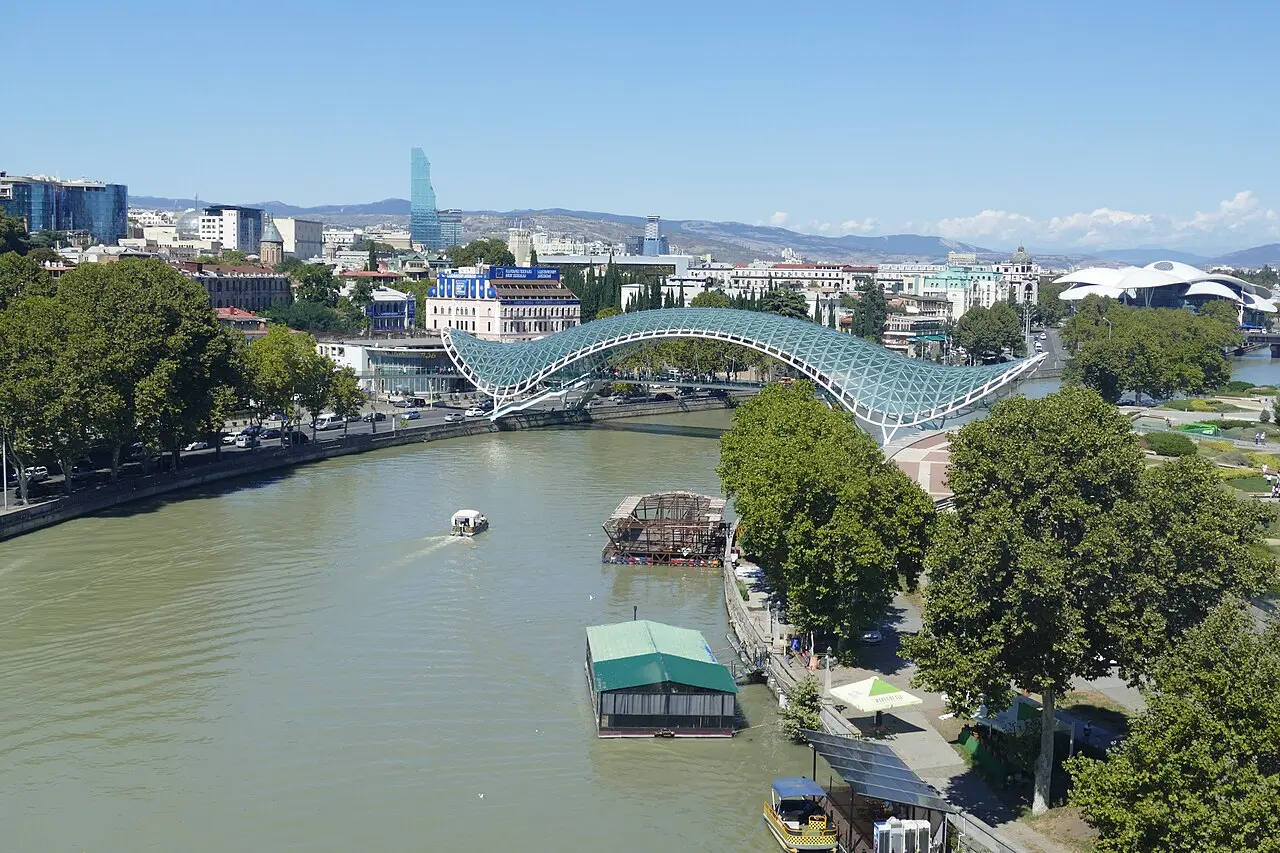
The Bridge of Peace is a pedestrian bridge over the Kura in central Tbilisi and one of the city’s most recognisable modern structures. A glass-and-steel arch with LED lighting, it links the historic Old Town with Rike Park on the far bank and has long been an essential stop on a walk around the capital, good for a quick crossing between museums in the afternoon or for building a whole evening around the light show. It’s also the symbol of the city’s post-2008 reinvention, and the argument about whether it belongs next to the Old Town has quietly faded.
Why the bridge is famous
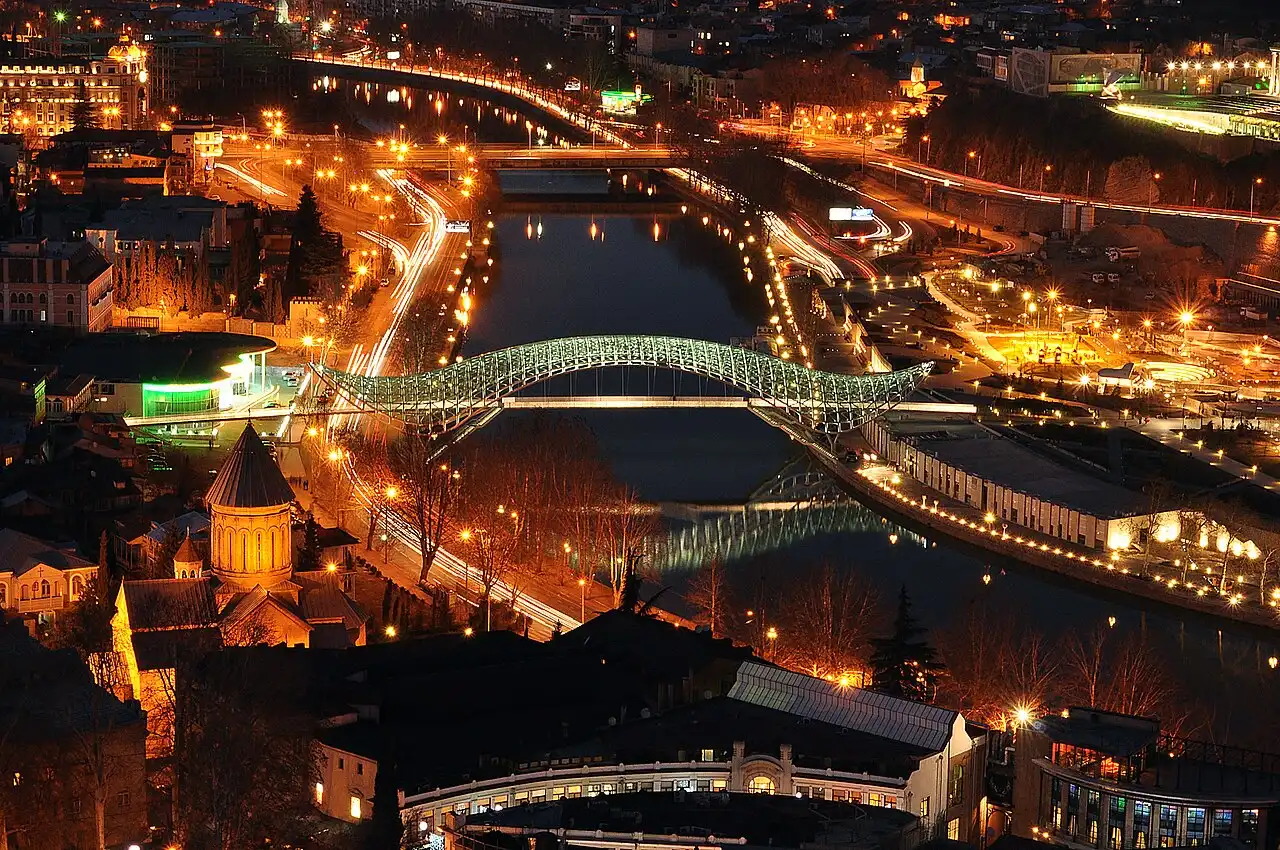
The Bridge of Peace opened on 6 May 2010. It’s an arched structure of glass and steel around 150 metres long: a transparent canopy covers it from above, while the pedestrian deck runs over the river. The project was designed by the noted Italian architect Michele De Lucchi, who also designed Tbilisi’s Ministry of Internal Affairs building, and the lighting scheme was created by the French lighting designer Philippe Martinaud.
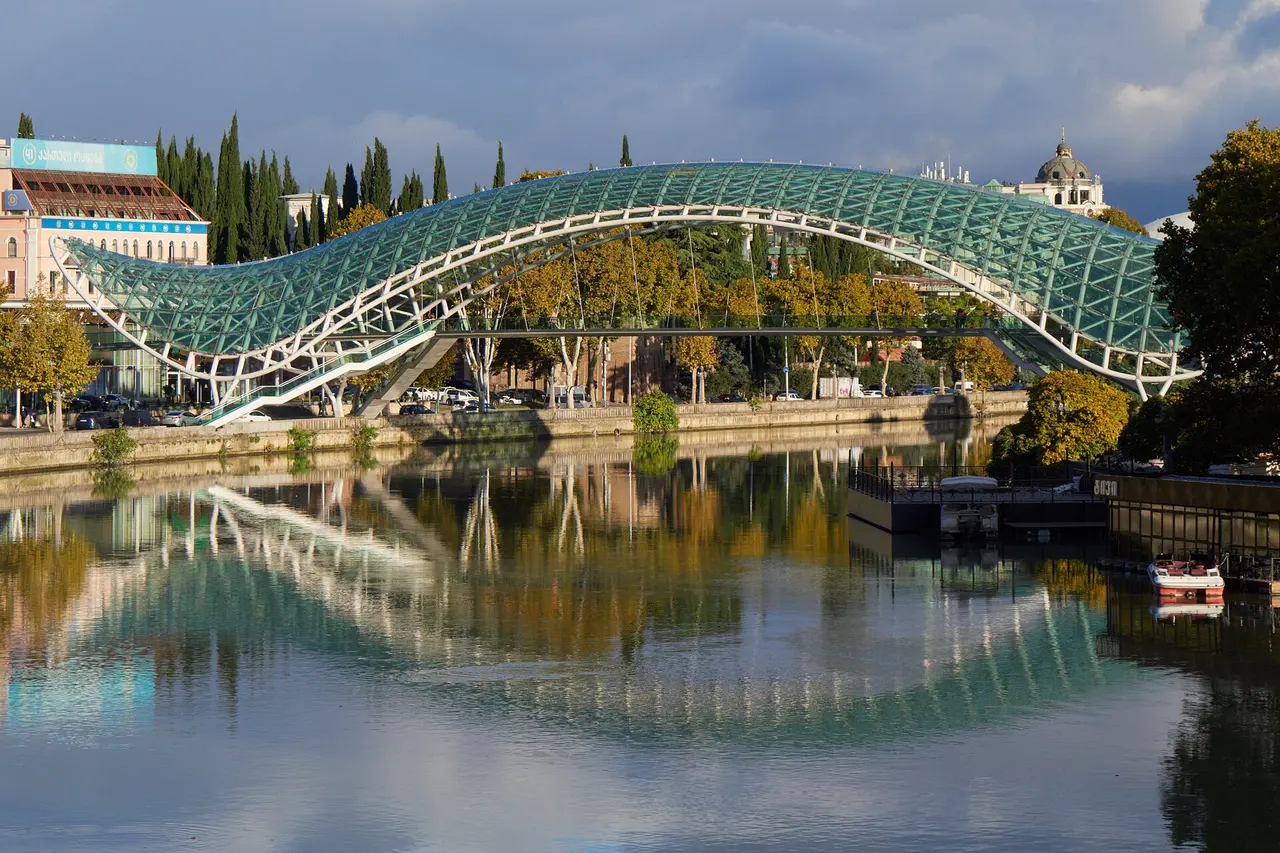
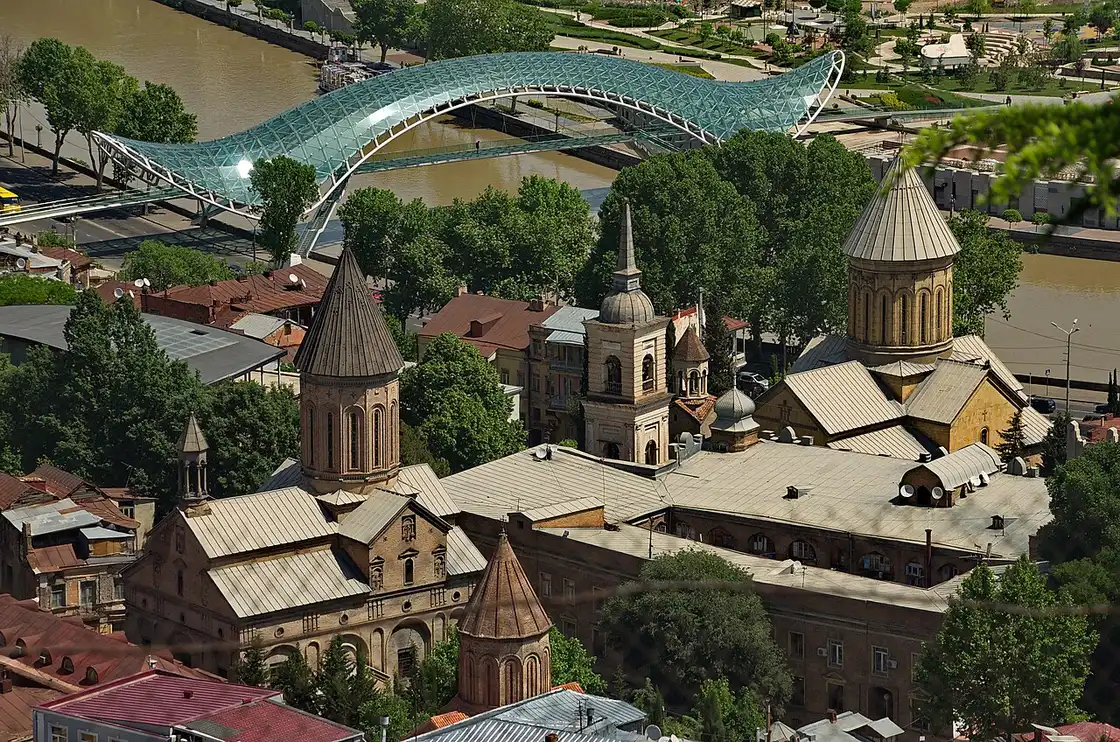
The idea for the bridge came out of the aftermath of the 2008 war with Russia: Tbilisi City Hall, under then-president Mikheil Saakashvili, commissioned it as part of a wider push to modernise the city’s image and give it a physical symbol of renewal rather than conflict, at a time when a lot of outside attention on Georgia was focused on the fighting rather than on what the capital actually looked like. The engineering behind it is more involved than it looks from the embankment - a tubular steel skeleton, built and cut in Italy, then shipped to Tbilisi on around 200 trucks and assembled on site over the fast-flowing Mtkvari, with the glass canopy fitted afterwards panel by panel. The bridge joins the two banks of the Kura - the Old Town embankment and Rike Park on the left bank - and its walkway is wide enough that it never feels like a bottleneck even when tour groups cross at the same time as everyone else. Seen from the side, the sweeping steel ribs and glass shell read to many visitors as a marine creature’s shell, or a bow drawn taut across the river, and once you notice that reading it’s hard to un-see it on later visits. Walking across takes two or three minutes; with photo stops, a quarter of an hour goes quickly.
The light show and what it spells out
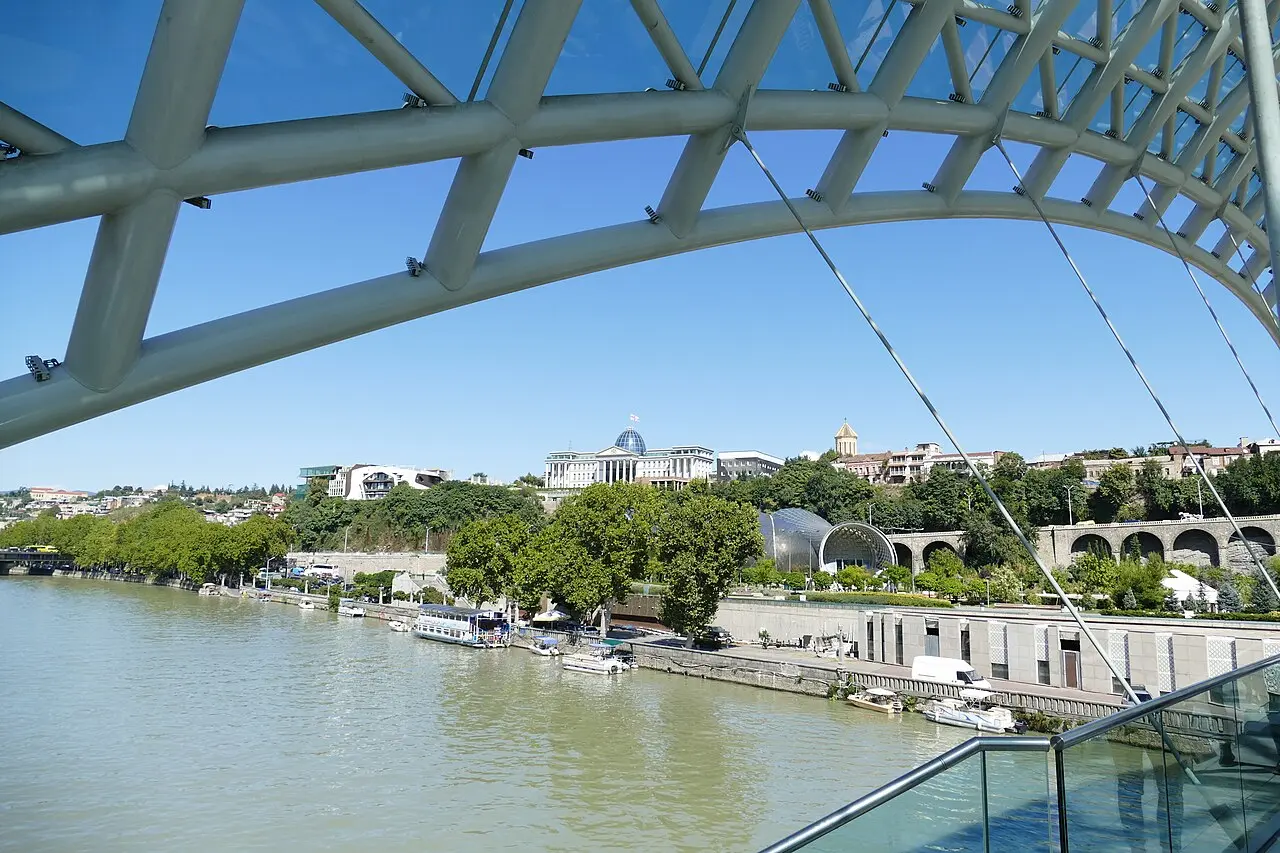
LED lighting is built into the canopy, the handrails and the deck itself - 1,208 individual fixtures by the commonly quoted count, plus linear low-power strips woven into the glass railings. By the widely repeated account (the Wikipedia article cites the lighting contractor), the display switches on around ninety minutes before sunset each evening, so the exact time shifts with the season instead of being fixed on a clock. It isn’t just decorative: the LEDs in the glass parapets spell out a repeating message in Morse code, and it runs across both parapets once an hour. Wikipedia describes it as a rendering of the periodic table of elements; a more specific account from a Tbilisi tour operator says the message spells out the names of elements found in the human body - carbon, oxygen, hydrogen, nitrogen - which isn’t necessarily a contradiction, since those elements are part of the periodic table too. Either way, the idea behind it, as described by Martinaud and De Lucchi, is the same: a wordless reminder that everyone crossing the bridge, whatever their nationality or background, is built from the same basic chemistry.
Not everyone loved it at first
A glass-and-steel bridge dropped into a neighbourhood of nineteenth-century balconies and stone churches didn’t go over quietly when it opened, and it’s worth knowing that history before you form your own opinion on the spot. Critics at the time, including international architecture writers, argued the design clashed with Old Tbilisi rather than complementing it, and the bridge picked up an unflattering local nickname - “Always Ultra” - for its passing resemblance to a sanitary pad seen from certain angles. That reaction has largely faded with time: the bridge is now embraced by a younger generation of Tbilisi residents and by the buskers, photographers and evening crowds who treat it as a natural gathering spot, not an eyesore, and it’s hard to find a postcard rack in the city that doesn’t feature it. For perspective, the Eiffel Tower and the Louvre Pyramid went through almost identical waves of local outrage before becoming the symbols they are now - a modern structure dropped into an old city seems to need a decade or two before the initial shock wears off.
What to see nearby
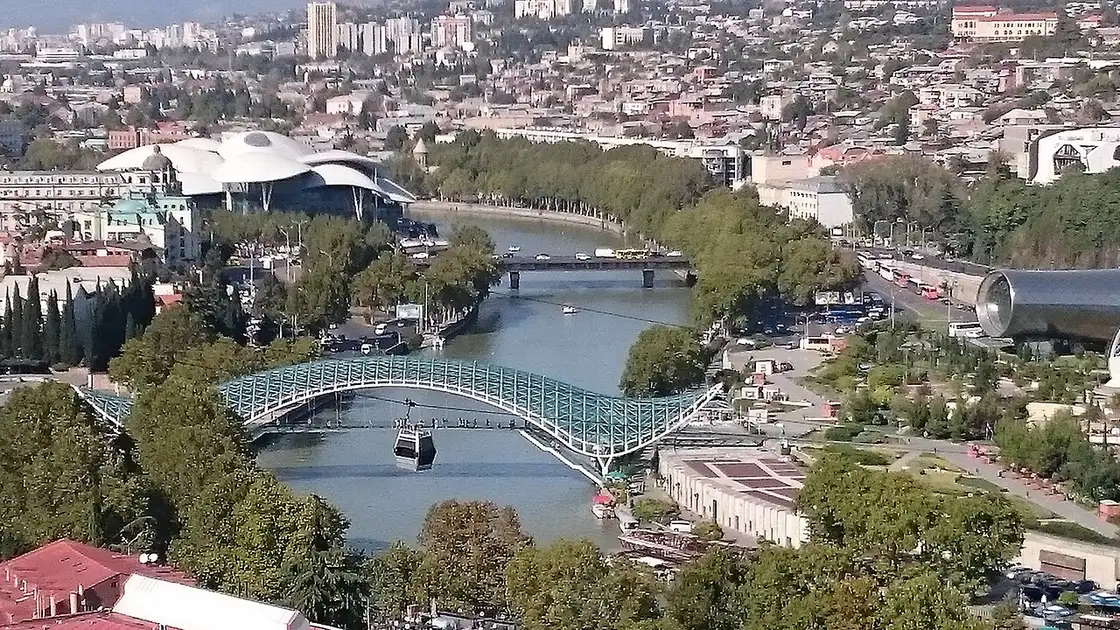
The bridge is a handy point from which to take in several places in the centre at once. Upstream is the Baratashvili Bridge, downstream the Metekhi Bridge, and from the deck there are views over the tiled roofs of the Old Town, the Metekhi Church and the Narikala fortress on its hill. On the left bank begins Rike Park with its lawns and open-air views, popular with local families in the evening as much as with visitors, and from here, too, runs the cable car up to Narikala - cross the bridge, and you can be riding it within minutes without backtracking. It’s paid separately from the city ticket: 2.5 GEL one way, and it takes only the Metromoney card (2 GEL, sold at metro ticket offices and Bank of Georgia express branches), not cash at the turnstile. Along the river it’s an easy walk to the sulphur baths as well, so the bridge works as a starting point for half a day of walking instead of a single photo stop.
What to keep in mind
The bridge is open 24 hours a day, seven days a week, with no entry fee and no gates to close behind you. By day it’s simply a handy, well-lit crossing with views in both directions; in the evening it becomes a sight in its own right once the lighting activates. If you only have time to cross once, aim for somewhere around sunset, when you get a few minutes of the daytime view before the lights take over rather than committing fully to one or the other. That timing also sets you up neatly for the remainder of a Tbilisi evening, whether that means dinner in the Old Town, a walk up to Narikala while there’s still some light left, or - for anyone curious about it - a look at where Tbilisi’s casinos are and the rules once darkness has properly fallen. The classic advice from people who know the bridge well is to cross it twice on the same trip - once in daylight to actually look at the architectural details and the monuments around it, and once after dark for the Morse code display - since trying to do both in a single crossing means you end up only half-noticing either. Bear in mind that this is one of the most photographed spots in the city, so expect company: tour groups, wedding photo shoots and street musicians all compete for the same stretch of railing in high season. Early morning is the one window when you’ll reliably have the middle of the bridge to yourself, if a clear, empty shot matters more to you than the crowd energy of a summer evening.
How to get there
The bridge has an entrance on each bank. From the Old Town, walk down to the river from Shardeni or Erekle II streets and you’ll see the glass canopy ahead; the nearest metro station on that side is Liberty Square. From the left bank, Avlabari metro station is a short downhill walk through Rike Park, which brings you straight to the eastern end and the cable-car station. Taxis can drop you at either embankment, but the last stretch is on foot either way.
Nearby
The Abanotubani sulphur baths and the Narikala fortress above the Old Town are covered on their own pages. For more on the capital, see the Tbilisi guide; more places across the country are gathered in the things to see section.
Photos
On the map
The map loads on click - to keep the page lightweight.
The map didn’t load. Check your connection and refresh the page.
Admission and opening hours
- Admission price
- Free entry
A pedestrian bridge over the Kura, open 24 hours a day, 7 days a week; architectural lighting comes on in the evening.
Details checked: September 12, 2026
Distance
- Tbilisi In the city centre, between Rike Park and the Old Town - on foot
- Kutaisi ≈230 km · ~3.5 h approximate, to Tbilisi
- Batumi ≈370 km · ~5.5 h approximate, to Tbilisi
Read also

What to see · 10 min read
Skiing in Georgia: Gudauri vs Bakuriani
Updated · September 5, 2026Gudauri or Bakuriani: 2025/26 day passes 70 vs 55 GEL, elevations, last season dates, who each resort suits and how to get there.

What to see · 7 min read
Svaneti travel guide: Mestia, Ushguli and towers
Verified · August 25, 2026Svaneti mapped: Mestia vs Ushguli, tower villages, season, and how to link town guides, the trek, and the road from Tbilisi.

What to see · 9 min read
Resorts near Batumi: Gonio, Kvariati & Tsikhisdziri
Updated · September 2, 2026Where to stay near Batumi for cleaner, quieter beaches: Gonio and its Roman fort, Kvariati for diving, and secluded clifftop Tsikhisdziri - how to choose.

What to see · 10 min read
Georgia with kids 2026: family beaches & resorts
Updated · July 18, 2026Georgia with kids: sandy, shallow beaches up north (Ureki, Shekvetili, Kobuleti), amusement parks, when to go and how to plan a family trip.