
What to eat in Georgia: cuisine, khachapuri and wine
The key dishes of Georgian cuisine: khachapuri, khinkali, mtsvadi, lobio, churchkhela and qvevri wine. What you must try when you visit Georgia.
Georgian cuisine is one of the main reasons to come to the country. It’s generous, hearty and very regional: every part of Georgia has its own dishes, cheeses and wines. Here’s what to try first — and a few things to know at the table.
Khachapuri
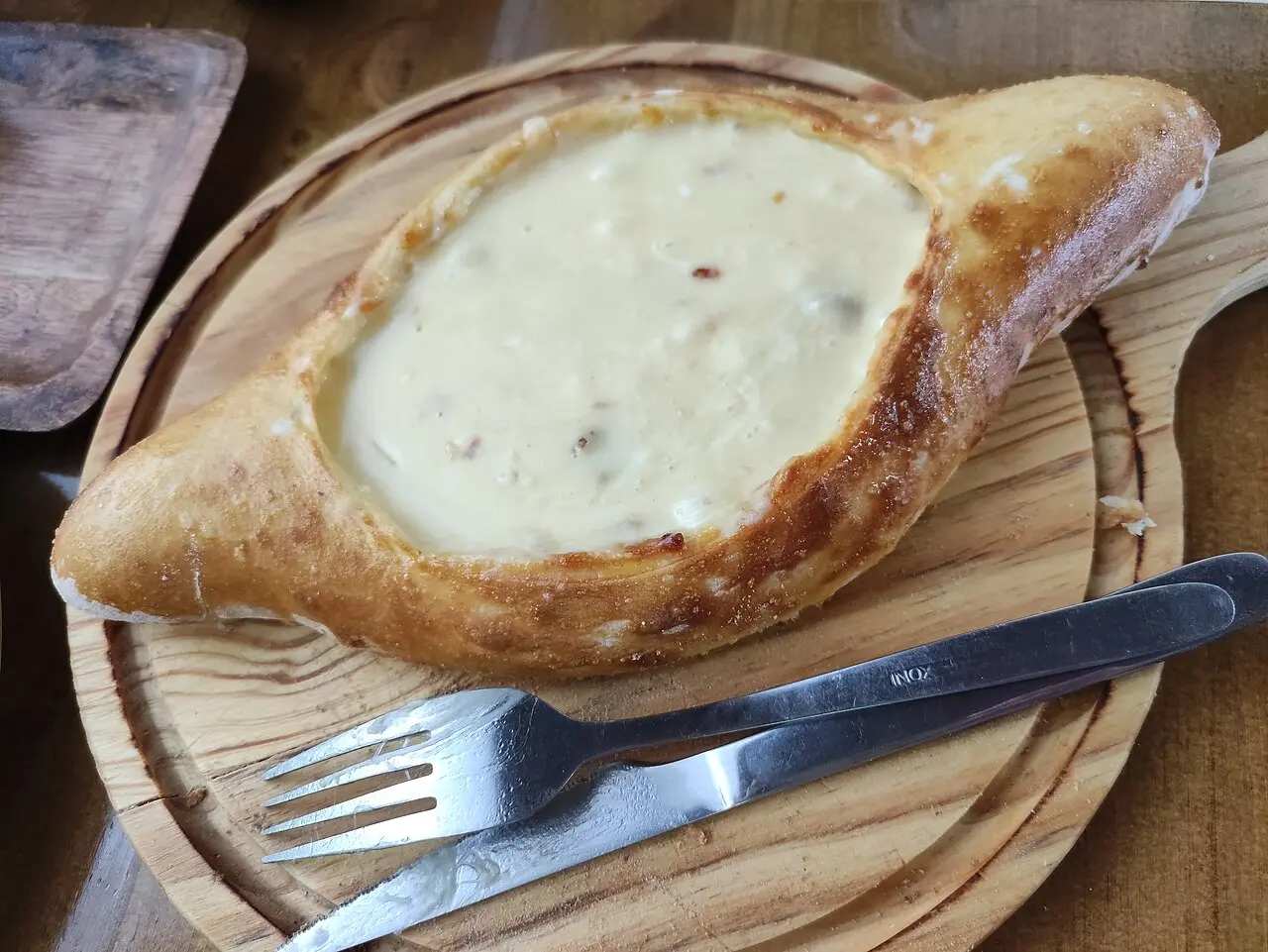
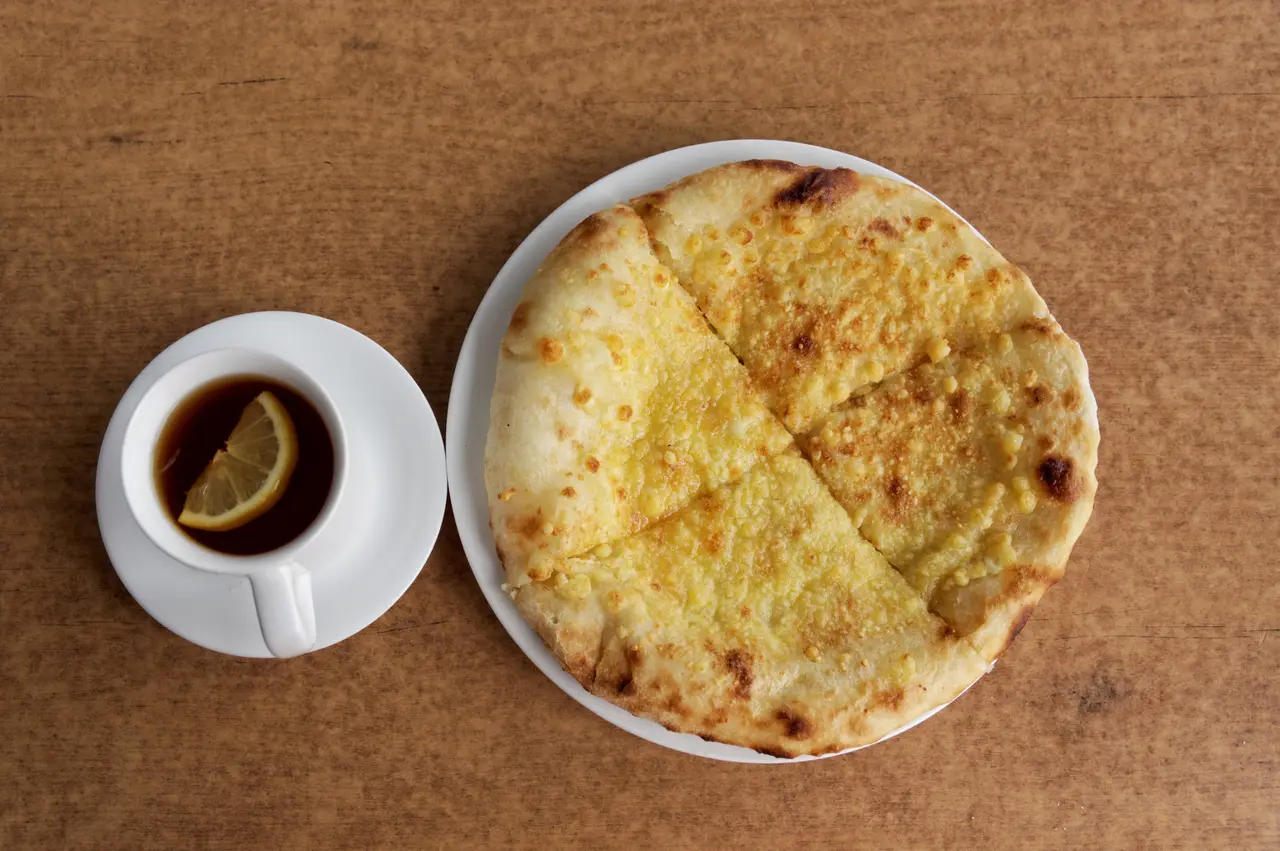
The most famous dish is khachapuri, a cheese-filled bread that comes in several regional versions. Adjaruli (Adjarian-style) is an open “boat” with cheese, butter and an egg that you stir straight into the hot cheese. Imeruli (Imeretian) is a closed round bread with cheese inside. Megruli (Megrelian) is like the Imeretian but with cheese on top as well. There’s no easier way to start getting to know Georgian food than with khachapuri.
Khinkali
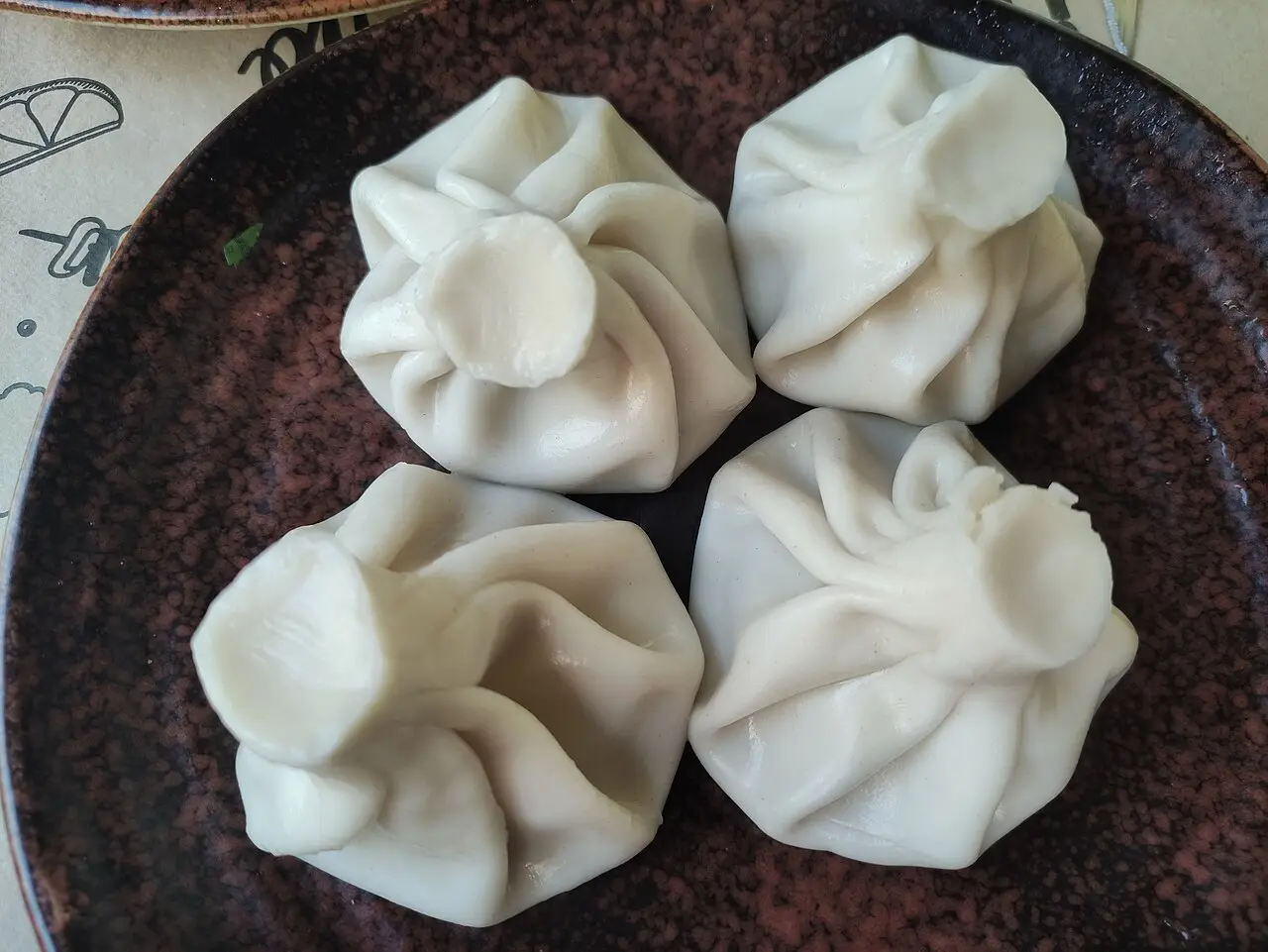
Khinkali are large, juicy dumplings with broth inside. The classic filling is minced spiced meat, but you’ll also find cheese, mushroom or potato versions. You eat them with your hands: hold the twisted top knot, take a bite, sip out the broth, and the tough knot itself is usually left uneaten on the plate — handy for keeping count of how many each person has had.
Meat, lobio and vegetables
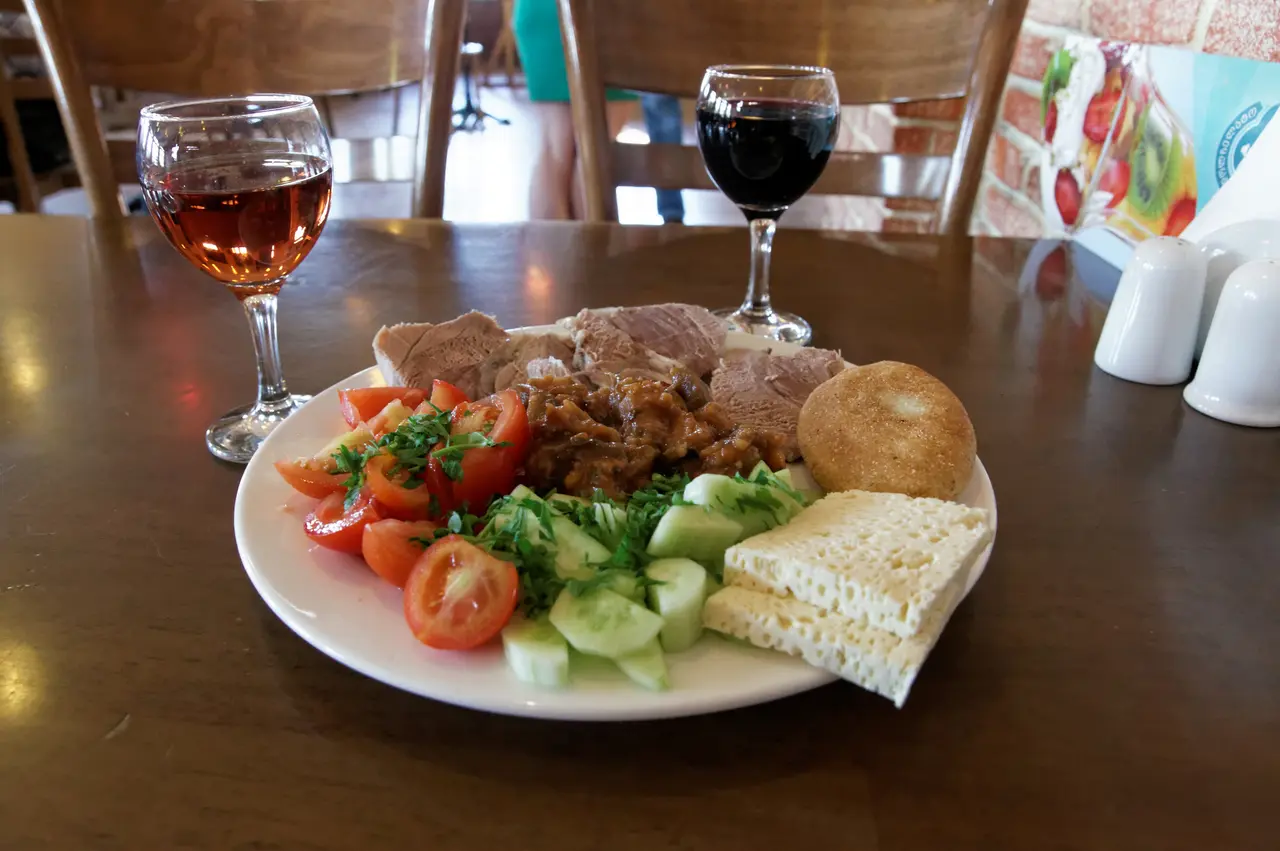
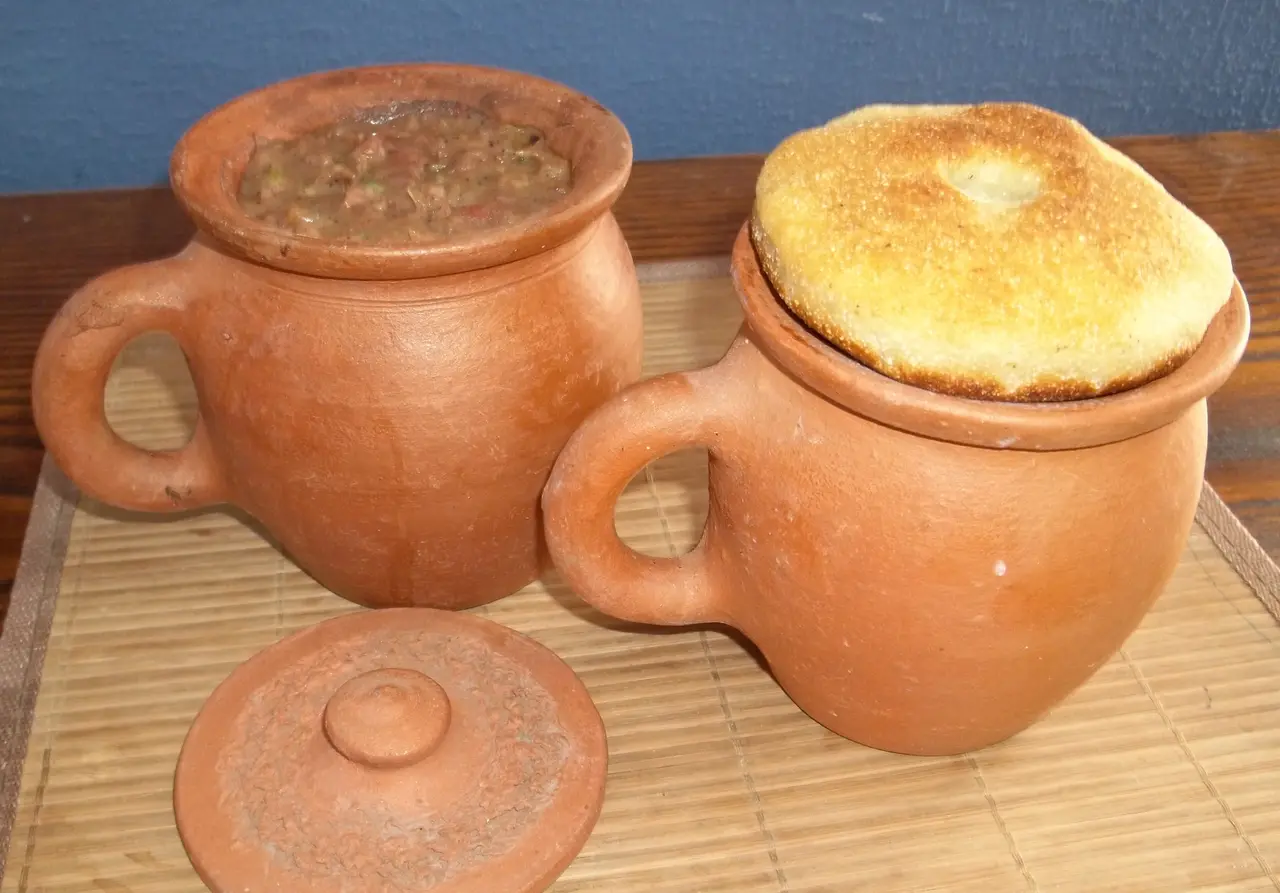
For meat, try mtsvadi — Georgian barbecue, grilled over dry grapevine. On the vegetarian side there’s lobio, spiced stewed beans served in a clay pot with mchadi cornbread and pickles. A whole category of its own is the cheeses (sulguni, Imeretian) and the walnut-rich vegetable starters: pkhali and aubergine with walnut.
Sweets: churchkhela
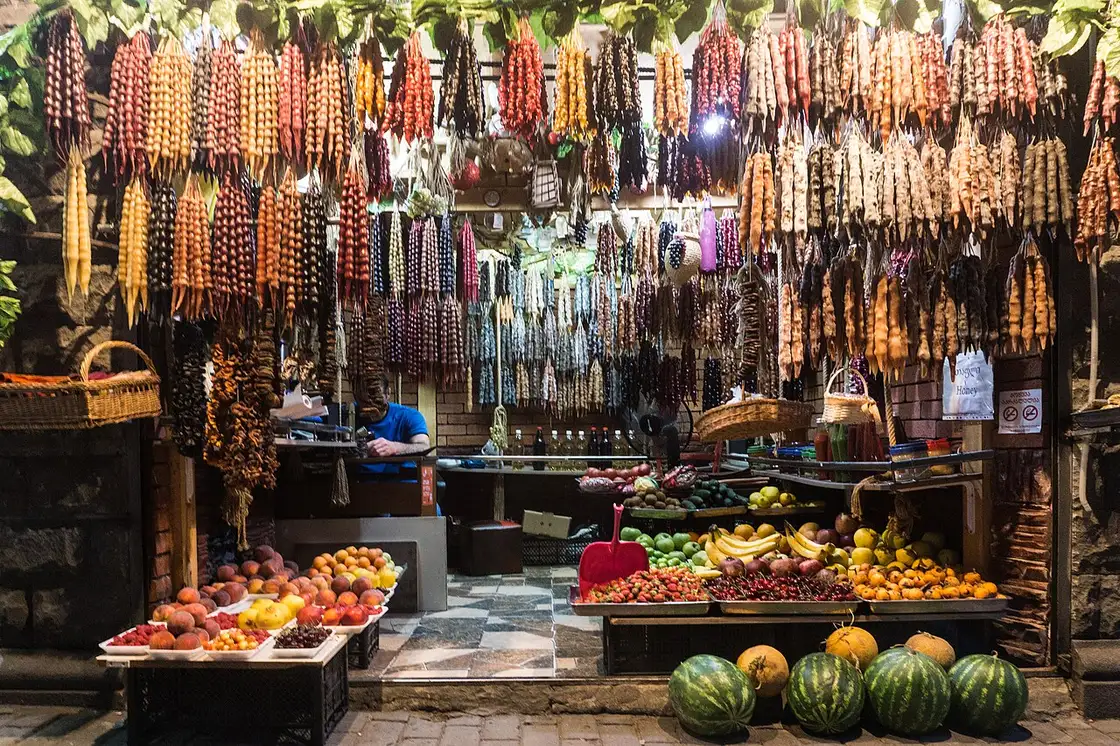
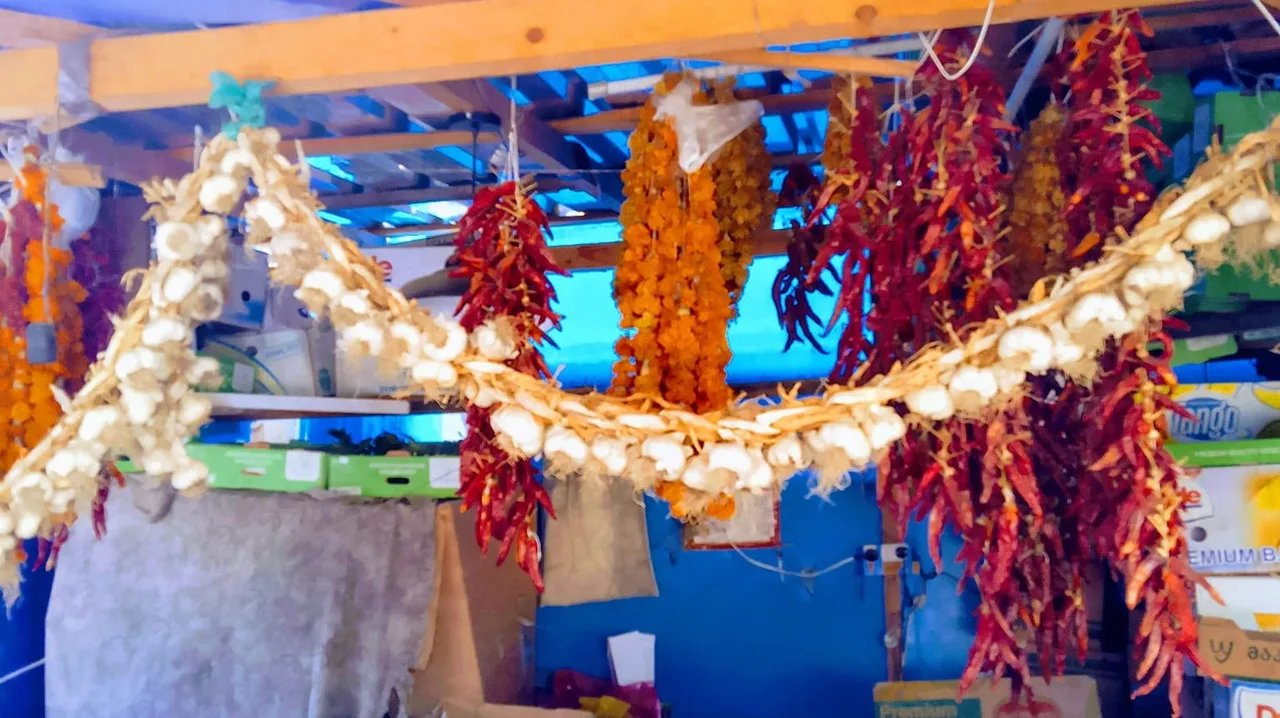
The signature edible souvenir is churchkhela: nuts threaded on a string, dipped many times in thickened grape juice and dried. It’s often called the “Georgian Snickers”; at markets churchkhela hangs in colourful “candles” of every shade.
Wine and qvevri
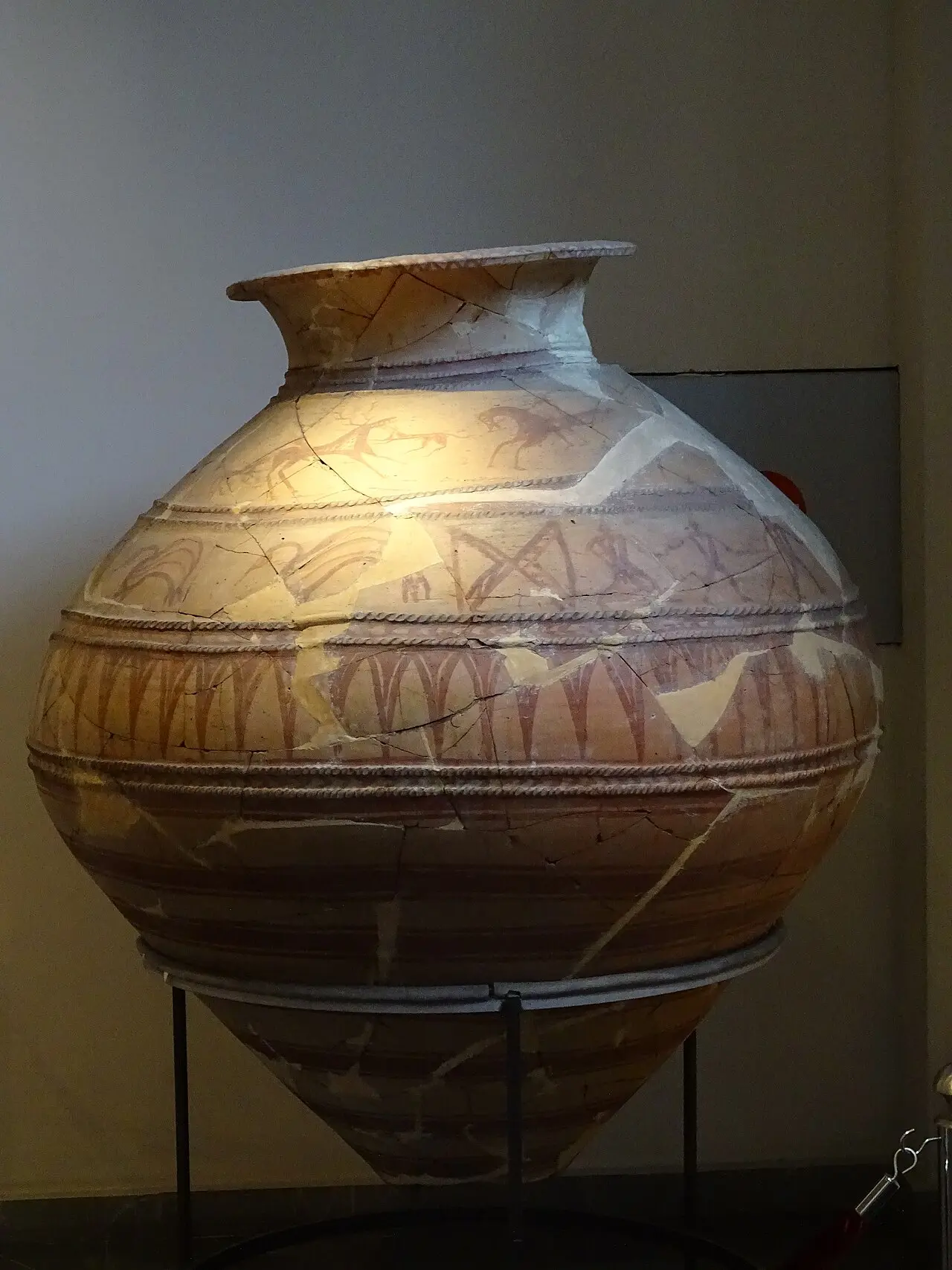
Georgia is one of the world’s oldest winemaking countries. Wine is still made here in qvevri — large clay vessels buried in the ground; the method is on UNESCO’s list of intangible heritage (2013). Contact between the juice and the skins in the qvevri produces amber (orange) wine, Georgia’s signature style. The main wine region is Kakheti, and the best way to really get to know the wine is to go there.

What it costs to eat (a guide)
This is a country-wide guide for 2026, not a fixed price list: central Tbilisi, Batumi and tourist spots are pricier, while the regions and simple canteens are noticeably cheaper. For exact figures, check the menu on the spot.
- Khinkali — about 1.5–2.5 GEL each.
- Khachapuri — Adjaruli ~14–22 GEL, Imeretian/Megrelian ~10–18 GEL.
- Mtsvadi (barbecue) — a portion ~15–28 GEL.
- Lobio — ~8–14 GEL; pkhali — ~6–12 GEL.
- Churchkhela — ~3–6 GEL each.
- Wine — a glass ~6–12 GEL, a bottle or house wine in a jug ~20–45 GEL.
Where to try it
You’ll find Georgian cuisine in any city, but the easiest places to start are Tbilisi and Batumi. For wine and country cooking, it’s worth heading to Kakheti — for example along the Kakheti wine in 2 days route. We round up tried-and-tested places by city in the where to eat section.
Read also

Tbilisi–Batumi flights: Georgian Airways from June 25
Updated · June 19, 2026From June 25, 2026 Georgian Airways flies Tbilisi–Batumi four times a week, 45 minutes in the air. Days, schedule and how to book a ticket.
Best time to visit Georgia: seasons & weather
Updated · June 19, 2026The best time to visit Georgia by season — weather, crowds and prices across spring, summer, autumn and winter, plus beaches, skiing and wine.

Batumi Opens Summer with a Festival on June 20–21
Updated · June 19, 2026June 20–21 Batumi opens its summer season with a free festival by the Alphabet Tower: evening music show from 17:00, ~150-maker market, seaside cafes.
Money in Georgia: lari, exchange and cards
Updated · June 19, 2026Money in Georgia: the lari (GEL), where to exchange cash at good rates, card and ATM tips, tipping, and how much cash to carry.