
Fabrika Tbilisi: Old Factory Turned Bars & Cafe Courtyard
Fabrika in Tbilisi - a former Soviet factory now a courtyard of bars, cafes and workshops. Free to enter, quiet coffee by day, liveliest yard at night.
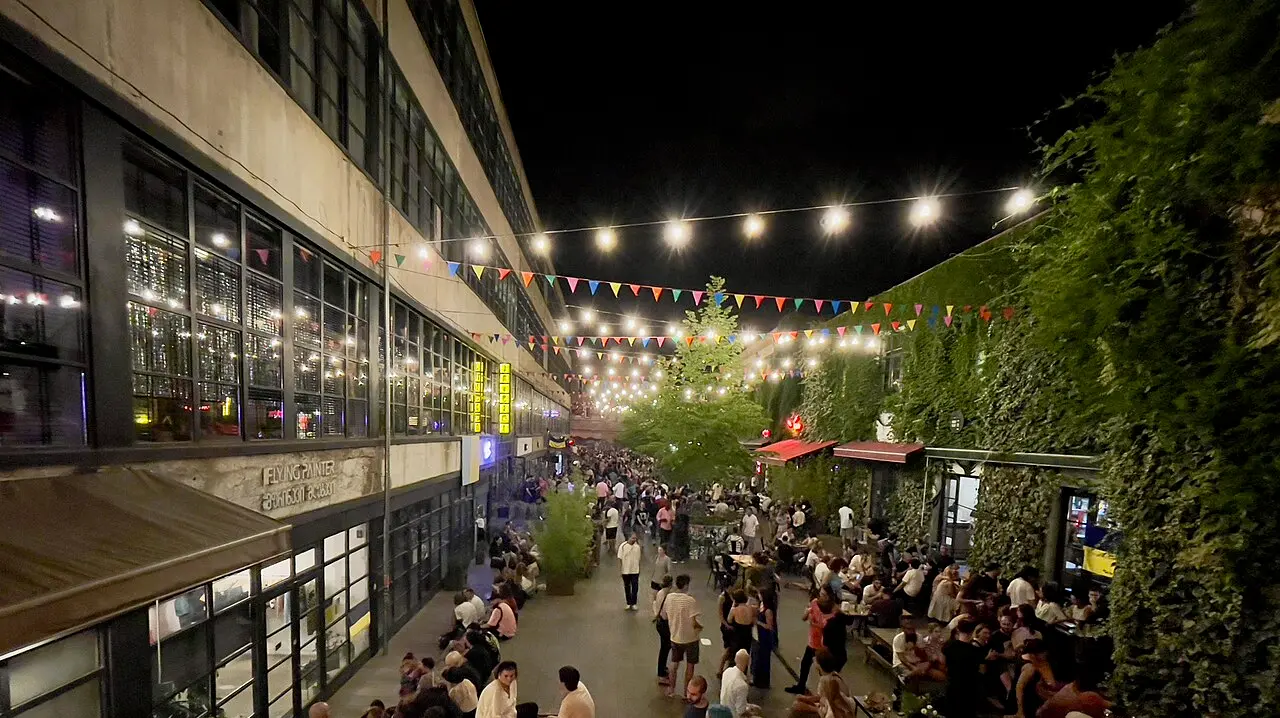
Fabrika is a former Soviet sewing factory in Tbilisi’s Chughureti district, on the left bank of the Kura, that reopened in 2016 as a courtyard of bars, cafes, shops and a hostel. It’s one of the easiest places in the city to end up at the same table as both a local and a backpacker. Getting into the courtyard costs nothing - you only pay once you order something. For an evening that continues past the bar, Tbilisi has another night side too: legal Tbilisi’s casinos attached to hotels.
Walk in for the first time and the mash-up is the whole point: raw brick and steel trusses next to neon signs and street art, a hostel reception desk a few steps from a wine bar, a barbershop facing a print shop across the yard. None of it is styled into a single concept - it reads like seventeen small businesses sharing one landlord, because that’s exactly what it is.
From sewing factory to courtyard
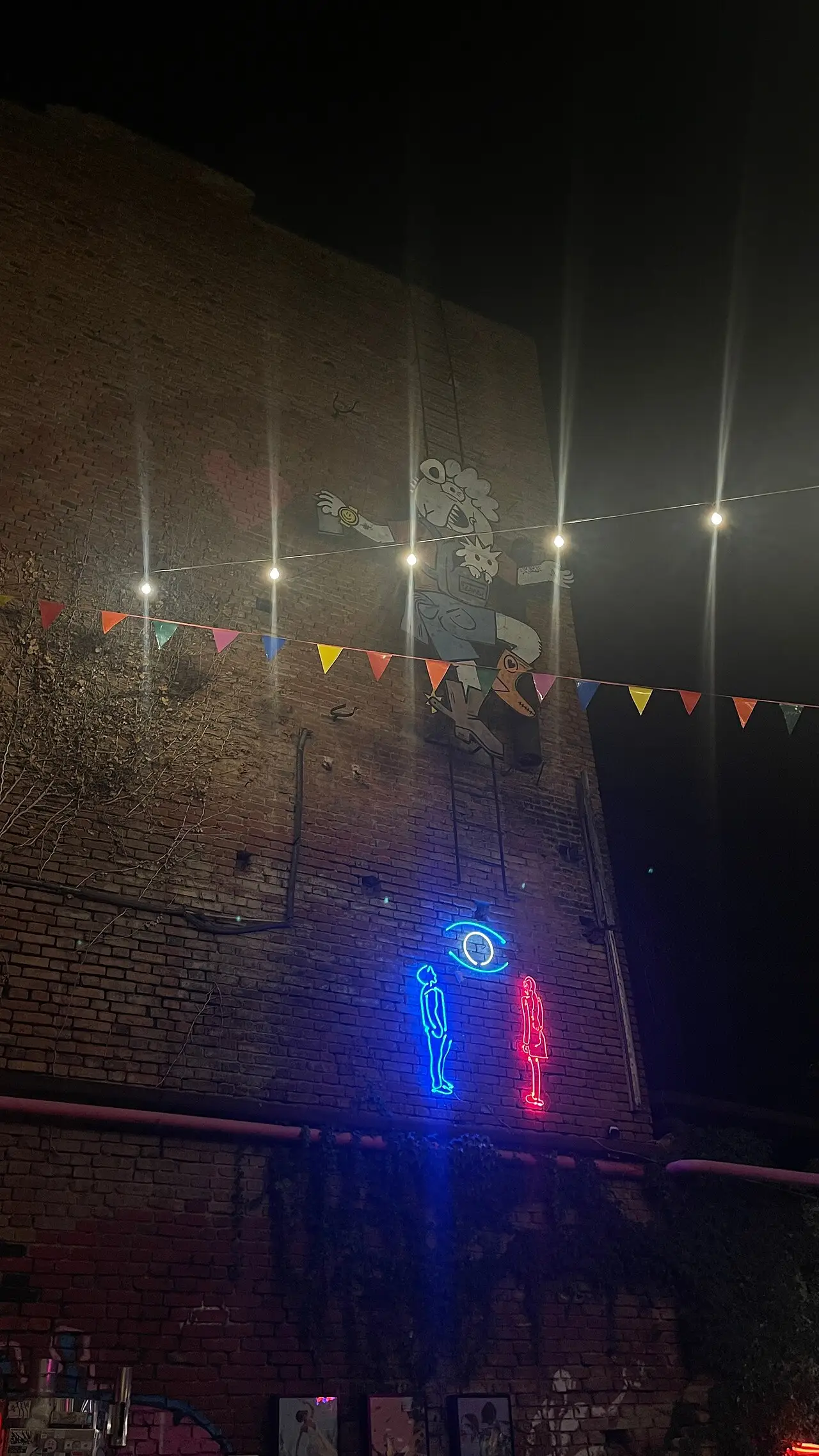
The building went up in stages - one architectural account describes four eclectic sections built at different times - and ran through the Soviet decades as a clothing plant known as “Nino.” Exactly what it produced in the earlier decades isn’t well documented; no written records survive from that period, and what’s known with any confidence dates from the high-quality clothing it turned out in its last ten to fifteen years. Georgia’s civil war in the early 1990s shut it down, and it sat empty for roughly two decades: one more derelict industrial shell in a city that had no shortage of them after independence. Chughureti as a whole grew up the same way - it was one of Tbilisi’s working industrial quarters through the late 19th and early 20th centuries, and only later, once the workshops and small factories emptied out, did it turn into the studio-and-graffiti district you’ll walk through today. Fabrika is the biggest single example of that shift, not an outlier. The street art on its walls fits the same pattern: Chughureti’s buildings, well beyond Fabrika’s own courtyard, have become one of the more visible canvases for Tbilisi’s younger artists, covering everything from pure decoration to pointed social commentary.
The revival started in 2016, when developer Adjara Group and Tbilisi studio Multiverse Architecture, led by architects Gogiko Sakvarelidze and Devi Kituashvili, took on the shell. They kept the brick and the steel trusses and filled the building with a hostel, studios and a run of cafes and bars around an open courtyard. One detail that never made it into the marketing: crews doing the renovation found a bomb shelter under the building, built after the First World War and still stocked with Soviet-era gas masks and emergency kits. None of that is visible today - the same walls now carry street art and neon instead.
Fabrika is also a listed member of Trans Europe Halles, a network founded in 1983 that now links more than 180 grassroots arts and culture centres across upwards of 40 countries, almost all of them built inside old factories, warehouses and other industrial leftovers. It’s a small detail, but it places Tbilisi’s courtyard in the same category as long-running spaces in Sweden, France or Poland rather than treating it as a one-off tourist stop.
Who’s inside the courtyard now
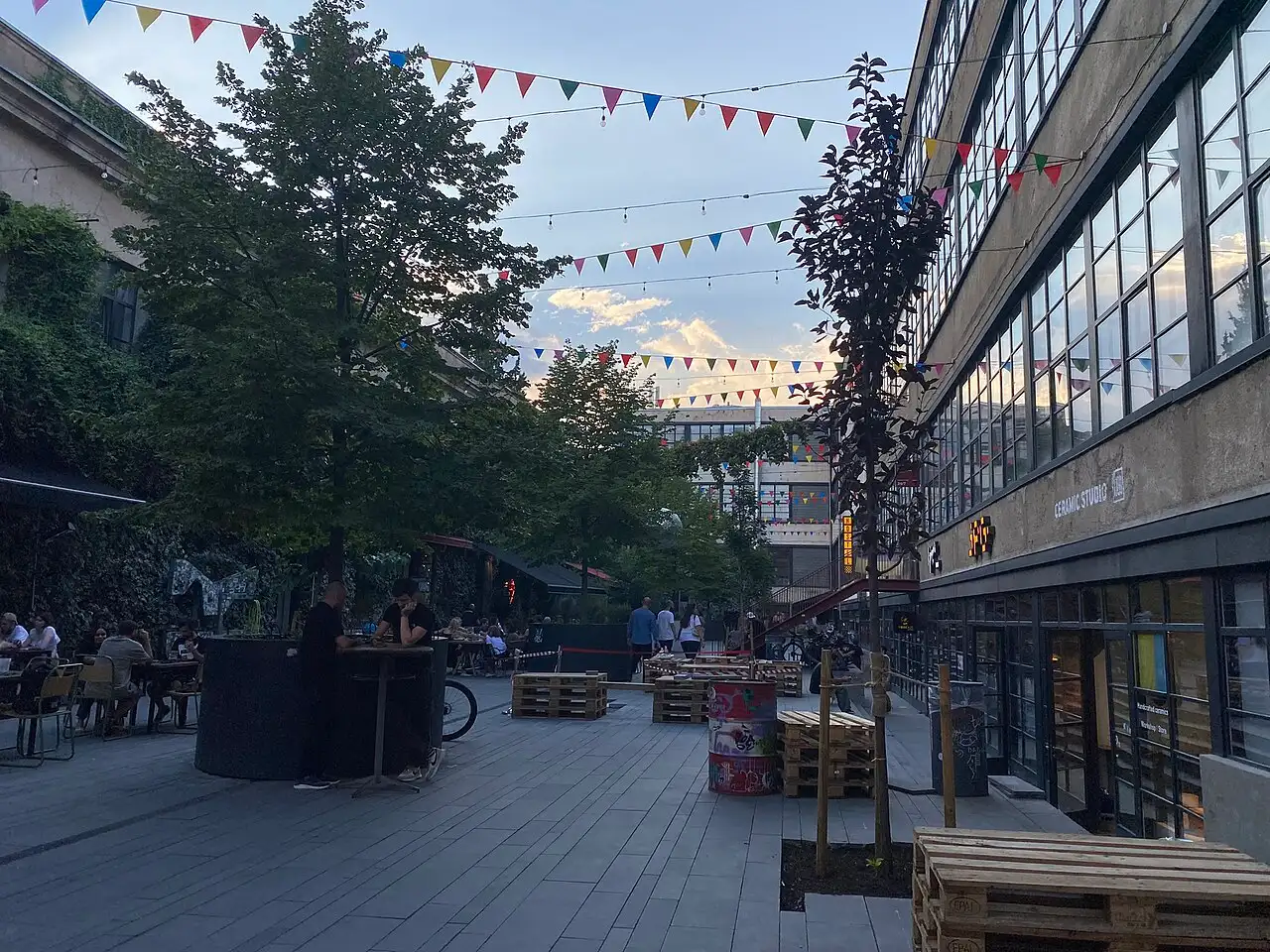
Fabrika’s own tenant directory lists seventeen businesses sharing the courtyard, and the mix changes slowly enough that it’s worth a quick check before a special trip. For food and drink there’s Saamuri Wine Bar, which leans into Georgian wine specifically rather than running a generic cocktail list, the bar Moulin Electrique, G-U-M, PIPES Burger Joint, the pizzeria Popolo and Tone - a Georgian bakery-restaurant named after the clay oven used across the country for baking shoti bread. For browsing there’s Vodkast Records for vinyl, the design studio Shavikata, Ceramic Studio 1300, JPG Print Shop and Magnolia Film Lab for anyone still shooting on film. Camora Barber Shop and Tsibakha Game Club, which stocks more than 150 board games from chess and backgammon to strategy titles, round out the services side.
Fabrika Co-Work runs alongside all of this as its own business, aimed as much at Tbilisi’s own freelancers and entrepreneurs as at travelers passing through - a desk for a day doesn’t require a dorm bed upstairs. Between the studios, the bars and the coworking floor, the courtyard tends to have people in it at almost any hour, which is part of why it works as a meeting point rather than just a nightlife stop.
None of these venues publish a shared price list, so budget the way you would at any central Tbilisi cafe: a filter coffee is cheap, a glass of wine at Saamuri won’t be the cheapest pour in Georgia. The flea market at the Dry Bridge sits close enough that plenty of visitors combine a morning browsing Tbilisi’s markets with an afternoon coffee here.
Staying at the hostel
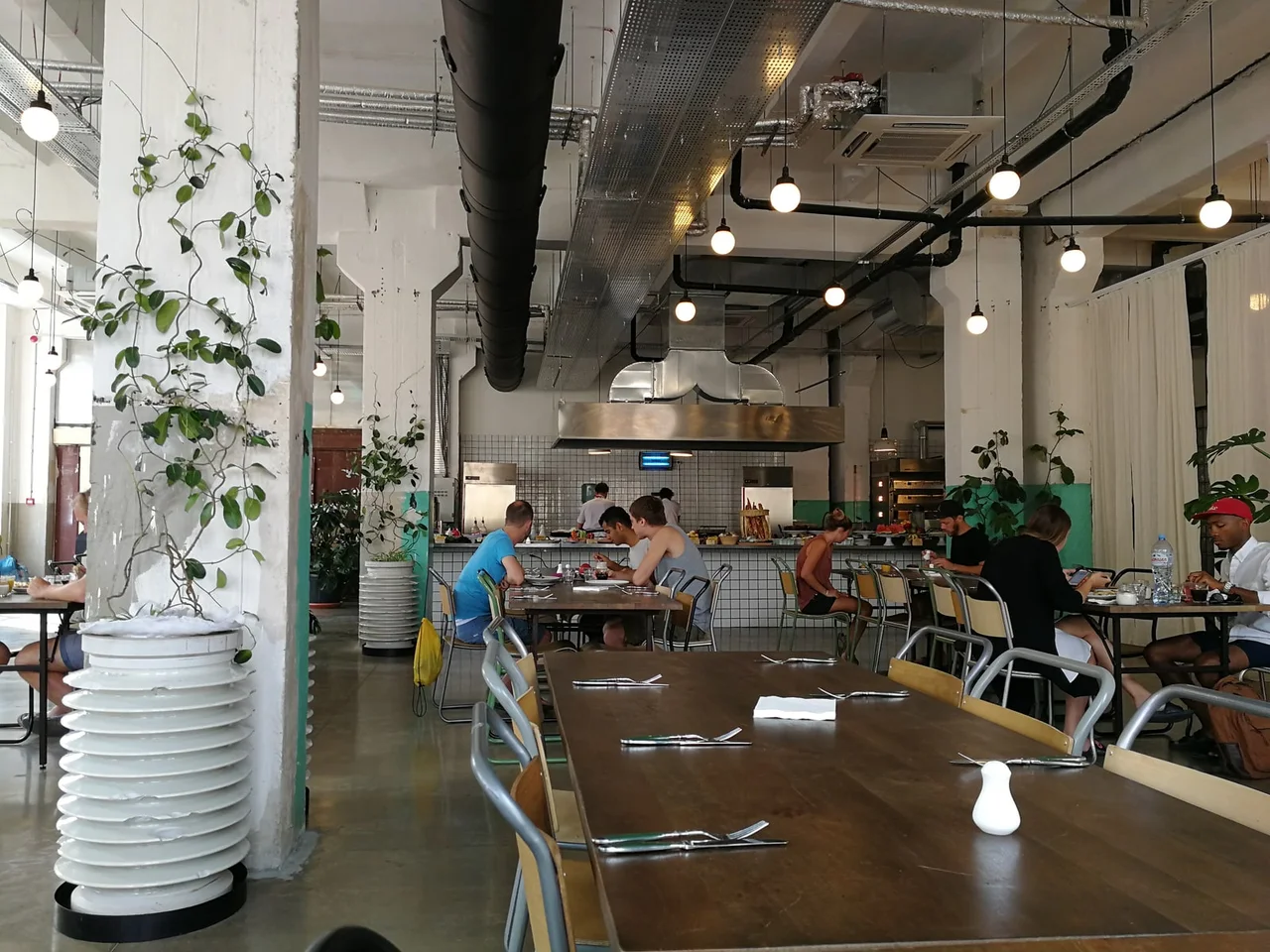
Fabrika Hostel opened alongside the courtyard in 2016 with roughly 95 rooms - about five apartment suites, 44 private rooms and 49 shared dorm rooms, by one architectural writeup from the following year. By 2018 it was already being counted among the biggest hostels in the region, with more than 230 dorm beds alone plus 24-hour reception and free wifi. The stated aim from day one wasn’t just cheap beds - it was to get travelers and Tbilisi locals talking to each other in the same courtyard, and the mix of residents above still does that job.
Current rates aren’t published in one central place, so check the hostel’s own booking page close to your dates - they move with the season like anywhere else in town. You don’t need to be a guest to use the courtyard: the cafes, bars and shops are open to anyone who walks in off Ninoshvili Street.
When to come
Afternoons are quiet: a coffee, a look at the shops, maybe a haircut. The mood flips after dark and on weekends, when the tables fill and the courtyard turns into one of the livelier corners of the city. For the night that follows, from Left Bank on this side of the river to Bassiani and KHIDI, see our Tbilisi nightlife guide. Markets, exhibitions and concerts run through the year without a fixed schedule - they’re free to walk into like the courtyard itself, so a quick look at Fabrika’s own events listing before you head over can save you from missing one.
Winter thins the crowd outdoors, since most of the seating is in the open air, but the bars and cafes keep running regardless. If you’re only in Tbilisi for a day or two and have to choose, an evening here pairs naturally with dinner nearby, rather than trying to squeeze it in alongside a full day of sightseeing across town.
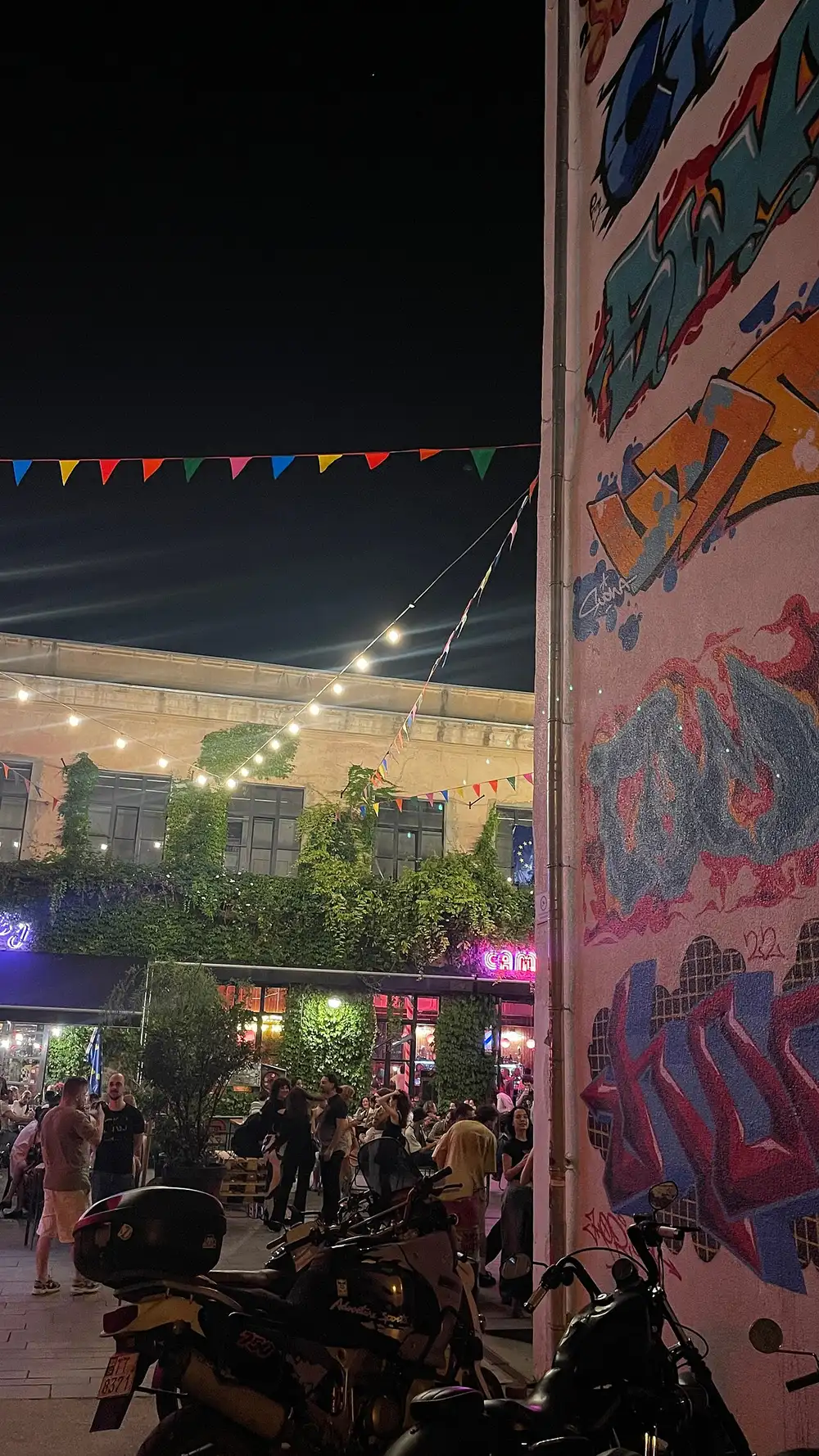
Fabrika works better as a stop than a destination: an hour by day, longer once the bars fill up. There’s no single sight to tick off inside - the draw is the courtyard itself, cafes and workshops packed into a century-old shell 5 to 10 minutes on foot from Marjanishvili metro. Travelers who want a quiet, museum-paced old-town visit can safely skip it; anyone who likes their history mixed in with a working bar scene, rather than roped off behind a ticket booth, will find plenty to do here. For the wider city, see our Tbilisi guide, the transport section for getting around, and entertainment for other ideas nearby.
On the map
The map loads on click - to keep the page lightweight.
The map didn’t load. Check your connection and refresh the page.
Admission and opening hours
- Admission price
- Entry to the courtyard is free; cafes, bars and shops have their own prices
The courtyard is open at all times; the venues inside keep their own hours. Busy in the evenings, quieter by day.
Details checked: August 29, 2026
Read also

Entertainment · 11 min read
Cooking Classes in Tbilisi: What to Pick and What It Costs
Verified · October 17, 2026Khinkali and khachapuri classes in Tbilisi from 110 GEL: family home or food walk, prices from operators' own sites, kids, vegetarians, how to book.

Entertainment · 9 min read
Georgian Folk Shows in Tbilisi: Where to Go and Prices
Verified · October 19, 2026Georgian dance and polyphony in Tbilisi: Erisioni at the Sports Palace on 30 October 2026, Ethno Tsiskvili nightly, lari prices and what the dances mean.

Entertainment · 9 min read
Paragliding in Gudauri: tandem flights, prices, season
Verified · October 10, 2026Tandem paragliding in Gudauri: the three launch sites, summer and winter prices in lari, weight limits, insurance and what happens if the weather turns.

Entertainment · 13 min read
Tbilisi Nightlife: Techno Clubs, Bars and Door Rules
Verified · October 6, 2026Tbilisi nightlife in 2026: Bassiani, KHIDI and Left Bank, entry prices in lari, how registration and the door work, where to drink first and getting home.