
Changing Money in Georgia: Bank, Exchange or ATM 2026
An exchange office pays almost the official rate, a bank counter 1-2% less: about 25 GEL on $500. Plus ATM fees, limits and where you lose most.
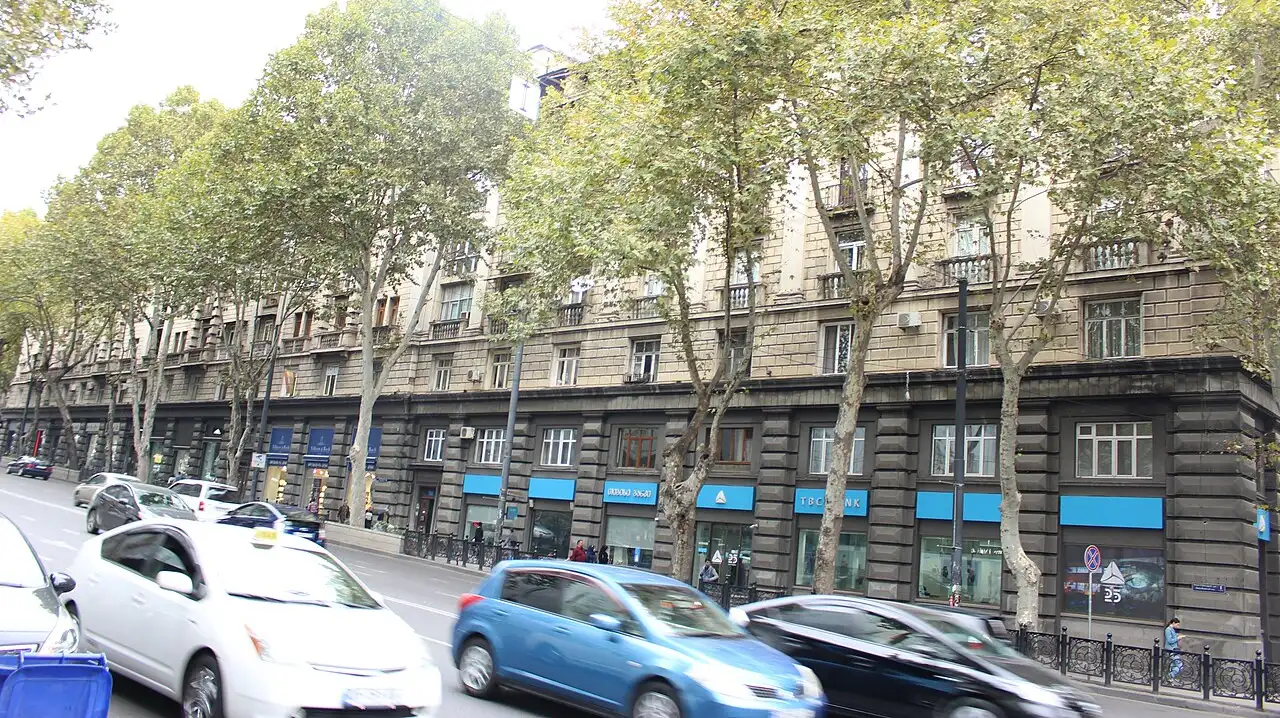
Short version: change dollars and euros at a street exchange office, not at a bank counter. On 1 August 2026 the best buying rate for a dollar was the same in Tbilisi, Batumi and Kutaisi - 2.623 GEL, against an official National Bank rate of 2.6259 (live data from the aggregator myfin.ge, which tracks exchange offices and banks). The same day the Bank of Georgia counter took dollars at 2.593 and the TBC counter at 2.574. On $500 that gap is 24 GEL: the exchange office hands you 1311 GEL, TBC 1287. Pull lari out of an ATM instead and you add the machine’s fee (0-5 GEL) plus whatever your own bank charges for a withdrawal abroad.
The rate itself moves daily, so the exact figures matter less than the gap between channels. That gap holds for months and barely depends on the city: Batumi and Kutaisi showed the very same numbers as the capital on the same day.
Exchange office, bank or ATM: where the rate is best
Georgia’s cash market is unusually tight. Street exchange offices (formally microfinance companies - Rico Credit, Express Lombard, Valuto, InteliExpress, Giro Credit) sit almost level with the official rate and post nearly identical numbers nationwide. Here is how changing dollars looked on 1 August 2026 (myfin.ge, buying rate, meaning the lari you get per dollar):
- Exchange offices in the city centre - 2.623 GEL. On $500 you give up less than 2 GEL against the official rate.
- Smaller banks (TeraBank, Credo) - 2.622 and 2.616 GEL. Effectively the same.
- Bank of Georgia - 2.593 GEL. On $500 you’re about 16 GEL short.
- TBC Bank - 2.574 GEL. On $500 that’s roughly 26 GEL, close to 2%.
The first practical rule follows from that: hunting for the single best exchange office is a waste of a morning. Between the best rate and the tenth on the list there’s about 0.3 tetri per dollar, which is one and a half lari on $500. The real money goes somewhere else - change the same sum at a big bank’s counter and you lose ten times as much.
Second, read the side of the board that applies to you. That day the spread between buying and selling a dollar was 0.4 tetri at the exchange offices (2.623 against 2.627) and 9 tetri at the TBC counter (2.574 against 2.664). The attractive number on the sign is often the selling rate, not the one you are being paid.
Third, and this one breaks the standard advice. “Never change money at the airport” no longer holds in Tbilisi: the international terminal has an InteliExpress desk quoting 2.622 GEL, the same as downtown, while the TBC service centre in the very same building was buying dollars at 2.574. It’s not the airport that costs you money, it is which window you walk up to. You still do not need to change everything there, since the city is full of offices at the same rate.
Fourth, what to bring. Dollars and euros change with almost no loss here - the best euro rate on 1 August was even slightly above official (3.023 against 3.0206). Roubles and hryvnia are a different story: roubles were bought at 0.0313 GEL against an official 0.03301 (down 5%) and hryvnia at 0.0545 against 0.05881 (down 7%). If you can choose what to carry, carry dollars or euros, because losing five percent at the door wipes out every fee you save later.
And cash against card. An ATM converts at the card scheme’s rate, which sits close to official, so if your card charges nothing for transactions abroad, a fee-free ATM works out roughly level with an exchange office. If your card takes 2-3% abroad, changing cash wins, and it is worth bringing dollars to change on the spot.
ATMs: where the fee is lower
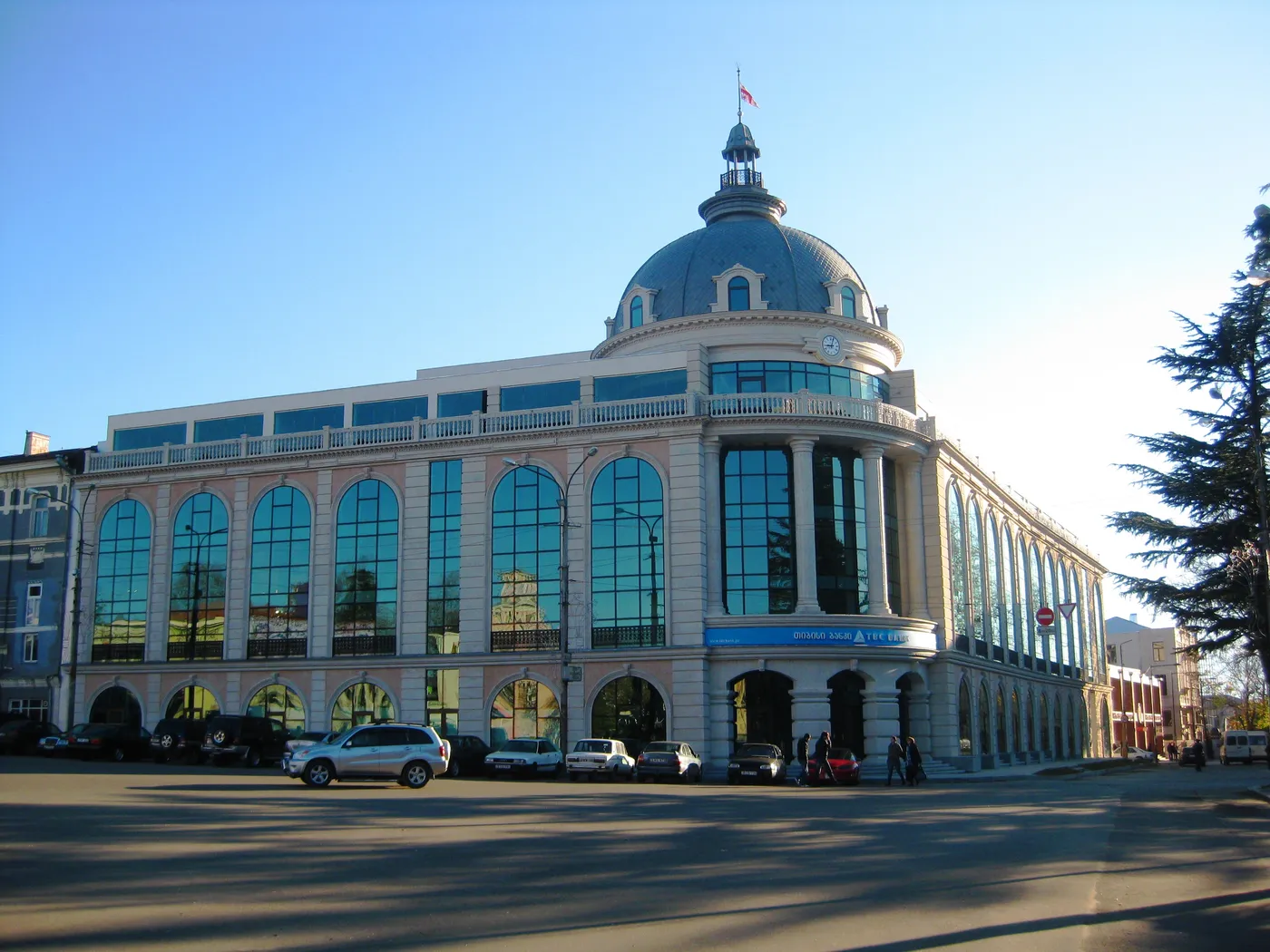
There are plenty of ATMs in Georgia, they’re on every corner in cities, and they take Visa, Mastercard and Maestro, some also UnionPay. But the withdrawal fee depends heavily on the bank, and over a trip the difference adds up. According to a dedicated ATM reference (atmfeesaver.com, current as of February 2026), the ATM’s own fee for foreign cards ranges roughly from 0.5 to 25 GEL per transaction across the country, with one bank charging up to 4% of the amount. Withdrawing dollars fee-free is no longer possible anywhere in Georgia in 2026, machines dispense cash in lari.
What this means in practice by bank (figures are indicative, from travel forums and guides in early 2026, and a bank can change them, so check in your app):
- Basisbank and Cartu Bank most often charge no fee of their own to foreign cards. They have fewer machines than the giants, but they are worth seeking out for a zero fee if you’re withdrawing a larger sum.
- TBC Bank - traveller reports put it at 1-5 GEL per transaction. One catch from the same reports: some TBC ATMs in residential districts (Vake, for example) add about 2% for foreign cards if you withdraw less than ~500 GEL, so at TBC it is better to take out at least 1000 GEL at once.
- Bank of Georgia - around 3 GEL per transaction in the same reports.
- Liberty Bank is formally listed as high (people quote amounts up to 20 GEL), but in practice it often charges foreign cards little or nothing, and unpredictably from town to town. It is unreliable as your main option, better kept as a backup.
An important caveat: that’s the fee of the ATM itself. On top of it, your own issuing bank will almost certainly charge a foreign-withdrawal fee (usually a percentage plus a flat amount), which you will find in your card’s terms. It is precisely this second fee that makes it cheaper to withdraw less often and in larger amounts, rather than hitting the ATM every day for small sums.
How much you can withdraw at once: limits
The second thing that saves on fees is the per-transaction limit. The more a machine gives you at once, the less often you pay your issuing bank’s flat fee. Per atmfeesaver.com, the per-transaction maximum across the country runs from 200 to 3000 GEL, most commonly 500 or 2000 GEL. Rough figures for the big banks (forums, early 2026): a standard TBC ATM gives up to ~2000 GEL at once, while newer terminals (Rustaveli Avenue and the East Point mall are named, for instance) go up to 3000 GEL; Bank of Georgia’s per-transaction limit is usually 1000-1500 GEL.
The good news: the ATMs themselves usually have no daily limit, so if a single transaction gave you too little you can simply run another one straight away. The constraint is more likely to come from your card: many banks have their own daily cap on cash withdrawals abroad, and that is worth checking and, if needed, raising in your app before the trip so you do not hit a wall on holiday.
And once more about DCC, dynamic currency conversion. If an ATM (or a shop terminal) offers to charge the amount “in your currency”, in dollars, euros or otherwise, always choose to be charged or paid out in lari (GEL), the “without conversion” or “charge in GEL” option. The rate the machine applies is almost always worse than your bank’s, and it’s an easy way to lose a few percent for nothing.
Cards or cash
In Tbilisi, Batumi and Kutaisi, Visa and Mastercard are taken almost everywhere: cafes, restaurants, supermarkets, hotels, pharmacies, shops, with contactless long since the norm. But you still need cash lari, and here’s where it is hard without it:
- markets and bazaars, small shops, fruit and spice sellers;
- street-hailed taxis and marshrutka minibuses (apps like Bolt take cards, but a street taxi is cash only);
- mountain villages, family guesthouses, monasteries, small rural cafes;
- entry to some natural sites and village markets.
A working rule is to keep at least 100 GEL in small notes for a day in the city, and if you’re heading to the regions or the mountains, budget two or three times that and withdraw cash in advance while a big-bank ATM is still nearby.
One caveat on card networks. Visa and Mastercard are the safe bet; UnionPay is accepted only patchily and Mir effectively doesn’t work outside Russia. Whatever you carry, don’t tie the whole trip to a single payment method - a reserve of cash dollars or euros to change is the simplest plan B.
Tipping: how much, to whom and when
Tipping in Georgia isn’t obligatory and was historically never part of the culture, though it has become more common in cities. No one expects the large sums seen in the US, but small notes are worth keeping for it.
Restaurants and cafes. There’s a trap here: many places already add a “service charge” of about 10% to the bill, and, as locals well know, it usually does not reach the waiter and stays with the venue. So check the receipt first. If the charge is there and you want to thank the waiter specifically, leave a small amount in cash, into their hand. If it’s not, aim for the same ~10%, again preferably in cash.
Taxis, hotels, guides. For a driver, round up the fare or add 1-3 GEL (Bolt also lets you tip in the app). A hotel porter gets about 2-5 GEL per bag, while small family guesthouses generally don’t expect anything. A guide on a tour gets around 15-20% or roughly 20 GEL per person for a good day, and on free walking tours the guide lives entirely on tips, so 30-50 GEL is reasonable.
What it adds up to over a trip
Add a week together. Change $700 at an exchange office rather than a TBC counter and you keep about 34 GEL. Take the same 2000 GEL out in two withdrawals instead of six small ones and, at a 3 GEL machine fee, you pay 6 GEL rather than 18, plus your own bank’s flat charge four fewer times. Decline DCC at the supermarket till and you keep the 3-5% it would have skimmed off every card payment. Over a trip that’s 100-150 GEL, a decent dinner for two: not a fortune, but not a reason to stand in a bank queue either.
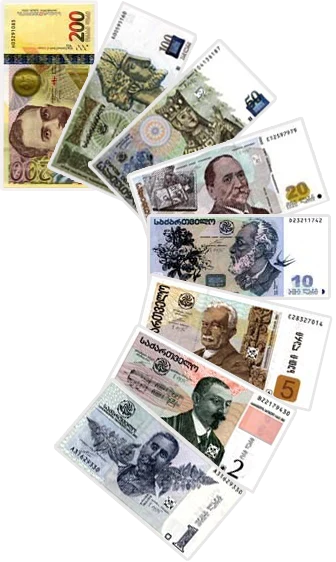
To gauge how much cash and card to budget for a few days, our breakdown of how much a trip to Georgia costs for 3, 5 and 7 days is a handy starting point. If you are staying long term or working remotely, the whole question of withdrawal fees goes away with a local card, covered separately in how to open a Georgian bank account. What the notes look like and how much cash you may bring in without declaring it’s in the guide to money and the lari in Georgia.
In short
- The rate is better at an exchange office - 2.623 GEL per dollar against 2.574 at a TBC counter (1 August 2026), a 24 GEL gap on $500.
- The airport isn’t the villain - the exchange desk in the Tbilisi terminal pays the city rate, while the bank counter in the same building pays the worst.
- Bring dollars or euros - roubles and hryvnia change 5-7% below the official rate.
- Lower ATM fees at Basisbank and Cartu (often 0 GEL); TBC and Bank of Georgia are usually 1-5 GEL (early-2026 reports - check in the bank’s app), so withdraw from 1000 GEL.
- DCC: always choose to pay and be paid out in lari (GEL), not your home currency.
- Cash is needed for markets, taxis, minibuses and mountain villages; ~100 GEL in small notes per day in the city.
- Tips: ~10% in cafes in cash by hand, 1-3 GEL to a taxi driver, 15-20% to a guide.
Photos
Read also

Before you go · 8 min read
Georgia in winter: weather, cities and ski season
Updated · September 3, 2026Winter in Georgia: Tbilisi averages 3.4 °C in January, days run nine hours, ski season from late December, sulphur baths and cheaper city rooms.

Before you go · 9 min read
Georgia vs Armenia: Where Should You Fly?
Updated · September 3, 2026Georgia or Armenia in 2026: visas, flights, Black Sea vs Sevan, published tariffs side by side, and when both countries beat picking one.

Before you go · 11 min read
Tbilisi or Batumi: Which One Should You Visit
Updated · September 11, 2026Tbilisi or Batumi: climate, rain, lodging and who each city suits. Batumi gets five times more rain than Tbilisi a year - it changes the choice.

Before you go · 12 min read
Rtveli 2026: when to harvest grapes in Georgia
Verified · August 17, 2026Kakheti's 2026 harvest peaked late September to mid-October. Where to base, which wineries named dates, and how to join without a ticketed festival.