
Bakuriani, Georgia: where to stay, zones and summer
Bakuriani village guide: the Didveli, Kokhta and Mitarbi zones explained, where to stay and eat, getting around, and what stays open once the snow melts.
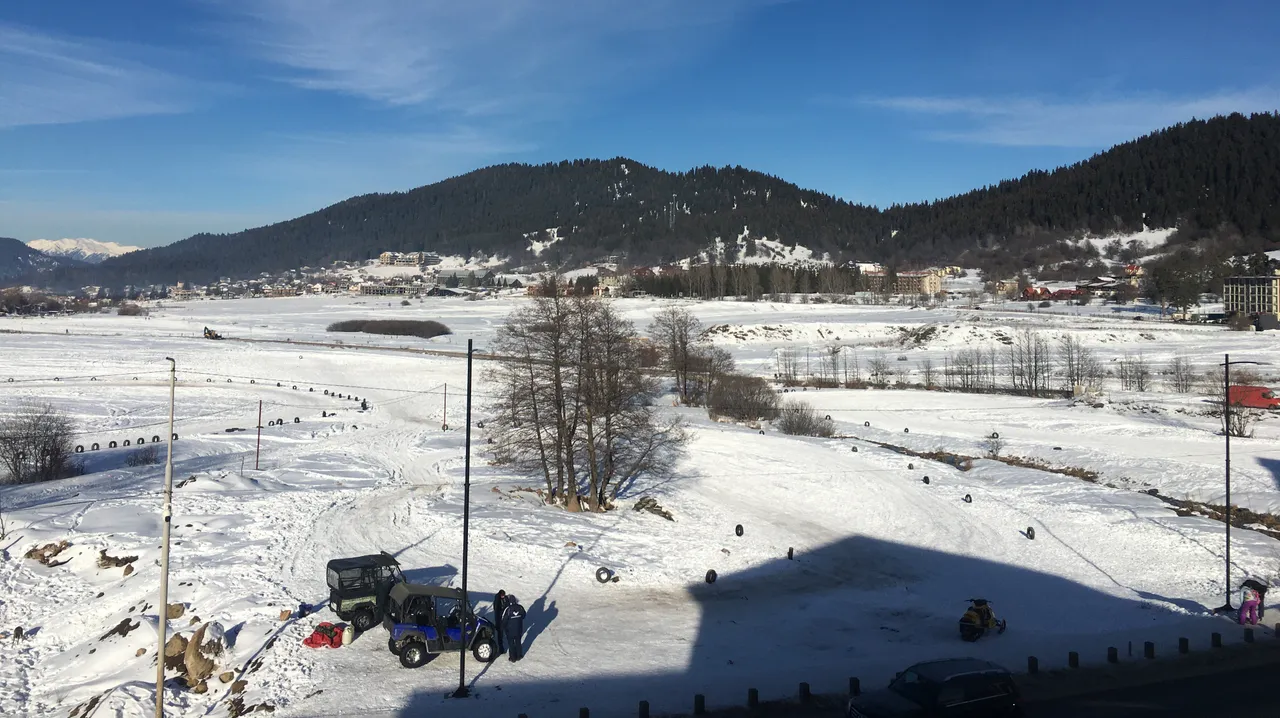
The first decision in Bakuriani is which of its three ski zones to sleep near - Didveli, Kokhta or Mitarbi, a few kilometres of road apart - or whether to skip all three for the village along Agmashenebeli Street. Get it right and you walk to your lift; get it wrong and every morning starts with a taxi fare.
How Bakuriani is laid out: the centre and the zones
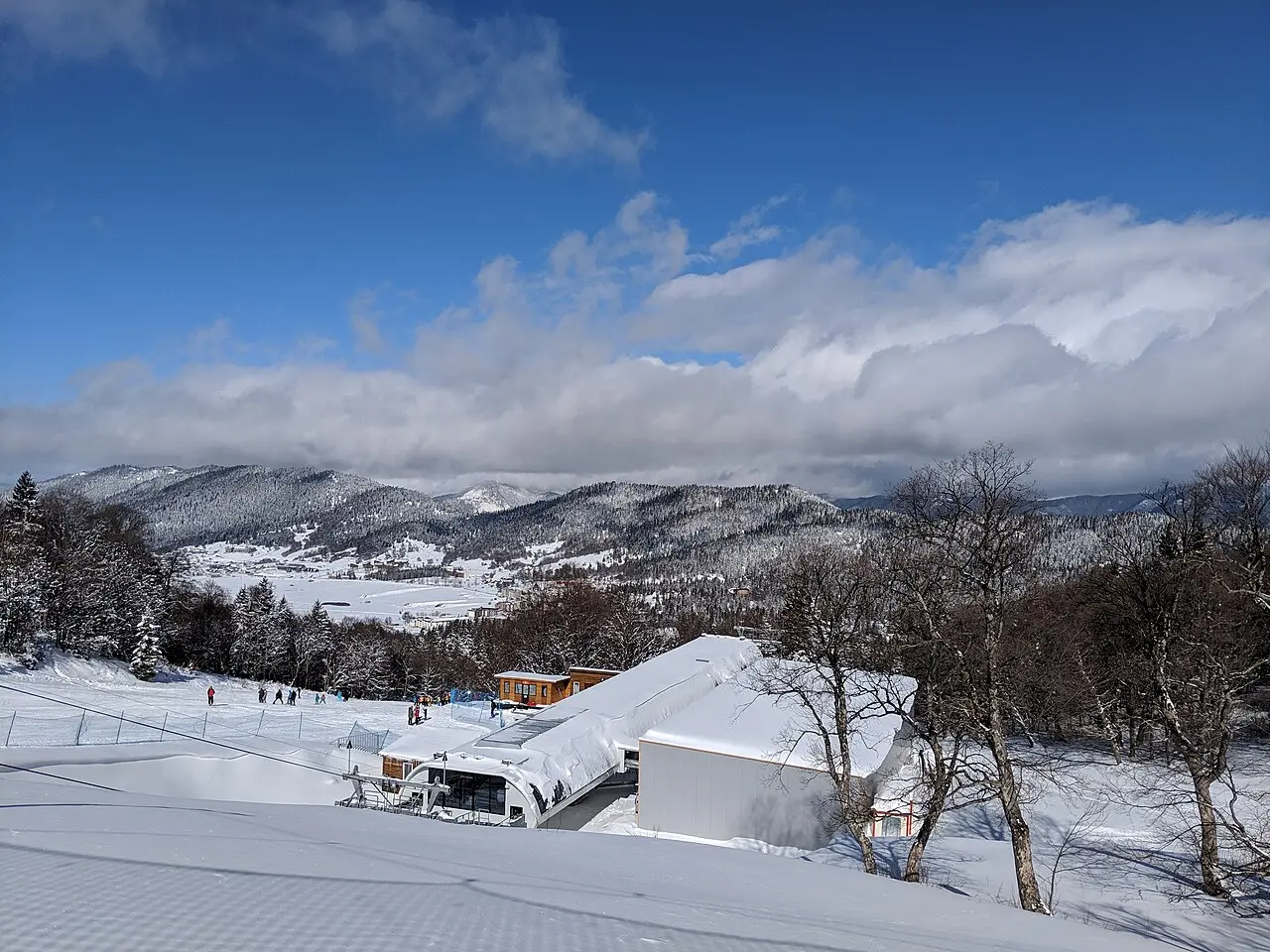
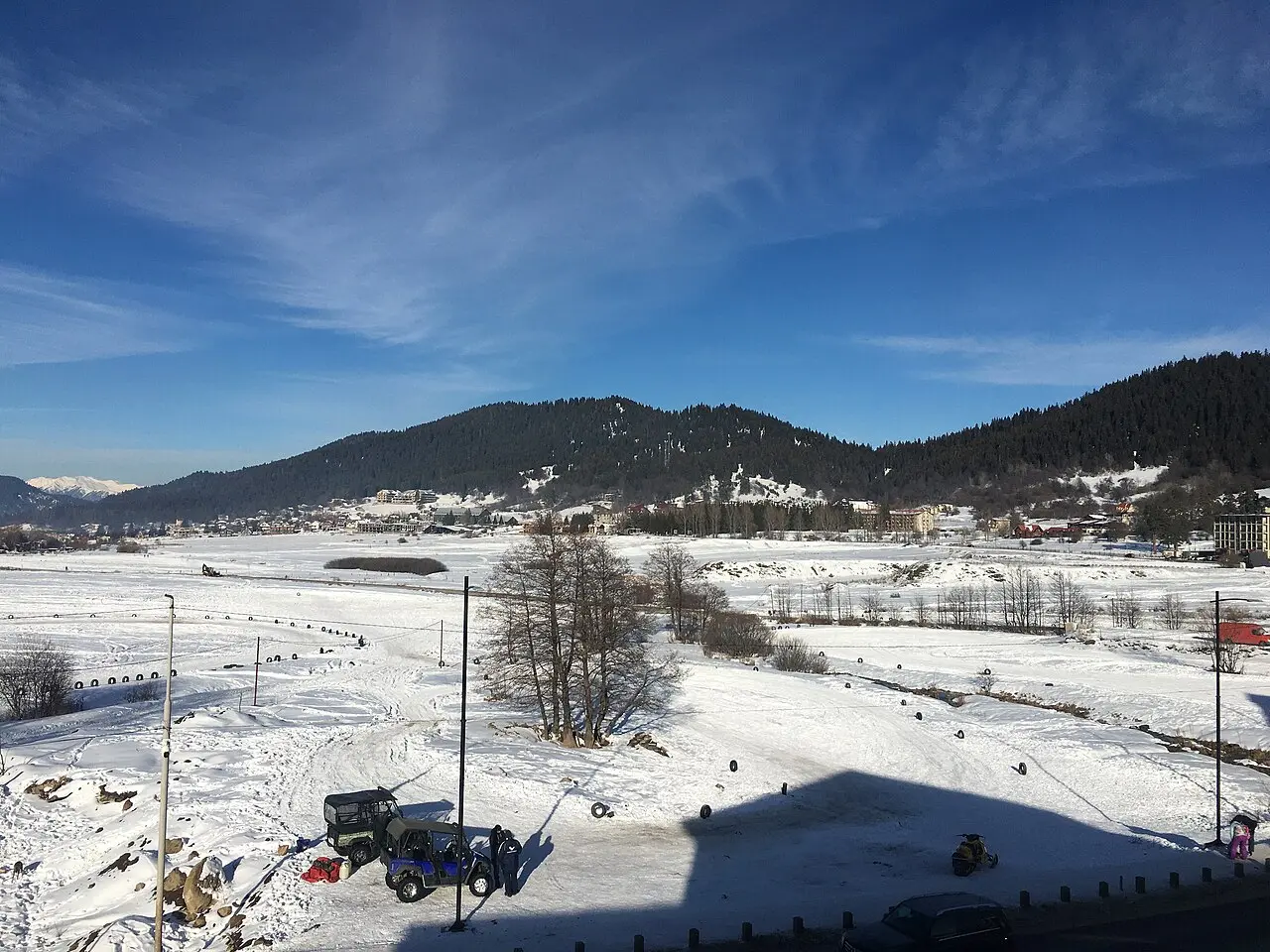
Bakuriani sits in Borjomi municipality on the northern slope of the Trialeti range, at around 1,700 metres. Officially it’s a daba, the Georgian status for a small urban-type settlement, and it really is small: the 2014 census counted 1,879 people in the borough itself, and 2,348 in the wider community. Everyday life fits into a compact grid of streets around Agmashenebeli, with the church, the old Kukushka station building, most of the shops and a scatter of cafes within a few blocks of each other. That’s the address to picture when someone says “the centre” - it isn’t a lift base, just the part of town where people live.
The three ski zones sit outside that grid. Didveli is the main lift base, home to the Nodo gondola and the Deka chairlift, and it carried most of the 2023 FIS Freestyle, Snowboard and Freeski World Championships: slopestyle, big air, halfpipe, parallel and cross all ran there, while moguls and aerials were contested down the valley at Kokhta, a separate ski area on its own slope. Mitarbi is the third zone, next to Kokhta on the same side of the valley. Addresses on that side can be new, so confirm that your particular guesthouse is finished and open before you book on the strength of a map alone.
Where to stay: which part of the village suits your trip
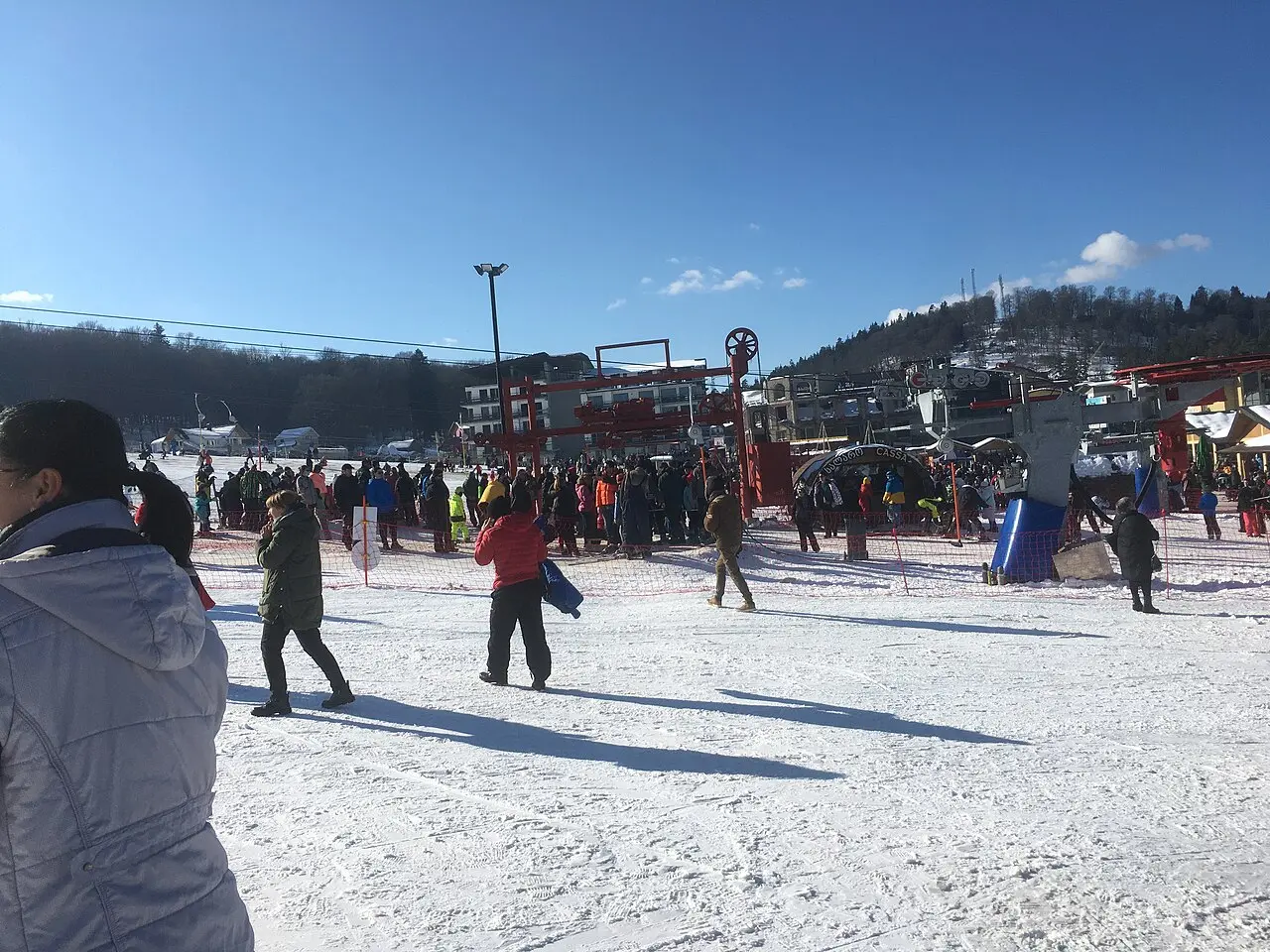
If skiing is the whole point of the trip and you don’t want a taxi between your bed and the first run, book near Didveli - it’s the busiest of the three, especially over the New Year fortnight. Kokhta is the quieter of the two big zones, and Mitarbi is worth checking for price as long as you confirm that the address is actually finished before you pay. The centre, along Agmashenebeli, is the most practical choice if you aren’t skiing every single day: it puts you closer to the shops, the church and the cafes, and a short taxi ride reaches whichever zone you want that morning.
The road distances behind that choice are short in every direction. Measured on the driving network, it’s about 2.6 km from the centre to Didveli, about 3.9 km to the Kokhta and Mitarbi side, and roughly 5.2 km between Didveli and Kokhta - six to nine minutes by car for any of those hops, snow and traffic permitting. So picking the “wrong” zone costs you a fare and a few minutes each morning, and nothing worse than that.
Where to eat and buy groceries
Cafes, small restaurants and a handful of pubs line the main street through the centre, and most kitchens lean into mountain staples: khinkali, kharcho, grilled meat. Small supermarkets cover self-catering if your guesthouse has a kitchen, though the shelves run closer to a village shop than a city supermarket. Card machines are common in the centre; the smaller kiosks up by the lifts often aren’t, so keep some cash on you.
Getting around the village and between zones
The centre itself is walkable; the zones are not. Those five kilometres of road between Didveli and Kokhta are more than anyone wants to cover on foot in ski boots, and no fixed shuttle timetable is published on the operator’s side. In practice people flag a taxi for the hop and agree the fare before getting in. Coming from outside, you arrive by marshrutka or taxi from Borjomi; where they leave from, what the road costs and how long it takes are set out in our Borjomi-Bakuriani weekend route, which also lists the direct minibuses from Tbilisi. Want to drive instead? The car hire section explains how to pick up a vehicle before you head into the mountains.
Off the slopes: evenings and non-ski days
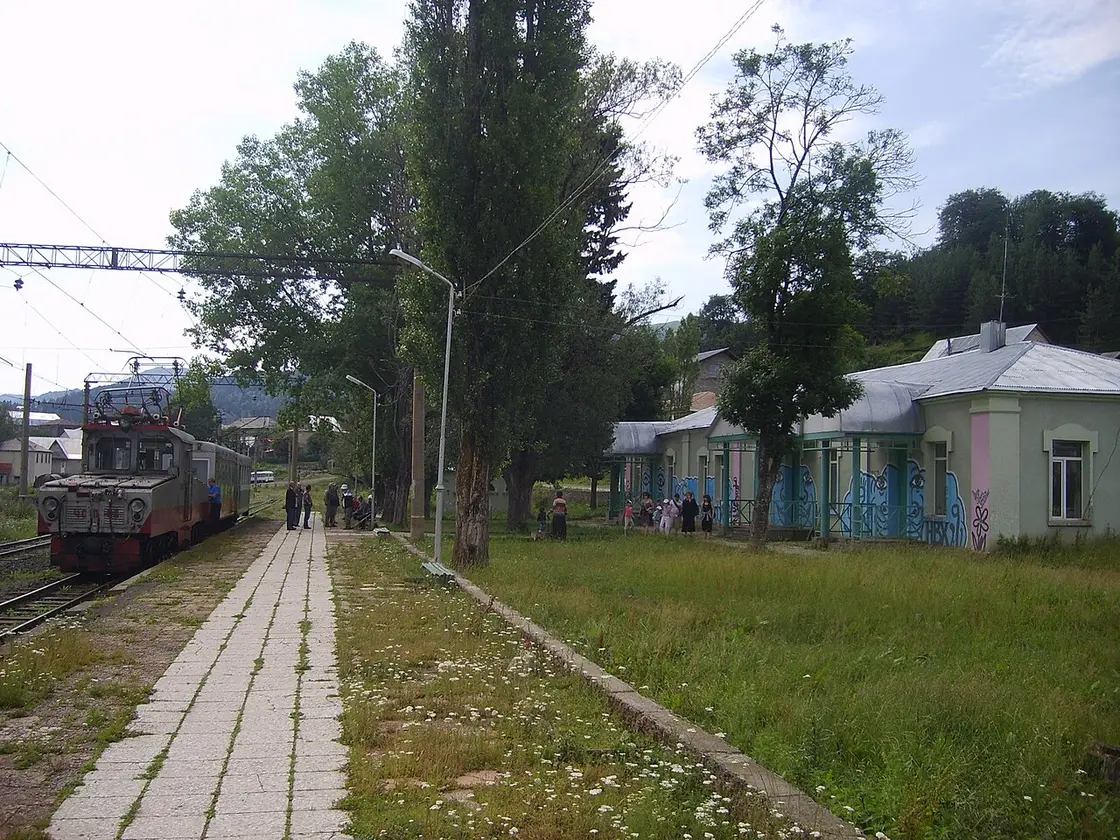
Lifts close for the day in the late afternoon, and Bakuriani’s evenings are quiet by design: this was a climatic health resort with sanatoriums long before it had a single chairlift, and that slower pace still shows once the slopes empty out. A walk up the main street, a long dinner and an early night is the local default, and most visitors settle into it by the second evening. When the weather closes in and skiing is off, the centre’s cafes and shops are the obvious fallback, and the road down to Borjomi is short enough that the town below, its park and its mineral water pavilion fill a half-day comfortably. The old Kukushka station building in the village is worth a look on the way past, though the line’s preserved steam locomotive stands on a plinth in Borjomi, not here.
Bakuriani outside winter: what’s open in the village itself
Guesthouses, cafes and shops in the centre run year-round, and rooms are generally easier to find and cheaper outside the ski season - useful if your trip is really built around Borjomi and the national park, with Bakuriani as the cooler add-on. Which lifts run in summer is announced season by season, and the announcement is the thing to read: Didveli’s Nodo gondola and Deka chairlift have opened in recent years, while Kokhta and Mitarbi run only when the operator says so. Both of them did run daily through the summer of 2025; for 2026 the operator named Didveli alone and left the other areas to a later notice. This season’s hours are in our Borjomi-Bakuriani weekend route.
The village also keeps its own alpine botanical garden, a branch of the Ilia State University Institute of Botany on Borjomi Street. It was founded in 1912, stays open to visitors all year and charges nothing, with garden staff acting as guides - a genuinely quiet hour that most itineraries never hear about. The historic Kukushka narrow-gauge railway from Borjomi is a different matter: it hasn’t carried passengers since 2020, a full rebuild was ordered in April 2026, and services are announced to return in January 2027. Until then it’s something to photograph from the road; the fuller history of the line and the old bridge at Tsagveri belongs to our Borjomi city guide.
On the ground: money, signal, medical help, weather
The village pharmacy is the Aversi branch on Agmashenebeli Street, open 10:00 to 22:00 seven days a week; it’s the only one the chain lists here, so the “second Bakuriani branch” you may read about elsewhere is actually its namesake in Akhaltsikhe. Skis, boards and boots can all be hired locally, so bringing your own gear is optional - ask your guesthouse which kiosk is nearest your door, since the hire points don’t publish addresses. Draw cash before the last climb up from Borjomi instead of counting on a machine by the lifts. Borjomi, about 45 minutes down the mountain, is also the nearest town of any size for anything past a pharmacy shelf; in a real emergency the nationwide number is 112, which covers police, ambulance and mountain rescue. Even in July the evenings are cold at 1,700 metres, so pack a warm layer whatever month you’re travelling.
Nearby
Bakuriani sits next to Borjomi and its mineral water, with the trails of Borjomi-Kharagauli National Park starting from the same town; our weekend route ties the two together with the road and rail details in full. Deciding between Bakuriani and Georgia’s other big resort, Gudauri? The skiing in Georgia comparison covers passes, season dates and terrain. And Georgia in winter covers where else to base yourself for a cold-season trip.
Photos
On the map
The map loads on click - to keep the page lightweight.
The map didn’t load. Check your connection and refresh the page.
Distance
- Tbilisi ≈190 km · ~3 h via Borjomi
- Kutaisi ≈175 km · ~3 h approximate
- Batumi ≈300 km · ~5 h approximate
Read also

What to see · 10 min read
Skiing in Georgia: Gudauri vs Bakuriani
Updated · September 5, 2026Gudauri or Bakuriani: 2025/26 day passes 70 vs 55 GEL, elevations, last season dates, who each resort suits and how to get there.

What to see · 7 min read
Svaneti travel guide: Mestia, Ushguli and towers
Verified · August 25, 2026Svaneti mapped: Mestia vs Ushguli, tower villages, season, and how to link town guides, the trek, and the road from Tbilisi.

What to see · 9 min read
Resorts near Batumi: Gonio, Kvariati & Tsikhisdziri
Updated · September 2, 2026Where to stay near Batumi for cleaner, quieter beaches: Gonio and its Roman fort, Kvariati for diving, and secluded clifftop Tsikhisdziri - how to choose.

What to see · 10 min read
Georgia with kids 2026: family beaches & resorts
Updated · July 18, 2026Georgia with kids: sandy, shallow beaches up north (Ureki, Shekvetili, Kobuleti), amusement parks, when to go and how to plan a family trip.