
Rike Park in Tbilisi: Bridge of Peace, cable car, fountains
Rike Park on the Kura in Tbilisi: the Bridge of Peace, the cable car up to Narikala, a musical fountain and modern architecture. What to see there.
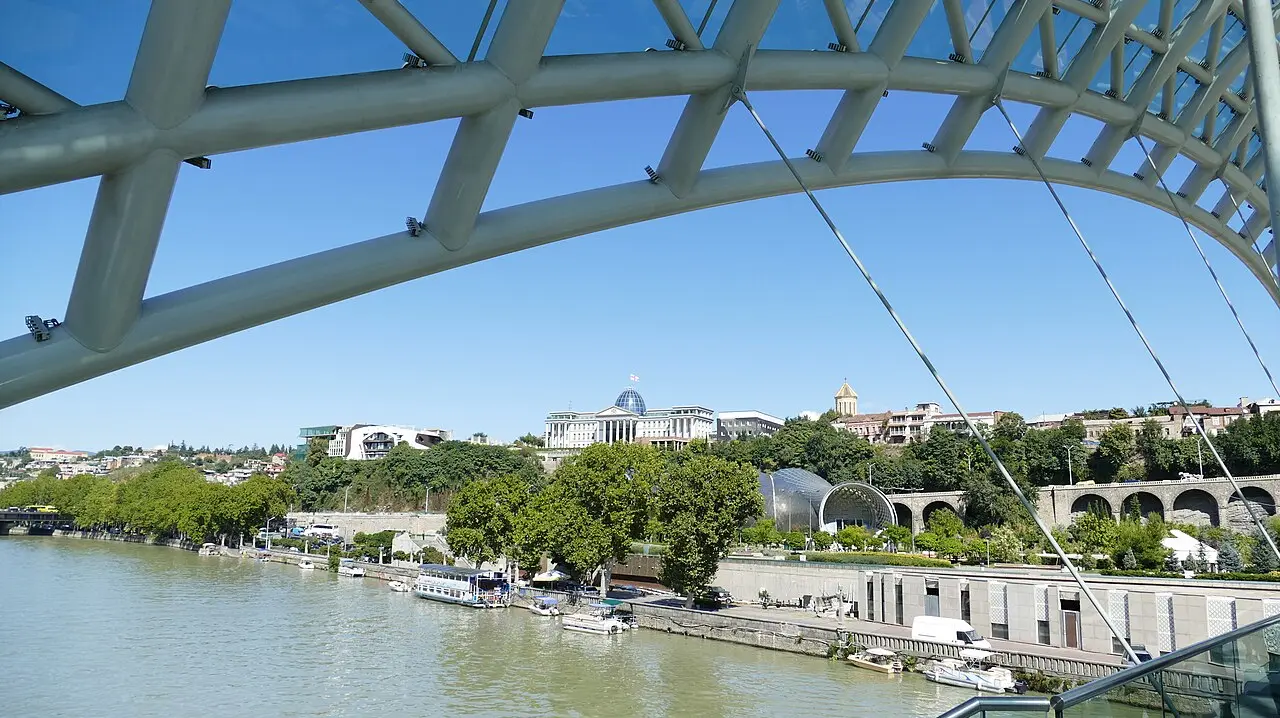
Rike Park is a modern park on the left bank of the Kura, right opposite old Tbilisi. It opened in 2010 and is now one of the busiest places in the city to stroll: lawns, fountains, cafés and some unusual architecture. The nearest metro stop is Avlabari, a five-minute walk away on the same side of the river, which makes the park an easy add-on before or after visiting the Holy Trinity Cathedral on the hill above it.
It’s a convenient place to begin exploring the centre. The pedestrian Bridge of Peace - a glass “wave” lit up at night - crosses the river to the Old Town, and from the park a cable car climbs up to Narikala fortress. In the park itself there’s a musical fountain, a giant piano sculpture and, for now at least, the pair of futuristic metal tubes that were meant to become a concert hall (their demolition is under way - see below).
From market square to modern park
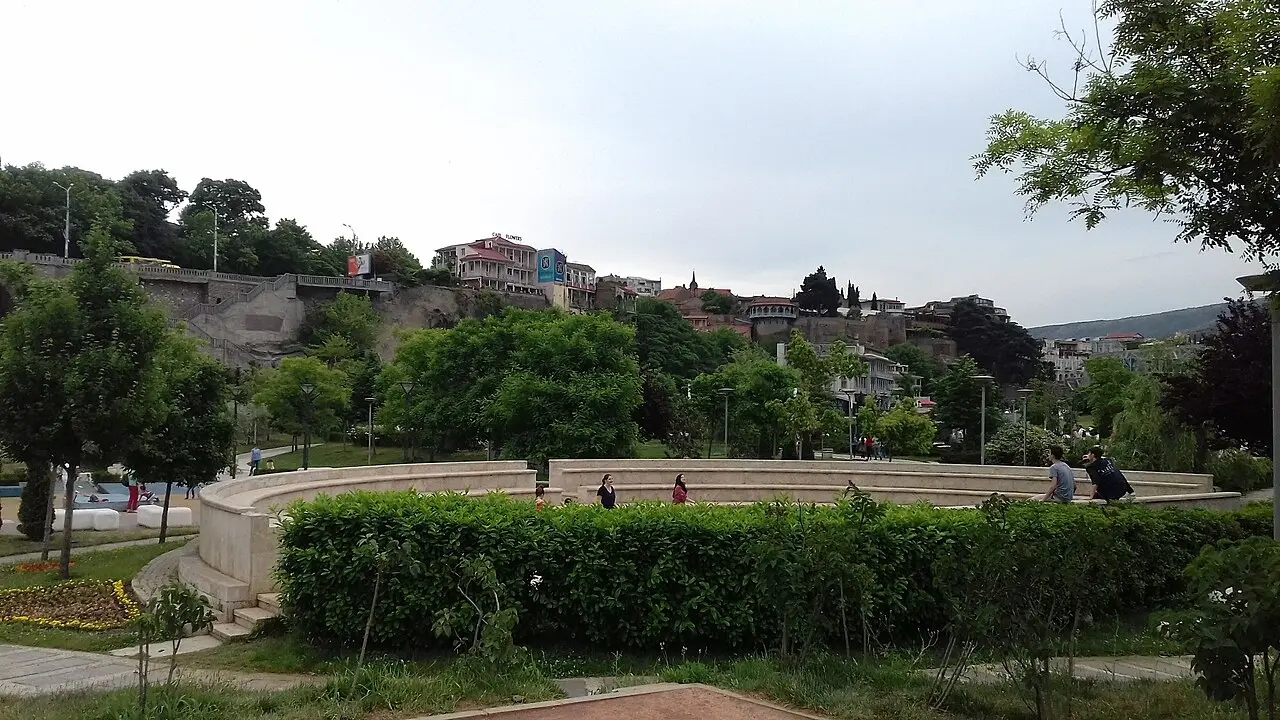
The ground Rike Park sits on wasn’t always this green. Through the 19th century the site held a working jumble of markets, inns and craft workshops serving the Old Town across the river, not a park at all. That history is easy to forget standing on the lawns today, but it explains why the site was already so central to city life long before anyone planned a park here: this stretch of riverbank had been doing a job for Tbilisi for more than a century before it became somewhere to relax rather than trade. The redevelopment that turned it into a park was part of a wider push, in the years after 2010, to remake Tbilisi’s riverfront and its approaches to the Old Town, and Rike was one of the more visible results: a working, slightly scruffy edge of the city turned into the kind of manicured, photogenic space that ends up on postcards instead.
The Bridge of Peace and views of the Old Town
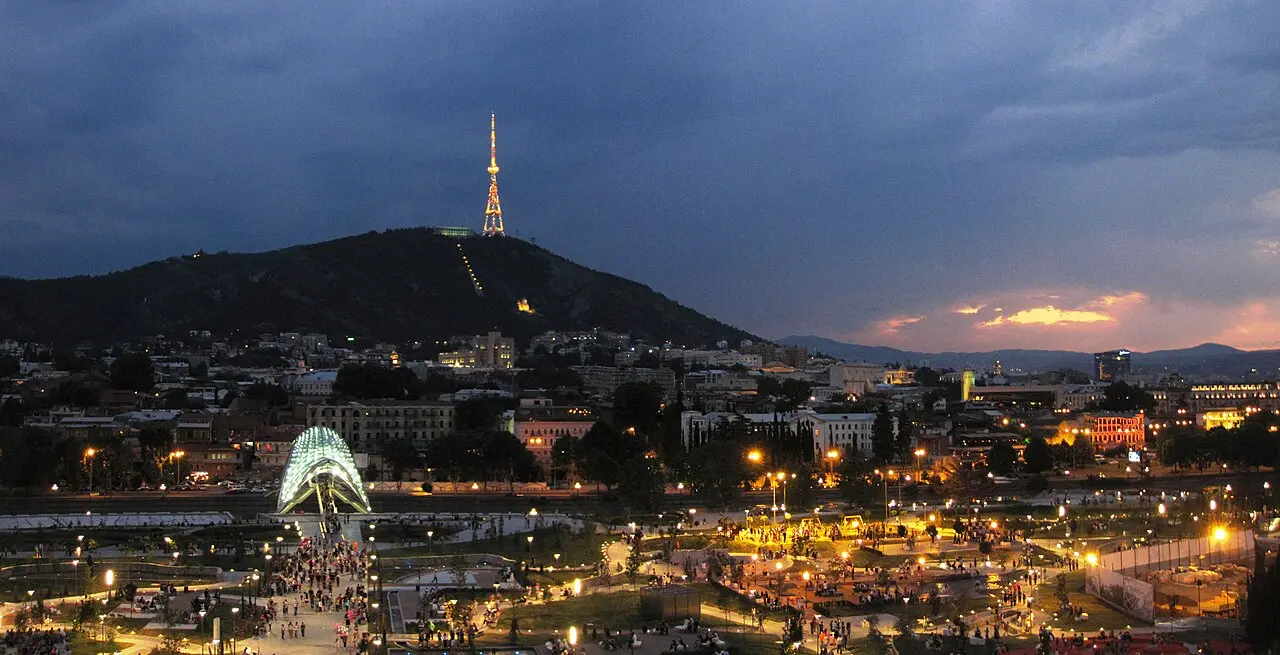
From the park’s embankment you get one of the most recognisable views in Tbilisi: the glass arc of the Bridge of Peace, and beyond it the rooftops of the Old Town and Mount Mtatsminda with its TV tower. The bridge itself opened on 6 May 2010, Georgia’s feast day for St George, and runs about 150 metres across the Kura - a steel-and-glass canopy designed by the Italian architect Michele De Lucchi, with over 1,200 individual LED fixtures built into the structure by the lighting designer Philippe Martinaud. Once an hour after dark, the lights along the two parapets blink out a message in Morse code that spells out the names of the chemical elements that make up the human body - the same handful of elements in every person, which is why the designers call it a small celebration of life and peace between people. From here it’s easy to cross to the right bank and head up into the historic quarters.
The cable car to Narikala
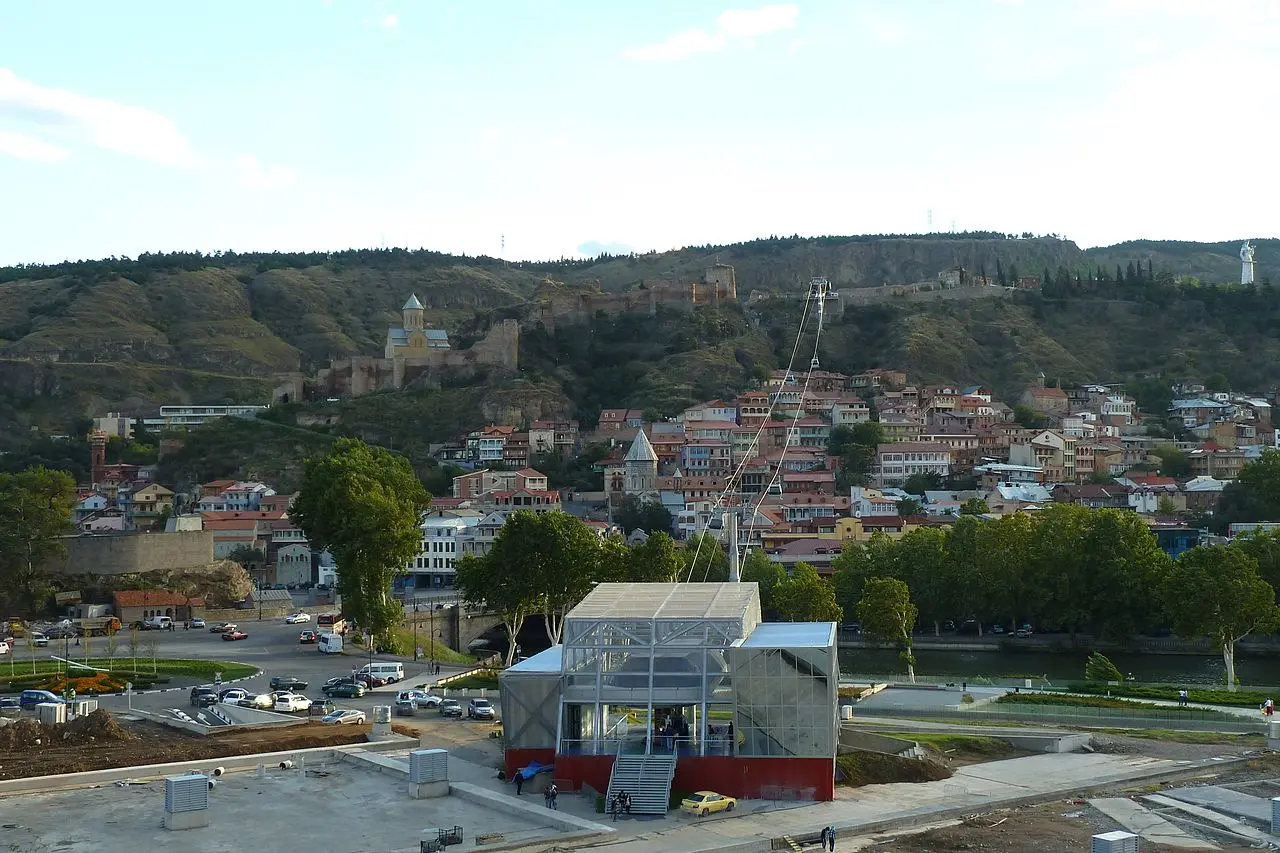
The lower cable-car station stands right in the park. Built by the Austrian firm Doppelmayr, the line covers about 500 metres, carrying cabins up over the river and the Old Town straight to Narikala fortress and the Mother of Georgia monument in just a few minutes - a short ride with panoramic views that’s genuinely quicker than the walk up. It’s paid with a Metromoney card rather than cash, the same card used on the metro and buses, and the fare is a flat 2.5 GEL one way, so a return trip runs about 5 GEL (plus 2 GEL for the Metromoney card itself the first time) if you come back the same way. The ride itself is the real draw, not just the transport: for a minute or two you’re gliding directly over the Kura and the rooftops of the Old Town, close enough to pick out individual balconies and courtyards, before the cabin swings up over the fortress walls at the top - an angle on the city you simply can’t get on foot. The cable car generally runs from 10:00 until close to midnight through the warmer months and switches to a shorter 10:00-22:00 winter timetable around the start of November, though the city moves that cutoff date a little from year to year, so it’s worth checking locally if you’re planning an after-dark ride outside peak summer.
The tubes that never became a concert hall
The pair of giant curved metal tubes near the northern end of the park have a stranger story than most people walking past them realise. Designed by the Italian firm Studio Fuksas as a 566-seat Music Theatre and Exhibition Hall, the structure was largely finished by 2012, complete with its own foyer, backstage space and a street-level ramp into the exhibition wing. Then Georgia’s government changed that same year, the new administration walked away from the previous one’s flagship building projects, and the interior fit-out was simply never completed. The tubes have stood empty ever since - a roughly 40-million-euro building that has never once hosted a concert or an exhibition.
That chapter is now closing for good. In July 2026 Tbilisi City Hall approved demolishing the building, and work on stripping it down began within a fortnight of the permit, in late July, with a deadline to finish by 25 December 2026. Studio Fuksas has publicly objected, saying it was never invited to discuss alternatives before the decision was made. So depending on exactly when you visit, the tubes might still be standing whole, half-stripped mid-demolition, or already gone and replaced by a building site - worth keeping in mind if a photo of them is the whole reason you came. Either way, it’s one of the more unusual footnotes to a park that otherwise reads as an unqualified success story.
What else is in the park
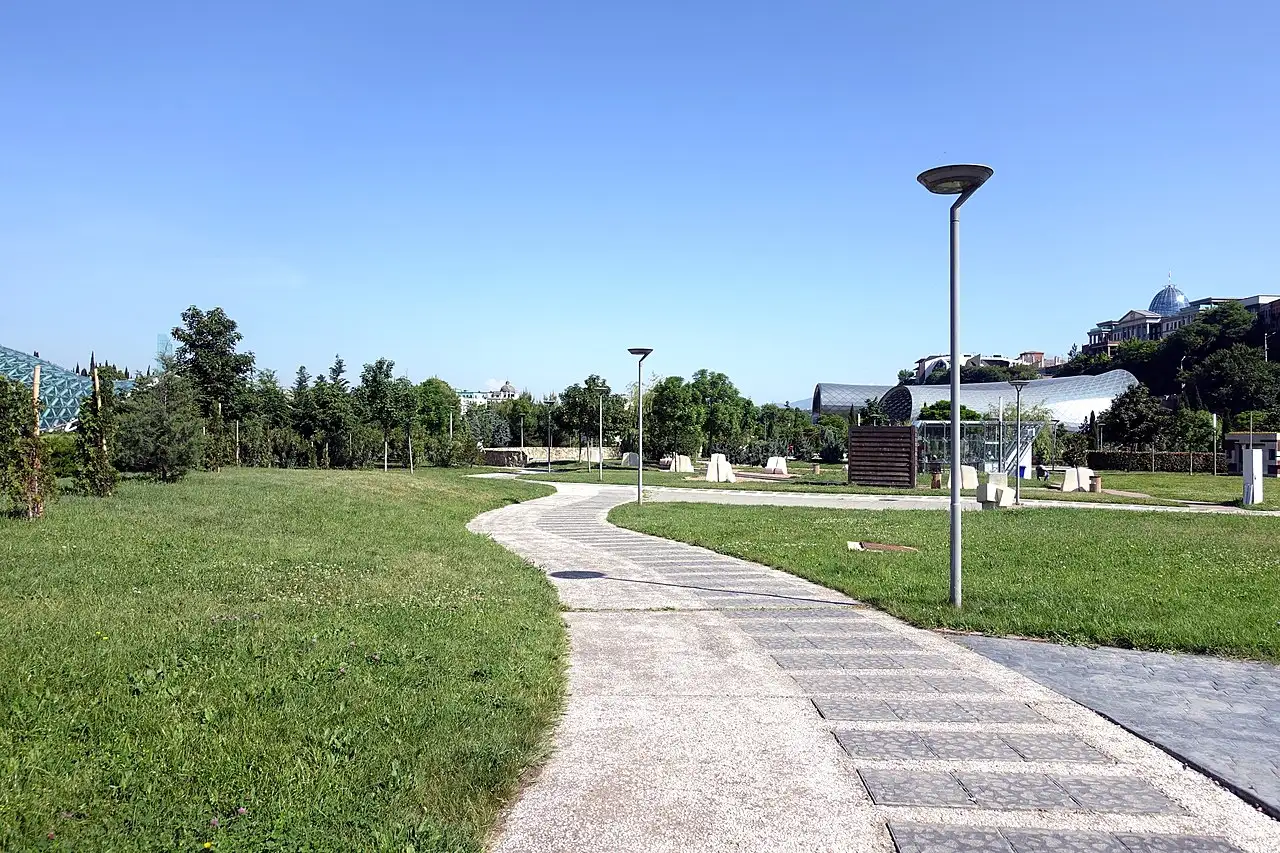
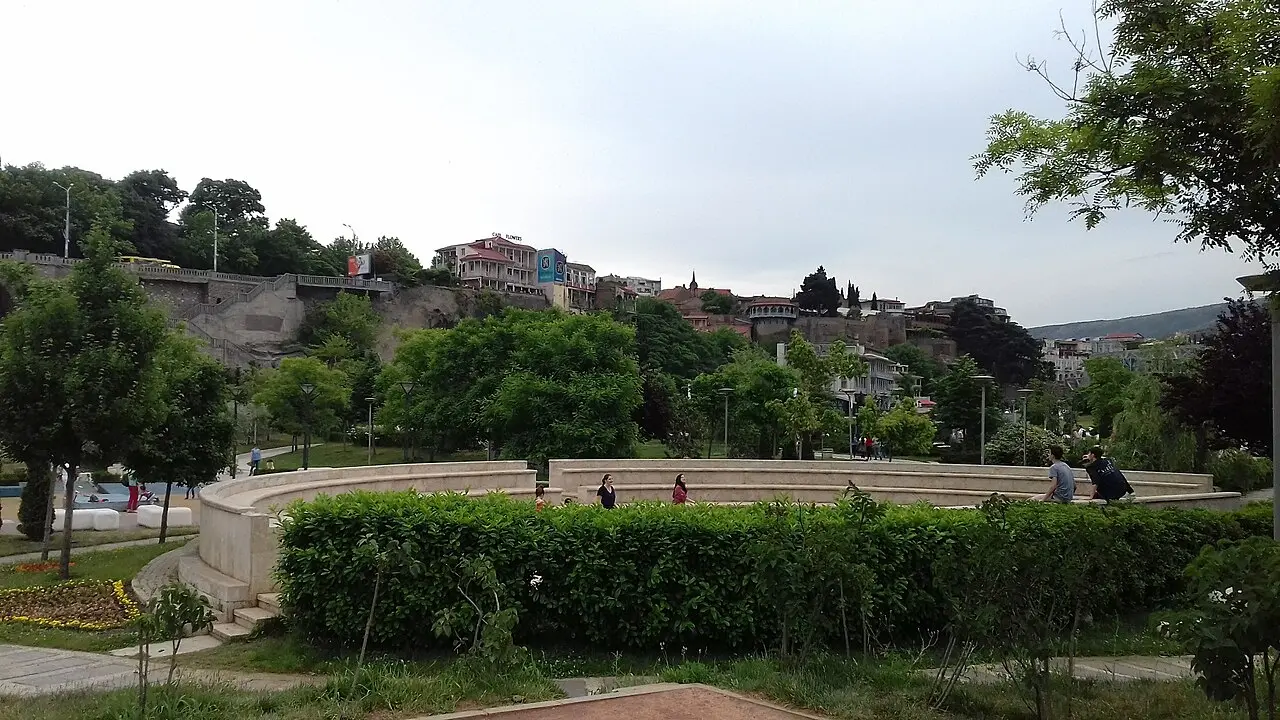
Beyond the bridge, the cable car and the unfinished concert hall, the park itself has plenty to wander through: broad lawns, a giant piano sculpture, an oversized chess board with pieces about a metre tall, and an amphitheatre stage that hosts open-air events through the summer. Look for the ten-metre metal oak tree near the centre of the park too - a sculpture by the Georgian artist Davit Monavardisashvili with twenty-five small doors set into the trunk, each one meant to represent a different era in the country’s history. During the warmer months a separate musical fountain runs light-and-water shows after dark, a few steps from the oak tree rather than attached to the piano sculpture. The whole layout is deliberately flat and open, with ramps rather than steps in most places, so it works well for visitors with a stroller or a wheelchair, not just people out for a casual walk. There’s no admission charge for any of it, which makes Rike an easy way to fill an hour or two in Tbilisi without spending anything beyond the cable car fare, and it’s a useful contrast if you’ve just come from a paid museum or fortress ticket elsewhere in the city.
The park in the evening
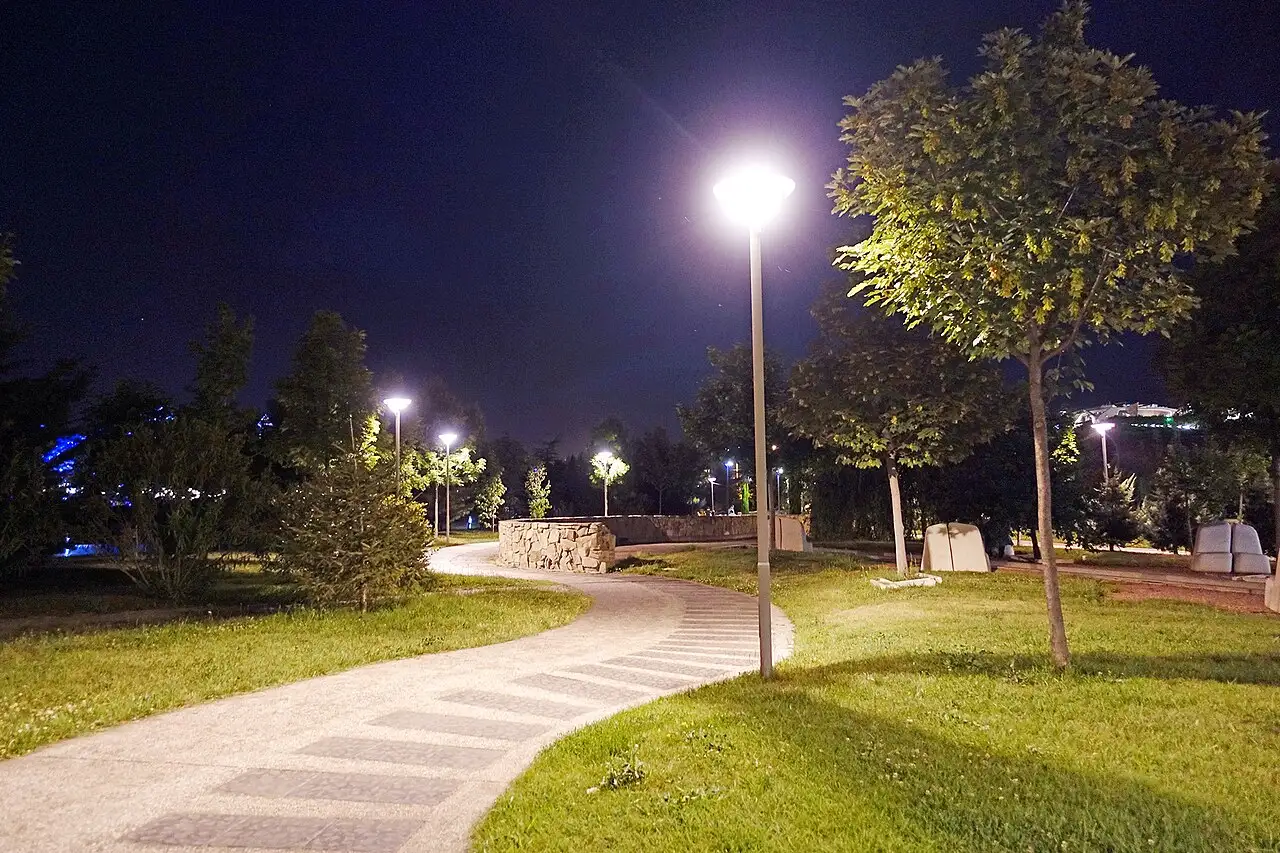
The park is at its best in the evening, when the lights come on across the bridge and the fountains, and it’s also when Rike gets busiest with an actual mix of ages rather than just tourists - families out for ice cream, teenagers on the chess board, couples heading for the cable car before it closes. Entry is free, and it’s worth timing a visit around dusk if you can, since the same view that’s pleasant by day turns into one of the better free evenings the city has to offer after sunset. The park also hosts part of Tbilisoba, the city’s long-running autumn festival, usually on the first weekend of October, when stalls and stages spread across the lawns for a weekend and the usual quiet evening stroll turns into something closer to a street party.
If Rike leaves you wanting another view of the city from above, the cheaper cable car to Turtle Lake on the opposite side of town is worth the detour, and the same Metromoney card that pays for both rides is explained in full in our Tbilisi public transport guide. For more on the city, see our guide to Tbilisi; for another side of Tbilisi’s outdoor life, the Dry Bridge and Dezerter Bazaar markets are a short walk away; and for more ideas, the things to do section.
Photos
On the map
The map loads on click - to keep the page lightweight.
The map didn’t load. Check your connection and refresh the page.
Admission and opening hours
- Admission price
- Free entry to the park; the cable car to Narikala is a separate paid ride, 2.5 GEL one way, paid with a Metromoney card; the card itself costs 2 GEL and is sold at metro station ticket offices
- Opening hours
- The park itself is open at all times
The cable car usually runs 10:00 to midnight through the warmer months, moving to a 10:00-22:00 winter timetable from around 1 November - Tbilisi City Hall adjusts the exact date most years, so treat it as a guide for an evening ride rather than a fixed rule.
Details checked: September 11, 2026
Read also

Entertainment · 11 min read
Cooking Classes in Tbilisi: What to Pick and What It Costs
Verified · October 17, 2026Khinkali and khachapuri classes in Tbilisi from 110 GEL: family home or food walk, prices from operators' own sites, kids, vegetarians, how to book.

Entertainment · 9 min read
Georgian Folk Shows in Tbilisi: Where to Go and Prices
Verified · October 19, 2026Georgian dance and polyphony in Tbilisi: Erisioni at the Sports Palace on 30 October 2026, Ethno Tsiskvili nightly, lari prices and what the dances mean.

Entertainment · 9 min read
Paragliding in Gudauri: tandem flights, prices, season
Verified · October 10, 2026Tandem paragliding in Gudauri: the three launch sites, summer and winter prices in lari, weight limits, insurance and what happens if the weather turns.

Entertainment · 13 min read
Tbilisi Nightlife: Techno Clubs, Bars and Door Rules
Verified · October 6, 2026Tbilisi nightlife in 2026: Bassiani, KHIDI and Left Bank, entry prices in lari, how registration and the door work, where to drink first and getting home.