
Prometheus Cave (Kumistavi): what to see and how to visit
Prometheus Cave near Kutaisi: six named halls, an underground boat ride, current ticket prices and hours, and a combo ticket with nearby sites.
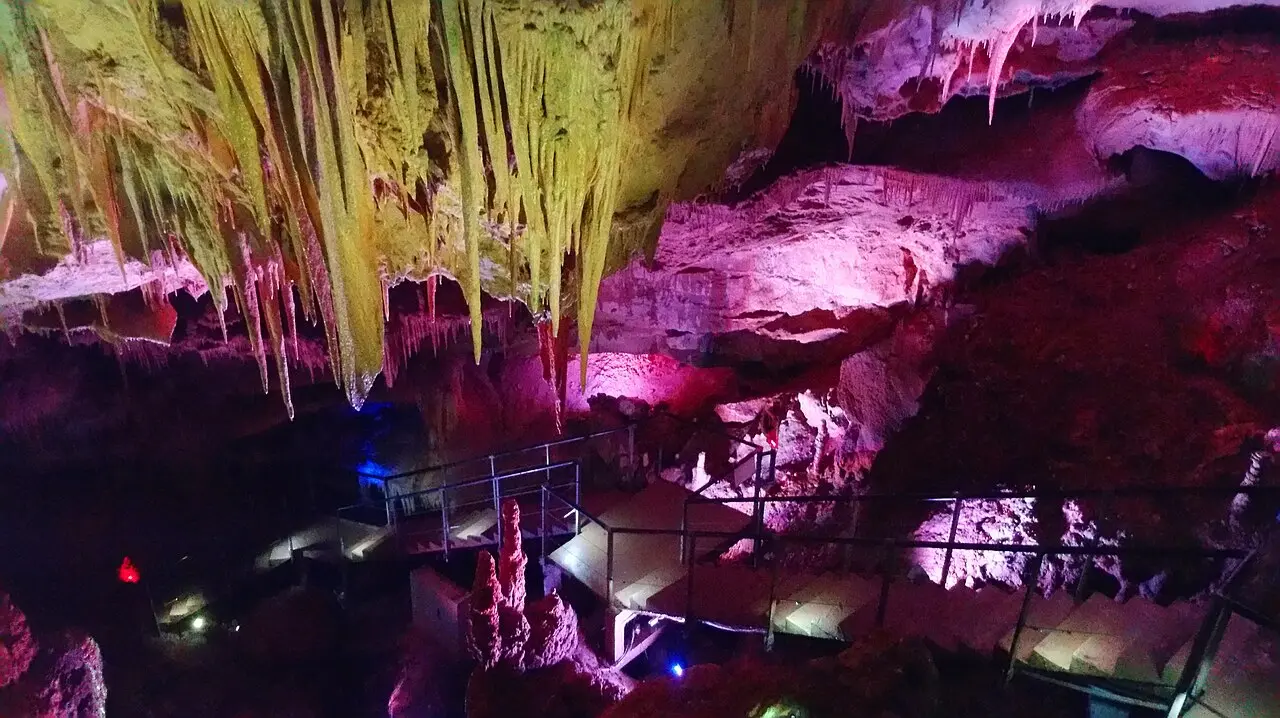
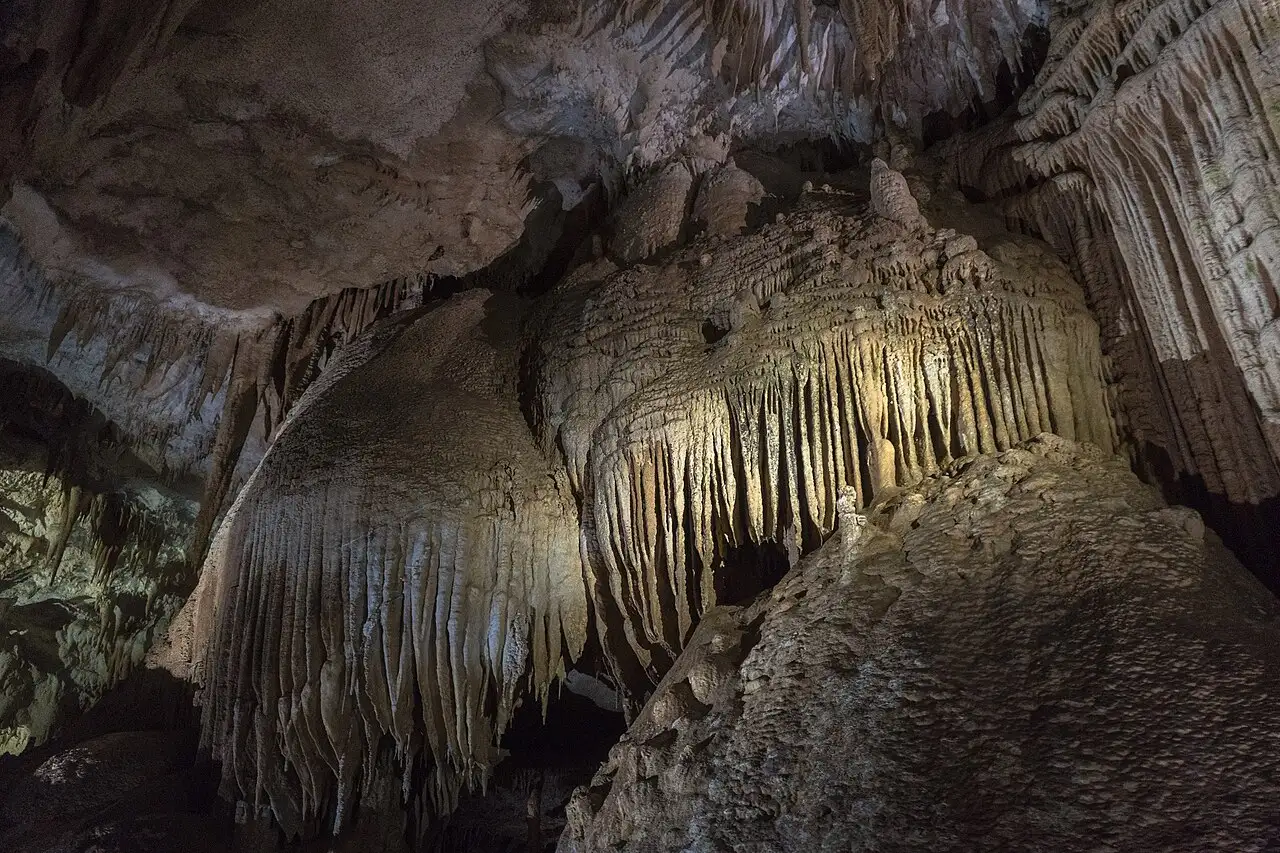
Prometheus Cave (Kumistavi) is the best-known cave in Georgia: long halls with flowstone, stalactites and dramatic lighting, and below them an underground river you can travel along by boat if the water level allows. It’s named after the Titan Prometheus, who according to Greek myth was chained to a rock in the Caucasus, and the six halls open to visitors carry names from the Greek myths Georgia claims as its own, from Prometheus himself to Jason’s Argonauts. It’s part of the Sataplia-Tskaltubo karst massif, the same limestone country that also holds Sataplia’s dinosaur footprints a short drive away.
Why the cave is famous
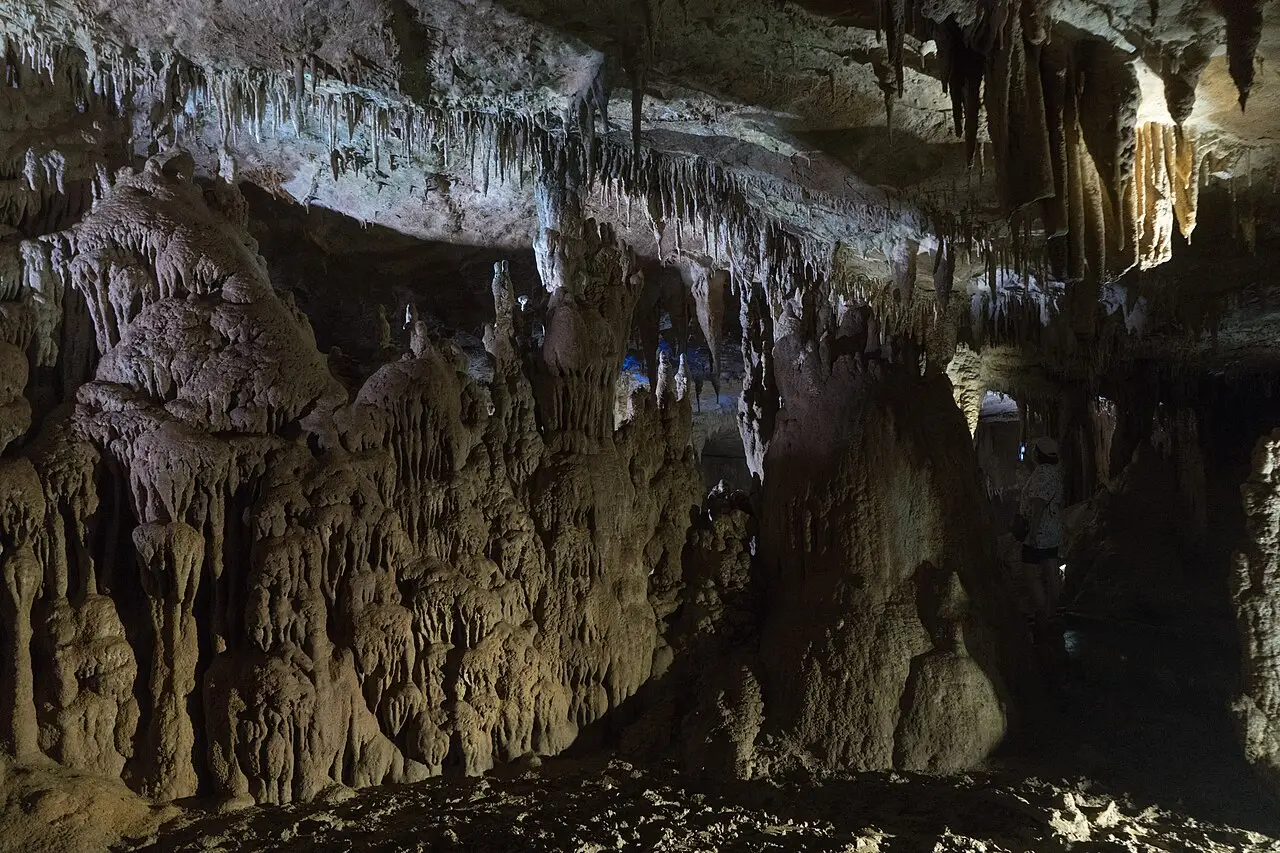
Prometheus Cave sits in the Tskaltubo Municipality of Imereti, close enough to Kutaisi for an easy half-day trip. The agency that runs the site puts the cave about 40 metres below the surface - its English page says “below sea level”, which the Georgian original doesn’t: the ground above the entrance is well above sea level. The developed tourist route through it runs for roughly 1.8 km. That’s the part with walkways, lighting and railings; the system itself continues well beyond the stretch visitors walk. Georgian speleologists first explored the cave in the early 1980s, work to develop it for tourism began in 1985, and in its current form, with paths, lighting and infrastructure, it opened on 26 May 2011. The cave was granted the status of a protected natural monument in 2007.
Tickets and hours
An adult ticket costs 40 GEL for foreign visitors and 16 GEL for Georgian citizens and residents, both for people 18 and over. The boat ride at the end of the walking route is a separate charge: 30 GEL for foreigners, 14 GEL for citizens and residents, and the agency sells it only on top of an entrance ticket bought beforehand. Anyone 6 to 18 pays 5.50 GEL - the agency’s Georgian page limits that rate to citizens and residents, so ask at the desk about a foreign child - and children under 6 get in free, as does a teacher accompanying a school or student group. An audio guide is 7 GEL, and Georgian citizens and residents who are war or armed-forces veterans pay just 5 GEL - a detail that only shows up on the agency’s Georgian-language page, not the English one. Anyone buying a resident-priced ticket needs to show an ID card or passport at the gate; turn up without one and you’ll be charged the standard foreign-visitor rate instead. As of October 2026 the site is open 10:00 to 17:30, every day (in summer it was 18:00 - the agency moves the closing time with the season), with no closed day at all - the Monday closure is gone. The agency’s English page still shows 17:00 - treat that as closing time rather than the latest arrival: the guided route alone takes about an hour and the agency doesn’t publish a last-entry time, so call 577 10 14 17 to ask when the last group goes in. If you’re combining Prometheus with other karst sites nearby, ask about the combined ticket before you buy separately. Weekends and the peak of summer bring the biggest crowds, so calling the visitor service line on 577 10 14 17 to check session times, or simply arriving earlier in the day, saves time standing around waiting for the next group to form.
Inside: six named halls and the underground boat ride
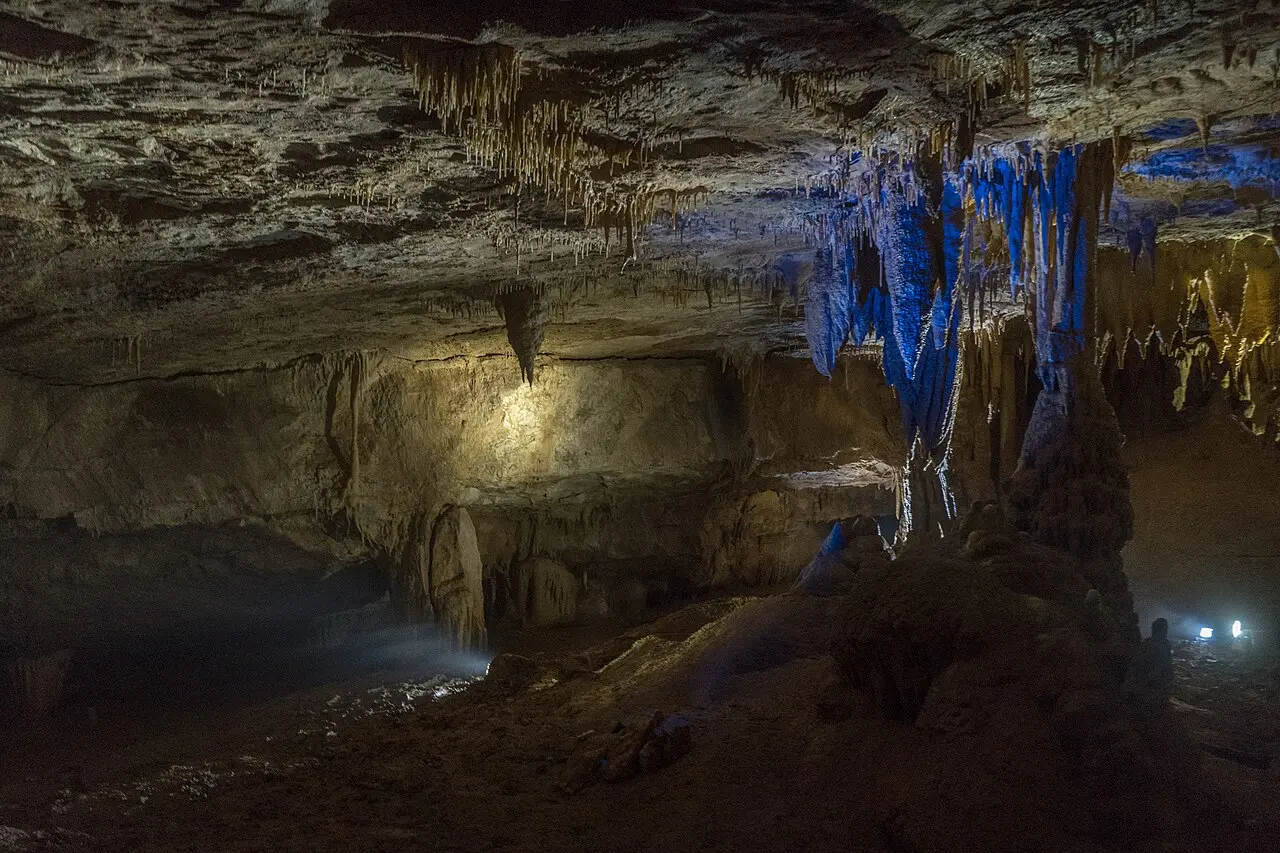
The one-hour route walks you through six named halls in sequence: Argonauts, Kolkheti, Medea, Love, Prometheus and Iberia, all named for figures and places from the myth of Jason’s voyage into Colchis - western Georgia, the country around present-day Kutaisi. Easy walkways with railings and carefully placed lighting pick out the shapes of the formations along the way - stalactites hang from the ceiling, columns rise from the floor where a stalactite and a stalagmite have met and fused, and coloured light washes the halls in blue, green and pink. The myth of Jason and the Argonauts sailing to Colchis for the Golden Fleece, and of the Colchian princess Medea, has long been part of Georgian cultural identity, and whoever named these halls was drawing on it. You don’t explore alone; the whole route is done as a group with a guide, which is included in the ticket price rather than sold separately. All told, if you catch the boat option, the full visit runs about an hour on foot plus another quarter hour on the water.
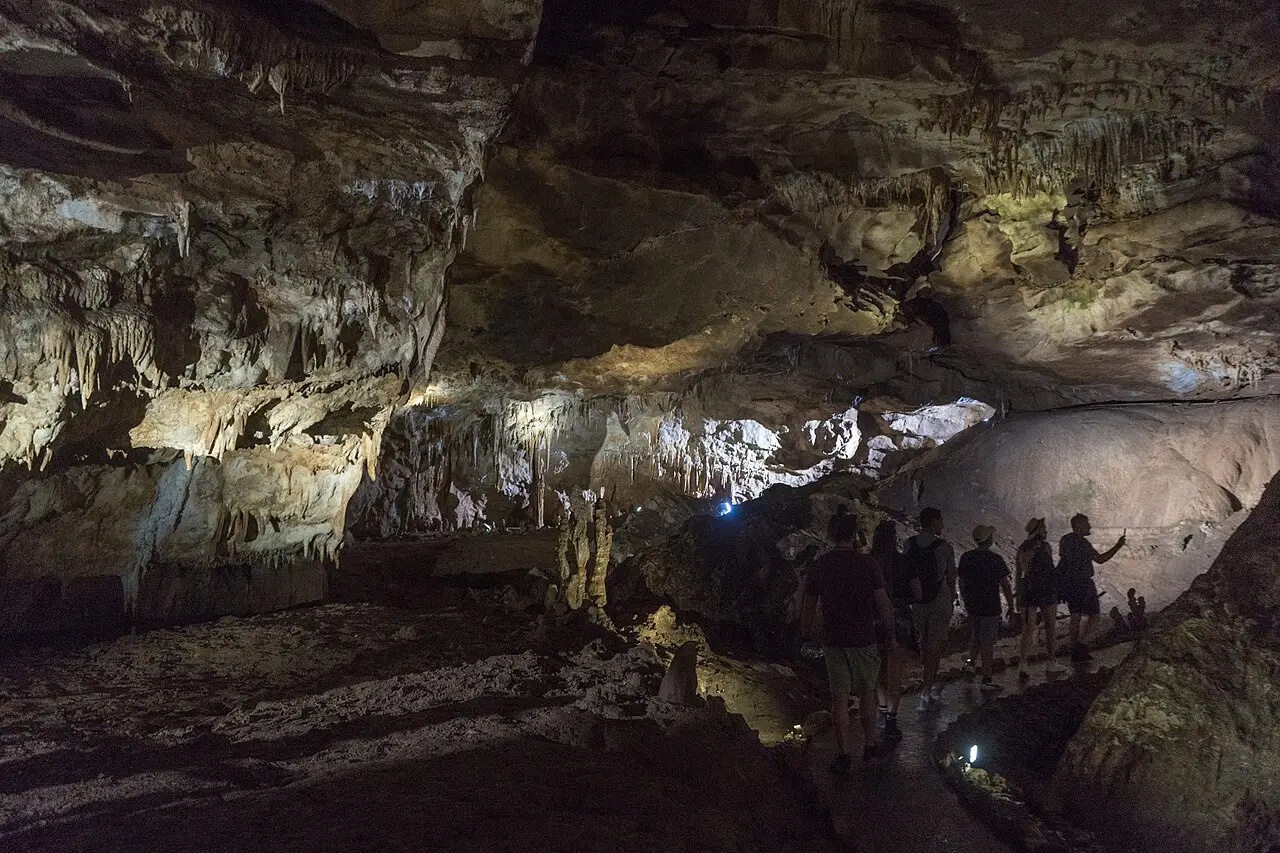
At the end of the walking route, the path reaches the underground course of the River Kumi. When the water level allows it, you finish the visit with a 15-minute boat ride along that same underground flow instead of walking back; when the water’s too high, the operator walks everyone back instead, for safety. The boat is a bonus, not a guaranteed part of the ticket.
Getting to the cave
The visitor centre is in the village of Kumistavi, in the Tskaltubo Municipality, about 20 km and half an hour’s drive from Kutaisi. That short distance means you don’t need to dedicate a whole day to it on its own - most visitors pair it with at least one other site in the same part of Imereti, whether that’s a monastery, a canyon or the region’s thermal springs. Without a car, take a marshrutka or taxi from Kutaisi to Tskaltubo and a taxi for the last few kilometres to Kumistavi; drivers wait at the Tskaltubo stand. Every tour starts at the desk by the entrance.
Driving yourself or taking a tour from Kutaisi
A rental car makes sense if you’re planning to string Prometheus Cave together with Martvili Canyon, Okatse Canyon or Sataplia in the same day, since you control the order of stops and don’t have to fit around anyone else’s schedule. The drive from Kutaisi is short and easy, on paved roads the whole way, so this isn’t a site that particularly rewards having your own vehicle the way a remote waterfall might. An organised day tour from Kutaisi or Tbilisi usually bundles Prometheus with one or two of its karst neighbours, handles the ticket queue for you, and works well if you’d rather not drive at all or you’re travelling solo and want the company. If the cave is your only stop of the day, take the tour and skip the parking; if you already have two or three karst sites on the list, drive.
What to keep in mind when visiting
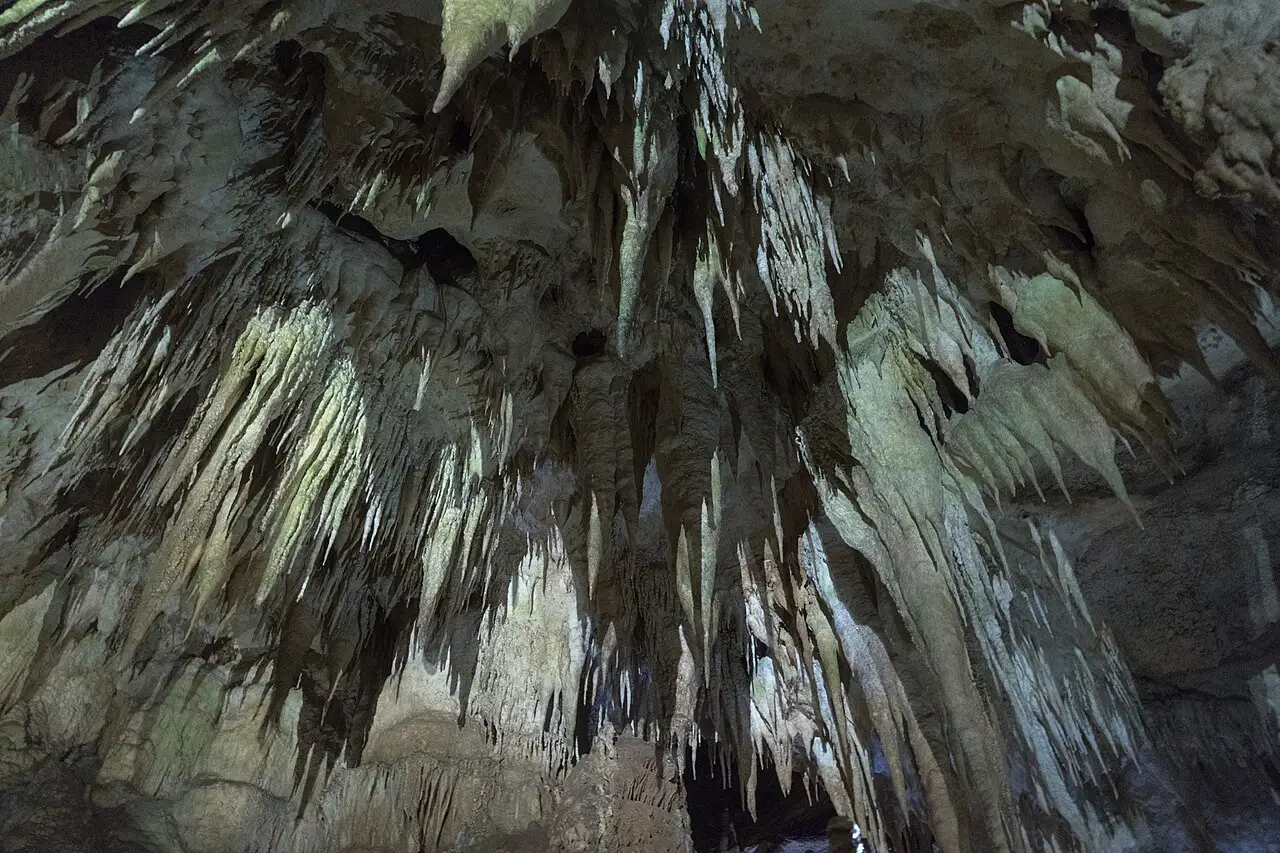
The cave stays cool and damp all year, even at the height of summer, so bring a layer you can put on and comfortable, non-slip shoes - the walkways get wet in places, especially near the underground river. Visits run on a fixed schedule with a guide rather than at your own pace, so it’s worth checking session times, and the price of the boat option, before you turn up, particularly in high season when the timed slots fill up faster than you’d expect. The agency doesn’t publish which payment methods the desk takes, so carry some cash. The visit runs on the guide’s schedule, so you can’t linger at one hall - worth knowing if you’re travelling with children who want their own pace.
Nearby: the combo ticket is worth asking about
The agency that runs Prometheus Cave also runs several of the other karst attractions in this corner of Imereti, and it sells joint tickets across them. A combined ticket covering Prometheus Cave, Martvili Canyon and the Okatse (Kinchkha) Waterfall is listed at 38 GEL for residents and 90 GEL for foreign visitors on the agency’s Prometheus Cave and Martvili Canyon pages. The agency’s own Kinchkha waterfall page lists the same three-site ticket at 35 GEL and 85 GEL instead (all three pages read on 03.10.2026), so ask at the ticket desk which price applies before you count on either figure. Read the list carefully: the waterfall is in, the Okatse Canyon walkway is not, and that walkway charges its own 30 GEL for foreigners. Against 40 + 40 + 20 paid separately, the combo saves a foreign visitor about ten lari at 90 GEL (about fifteen at 85). The agency also sells a second ticket that swaps the cave for the Okatse Canyon walkway. Residents pay 38 GEL for it on all three pages that list it, but foreign visitors are quoted 90 GEL on the Martvili Canyon and Kinchkha pages and 80 GEL on the Okatse Canyon page (same 03.10.2026 check), so ask which ticket you are being offered and at what price. There’s also a combo covering Prometheus, Sataplia - a reserve better known for its dinosaur footprints and glass viewing platform than for its cave - and the smaller Navenakhevi Cave, for 35 GEL residents and 75 GEL foreign visitors, a better fit if canyons aren’t on your list but a second cave is. Closer to Kutaisi, the hilltop Gelati monastery makes an easy pairing on the same day, and the abandoned Soviet sanatoriums of Tskaltubo give the second half of the day a completely different, urban theme. Car hire is worth arranging if you’d rather set your own pace between these stops than follow a tour bus timetable. Kutaisi itself is the natural base for the whole area, and there’s a ready-made plan for the wider region in Imereti: canyons and caves. More places are in the things to see section.
Photos
On the map
The map loads on click - to keep the page lightweight.
The map didn’t load. Check your connection and refresh the page.
Admission and opening hours
- Admission price
- Adult: foreigners 40 GEL, Georgian citizens/residents 16 GEL; boat on the underground river +30 GEL (foreigners) / +14 GEL (citizens); audio guide 7 GEL; children 6-18 who are citizens or residents 5.50 GEL, under 6 free; war/armed-forces veterans among citizens and residents 5 GEL
- Opening hours
- 10:00-17:30, every day (no closed day), as of October 2026; the agency changes the closing time with the season
The route is guided only, in timed sessions; the boat depends on the water level. A combined ticket with Martvili Canyon and the Okatse (Kinchkha) Waterfall is available - the Okatse Canyon walkway is not part of it.
Details checked: October 2, 2026
Distance
- Tbilisi ≈250 km · ~3.5 h approximate, via Kutaisi
- Kutaisi ≈20 km · ~30 min via Tskaltubo
- Batumi ≈150 km · ~2.5 h approximate
Read also

What to see · 10 min read
Skiing in Georgia: Gudauri vs Bakuriani
Updated · September 5, 2026Gudauri or Bakuriani: 2025/26 day passes 70 vs 55 GEL, elevations, last season dates, who each resort suits and how to get there.

What to see · 7 min read
Svaneti travel guide: Mestia, Ushguli and towers
Verified · August 25, 2026Svaneti mapped: Mestia vs Ushguli, tower villages, season, and how to link town guides, the trek, and the road from Tbilisi.

What to see · 9 min read
Resorts near Batumi: Gonio, Kvariati & Tsikhisdziri
Updated · September 2, 2026Where to stay near Batumi for cleaner, quieter beaches: Gonio and its Roman fort, Kvariati for diving, and secluded clifftop Tsikhisdziri - how to choose.

What to see · 10 min read
Georgia with kids 2026: family beaches & resorts
Updated · July 18, 2026Georgia with kids: sandy, shallow beaches up north (Ureki, Shekvetili, Kobuleti), amusement parks, when to go and how to plan a family trip.