
Tskaltubo: radon waters and abandoned sanatoriums
Tskaltubo resort near Kutaisi: radon-carbonate springs at 33-35 °C and monumental abandoned Soviet sanatoriums. Why it's famous and how to get there.
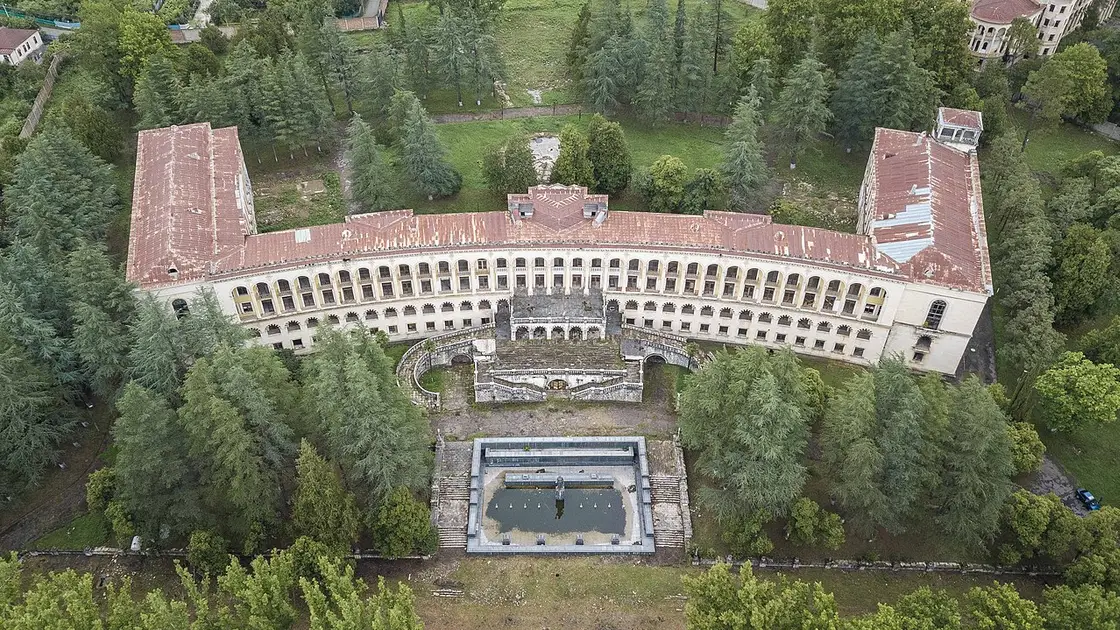
Tskaltubo is a resort with two faces: on the one hand the healing radon waters people came here for over decades, and on the other dozens of monumental sanatoriums, many of them now standing empty. It is one of the most atmospheric places in Imereti, a living monument to the Soviet spa era, and - underneath that - a much older bathing town: the springs were already known locally as healing waters back in the 7th-9th centuries, long before the 20th-century sanatorium boom put Tskaltubo on the Soviet map.
Why the resort is famous
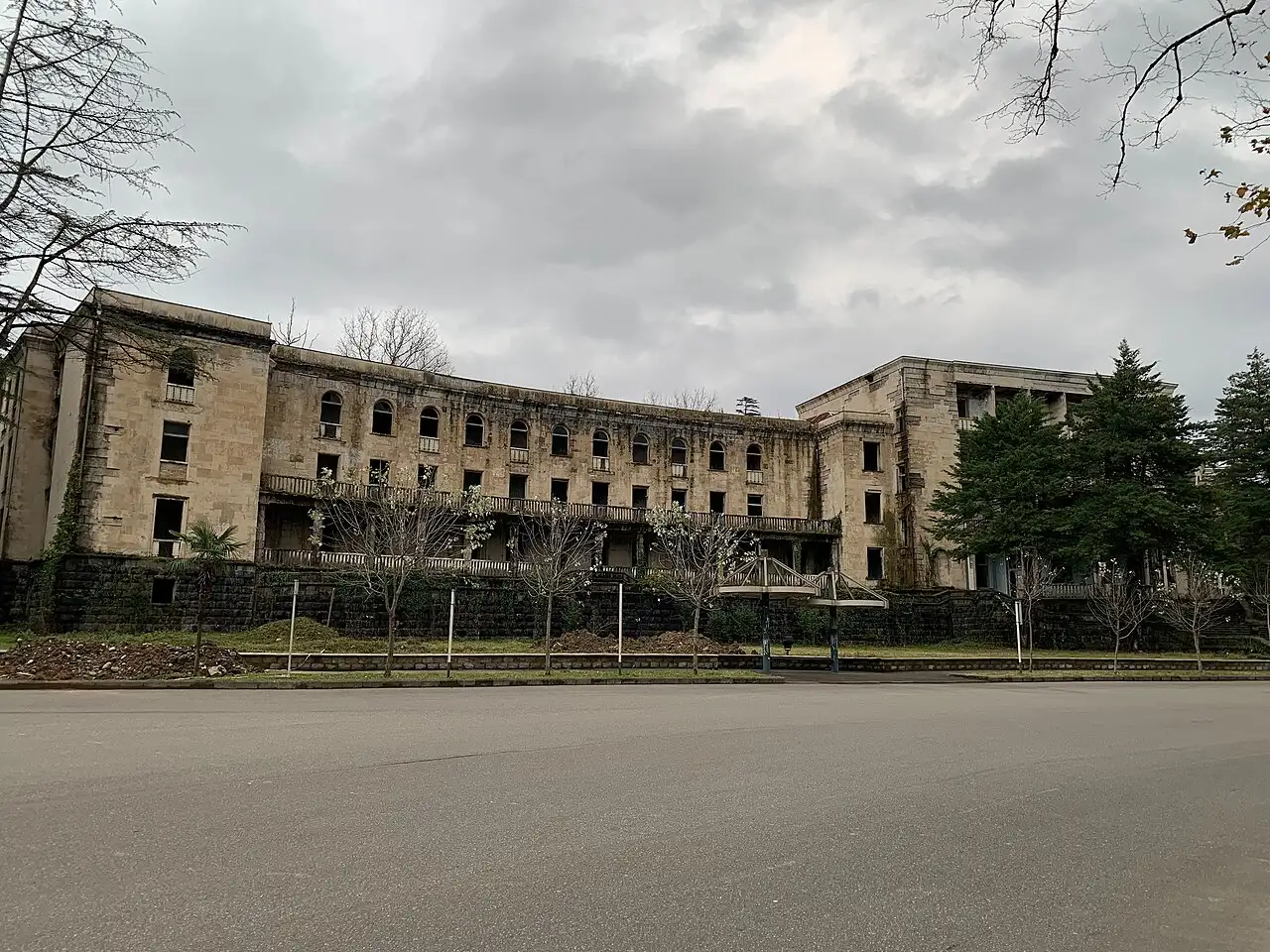
Tskaltubo lies about 15 km by road from Kutaisi - a 20-minute drive - and is famous for its radon-carbonate springs at 33-35 °C - water that is used without any prior heating. Georgia’s tourism board still calls it the “spring of immortality,” and the water genuinely has to be used on the spot: it loses most of its therapeutic properties within minutes of being pumped or transported, which is why the bathhouses were built directly over the outlets rather than piped anywhere else. The treatment itself, according to the official tourism board, is aimed mainly at musculoskeletal, cardiovascular and nervous-system complaints, along with some urological and gynaecological conditions - claims that belong to the resort’s own medical tradition rather than to independent clinical trials, and worth treating as the resort’s own framing, not a guarantee. Local tradition holds that the baths belonged to the royal household under Queen Tamar in the 12th-13th centuries, long before the Soviet building boom. That boom, when it came, was enormous: up to 125,000 people came here a year at the resort’s Soviet-era peak, and an imposing ensemble of sanatoriums in a monumental style was built around a 70-hectare central park that once held nine working bathhouses fed by the springs (some of the buildings are thought to have been put up by German prisoners of war in the late 1940s). Today the resort receives only a small fraction of its former crowds, and the contrast between the scale of what was built and how few people now use it is, honestly, half the reason travellers make the detour - it’s a stranger and more striking sight than a resort that simply looks tired.
What to see
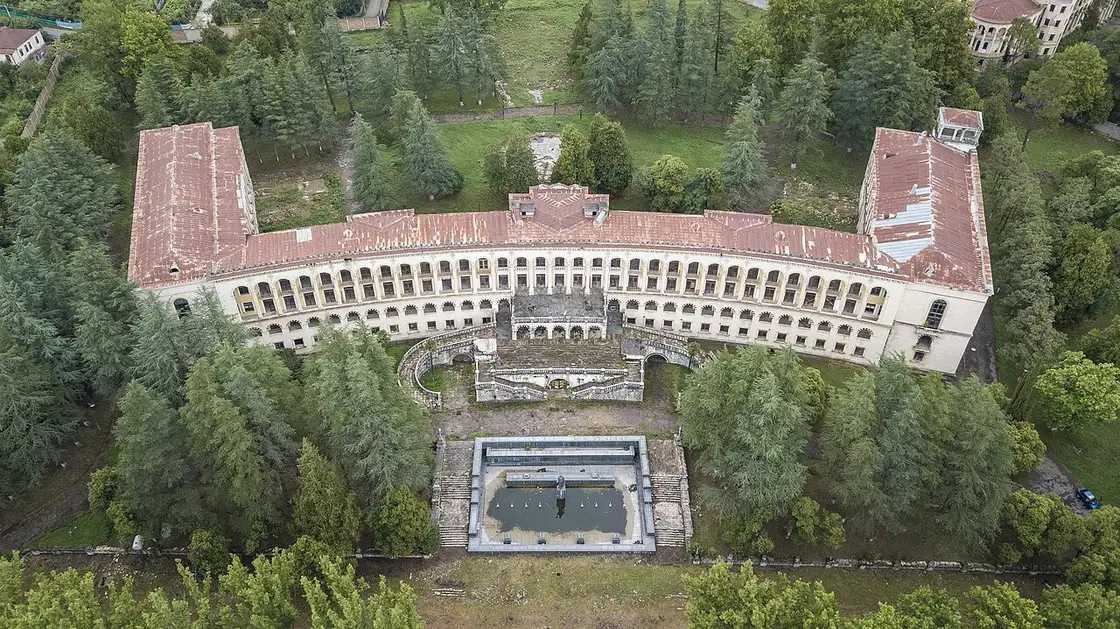
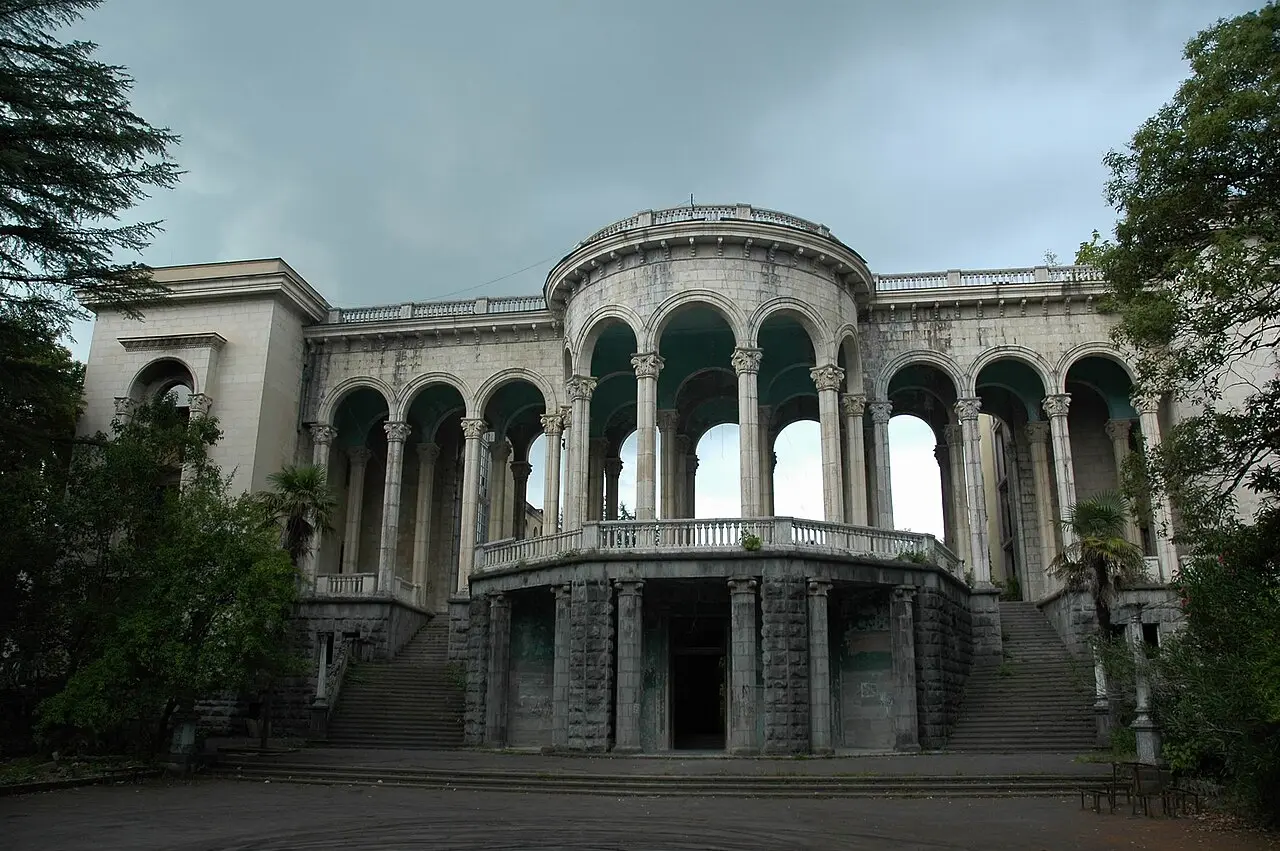
The main impression is the scale and the contrast. The sanatoriums are set in a ring around the park; some still operate, others stand empty, with colonnades, grand staircases and painted ceilings that the greenery is slowly swallowing up. It’s this aesthetic of “decaying Soviet art deco” that draws travellers and photographers here. In the central park you can also see the very spring that all of this was once built for - historically marked by a fountain known as the Spring of Beauty - plus the leftovers of the old amusement rides and footbridges that once made it a proper park, not just a garden between buildings. A small local history museum near the park covers the area from the Paleolithic through the region’s feudal period, for anyone who wants context beyond the Soviet layer. Sanatorium Iveria, with its long colonnaded portico, is one of the most photographed of the bunch; the “flying saucer” pavilion canopy nearby, a piece of pure Soviet space-age design, is another.
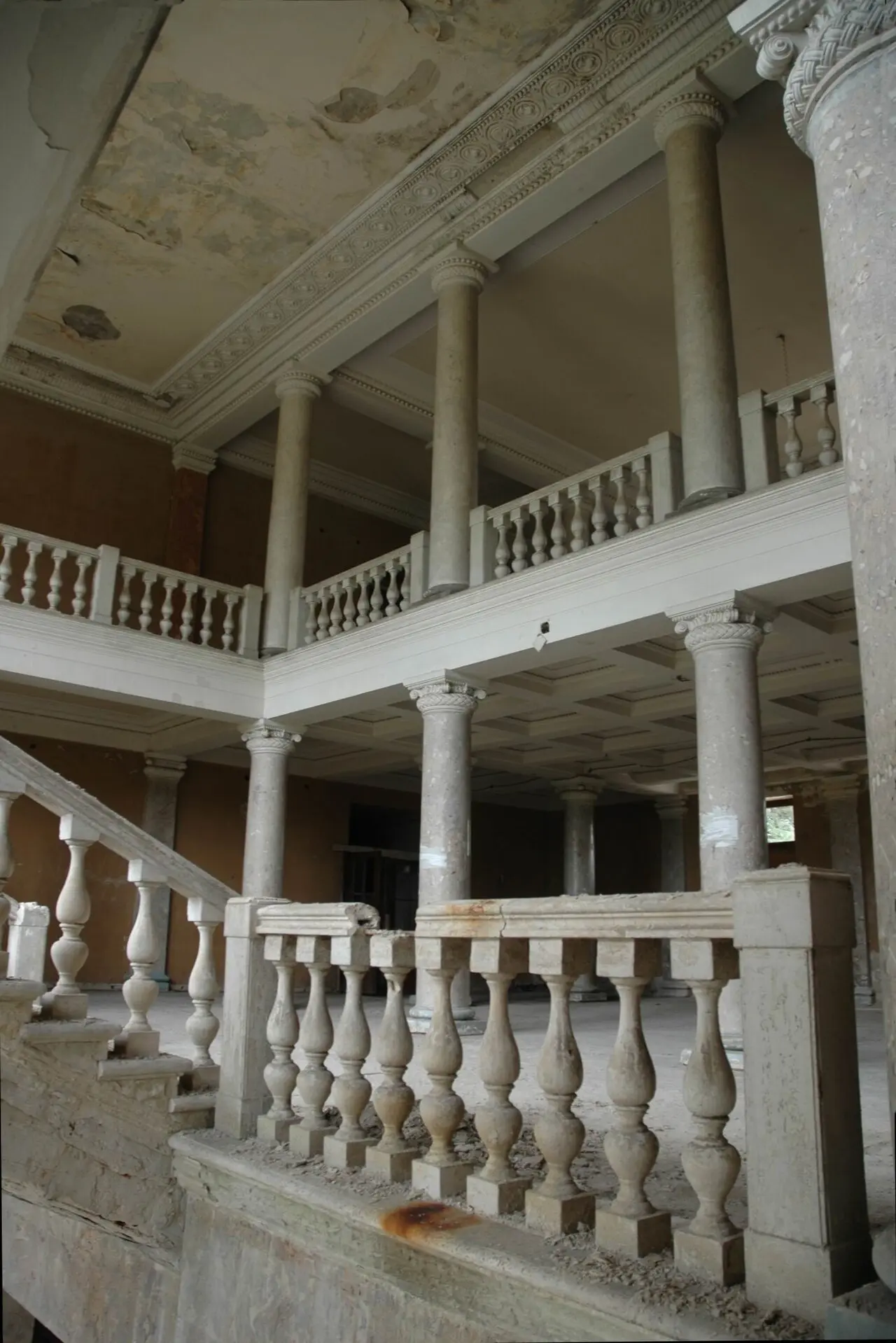
The sanatoriums today
What you see on a visit right now is a town caught mid-transition. Under a government redevelopment programme launched in 2022, a first batch of state-owned sanatorium buildings went up for auction, and by late 2025 a handful had found buyers. Sanatorium Tbilisi is the furthest along - it’s being restored as a hotel: travel writers report a Marriott of about 120 rooms, though neither Marriott nor the government has announced the brand, and the privatisation terms only require a hotel of at least 120 rooms. The Medea sanatorium pictured above is a different story: restoration there has been talked about for years but has not started, and visitors report that since someone was injured in a fall inside in July 2026 the building has been taped off and guarded, with no entry allowed - so admire it from the outside. Most of the grand shells you’ll walk past are still just that: empty, fenced off in places, and waiting for an investor rather than mid-renovation. Reported plans for the wider programme talk about hundreds of millions of dollars and more than a dozen new hotels over the coming decade, though numbers on that scale are easier to announce than to deliver, and a decade is a long horizon to hold a government to. Expect scaffolding and fresh fencing at a few buildings and untouched decay at most of the rest for the foreseeable future, which is very much part of what people come here to see and photograph today - a resort frozen mid-conversion, rather than either a ruin or a finished spa town.
Visiting with respect
Many of the abandoned buildings are in a dangerous state - with holes and collapses - and going inside is unsafe. And, more importantly: for decades, dozens of the sanatoriums served as housing for people displaced from Abkhazia after the 1992-93 war, when thousands sought shelter here. Many of those families were moved into newly built government housing in 2023 as part of the same redevelopment effort, but some residents still live in the old buildings. Either way, this was never an “abandoned site” staged for photos - it has been, and in places still is, someone’s home - so be tactful, don’t intrude into living quarters, and ask permission before photographing people. A camera pointed at a stranger’s front door reads very differently here than it does at an ordinary ruin.
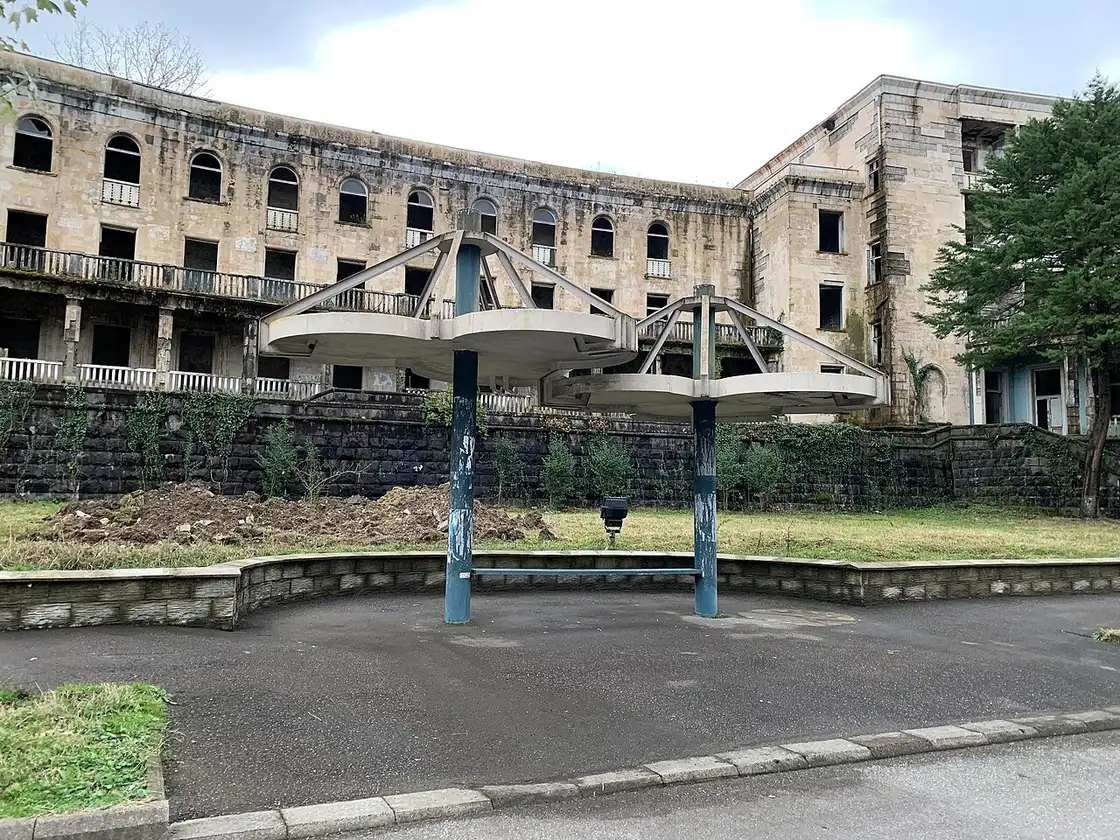
Tskaltubo or Borjomi?
Georgia has two famous spa towns, and they suit different moods. Borjomi, the mineral-water town east of here, still works as a resort: a landscaped park, a functioning bottling plant, hotels, a cable car. Tskaltubo is the opposite experience - the spa culture is mostly in the past tense, and what you’re actually visiting is the architecture and the atmosphere of that past, not an active wellness break. For a massage and a walk in a tidy park, go to Borjomi. For a few hours of urban exploration among genuinely grand, genuinely decaying buildings, with one or two of the old bathhouses still quietly operating in among them, Tskaltubo is the one. Plenty of travellers doing a loop through western Georgia end up doing both, on different days, for exactly that contrast.
Getting around once you’re there
The sanatoriums are spread in a loose ring around the central park, so plan on a kilometre or two of walking to see more than one or two up close - there’s no shuttle or ticketed entry to the district itself. Morning light is kinder to photographers than the flat glare of midday, and weekday visits are quieter than weekends, when local families still use the park for a walk. A driver or a rented car makes it easy to combine a stop here with other Imereti sights in a single day; some Kutaisi-based guides also run it as a half-day tour if you’d rather not navigate the backstreets yourself. Budget roughly ninety minutes to two hours for a walking loop past four or five of the main buildings and the park itself - long enough to take in the scale without turning it into a full afternoon, which most visitors save for Sataplia or the caves instead.
Nearby
Tskaltubo lies close to Kutaisi, from where it’s a short trip to both Sataplia nature reserve with its dinosaur footprints and the Prometheus Cave. It also makes a natural pair with Kinchkha Waterfall and Okatse Canyon further into the hills - a long but doable day combining springs, caves and waterfalls if you start early. None of these sit directly on public transport routes in any convenient way, which is the main practical argument for basing yourself in Kutaisi and driving out rather than trying to see Imereti from Tbilisi in a single long day. The easiest way to get around the sights of Imereti is by car - for how to rent one, see the car hire section; more places are in the things to see section.
Photos
On the map
The map loads on click - to keep the page lightweight.
The map didn’t load. Check your connection and refresh the page.
Distance
- Tbilisi ≈230 km · ~3.5 h approximate, via Kutaisi
- Kutaisi ≈15 km · ~20 min marshrutka, taxi or car
- Batumi ≈140 km · ~2.5 h approximate
Read also

What to see · 10 min read
Skiing in Georgia: Gudauri vs Bakuriani
Updated · September 5, 2026Gudauri or Bakuriani: 2025/26 day passes 70 vs 55 GEL, elevations, last season dates, who each resort suits and how to get there.

What to see · 7 min read
Svaneti travel guide: Mestia, Ushguli and towers
Verified · August 25, 2026Svaneti mapped: Mestia vs Ushguli, tower villages, season, and how to link town guides, the trek, and the road from Tbilisi.

What to see · 9 min read
Resorts near Batumi: Gonio, Kvariati & Tsikhisdziri
Updated · September 2, 2026Where to stay near Batumi for cleaner, quieter beaches: Gonio and its Roman fort, Kvariati for diving, and secluded clifftop Tsikhisdziri - how to choose.

What to see · 10 min read
Georgia with kids 2026: family beaches & resorts
Updated · July 18, 2026Georgia with kids: sandy, shallow beaches up north (Ureki, Shekvetili, Kobuleti), amusement parks, when to go and how to plan a family trip.