
Rabati Fortress, Akhaltsikhe: tickets, hours and old town
Rabati Fortress in Akhaltsikhe: 2026 ticket prices and hours, the Ottoman-era mosque, the old town beyond the walls, and how to pair it with Vardzia.
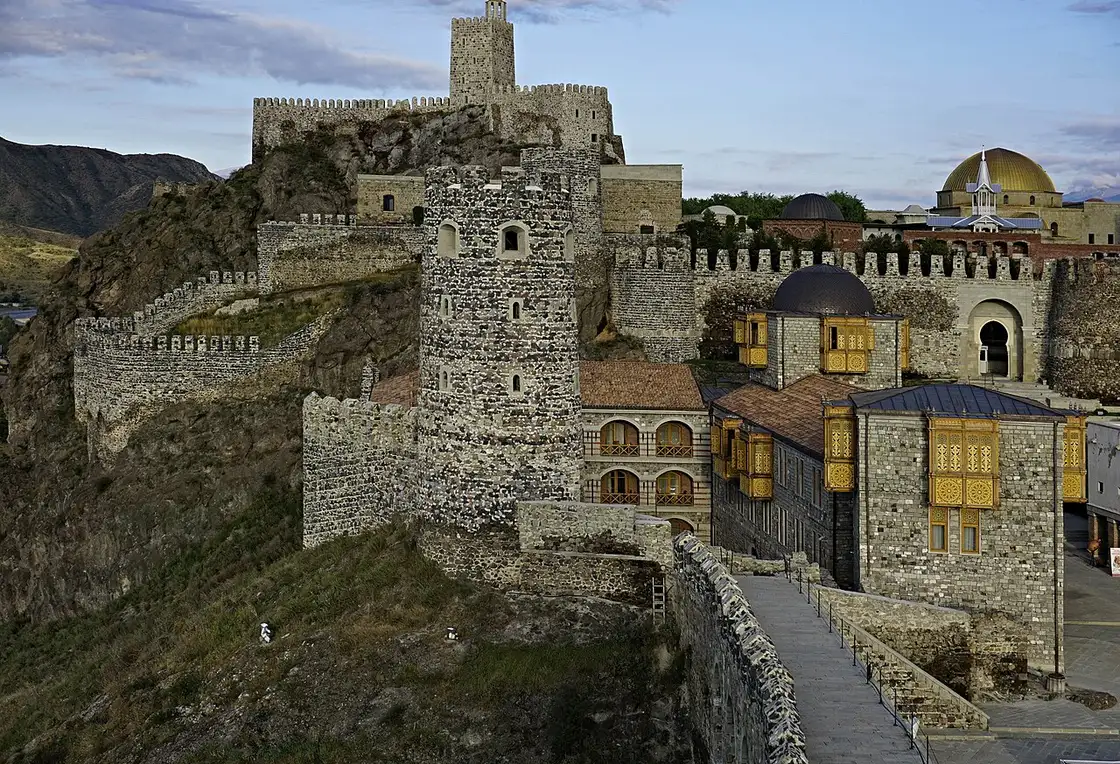
A 20 GEL ticket gets foreign visitors through the upper gate of Rabati and into the citadel; the lower courtyard below it - lanes, cafes, an observation tower, a stretch of old wall and a terraced vineyard - costs nothing at all. The history museum inside the walls is a separate matter: it sells its own ticket and keeps museum days, so it’s shut on Mondays even when the fortress isn’t. Plan a full morning for the museum and the old town under the walls on top of the citadel itself.
Visiting Rabati: tickets, hours and what’s included
The fortress operator’s own price list runs 20 GEL for foreign visitors, 15 GEL for foreign students and pupils, 10 GEL for Georgian citizens and residents, and 3 GEL for Georgian students, pupils and pensioners. Children under six, ICOM members, socially vulnerable people, people with disabilities, internally displaced persons and war veterans get in free on presentation of the right document. A guide is 20 GEL for one or two visitors, 40 GEL for three to ten, 60 GEL for eleven to twenty-five and 100 GEL for a group of up to fifty; a self-guided audio tour is 15 GEL on top of the entry fee. Bring cash for the ticket window.
Opening hours need reading twice. The usual answer is 09:00 to 18:00, but the operator’s own contact page says the complex works every day from 09:00 until 20:00. It also closes outright on some church holidays: in 2026 the gates were shut on 12 and 13 April for Easter, announced only in the news feed on the site. If your trip hinges on a particular day, the ticket office number is +995 365 200 500.
What the ticket does not cover is the museum. The Samtskhe-Javakheti History Museum stands inside the citadel, in the restored Jakeli palace, and it belongs to the Georgian National Museum rather than to the fortress: the price list mentions only that you “can also visit” it. That means a separate ticket at a separate desk, and museum opening days - the network runs Tuesday to Sunday, 10:00 to 18:00, closed on Mondays and official holidays, with the last visitor admitted at 17:30. Arrive on a Monday and you’ll still get the walls, just not the collection.
Why the fortress looks the way it does
The fortress goes back to the 9th century, when it was called “Lomsia”; its origins are linked to Guaram Mampali, son of the ruler of Tao. By the 12th century the name Akhaltsikhe - “new fortress” - had stuck, and in the 13th-14th centuries the town was the capital of the principality of Samtskhe-Saatabago, ruled by the Jaqeli family.
From 1590 Akhaltsikhe passed under the control of the Ottoman Empire and remained Turkish for almost two and a half centuries - until 1828, when Russian troops took the town. The Ottoman period gave the fortress its eastern character: in 1752 a mosque with a minaret and a madrasa were built here. Today the whole complex covers 8 hectares and combines a church, a mosque, a citadel and residential quarters.
Inside the citadel and the town below
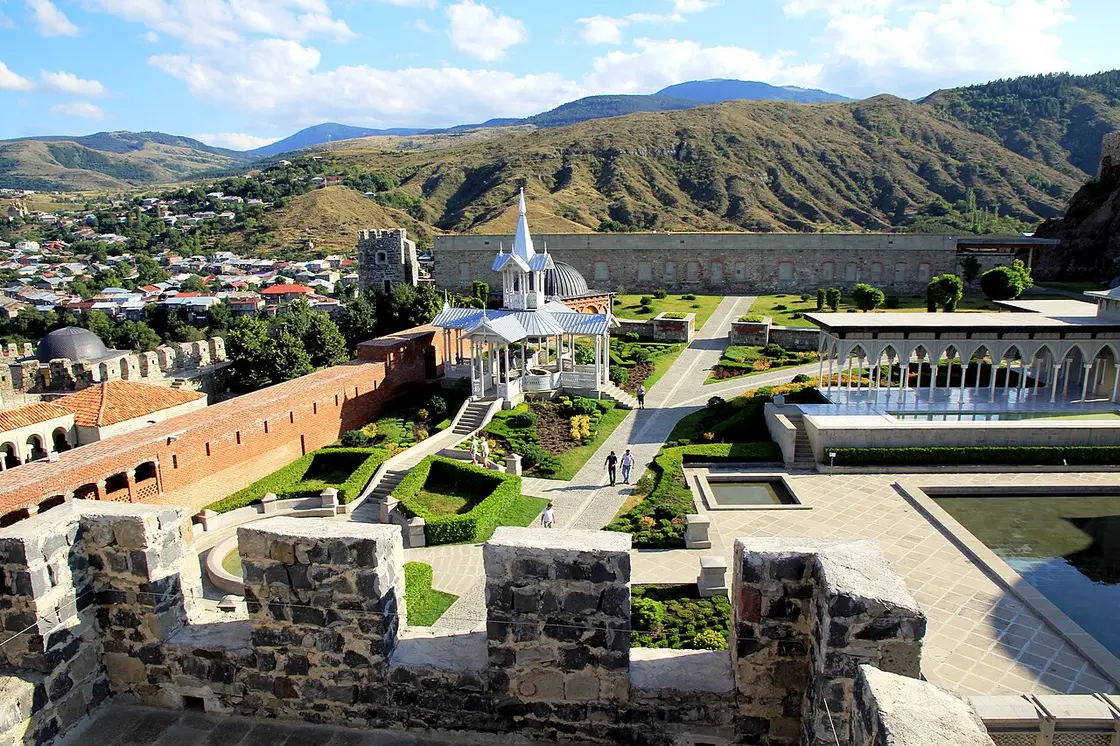
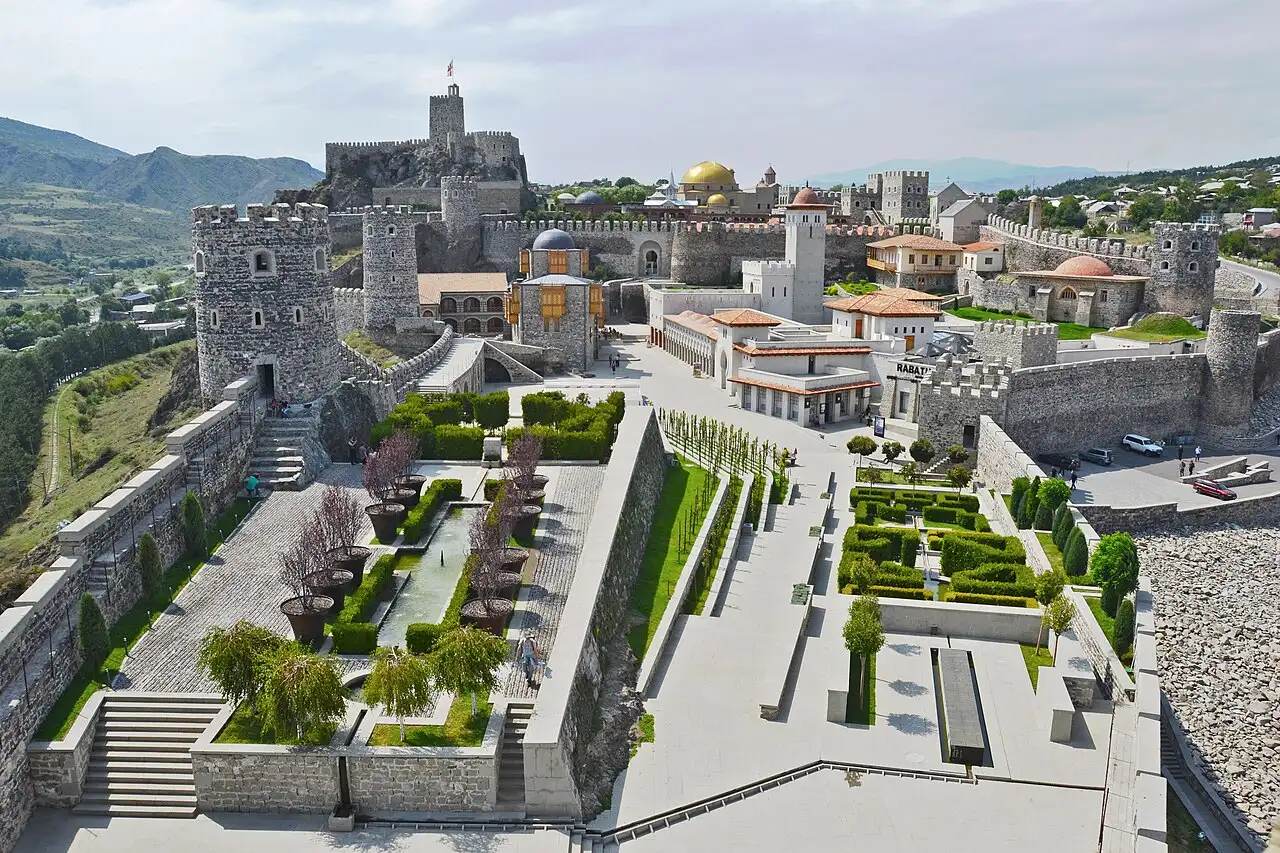
The heart of the fortress is the upper citadel, with its towers, courtyards, old baths and water cisterns; from here there are views over the town and the surrounding hills. The main landmark is the 1752 mosque with its minaret, with a madrasa standing beside it and an Orthodox church of the 9th-10th centuries on the same grounds: a mosque and a church inside one set of walls, and the town’s synagogues a few minutes’ walk below them.
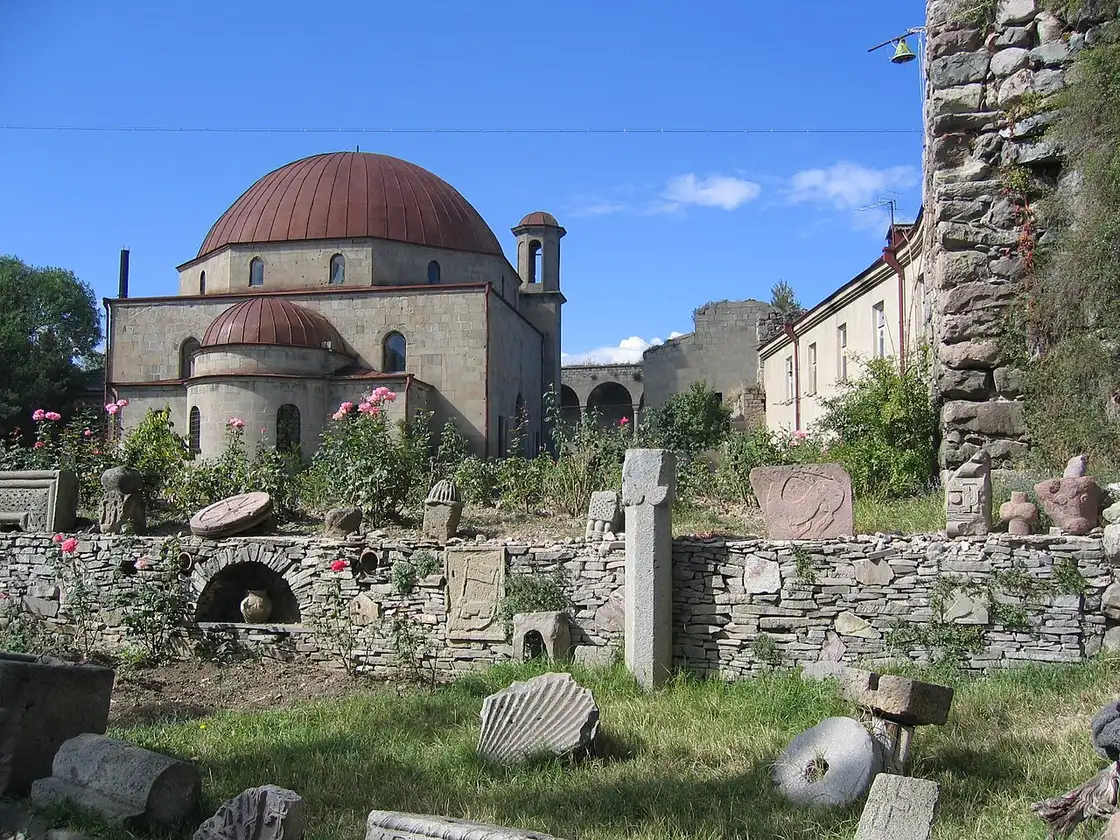
Gardens and terraces with arcaded galleries fill the gaps between the buildings, and it’s easy to spend a couple of unhurried hours here without repeating a view. The museum in the Jakeli palace holds more than 25,000 objects and opened in its present form with the 2012 restoration, so don’t leave it for the last half hour before closing. The lower, free part of the complex has its own lanes, small shops and cafes around the restaurant and hotel, along with an observation tower, a section of the old wall and a terraced vineyard: worth a walk even if you never buy a ticket for the citadel.
The 2011-2012 restoration
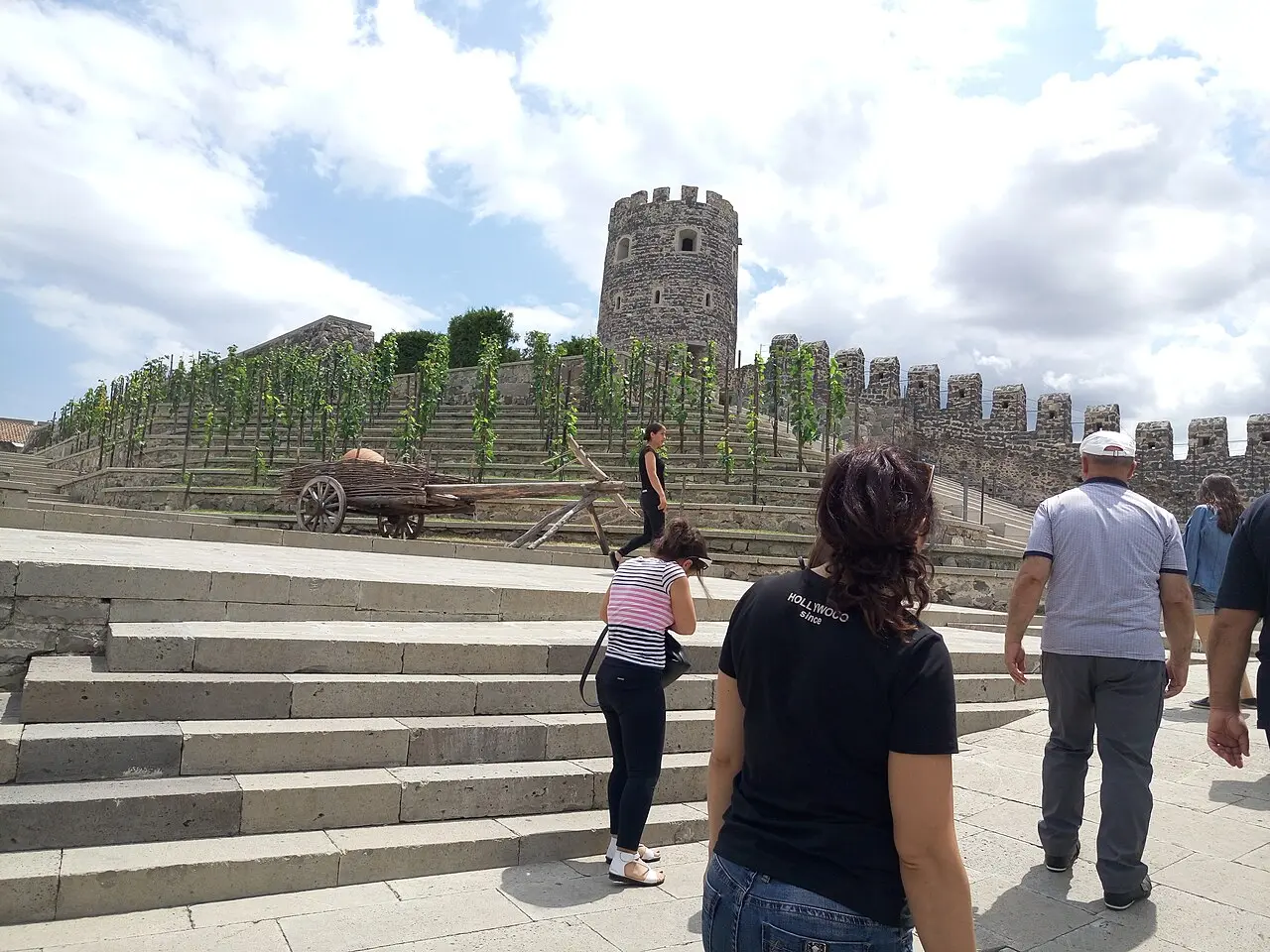
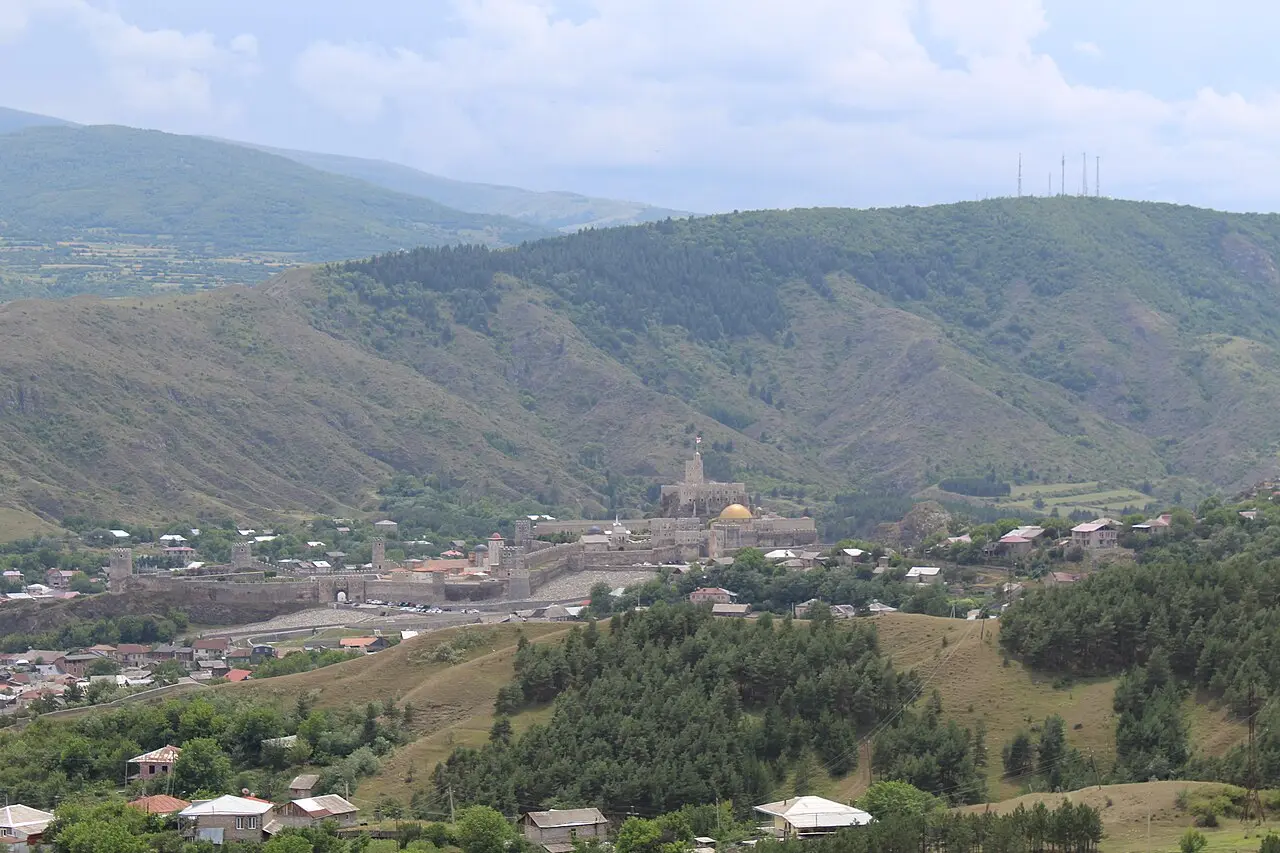
Rabati owes its present-day look to the major restoration of 2011-2012, on which the state spent around 34 million lari. The fortress walls, citadel, streets, facades and roofs were all rebuilt along with the infrastructure, and the fortress went from a ruin to one of the main tourist sites of southern Georgia. The restorers took liberties with the original, and some of the buildings look brand new, but the scale and the views still justify the entry fee.
Akhaltsikhe beyond the fortress
Rabati isn’t the only reason to slow down here. The streets below the walls have a layered history of their own: the town has two synagogues, one of them still in use and the other closed long ago, and the old Rabati district grew up around an Orthodox church, a Catholic monastery, an Armenian Apostolic church and a mosque standing within a few streets of each other. For generations Akhaltsikhe held Georgian, Armenian and Jewish quarters side by side, and the lanes below the fortress still show that mix more plainly than a tidied-up “old town” usually does. The central market is small, but a slow walk through it in the morning, when stalls are still setting up, is worth the twenty minutes.
What to eat here
Meskheti, the region around Akhaltsikhe, has its own corner of Georgian cooking that’s easy to miss on a menu built for Tbilisi or Batumi tourists. Meskhuri khachapuri is a laminated, butter-layered version of the cheese pie - crisper and flakier than the everyday kind found in most other Georgian regions. Lokokina, snails cooked in the shell, is the region’s other signature: Meskheti is the one part of Georgia where snails turn up on a menu at all. Not every kitchen in town cooks this way, so look for a Meskhetian section on the menu instead of assuming the nearest cafe will have either dish.
Getting there, when to go, and pairing with Vardzia
The fortress sits right within Akhaltsikhe, at 1 Kharishpirashvili Street, and is easy to spot from most of the town. The road from Tbilisi runs via Borjomi, about 50 km short of Akhaltsikhe. Direct marshrutkas leave the Nige and Okriba stands inside the bus station by Didube metro every 40-60 minutes between roughly 08:00 and 19:00, take 3-3.5 hours and cost around 15 GEL a seat as of September 2026 - a traveller-reported guide fare, not a published tariff. No carrier prints a timetable for this route either, and several intercity fares rose in May 2026, so check both the price and the next departure at the stand rather than working from a number you read in advance. In July and August there’s little shade inside the walls, so come early or late in the day. Akhaltsikhe makes a practical overnight base for the region: Vardzia is a further 61.5 km up the Mtkvari valley, about an hour’s drive, close enough for a long day trip and far enough that a night here first is the more comfortable plan - our two-day southern Georgia route lays the pairing out stop by stop.
Nearby
From Akhaltsikhe the road follows the Mtkvari valley 61.5 km to Vardzia, passing the small fortress of Khertvisi on the way; Borjomi with its mineral water and park is about 50 km back towards Tbilisi. With a car you can do all three in a day - see car hire.
Photos
On the map
The map loads on click - to keep the page lightweight.
The map didn’t load. Check your connection and refresh the page.
Admission and opening hours
- Admission price
- 20 GEL foreign visitors, 15 GEL foreign students/pupils, 10 GEL Georgian citizens and residents, 3 GEL Georgian students/pupils/pensioners; under 6 and several other categories free with ID
- Opening hours
- Usually 09:00-18:00; the operator contact page gives 09:00-20:00. Closed on some church holidays
The ticket covers the castle complex. The Samtskhe-Javakheti history museum inside the citadel sells its own ticket and keeps museum days: Tuesday to Sunday, closed Mondays. The lower courtyard by the restaurant and hotel is free. Guide 20-100 GEL depending on group size, audio guide 15 GEL; bring cash.
Details checked: September 23, 2026
Distance
- Tbilisi ≈200 km · ~3-3.5 h via Borjomi
- Kutaisi ≈230 km · ~4 h approximate
- Batumi ≈290 km · ~5 h approximate
Read also

What to see · 10 min read
Skiing in Georgia: Gudauri vs Bakuriani
Updated · September 5, 2026Gudauri or Bakuriani: 2025/26 day passes 70 vs 55 GEL, elevations, last season dates, who each resort suits and how to get there.

What to see · 7 min read
Svaneti travel guide: Mestia, Ushguli and towers
Verified · August 25, 2026Svaneti mapped: Mestia vs Ushguli, tower villages, season, and how to link town guides, the trek, and the road from Tbilisi.

What to see · 9 min read
Resorts near Batumi: Gonio, Kvariati & Tsikhisdziri
Updated · September 2, 2026Where to stay near Batumi for cleaner, quieter beaches: Gonio and its Roman fort, Kvariati for diving, and secluded clifftop Tsikhisdziri - how to choose.

What to see · 10 min read
Georgia with kids 2026: family beaches & resorts
Updated · July 18, 2026Georgia with kids: sandy, shallow beaches up north (Ureki, Shekvetili, Kobuleti), amusement parks, when to go and how to plan a family trip.