
Art-Gene Festival Tbilisi: dates, tickets, what to expect
Art-Gene is Georgia's folk festival: evenings at Tbilisi's Ethnography Museum. The 2026 dates, ticket prices, who plays and how to get up the hill.
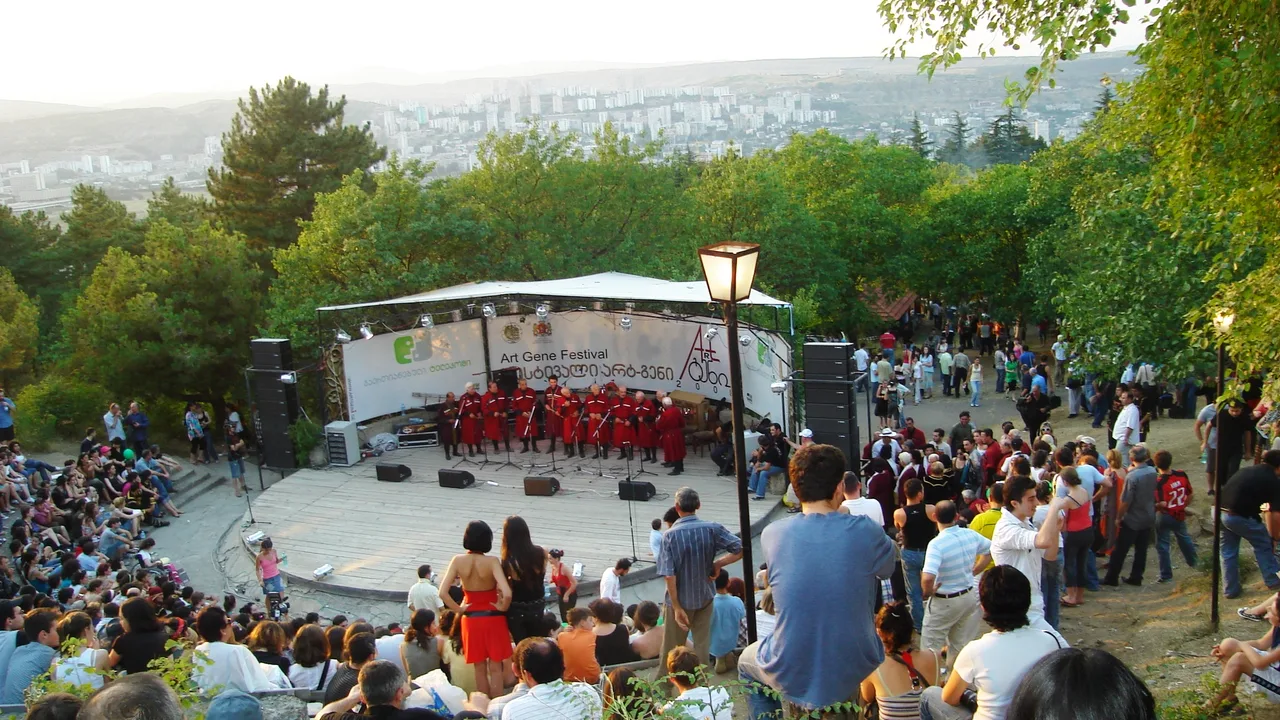
Art-Gene is Georgia’s folk festival, and it’s an evening affair. It takes over the open-air Ethnography Museum on the hill above Vake in Tbilisi for three or four nights in the second half of July: craft stalls and a wine zone from around six, folk ensembles on stage at 20:00, the last act on most nights at half past eleven, and everyone walking back down the hill after midnight.
The dates are the part people get wrong, because they move. The 2026 edition ran 23-26 July and is over; at least two international travel sites had it down for 7-14 July while the organiser’s own site said 23-26 July, and the three editions before that each fell on different dates. Book a flight off a listing site and you can miss the festival by a fortnight. As of 27 July 2026 nothing had been announced for 2027, and on the pattern of the last four years the next edition should land in the second half of July.
What Art-Gene actually is
It started as fieldwork, not as a concert. The Art-Gene group was founded in 2003 and drove around the country recording families who had kept their own singing traditions alive; more than a hundred households were visited, and many of those singers were invited to the first festival in Tbilisi in the summer of 2004. Among the founders were the rock musician Zaza Korinteli and Niaz Diasamidze of the band 33A, which explains a lot about how the evenings are put together.
The trick they landed on was scheduling. Regional folk groups go on early, contemporary bands go on late, so a young crowd that came for the rock has to sit through two hours of village polyphony first. Tamar Melikishvili, one of the founders, put the result plainly in a 2022 interview: “our greatest achievement was that folklore became fashionable”. Attendance settled at 25,000 to 30,000 a year, with a peak of around 40,000 back in 2007.
The Tbilisi nights are only the finale. Since 2005 the festival has spent June touring the regions, staging open-air concerts next to historic monuments; the national tourism board puts the whole cycle at almost a month, starting in late June. Those regional dates rarely reach English-language listings, so in June ask locally rather than searching.
What a night looks like
Turn up at midday and you’ll find an empty museum. The organiser’s own description still talks about daytime folklore and an eight-day finale, but that’s history: in 2025 the craft stalls, the wine and beer zone and the food ran from 18:00 to midnight, and in 2026 the stage schedule started at 20:00. Come at six or seven, eat and walk the grounds while it’s light, and be near the stage by eight.
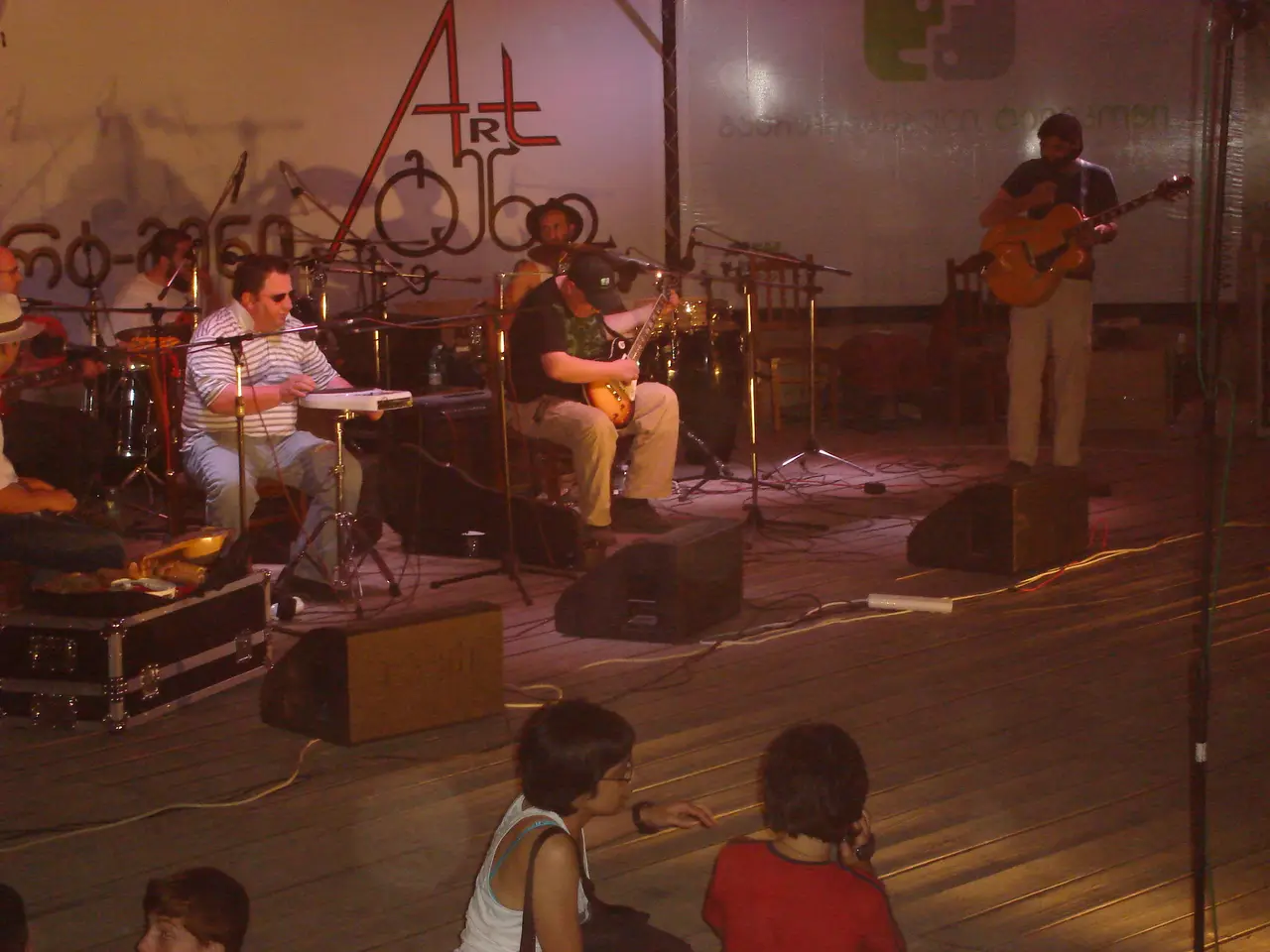
The 2026 running order shows the shape of a normal year. Each of the first three nights opened at 20:00 with a folk ensemble, put a second act on at 21:30 and a third at 23:30: on the 23rd that was the Sukhishvili ballet and then Temuriko Diasamidze and Friends, on the 24th Nino Katamadze and Friends closed, on the 25th the band Reggaeon. The final night was built differently: invited ensembles from the regions at 20:00, Niaz Diasamidze with 33A at 23:00.
Two rules catch people out. Smoking and strong spirits are banned inside the grounds and the organiser says the ban is enforced all festival, so leave the chacha at the flat; wine and beer are sold on site, in their own zone. Children get in free, but the cut-off moves: in 2026 it was children aged 10 and under with an adult, where the three years before it was under 12.
The museum you’re standing in
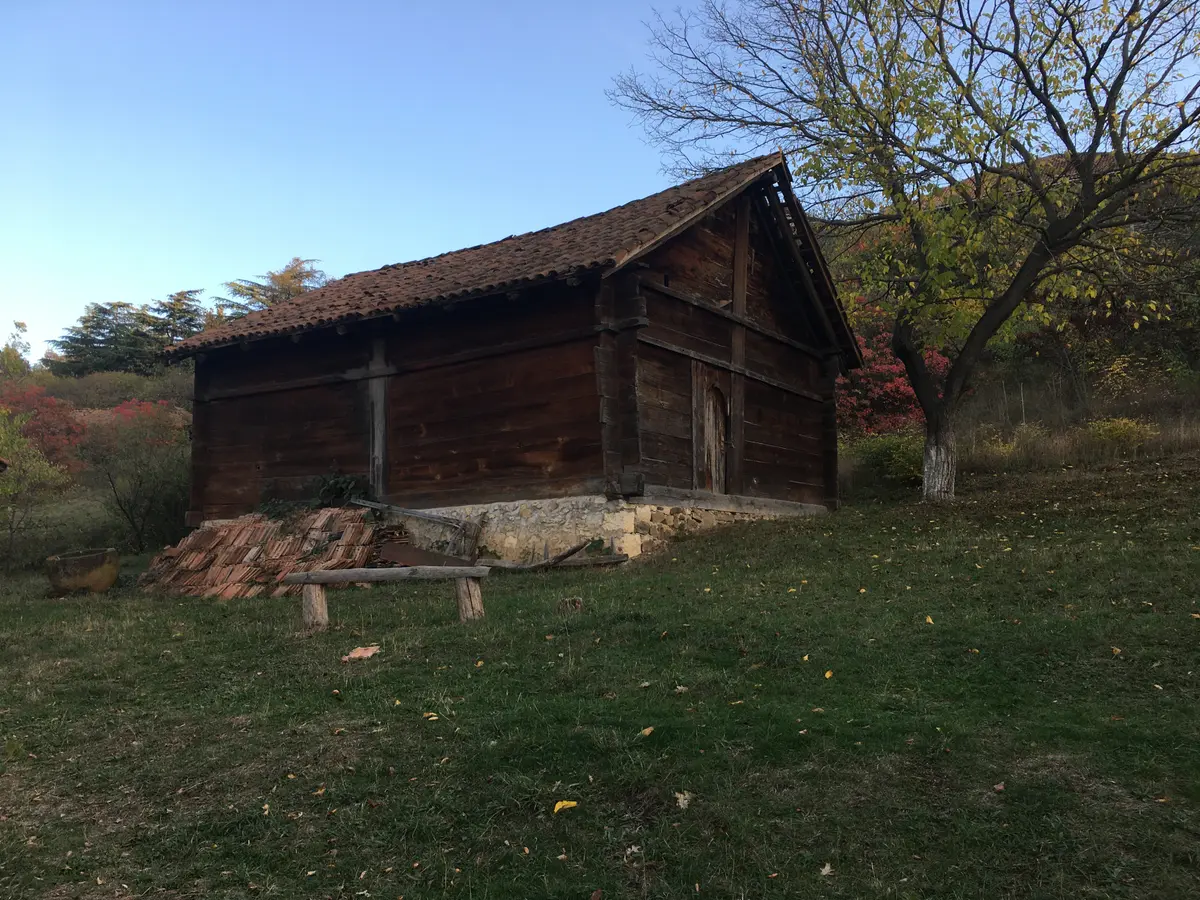
The venue is worth knowing about in its own right. The Giorgi Chitaia Open Air Museum of Ethnography was founded in 1966, covers 52 hectares of hillside in eleven zones, and holds around 70 relocated buildings and more than 8,000 objects: watchtowers, wineries, granaries and farmhouses brought in from villages all over the country. Since 2004 it has been part of the Georgian National Museum.
In practice: uneven ground, dry grass, tree roots and dirt paths, on a slope, in the dark, after the last set. Wear shoes you can walk a hill in, and bring something to sit on if you want grass not stone tiers.
Miss the dates and the museum is still one of the cheapest half-days in the city. It opens Tuesday to Sunday, 10:00 to 18:00, last admission 17:30, closed Mondays and public holidays. Entry is 5 GEL for an adult, 1 GEL for teachers, police and military, and 0.5 GEL for students, schoolchildren and pensioners; under-sixes go free. Those are museum prices, not festival prices.
When it happens, and where the real dates appear
Recent editions, all taken from the organiser’s own year pages:
- 2023 - 20-23 and 28-30 July, seven evenings across two weekends
- 2024 - 19-21 and 26-28 July, six evenings across two weekends
- 2025 - 25-27 July, three evenings
- 2026 - 23-26 July, four evenings
The direction of travel is clear. What used to be an eight-day finale, and was still two weekends as recently as 2024, is now a single block of three or four nights in the second half of July, and nothing guarantees that holds either. Hence you’ll want to check the dates rather than take them on trust.
The dates come first, the line-up follows: for 2026 the better Georgian festival calendars had the right dates by 24 June, while the full night-by-night bill only ran in Georgia Today on 2 July. Any site naming 2027 dates is guessing: as of 27 July 2026 the organiser had not published them. Two sources matter: the organiser at artgeni.ge and the ticket platform tkt.ge, which it links to directly. How the dates work for the rest of the year is in our month-by-month events calendar.
Tickets and what they really cost
Tickets are sold online through tkt.ge, and the organiser links to the event page for whichever edition is on sale rather than running its own checkout. It publishes no prices itself, so the 2026 figures here come from the line-up announcement in Georgia Today: 60 GEL for a single evening in the first sales phase, 90 GEL in the second, 145 or 190 GEL for a pass covering all four nights. Read them as the shape of the pricing, not as this year’s tariff, and you’ll want the live numbers on tkt.ge.
The pass is where the arithmetic is worth doing: 145 GEL for four nights is about 36 GEL an evening, against 60 GEL for one early ticket and 90 GEL for a late one. Two late-phase evenings alone (180 GEL) cost more than the early pass to the whole festival.
Set that next to the country’s other big summer festival. The Black Sea Jazz Festival in Batumi charged 120 to 440 GEL a night in 2026 for international touring acts. Art-Gene’s the cheap one, and the gap is the point: an evening costs about what one dinner with wine does in a good restaurant, so you don’t need to agonise over whether the line-up justifies the money. Our page on prices in Georgia puts those figures next to everything else you’ll pay for.
One caveat: we couldn’t confirm tickets are sold at the gate, so assume online only and buy before you go up the hill.
Who actually plays
The line-up looks unpredictable and mostly isn’t. Across the four editions from 2023 to 2026 the same three anchors turn up every single year: the Sukhishvili national ballet, the singer Nino Katamadze, and Niaz Diasamidze with 33A, who closed the final night in three of those four years (in 2025 Sukhishvili took the last slot instead). Since Diasamidze co-founded the thing, that closing set is a tradition rather than a booking. Everything around them rotates: regional ensembles, a rock or reggae band, and in both 2025 and 2026 the duo of Dato Shugliashvili and Tamuna Tolordava singing Inola Gurgulia’s repertoire.
Useful for planning: you don’t have to wait for the June announcement to know roughly what you’re buying, only to learn which night gets Sukhishvili.
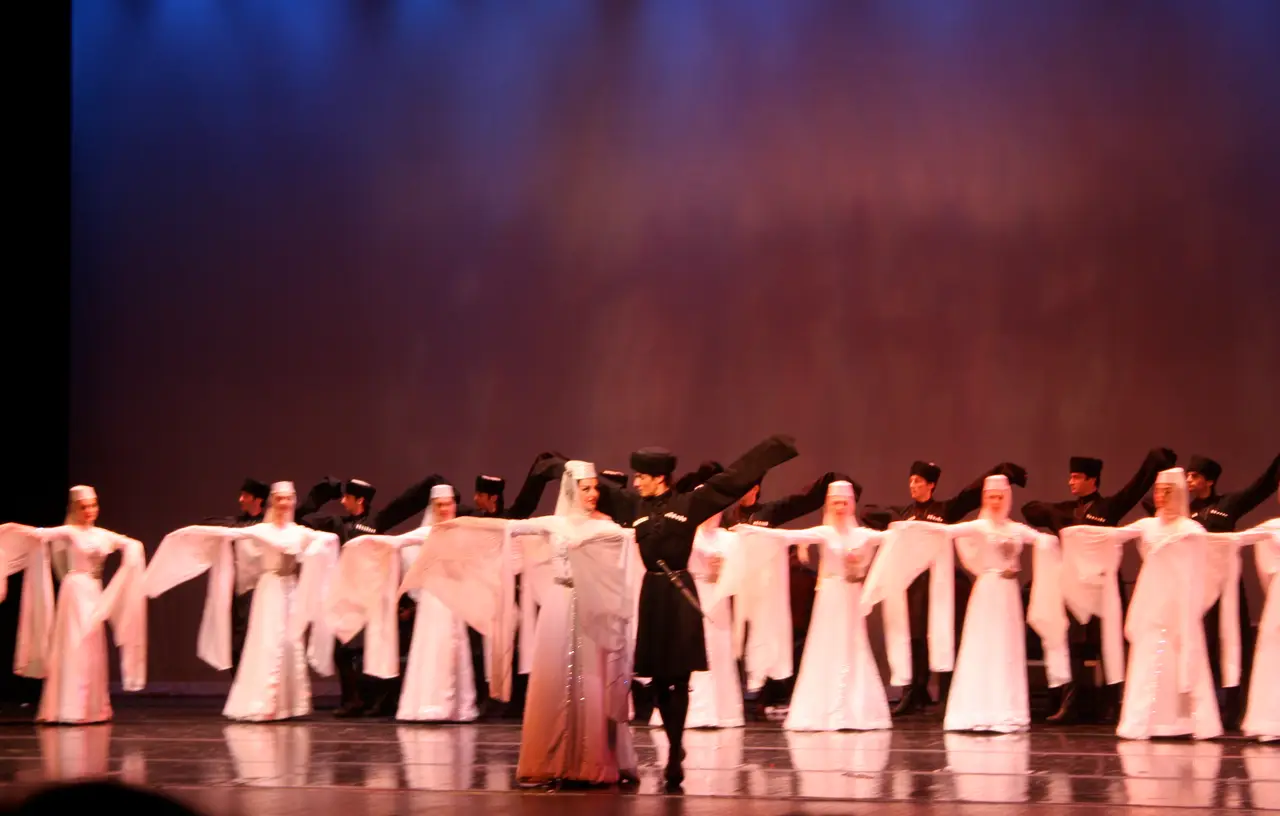
Sukhishvili’s worth staying up for even if folk dance isn’t usually your thing. The company was founded in 1945 by Iliko Sukhishvili and Nino Ramishvili, fields around seventy dancers with a small orchestra, and in 1967 played La Scala, reportedly the only folk company ever let onto that stage. One bar-room fact: the writer Terry Nation is said to have taken the gliding, feet-hidden walk of the women in long dresses as the model for the Daleks in Doctor Who. Outside July, Georgian dance in Tbilisi means a concert or a restaurant evening, and Georgian folk shows in Tbilisi lists both with prices.
Crafts, food and what people carry home
The stalls are a proper part of the festival, not a merchandise row: craftspeople sell what they make, the tourism board lists handicrafts and jewellery alongside regional food, wine and beer, and older editions turned the paths between the museum houses into an open-air workshop.
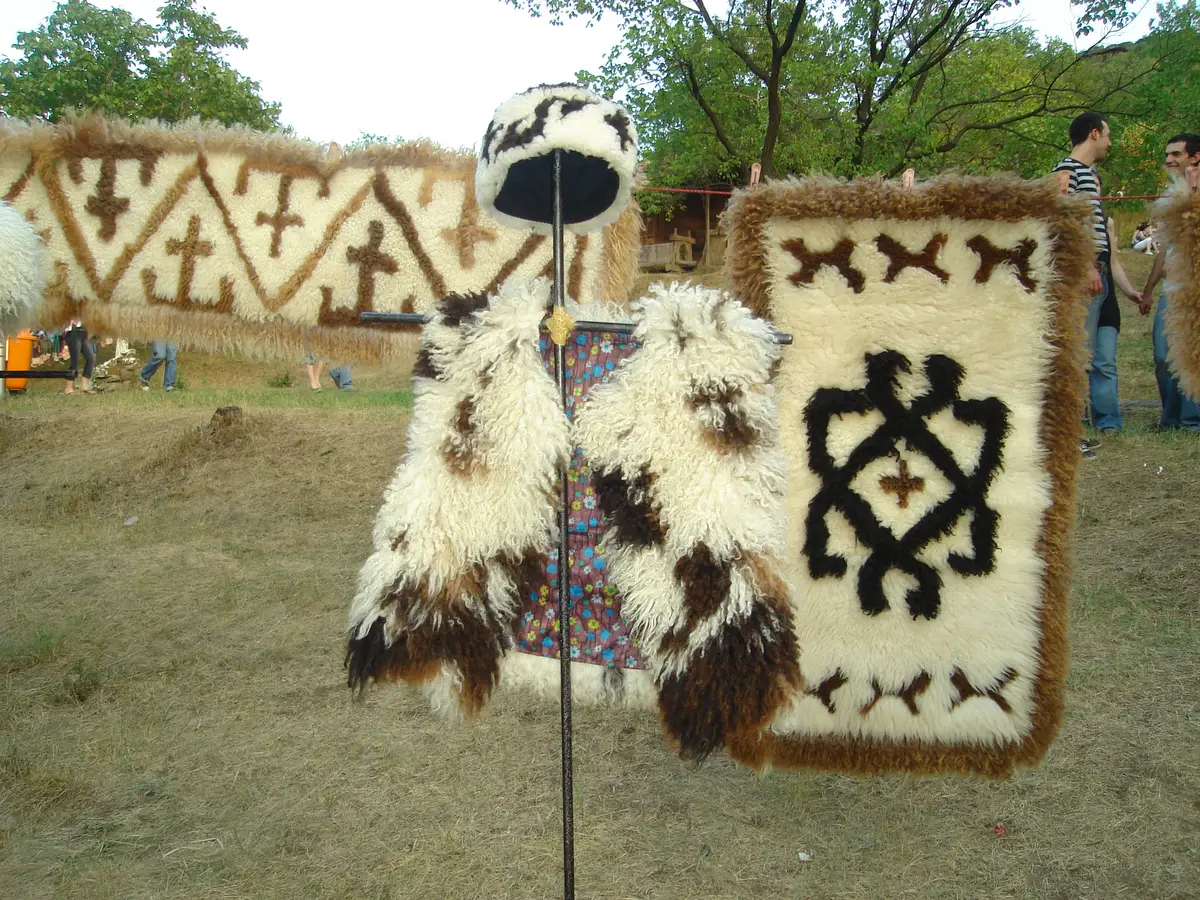
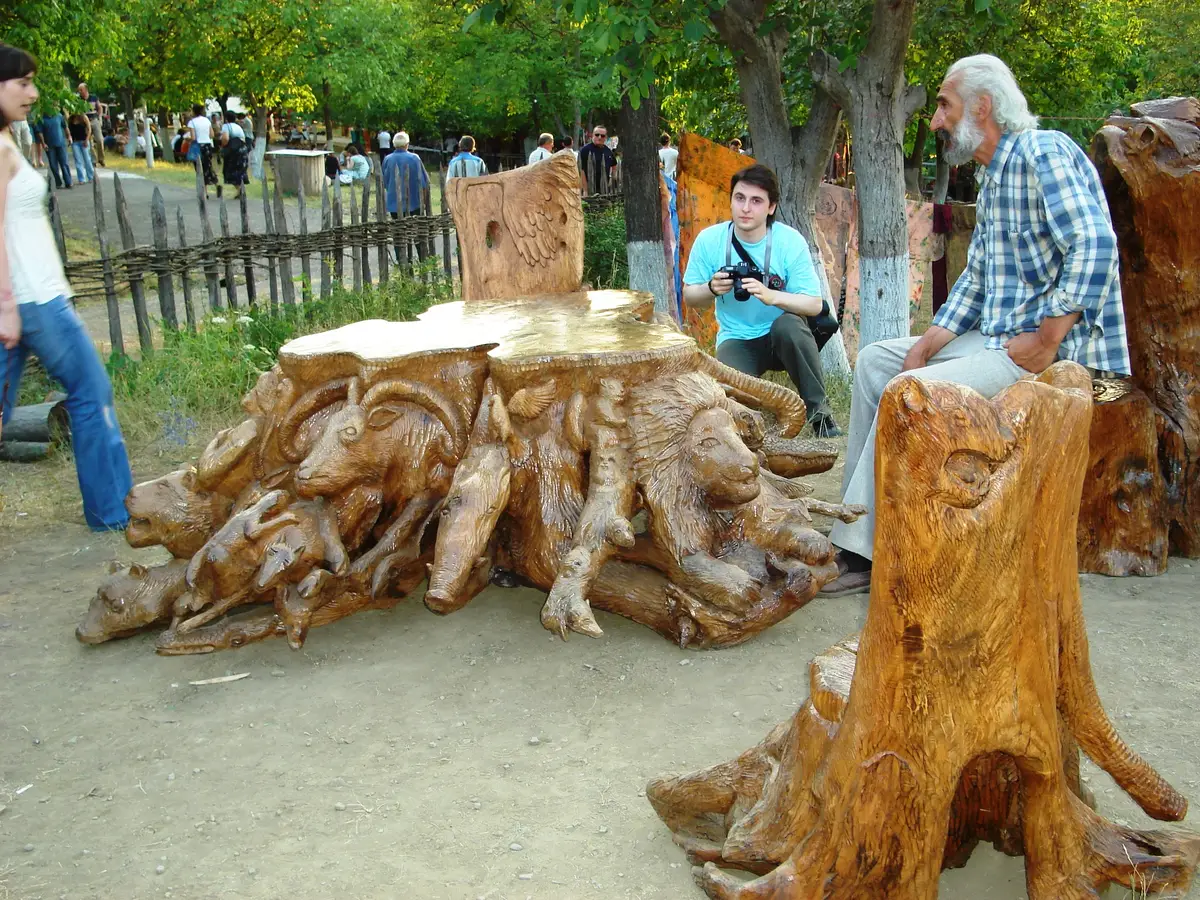
Eat on site rather than beforehand: the food is regional cooking sold by the people who cook it, and few other evenings put versions of the same dish from different provinces in one field. Still working out what to order? Our guide to Georgian food covers the names.
Filling the day before the gates open
Nothing starts before six, so a festival day is a normal Tbilisi day with a late night bolted onto it. The museum sits just below Turtle Lake, so the obvious pairing is easy: an afternoon at Turtle Lake, which has shade, water and a cafe, then down the hill to the gates. A day trip out of the city works too, as long as you’re back by early evening.
For the nights either side of the festival, Fabrika and the courtyard bars around it are the standard answer, and they run far later than any museum will.
Getting up the hill, and back down
The address is 25 Merab Berdzenishvili Street, on the Turtle Lake road above Vake. Local guides list three ways up: drive or take a taxi to the gate, walk up through Vake Park, or ride the cable car from Chavchavadze Avenue to Turtle Lake and walk down from there. The cable car costs about 1 GEL with a Metromoney card and runs roughly 08:00 to 22:00, worth checking on the day.
That matters for the way home. The headliner finishes after midnight, hours after the cable car has stopped, and no guide we found lists a city bus to the gate; our guide to Tbilisi public transport covers what does run and when. Everyone leaves at once when the last set ends, so either agree a pickup or walk down towards Vake and order a car from the main road, where drivers actually go.
So is it worth it?
When the dates are out and they fit your window, buy one evening and go. In 2026 sixty lari bought four hours of regional polyphony, a hillside full of people who came for the music, and a headliner who tours internationally. At that price it isn’t a decision that needs weighing.
If you’re choosing between this and the coast, be honest about what you want. Batumi’s jazz festival brings in international names and charges accordingly; Art-Gene is entirely Georgian, cheaper, and set in a village museum rather than on tennis courts. One is a night out with a famous act, the other a country fair with a stage.
And if you came for pure archival folklore, calibrate. The daytime programme the founders built the festival around has shrunk to almost nothing, the evenings mix village ensembles with electric bands, and the last hour is a rock show. That mix is the design, and why the festival is still running after two decades, but it isn’t a field recording session. Arrive for the first two hours, stay for the last two, and you’ll have seen both halves of what Georgian music does with its traditions.
Photos
Admission and opening hours
- Admission price
- 2026, per the line-up announcement in Georgia Today, 2 July 2026 (the organiser publishes no prices of its own): 60 GEL for one evening in the first sales phase, 90 GEL in the second; four-night pass 145 or 190 GEL. Sold through tkt.ge
- Opening hours
- Three or four evenings in the second half of July. Stalls and the wine zone open around 18:00, the stage runs from 20:00 until after midnight
The 2026 edition finished on 26 July and nothing had been announced for 2027 as of 27 July 2026. Dates, prices and the free-entry age for children are reset every year, and the festival has moved by a week or more between editions. Check artgeni.ge and tkt.ge before you book anything.
Details checked: July 27, 2026
Read also

Entertainment · 11 min read
Cooking Classes in Tbilisi: What to Pick and What It Costs
Verified · October 17, 2026Khinkali and khachapuri classes in Tbilisi from 110 GEL: family home or food walk, prices from operators' own sites, kids, vegetarians, how to book.

Entertainment · 9 min read
Georgian Folk Shows in Tbilisi: Where to Go and Prices
Verified · October 19, 2026Georgian dance and polyphony in Tbilisi: Erisioni at the Sports Palace on 30 October 2026, Ethno Tsiskvili nightly, lari prices and what the dances mean.

Entertainment · 9 min read
Paragliding in Gudauri: tandem flights, prices, season
Verified · October 10, 2026Tandem paragliding in Gudauri: the three launch sites, summer and winter prices in lari, weight limits, insurance and what happens if the weather turns.

Entertainment · 13 min read
Tbilisi Nightlife: Techno Clubs, Bars and Door Rules
Verified · October 6, 2026Tbilisi nightlife in 2026: Bassiani, KHIDI and Left Bank, entry prices in lari, how registration and the door work, where to drink first and getting home.