
Travel Insurance for Georgia: How to Choose
How to choose travel insurance for Georgia: coverage, deductible, trekking and skiing as a separate risk, and what to do if you need to file a claim.
Medical insurance is the easiest thing to forget while packing and the thing you regret at the worst possible moment: a doctor’s visit, a broken bone on the trail, or a car accident behind the wheel in a foreign country all come out of your own pocket if you don’t have a policy. The difference between a solid policy and one that’s just for show usually isn’t the price - it’s a handful of clauses in small print: the deductible, the altitude cap on mountain sports, how you actually get your money back. Those are what decide the outcome once something’s already happened. We went through the real coverage terms of one of the services people buy most often for Georgia, straight from its official policy document rather than its marketing page, and added what to actually do if you end up needing to use it.

Do you even need insurance
From a practical standpoint, yes, even when no one formally asks for it. Healthcare in Georgia is paid for foreigners, and the cost of a serious case (a hospital stay, surgery, a helicopter evacuation from the mountains) isn’t comparable to the price of a policy. From 2026, an entry requirement to hold medical insurance applies to incoming tourists - the coverage minimum, the fine and how it’s checked are laid out in the full guide to mandatory travel insurance for Georgia entry 2026, with the wider Insurance section for context, because the rules change from time to time.
What the policy should cover
The baseline is what a policy is nearly pointless without. Most international plans split this into separate line items with their own limits, rather than one lump sum:
- medical expenses and emergency care for the entire length of the trip (from entry to departure);
- medical evacuation - transport to a better-equipped hospital if the first one can’t treat you - and repatriation, a return home after discharge if your treating physician decides it’s medically necessary. These are two separate benefits with separate limits, not one line called “evacuation”;
- 24/7 assistance (phone support, coordination with the clinic) - critical when you don’t speak the local language, and often the channel through which direct billing to a hospital gets arranged instead of you paying and waiting for a refund;
- adventure activities as their own line. Trekking, skiing, rafting and quad bikes aren’t always covered by a basic policy by default - more on exactly where that line falls below.
One clause is worth checking separately, because it rarely gets noticed: search and rescue, including a helicopter sent to find and reach you, is flatly excluded by SafetyWing, a policy popular with nomads - what gets paid for is transport between hospitals, not the rescue operation itself in the mountains. In Georgia, rescue operations are run by local services (the single number is 112), but who foots your personal bill for the helicopter is a question for your specific insurer, and it’s worth settling in writing before a hike rather than assuming.
The deductible: what you pay yourself
A deductible (sometimes called an excess) is the part of the bill your policy doesn’t reimburse: either a fixed amount per case or a percentage of the invoice. A zero deductible doesn’t automatically mean a better policy - sometimes it just means the insurer built that difference into the subscription price instead of hiding it in fine print. SafetyWing’s Nomad Insurance Essential has no deductible at all: it simply isn’t mentioned anywhere in the official Description of Cover that’s been in effect since February 2026, and the overall limit is $250,000 per active insurance period. That’s a ceiling, not a guarantee - some benefits carry their own, smaller cap: medical evacuation has a lifetime maximum of up to $100,000, and repatriation is capped at up to $5,000 per active period.
Don’t confuse this deductible with the one in rental car insurance in Georgia - that one covers damage to the car, in amounts of $100-800 that the rental company holds back from your deposit. These are two different products covering two different things: one is about your health, the other about someone else’s car, and one deductible has nothing to do with the other.
Trekking and skiing count as a separate risk
This is where the common assumption breaks from what the policy actually says. People assume “adventure activities” always cost extra, but the real line isn’t drawn by sport - it’s drawn by altitude and by whether you’re on a marked trail. Under the official Description of Cover for Nomad Insurance Essential, hiking, trekking, on-piste skiing and snowboarding, and even ice climbing are all part of the base plan at no extra cost - but only up to 4,500 meters and only on “certified, official paths.” Step off the trail or ski off-piste, and the claim isn’t covered, no matter what add-on you’ve bought.
For Georgia, that’s not an abstract number. The routes most tourists actually walk - up to Gergeti Trinity Church above Stepantsminda, the Chaukhi pass, Mestia to Ushguli in Svaneti - sit below that ceiling. The summit of Kazbek itself (roughly 5,054 meters) doesn’t: that’s a technical, glaciated climb with ropes, not a walk, and it formally falls into territory the base plan doesn’t cover at all.
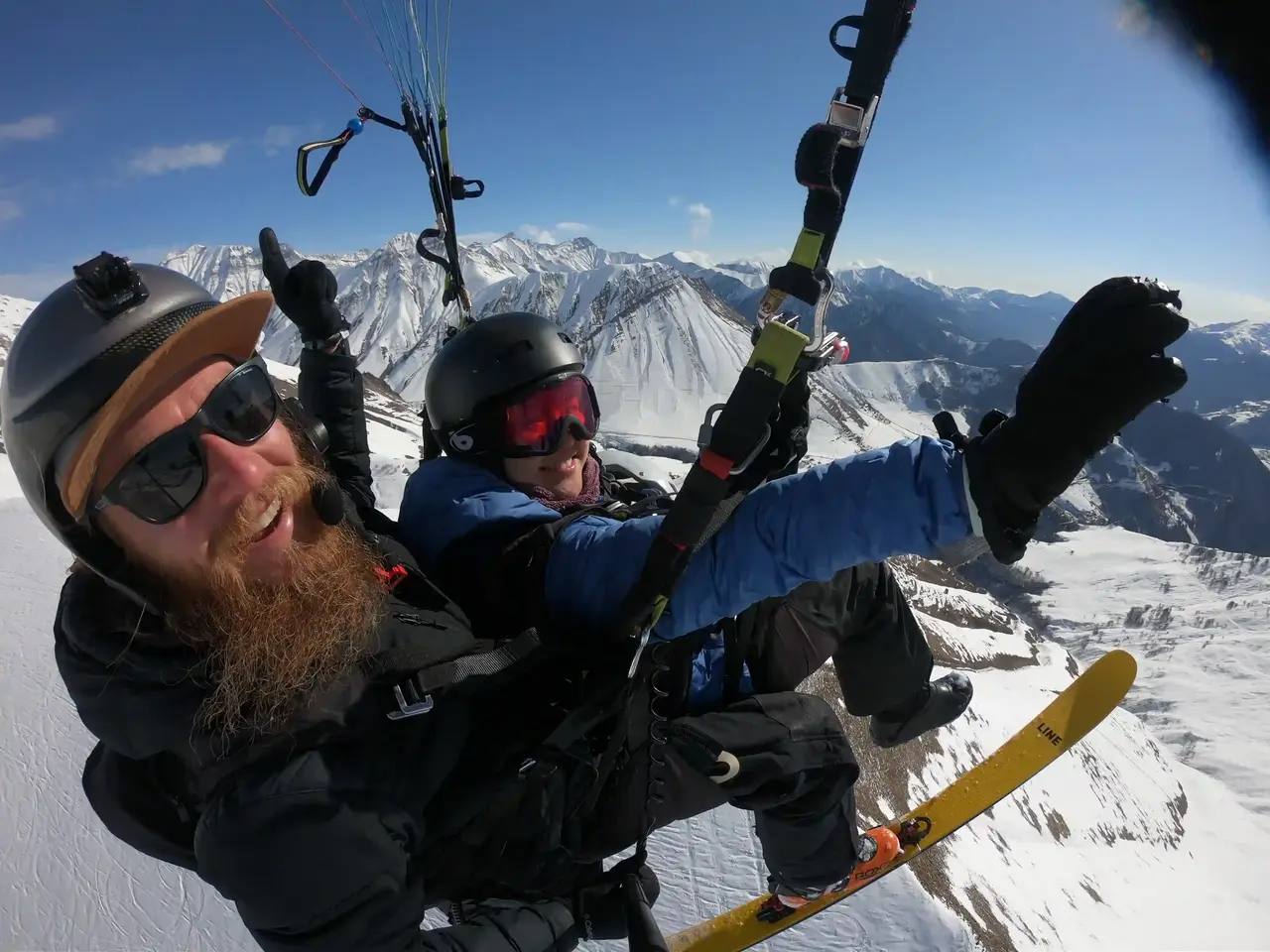
The separate Adventure sports add-on raises the altitude ceiling to 6,000 meters and adds riskier activities like paragliding and rock climbing, but even it never covers off-piste skiing or snowboarding, or heli-skiing, under any circumstances - that’s an explicit exclusion, not an oversight. The exact price and activity list for the add-on change, so check them at checkout rather than in this article.

If your route is a marked trail below 4,500 meters, which covers most tourist trekking in Georgia, a separate adventure-sports policy might not be necessary - but confirm that against your own policy, not someone else’s. If a summit, a glacier, or backcountry skiing is on the itinerary, read the exclusions section before the hike, not after an injury. For the wider risk picture, roads, weather, connectivity in the mountains, see Is Georgia safe for tourists?.
What else to check before you buy
- Dates. The policy must cover the whole trip, with no gaps.
- Coverage amount. Georgia’s entry rules set a minimum - check the current figure in the rules (“Insurance” section) and leave a margin rather than cutting it close.
- Policy language. A document in English (or Georgian) is easier to present at the border.
- Exclusions. Alcohol, chronic conditions, that same adventure-sports question - read the exclusions before you buy, not after.
- How you actually get paid back. Most international policies default to pay-and-claim: you pay, then get reimbursed, rather than the clinic getting billed directly. Direct billing is usually available only for hospitalization, and only if you notify the insurer in advance - more on that in the claims section below.
Tourist or long-term resident: different policies
A short trip suits an ordinary tourist policy for specific dates. People who live in Georgia for months find recurring policies more convenient - built for nomads and long stays, so you don’t need to buy one from scratch every time. SafetyWing is one such service. Ukrainian citizens find that some standard policies aren’t available to them; separate working options exist (EKTA, for example), and they’re worth comparing on coverage.
How and when to buy
Buy your policy a few days before departure, not on the way to the airport, and it’s not just about the border check. Most international policies, SafetyWing included, carry a built-in limit: anything that gets sick or happens in the first 72 hours after purchase isn’t covered. That’s a fraud guard against buying a policy on the way to the ER, not a trap, but in practice it means insurance bought the morning of your flight won’t cover you on day one of a hike. Coverage kicks in the moment you get your confirmation email (or the moment you physically leave your home country, if you bought it while still there), but that 72-hour exclusion is counted from the purchase date and time, not your departure date.
Save the policy in two places, your email and offline on your phone (a screenshot or PDF), and separately note the assistance line’s phone number or contact method: you won’t need it at the border, you’ll need it the moment something actually happens, which is exactly what the next section covers. If you’re driving, look at car insurance (CDW and the deposit) separately - see rental car insurance in Georgia for what it covers, and the car rental section for the rest. That’s a different policy, and it doesn’t replace medical cover.
What to do if something happens in Georgia
If it’s life-threatening, an injury, a car accident, a serious medical event, call 112 first (Georgia’s single emergency number: police, ambulance, rescue) and deal with the insurer afterward. That works nationwide, mountain areas included, though how fast a crew reaches a remote gorge versus central Tbilisi obviously differs.
From there, the process depends on whether it’s outpatient care or a hospital stay:
- A regular doctor’s visit or clinic trip. Pay on the spot yourself, then file a claim for reimbursement. SafetyWing calls this pay-and-claim: you submit it through your online dashboard or by emailing claims@safetywing.com, and that’s the default model for most international policies, not an exception.
- Hospitalization. Here there’s a real chance you won’t have to pay upfront at all. If you’re admitted to a hospital outside the US, the insurer may be able to arrange direct payment with the facility (a Guarantee of Payment) - but only if you, or someone acting for you, notify the assistance line in advance, or at the very latest before you’re discharged. Miss that window, and you’re back to paying yourself and claiming later.
- Documents to collect no matter what. An itemized invoice (a list of services and their cost, not one lump figure), a medical report with the diagnosis and the onset date of symptoms, proof of payment, and a police report if it’s an accident or theft. Ask the clinic for these on the spot, not from home afterward.
- Deadlines. SafetyWing requires you to file within 60 days of the end of your active insurance period, not 60 days after the incident itself; other insurers may set a different window, so check your own policy’s terms. Once approved, they say claims take roughly 10-15 business days to process, with the payout landing another 7-10 days after approval.
The same advice applies here as with the deductible: read the “how to file a claim” section of your policy before the trip, not once your arm’s already in a cast. It usually tells you exactly where to send things and what to photograph on the spot.
Read also

Insurance · 12 min read
Georgia Rental Car Insurance 2026: CDW, Excess, Borders
Verified · August 2, 2026What a Georgia rental car actually insures: CDW and its gaps, deposit vs excess, and what changes if you drive it into Armenia or Azerbaijan.

Insurance · 9 min read
Georgia Travel Insurance 2026: Entry Requirement
Verified · August 20, 2026Georgia entry insurance rule 2026: every tourist needs health and accident cover from 30,000 GEL. Who is exempt, what it must cover and where to buy.

Transport · 13 min read
Kutaisi Airport to Gudauri 2026: 4 h, Shuttle, Transfer, Car
Verified · October 24, 2026Kutaisi airport to Gudauri: 309-310 km, about 4 h by road. A 30 GEL coach to Tbilisi and a marshrutka, a transfer timed to your flight, the winter bus.

Entertainment · 11 min read
Cooking Classes in Tbilisi: What to Pick and What It Costs
Verified · October 17, 2026Khinkali and khachapuri classes in Tbilisi from 110 GEL: family home or food walk, prices from operators' own sites, kids, vegetarians, how to book.