
Is Georgia Safe in 2026? US, UK, Canada, Australia Advice
Checked 23 Sep 2026: US Level 1, UK, Canada, Australia at their lowest level, Canada a step up in Tbilisi. No-go: Abkhazia, South Ossetia. 112, 30,000 GEL.
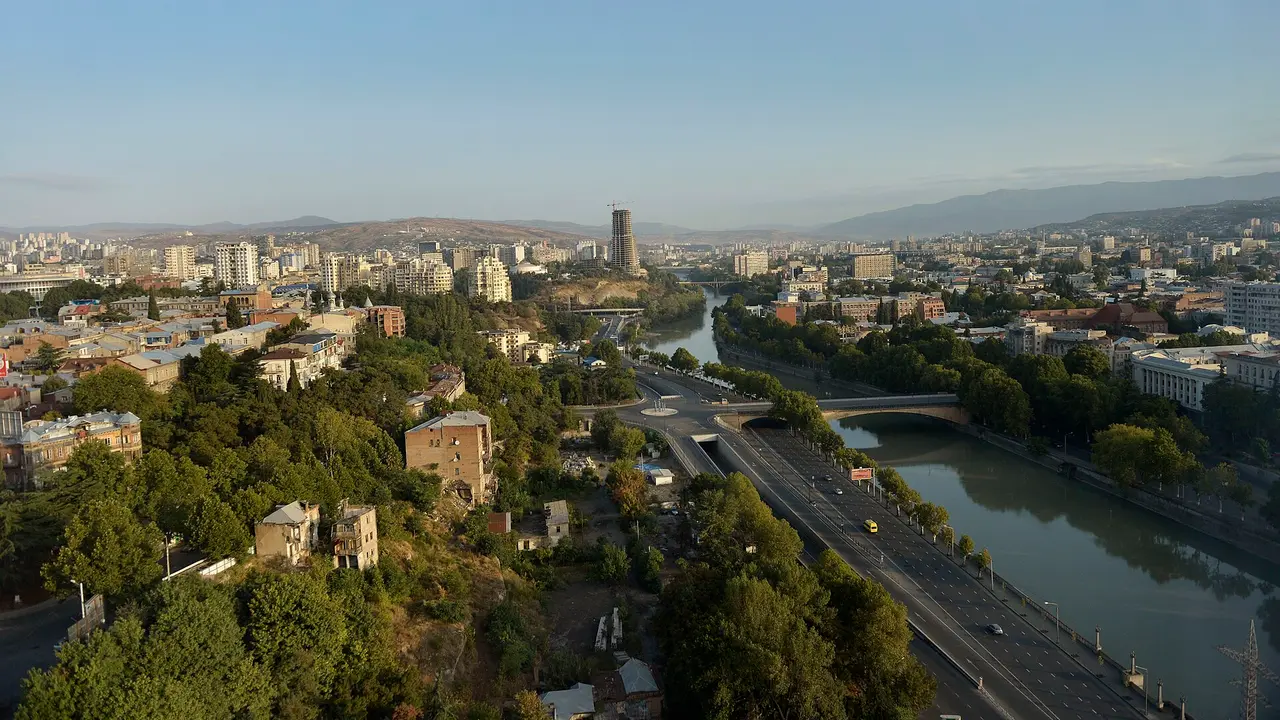
Yes, for the trips most visitors take. On 23 September 2026 the U.S., UK, Canadian and Australian governments all rated Georgia at the lowest step of their scales, with the U.S. at Level 1: Exercise Normal Precautions. All four put the same two places off limits, the Russian-occupied regions of Abkhazia and South Ossetia. Outside those regions and their immediate surroundings, only Canada raises the level anywhere: for Tbilisi, citing “the risk of demonstrations and clashes between security forces and protestors,” not crime.
What goes wrong for visitors is usually more ordinary: a bar bill padded by hustlers, a hike that drifts toward an unmarked boundary line, an injury in a valley an ambulance can’t reach. There’s also one legal trap few Western travelers have heard of. Entering Abkhazia or South Ossetia from the Russian side is a crime under Georgian law, punishable by a fine or two to four years in prison.
Checked 23 September 2026 against the advice pages of the U.S. State Department, the FCDO, Global Affairs Canada and Smartraveller, and against Georgian law on matsne.gov.ge. This is a summary of official advice, not legal advice or a safety guarantee. Advice and entry rules change: if any of those pages shows a newer update date than the table below, follow the newer page.
Four advisories, one table
| Government | Georgia as a whole | Off limits | Last update |
|---|---|---|---|
| U.S. State Department | Level 1: Exercise Normal Precautions | Do not travel: South Ossetia, Abkhazia | advisory dated 13 March 2025; country page updated 17 September 2026 |
| UK (FCDO) | no advice against travel to Georgia as a whole | advises against all travel: South Ossetia, Abkhazia; against all but essential travel: areas right next to their boundary lines | updated 15 September 2026 |
| Canada (Global Affairs) | Take normal security precautions; Tbilisi: Exercise a high degree of caution | avoid all travel: both regions and anywhere within 5 km of their boundary lines, Highway E60 excepted | updated 9 September 2026 |
| Australia (Smartraveller) | Exercise normal safety precautions | Do not travel: South Ossetia, Abkhazia | updated 5 August 2026, still current on 23 September 2026 |
Read across the rows and two more differences stand out.
How wide the buffer is. Canada is also the only one to give travelers a distance: avoid all travel within 5 km of the boundary lines, except on Highway E60, the main highway west from Tbilisi past Gori. The U.S. keeps its own embassy staff out of the same 5 km strip unless they’re on official business in an armored vehicle, but says personal travel on major highways there isn’t restricted. The UK speaks of “areas immediately next to” the lines without a distance, and Australia of “nearby areas.”
Pankisi. Only the State Department cautions U.S. citizens against travel to the Pankisi Gorge in Kakheti, north of the villages of Matane and Chorale up to the Russian border and including Duisi. Its own staff face travel restrictions there because of the security environment and the potential for civil unrest.
Abkhazia and South Ossetia: the line you can’t cross
Russian troops and border guards have held both regions since the 2008 war, and every one of the four governments says don’t go. Their reasons range from landmines and crime to fighting and the risk of detention. None of them can do much for you once you’re inside. The FCDO can’t provide face-to-face support, Australia calls its ability to help “extremely limited”, and the U.S. points out that air ambulance evacuation is impossible because neither region has a commercial airport.
Georgian law adds a trap of its own. The Law on Occupied Territories lets foreigners enter only from Georgian-controlled ground: Abkhazia from the Zugdidi side, South Ossetia (the Tskhinvali region) from the Gori side. Any other way in, and that includes crossing from Russia, is banned and prosecuted under Article 322¹ of the Criminal Code: a fine or two to four years in prison, three to five if it’s repeated or done as a group. The FCDO adds that passport stamps from the self-declared authorities may be read as illegal entry, and Canada says even the Georgian-side route needs prior authorization from the Georgian authorities.
That’s why the Russian border matters for overlanders too. Canada notes that Georgia recognizes only one crossing with Russia, Kazbegi-Upper Lars. Australia goes further and tells its citizens not to enter or leave Georgia by any land border with Russia.
On the ground, three things get travelers into trouble:
- Unmarked lines. The FCDO says the boundary lines are “generally unmarked and away from roads.” The U.S. warns that South Ossetia’s line has moved and can move again, and that hikers risk wandering across on its eastern side, where Russian security forces can detain them.
- Old ordnance. The UK and Canada both list unexploded weapons along the boundary lines and near the Red Bridge crossing with Azerbaijan.
- Davit Gareja. At the Udabno caves the Georgia-Azerbaijan border is “unmarked in this area and disputed,” says the FCDO, which suggests asking the border guides there if you’re unsure.
Insurance follows the same map. The FCDO says cover could be invalidated if you travel against its advice, and Smartraveller warns that most Australian policies won’t cover these regions at all. If the Truso valley near Kazbegi is on your list, our Kazbegi day hikes guide explains where the Georgian checkpoint turns walkers back.
Tbilisi protests: where things stood on 23 September 2026
In Tbilisi the protests mostly have one address. The FCDO counted the 650th consecutive day of protests on 9 September 2026, and some of those days ended in violent confrontation between police and protesters. The crowd gathers outside the Parliament building on Rustaveli Avenue and can spread to other streets, particularly on Saturday evenings and nights and on the anniversaries of political events. Protests take place in other cities and towns too, and Canada adds that security forces “may also strongly repress demonstrators and carry out arrests.”
For foreigners there’s a second risk besides the crowd itself: the border. The FCDO says foreigners who “participate or engage” in demonstrations may face extra questioning on exit or be refused re-entry, and that unpaid fines can stop you leaving until they’re paid. Its entry page adds that a small number of British citizens have been refused entry or had trouble leaving, in cases that appear to be linked to “alleged presence at or participation in” protests. The word is presence, so standing in the crowd to watch or film isn’t a safe middle ground, and all four governments tell visitors to keep away from demonstrations. Canada lists fines, detention, deportation and questioning at departure for tourists who join in.
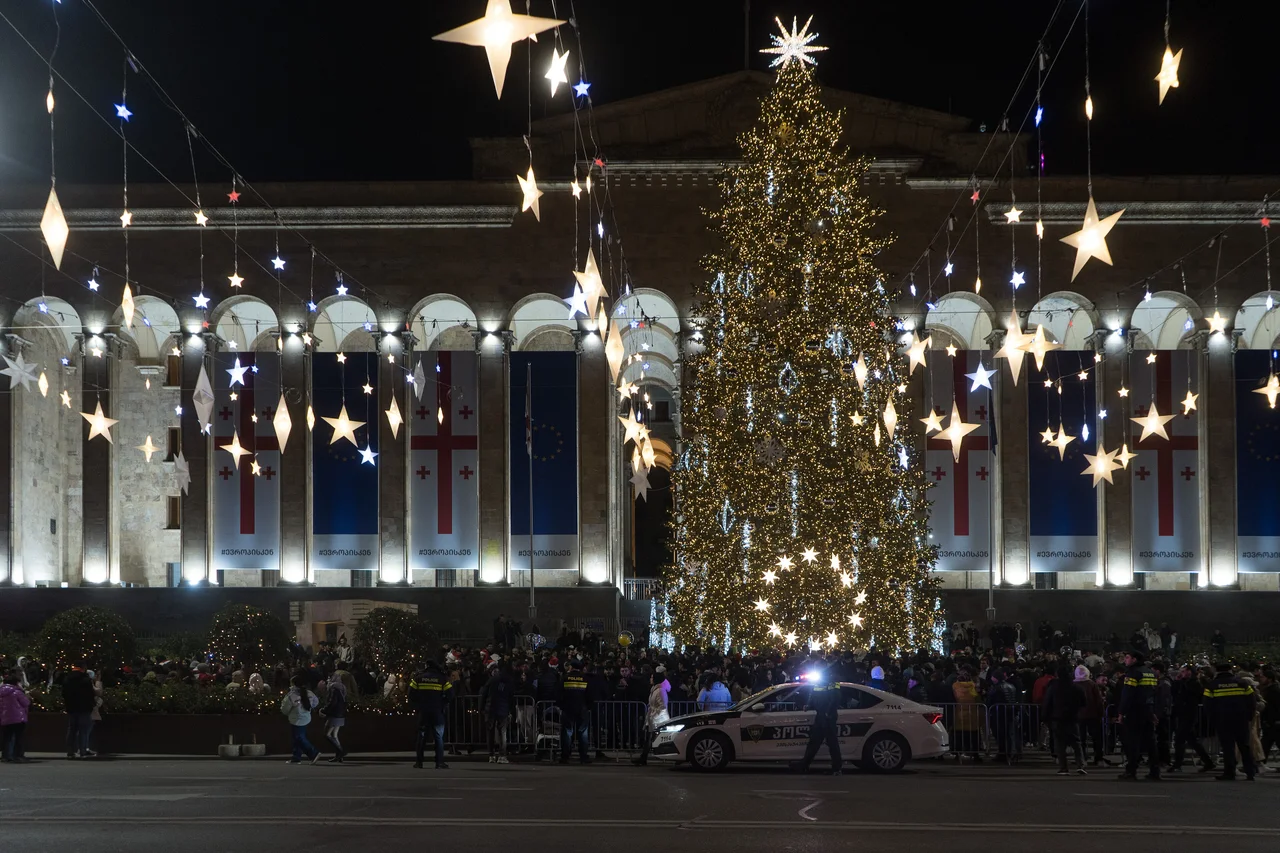
Nobody publishes a forecast, so check the status the week you fly instead of trusting any article, this one included:
- read the “Political situation” paragraph in the Safety and security section of the FCDO’s Georgia advice; if it’s still counting days, the Rustaveli pattern holds;
- U.S. citizens can read the embassy’s demonstration alerts on its website and get its messages by email through STEP, and the FCDO and Smartraveller both offer email updates whenever their Georgia page changes;
- if you’re booking central Tbilisi for a weekend, a room a few streets off Rustaveli means you won’t have to walk past Parliament on a Saturday night. The avenue itself is being rebuilt section by section: the city shut it to cars in late July 2026 and reopened the first stretch, from Chovelidze to Javakhishvili Street, on 11 September, while the FCDO’s 15 September update still flags construction work in central Tbilisi. Our guide to where to stay in Tbilisi explains how the works change the choice of district.
Street crime is low, and the scams are well-worn
The FCDO puts it plainly: “Crime levels are low.” Canada adds that violent crime against foreigners happens occasionally and that police can take much longer to reach remote areas than city streets. Visitors tend to run into the same four problems:
- The bar setup. A friendly stranger, or a match on a dating app, suggests a particular bar or club; the bill arrives inflated and the staff lean on you to pay. The U.S. calls these schemes common. Canada’s fix is simple: meet new people somewhere secure and familiar, confirm prices before ordering, don’t run an open tab and don’t hand your card over.
- Spiked drinks. The UK, Canada and Australia all warn about it. Buy your own drinks and keep them in sight; Australia adds a methanol warning and says to drink only branded, sealed drinks.
- Pickpockets and skimmers in crowds and at ATMs. The U.S. also mentions groups of street children who surround and distract foreigners.
- Taxis. Don’t flag one in the street, book through an app and check the seatbelts work (FCDO). Canada says to avoid marshrutka minibuses altogether, and U.S. embassy staff aren’t allowed to ride them.
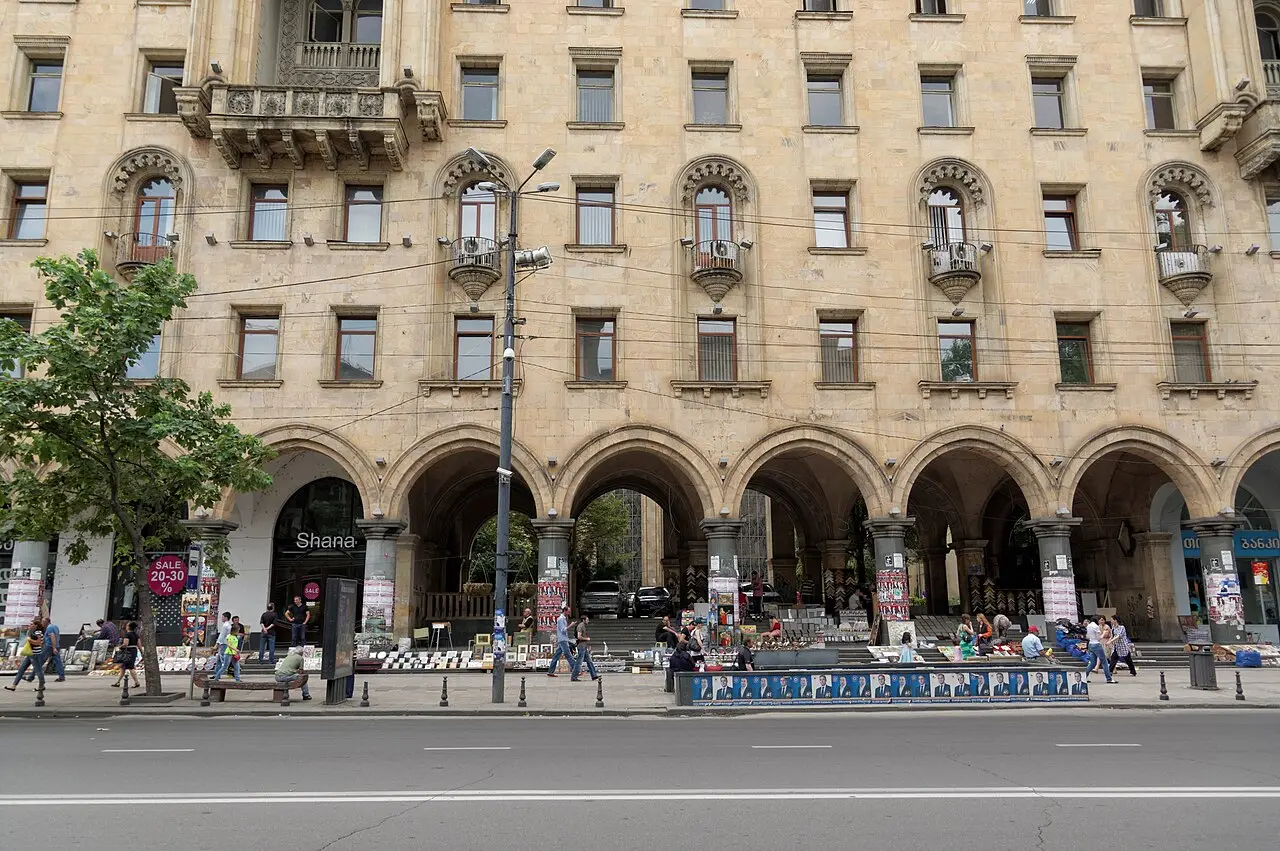
Two legal traps catch people who’d never think of themselves as lawbreakers. Carrying a pocketknife or another cutting tool is illegal, says the U.S., and can get you detained or cited. And the drug law is severe: the FCDO quotes 5 to 25 years for illegal drugs, cannabis included, and warns that non-prescription codeine medicines sold freely in the UK are illegal in Georgia. Carry prescriptions and original packaging; to check a specific drug, write to Georgia’s medicines regulator at regagency@moh.gov.ge at least a month ahead, which is how long the FCDO says an answer takes.
Mountains and roads: 112, phone signal and who comes to get you
Georgia’s single emergency number is 112, run since 2012 by the Ministry of Internal Affairs. It answers around the clock nationwide and dispatches police, fire and rescue teams and ambulance crews. The service says you can call from a phone with no SIM card or a negative balance, but only where a Georgian mobile network has coverage, and a deep valley may not have any. According to the U.S. Embassy, most dispatchers speak Georgian and Russian and hand English speakers to a colleague; Smartraveller says English-speaking operators are usually available.
Install the free 112 Georgia app before you head up (Android and iOS; Georgian, English, Russian, Armenian and Azerbaijani). It calls 112 and sends your GPS coordinates at the same time, lets you chat with a dispatcher when you can’t talk, and if you’ve run out of mobile data it sends the coordinates by SMS. A silent SOS button sends your location and brings the police.
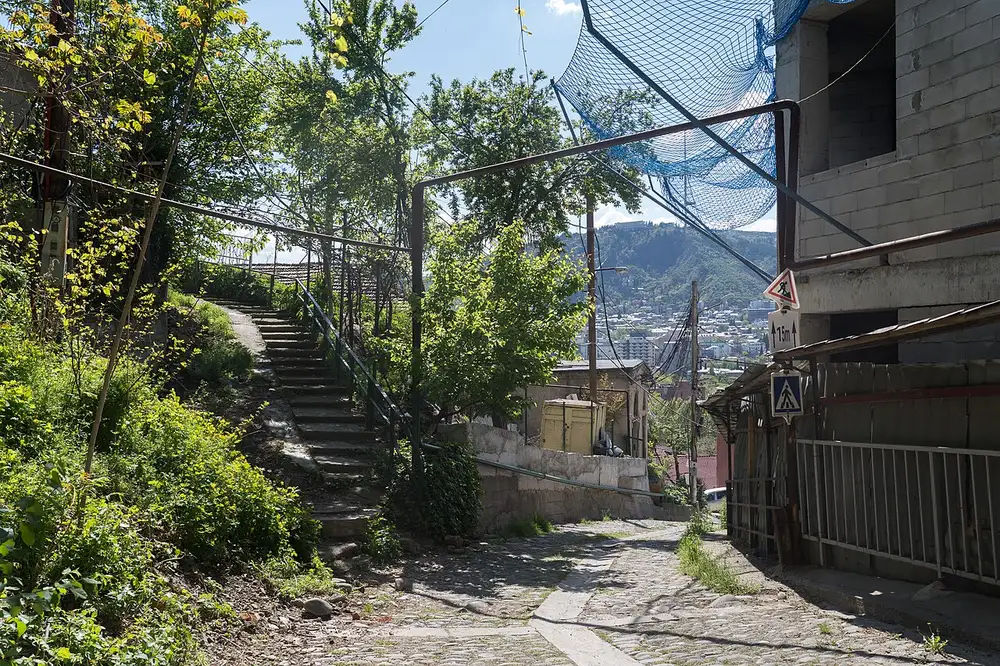
Then comes the part all four governments agree on: help can be slow. The U.S. says first responders generally can’t reach areas outside the major cities, ambulances are rare outside Tbilisi, and an injured traveler may do better taking a taxi to the nearest major hospital. The FCDO and Australia warn that emergency response may be limited for hikers, skiers and mountaineers, and Canada that first responders may not be able to reach rural areas and trails aren’t always marked. The FCDO also lists Gudauri, Mount Kazbegi and Mount Tetnuldi as places where altitude sickness is a risk.
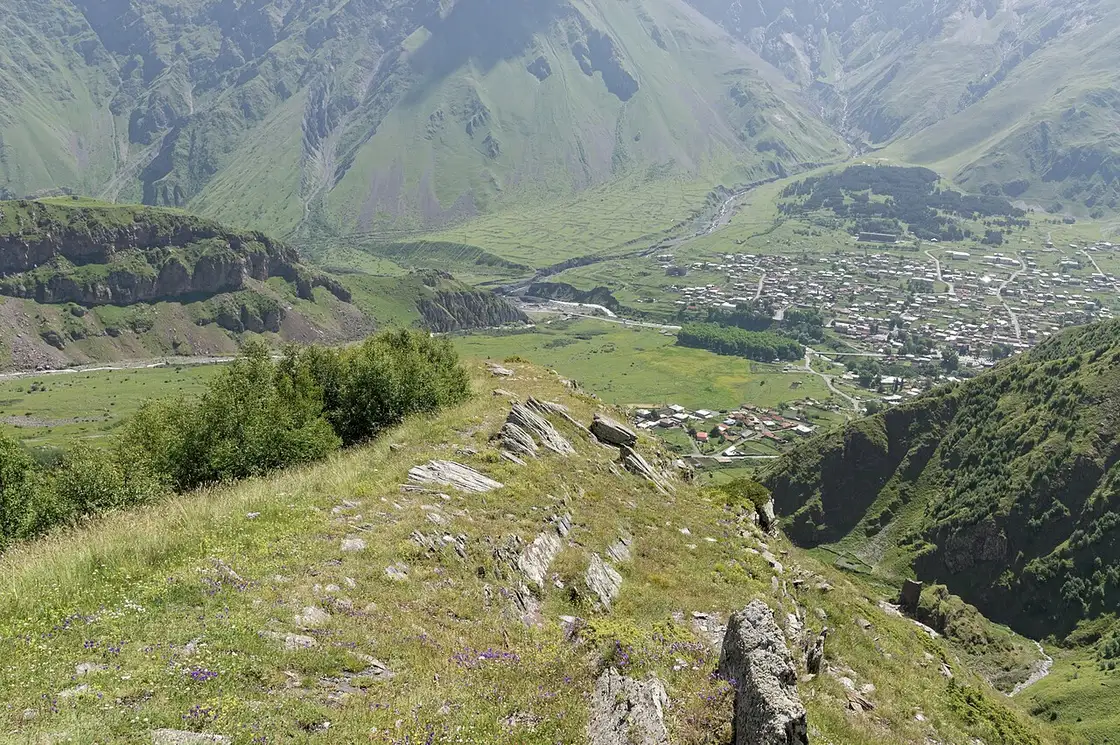
What that means before a hike:
- tell someone who isn’t coming along your route and contacts, and don’t go alone (U.S.);
- hire a guide from a Georgian company for trekking or mountaineering (Australia) and, the FCDO suggests, a professional guide for any walk close to the boundary lines;
- check whether your route crosses the border zone, a strip up to 5 km wide along the state border (in some places the government sets it at up to 30 km). This has nothing to do with the 5 km around the boundary lines above. Tourists need a Border Police permit there. Fill in the application form on the Border Police’s Information for Tourists page and email it to bpol@mia.gov.ge with the route, start to finish, and scans of everyone’s passports. You can also apply on paper at 12 Kandelaki Street in Tbilisi, at a regional Border Police division or at a border sector;
- skip off-piste skiing without a guide, which the FCDO calls very dangerous and many policies won’t cover.
On the road the advice lines up. Avoid driving at night: lighting is poor, livestock wanders onto the road and some drivers are reckless. In winter, the U.S. and Canada both say snow tires or chains are required in the mountains. And don’t drink before driving: the U.S., Canada and Australia describe the limit as zero, and under Georgia’s Administrative Offences Code more than 0.3 per mille already costs a six-month license suspension. The U.S. adds that landslides are common after heavy rain, so check conditions before a mountain day.
Insurance: the 30,000 GEL rule and the gaps it leaves
Article 12 of Georgia’s Law on Tourism makes health and accident insurance mandatory for every tourist. Since 1 January 2026, Government Decree No. 602 has set the floor: a sum insured of at least 30,000 GEL (about $11,500, just over €10,000 or about £8,600 at the National Bank of Georgia rate on 23 September 2026). The lari moves, so leave a margin. The policy has to cover the whole stay, entry and departure days included. The decree defines a valid policy as one that names the parties, the territory covered, when cover starts and ends, the insured risks, the sum insured and the premium. The Patrol Police officer at the border crossing may check it, and the FCDO says your airline may ask at check-in. The decree itself sets no fine. Entry is another matter: under Article 11(1)(d) of the Law on the Legal Status of Aliens, a foreigner without health and accident insurance may be refused entry, and the FCDO warns you “may face difficulties” without proof.
The number is a floor on the sum, not a description of the cover, and that’s the gap to close. The U.S. strongly recommends separate cover for medical evacuation, and Canada warns that evacuation can be very expensive and that clinics often want cash up front. Good care exists in Tbilisi and Batumi, according to Canada and Australia; the FCDO says Tbilisi’s facilities can be expensive and those outside the capital are limited, and the UK has no reciprocal healthcare agreement with Georgia. For the mountains you want evacuation and hospital stays in writing, plus the activity you’ll be doing. Who’s exempt and what form the policy can take are in our explainer on the mandatory insurance rule, and the guide to choosing travel insurance for Georgia reads the wording of SafetyWing, the plan in the box above, and shows where it stops: search and rescue, helicopter included, is excluded.
Who should read their own government’s page in full
LGBT+ travelers. Same-sex relationships aren’t criminalized, but the law “On the Protection of Family Values and Minors”, in force since 1 December 2024, bans public events on these topics and restricts related speech (U.S.), and Canada warns it could bring criminal charges. Pride events were called off in 2019, 2021 and 2023 (FCDO).
Women traveling alone. The U.S. reports harassment and assaults, often late at night in bars, clubs or restaurants, with alcohol or drugs at times a factor, and recommends a buddy system, reputable taxis and the back seat.
Dual nationals. Georgian citizens must enter and leave on a Georgian passport, and dual-national men aged 18 to 27 may be called up for military service (U.S., Canada).
Who picks up if something goes wrong
Call 112 first for police, an ambulance or rescue, then your insurer’s 24-hour emergency number (Smartraveller reminds travelers that insurers should have one). Your own government comes third, and for two of the four passports its nearest full embassy isn’t in Georgia:
| Passport | Office covering Georgia | Phone |
|---|---|---|
| U.S. | U.S. Embassy Tbilisi | +995 32 227-7724; after hours +995 32 227-7000 |
| UK | British Embassy Tbilisi, 51 Krtsanisi Street | emergencies via the FCDO online contact form; family in the UK can call the FCDO in London on 020 7008 5000 |
| Canada | Consulate of Canada in Tbilisi (honorary consul, not all services); Embassy of Canada in Ankara | +995 32 298-2072; +90 312 409-2700; out of hours, the Emergency Watch and Response Centre in Ottawa |
| Australia | no embassy in Georgia: Australian Embassy in Ankara, with limited help from the British Embassy in Tbilisi | +90 312 459 9500; Consular Emergency Centre +61 2 6261 3305 |
For planning beyond safety, from documents to money, see the independent trip to Georgia guide, and check Georgia’s entry rules for 2026 before you book the flight.
Read also

Before you go · 8 min read
Georgia in winter: weather, cities and ski season
Updated · September 3, 2026Winter in Georgia: Tbilisi averages 3.4 °C in January, days run nine hours, ski season from late December, sulphur baths and cheaper city rooms.

Before you go · 9 min read
Georgia vs Armenia: Where Should You Fly?
Updated · September 3, 2026Georgia or Armenia in 2026: visas, flights, Black Sea vs Sevan, published tariffs side by side, and when both countries beat picking one.

Before you go · 11 min read
Tbilisi or Batumi: Which One Should You Visit
Updated · September 11, 2026Tbilisi or Batumi: climate, rain, lodging and who each city suits. Batumi gets five times more rain than Tbilisi a year - it changes the choice.

Before you go · 11 min read
Rtveli 2026: when to harvest grapes in Georgia
Verified · August 17, 2026Kakheti harvest peaks mid-September to mid-October 2026. Where to base, which wineries named dates, and how to join without a ticketed festival.