
Georgia Travel Insurance 2026: Entry Requirement
Georgia entry insurance rule 2026: every tourist needs health and accident cover from 30,000 GEL. Who is exempt, what it must cover and where to buy.

In short: from 1 January 2026, entering Georgia requires valid health and accident insurance with coverage of at least 30,000 GEL (about $11,500) for your whole stay - this is a formal requirement under the Law of Georgia on Tourism, not a recommendation. Arriving without a policy means you can be refused entry; some outlets also report a fine (around 300 GEL), but no fixed penalty has been officially confirmed. Below: who exactly needs insurance, who is exempt, what it must cover, how to show it at the border and where to buy it in advance. We don’t invent specific sums and policy terms - they depend on the insurer, so check them on the purchase page.
This is general information, not insurance or legal advice. Entry requirements and the wording of the rules change from time to time - before you travel, always verify with an official source (Revenue Service rs.ge, your embassy) and confirm current terms with the insurer.

What changed in 2026
Previously, health insurance for entering Georgia was just a sensible precaution - nobody checked it. From 1 January 2026, holding a policy became a formal requirement when crossing the border. The legal basis is the Law of Georgia on Tourism (art. 12), brought in by a government resolution in December 2025. Foreign missions also flag the new rule, including the U.S. Embassy in Georgia (ge.usembassy.gov).
Key parameters under the current rules:
- valid health and accident insurance covering your whole stay, arrival and departure dates included;
- the insured period is counted from the date of entry to the date of exit and cannot exceed one year (Decree No. 602, art. 2) - worth knowing if you’re settling in for a long stay;
- minimum coverage - at least 30,000 GEL (about $11,500);
- main consequence of no policy - refusal of entry; a fine (around 300 GEL) is reported by some outlets but not officially confirmed;
- the policy in English or Georgian, paper or electronic - that makes it quicker to check at the border.
This is a new regulatory requirement, and its details (wording, inspection procedures, exclusions) may be refined. So don’t count on “buying it on arrival”: arrange the policy in advance, online, before you fly or drive in. We cover the general principles of choosing a policy separately - in the how to choose travel insurance for Georgia guide; here it’s only about the mandatory entry rule.
Who needs insurance to enter
The rule applies to foreign tourists entering Georgia - whether or not you need a visa. So even citizens of countries with visa-free entry up to 365 days still need a policy. A few common situations:
- A tourist for a week or two. You need ordinary travel insurance covering exactly your trip dates, with coverage no lower than the minimum.
- Someone staying long-term or living in Georgia for months. A recurring policy aimed at nomads works well - no need to re-buy it each time. Details are in the choosing insurance guide.
- Entry by land or sea. The rule is the same at every border - at the airport, at land crossings (Sarpi, Verkhny Lars) and at seaports. Which points you can enter through, and the full document checklist, are in the Georgia visa guide and the entry rules for Russians and Ukrainians.
- Ukrainian citizens. Some standard international policies are unavailable to them - there are separate working services (for example, EKTA) worth comparing by coverage.
Who is exempt. The rule targets ordinary tourists, but it lists exceptions: holders of diplomatic and special visas or passports, accredited staff of diplomatic missions, consulates and international organisations (and their families), people covered by relevant international treaties, and drivers on international freight and passenger routes. If you’re a regular visitor, none of that applies and you need a policy.

What the insurance must cover
The minimum under the rule is coverage of ≥30,000 GEL. But the sum is only a threshold - what matters is what the policy actually covers. A baseline for a trip to Georgia:
- medical expenses and emergency care for the whole trip;
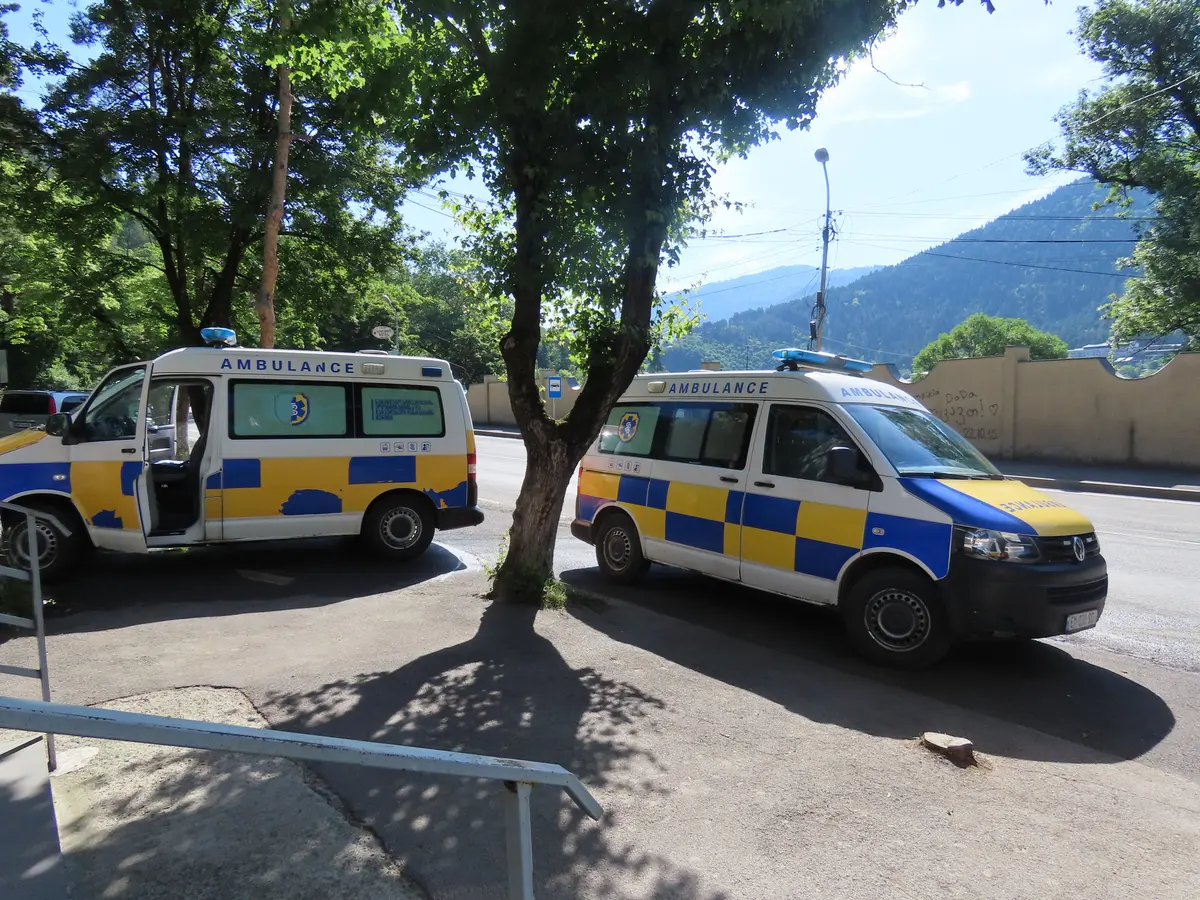
- accidents, medical evacuation and repatriation - in a mountainous country this is not a formality but a real risk;
- 24/7 assistance - phone support and coordination with a clinic in a language you understand;
- active leisure as a separate add-on. Trekking, skiing, rafting and quad bikes are often NOT covered by a basic policy - you add an extension for them.
Choose coverage with a buffer, not “just at” the minimum: the cost of a serious case - hospitalisation, surgery, helicopter evacuation from the mountains - easily exceeds the formal threshold. What else to look at when choosing (deductible, exclusions, policy language) is covered in detail in the how to choose insurance guide.
Consider family and children separately. Everyone entering needs a policy, children included - you buy a separate policy for them or add them to a shared family plan. Insurers’ terms and rates for children differ, so don’t assume a child is “covered” by an adult policy automatically: check this when buying. The same goes for older travellers and people with chronic conditions - there can be age loadings and specific exclusions that are better seen before purchase than at a declined claim.
Active leisure: why the threshold isn’t enough
Georgia is a mountainous country, and most tourists come precisely for the mountains: trekking in Svaneti and Kazbegi, skiing, rafting. Here’s the key trap: a basic policy that formally meets the 30,000 GEL sum may NOT cover active leisure. If an injury happens on a trail or piste and the policy has no “active leisure” option, the insurer will decline the claim - the rule is formally met, but in practice you’re not protected.
So if mountains are on your plan, add activity coverage separately when buying and check the exclusions list. This isn’t part of the mandatory rule, but it’s exactly the case where a “box-ticking policy” turns into a large bill.
A typical list of what a basic policy does not cover by default: injuries while intoxicated, flare-ups of chronic illness, late-term pregnancy, and activities classed as “dangerous”. This isn’t Georgia-specific - it’s standard insurer wording - but in a mountain trip these clauses trigger more often, so read the “exclusions” section before buying, not after.

How to show the policy at the border
The border check is a formality if your documents are in order. To pass it smoothly:
- arrange the policy in advance, online - before you fly or drive in, not “on arrival”;
- save the policy in two places - in your email and offline on your phone (screenshot or PDF), so you can open it without internet;
- a policy in English or Georgian is easier to present than a translation from a third language;
- note the assistance phone number separately - you’ll need it not at the border but if a claim arises.
The policy is checked alongside your passport, so keep it with your documents. What else border control may ask for (accommodation booking, return ticket) is in the Georgia visa and entry guide.
Where to buy insurance for the 2026 rule
Buy the policy online in advance - that way you have time to compare coverage and aren’t at the mercy of the situation at the border. The right service depends on your citizenship and trip length: short-stay tourists need ordinary travel insurance, nomads and residents a recurring policy, Ukrainian citizens the separate services available to them. The how to choose travel insurance for Georgia guide helps compare the options and understand what each one covers.
What to check before buying: coverage no lower than 30,000 GEL (ideally with a buffer), the policy covers the whole trip with no date gaps, emergency care and evacuation are included, and - if mountains are planned - an active-leisure add-on is included. You can arrange health insurance for the 2026 rule through the boxes below.
This entry-insurance rule covers you, not a rented car. If you’re planning to drive, the CDW and excess that come with a rental are a separate policy with their own gaps - see rental car insurance in Georgia for what’s covered, what typically isn’t, and what changes if you take the car into Armenia or Azerbaijan.
In short: a checklist
- Health and accident insurance is mandatory from 1 January 2026 for all incoming tourists (even visa-free).
- Minimum coverage - ≥30,000 GEL (~$11,500) for the whole trip.
- No policy - you can be refused entry; a reported fine (around 300 GEL) is not officially confirmed.
- Exempt: diplomats, special-visa/passport holders and international transport drivers - not ordinary tourists.
- The policy - bought in advance, online, in English or Georgian, saved offline.
- Heading to the mountains - add active-leisure coverage separately.
- Before travelling, verify the current rules on rs.ge and with your insurer.
Read also

Insurance · 12 min read
Georgia Rental Car Insurance 2026: CDW, Excess, Borders
Verified · August 2, 2026What a Georgia rental car actually insures: CDW and its gaps, deposit vs excess, and what changes if you drive it into Armenia or Azerbaijan.

Insurance · 10 min read
Travel Insurance for Georgia: How to Choose
Verified · August 9, 2026How to choose travel insurance for Georgia: coverage, deductible, trekking and skiing as a separate risk, and what to do if you need to file a claim.

Transport · 13 min read
Kutaisi Airport to Gudauri 2026: 4 h, Shuttle, Transfer, Car
Verified · October 24, 2026Kutaisi airport to Gudauri: 309-310 km, about 4 h by road. A 30 GEL coach to Tbilisi and a marshrutka, a transfer timed to your flight, the winter bus.

Entertainment · 11 min read
Cooking Classes in Tbilisi: What to Pick and What It Costs
Verified · October 17, 2026Khinkali and khachapuri classes in Tbilisi from 110 GEL: family home or food walk, prices from operators' own sites, kids, vegetarians, how to book.