
Old Tbilisi walking route: baths, Narikala, Shardeni
A half-day walk in Old Tbilisi: Abanotubani sulphur baths, Narikala Fortress and Shardeni Street. Order, the 2.5 GEL cable car and a no-fluff budget.
In half a day, old Tbilisi fits a short loop: the sulphur domes of Abanotubani, Narikala Fortress above the roofs, and pedestrian Shardeni Street for coffee. You’re looking at about 3.5 km on foot and 3-5 hours with pauses - no car, no “see everything before sunset” panic.
Cable car or stairs - that’s the first fork, and it’s worth settling before you go: what follows is a workable order, numbers from Tbilisi Transport Company (TTC), and a price floor for baths at Chreli Abano. Neighbouring bathhouses post their own rates, and checking the board at the door before you pay is the difference between the going rate and a tourist markup.

Two half-day plans that hold up
Plan A - baths first. Start in Abanotubani, walk up to Narikala (15-25 minutes on stairs and paths), drop toward Shardeni, and finish at the Bridge of Peace or in Rike Park. You skip the morning cable-car queue and land in the city’s most sulphur-scented frame right away.
Plan B - view first. Begin in Rike Park, ride the cable car up Narikala hill (2.5 GEL one way on the TTC tariff) to the viewpoint, then walk down past the fortress and the baths before peeling off into Shardeni. While the fortress is under renovation, the path past the construction zone can be partly closed - follow the posted signs and don’t cross the fencing. It’s the better call if your knees hate climbs or you’ve already bought a Metromoney card for the metro.
Both plans cover the same ~3.5 km. You’re only choosing how you pay for the height - with your legs or with the card.
If you’ve got exactly one day in town and it’s hotter than about 30 °C, Plan B once the cable car opens at 10:00 (the descent still has some shade then) and baths later usually feels kinder. After a steam room, the midday climb hurts more than it looks. In shoulder season and winter the order barely matters - dry shoes and a tea break matter more.
Don’t try to bolt Mtatsminda’s funicular and Sameba into the same half-day. That’s another hill and another transit hop. Old Town pays you back for going slow: one quarter done properly beats five ticks on a list.
Abanotubani: domes and the sulphur smell
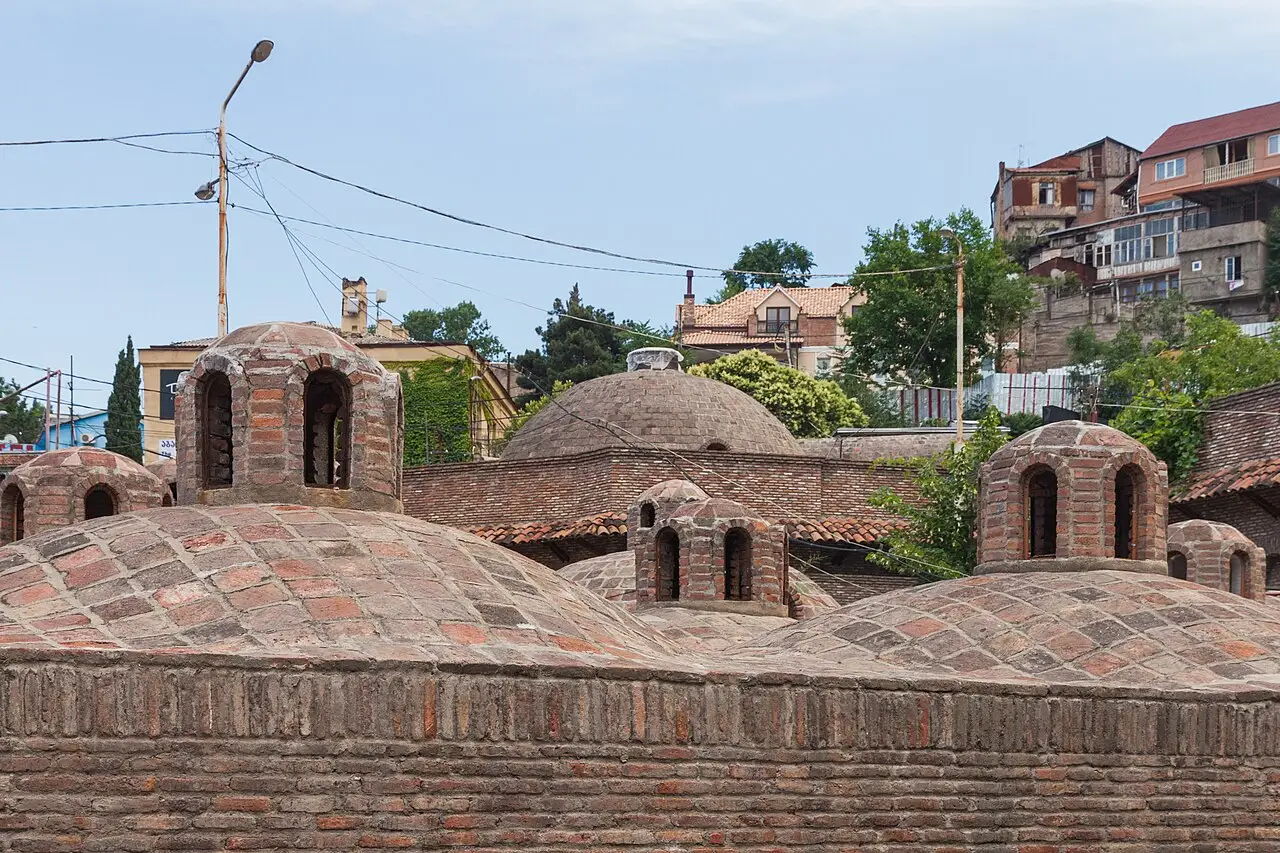
The bath quarter sits under the fortress. Legend says the city started here: a hot spring, King Vakhtang’s hunt, and a settlement by the water. Today it’s a tight run of brick domes, courtyards and multilingual signs.
If a bath is on the plan, book a private room - don’t bank on a Saturday-evening walk-in. Operator Chreli Abano (Abano St N2) lists daily hours 09:00-23:00 on its site. By the price list, rooms for 1-2 people (N6, N8, N9) start from 130 GEL per hour; rooms for up to 3 (N7, N10) run 160 GEL/hour; the largest, holding up to 4-6 people (N1-N5), run 200 GEL/hour. A party of three that grabs the “bigger” room out of habit at 200 GEL overpays by 40 GEL an hour - N7 or N10 fits and costs less. Book on the operator site or booking.chreli-abano.ge; cancel 1-2 business days ahead and you get 80% back, cancel later or not at all and the operator keeps the full amount. Sulphur water isn’t recommended during pregnancy or for anyone with blood pressure or heart conditions - that’s the operator’s own warning, not guidebook caution. Next-door bathhouses run their own boards - check before you pay.
If you’re not getting in the water, still give the lanes 20-40 minutes. The sulphur smell, steam vents and the Narikala slope behind the domes beat any museum plaque for context. Wear closed shoes: wet stone and puddles by the springs are normal.
Towels, sheets and slippers aren’t included in the room price - the operator sells them on site. A kisa scrub runs 20 GEL for 30 minutes and is usually cash-only; a classic massage is 100 GEL for 30 minutes, and the candle or chocolate versions run 250 GEL an hour. You can’t book the kisa on its own: reserve the sulphur room first, then add the peeling to it. These are the operator’s listed prices, but they shift faster than the cable-car tariff, so check before you go.
Drone shots over the domes at midday rarely help: steam eats the detail. Phone photos land better in side light - morning or late afternoon - when the brick warms up.
Narikala: 2.5 GEL cable car or your own legs
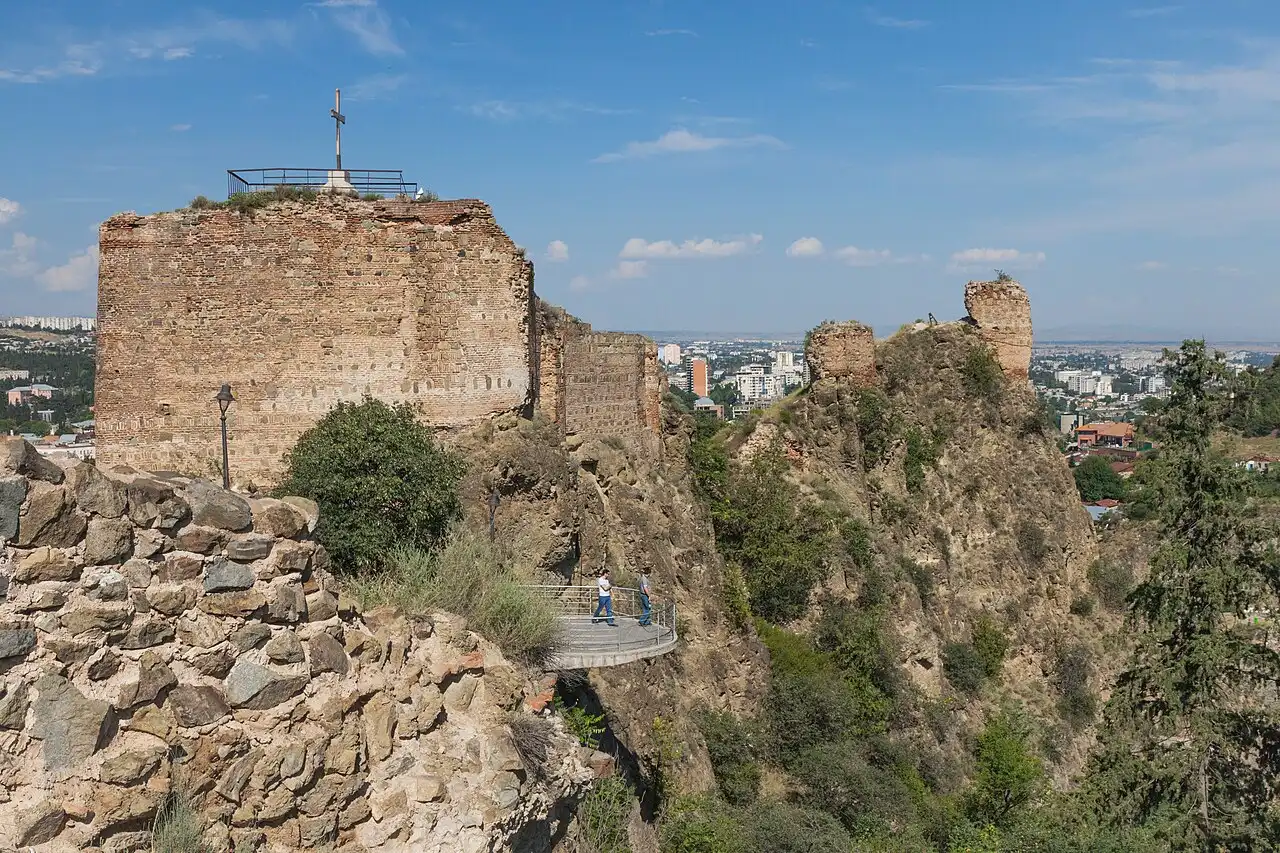
As of September 2026, the fortress interior, its walls and St Nicholas Church are closed - Narikala is under renovation, and the city hasn’t confirmed a reopening date. The outdoor viewpoint at the base and the cable car itself both still run: you only pay for the ride up if you take the cable car. On the official TTC tariff, the Rike-Narikala ropeway is 2.5 GEL one way. A Metromoney card costs 2 GEL and also works on metro and buses. One catch: the ropeway is not inside the municipal 1 GEL / 90-minute transfer package (that package only works if you tap a Metromoney or bank card - cash and mobile-app payments don’t qualify) - it’s a separate line on the tariff page. The cable car runs from 10:00; it closes around midnight in summer and at 22:00 on the winter schedule from 1 November (per Tbilisi City Hall’s 2025/26 announcement - check before an early or late visit).
Buy or top up the Metromoney card right at either cable-car station - both sell and reload it, not just the metro counters. Riding back down is another 2.5 GEL; a lot of people skip that and walk down toward the baths and Old Town instead - you’ll save the fare and see more lanes.
The walk up from Abanotubani to the viewpoint usually takes 15-25 minutes. Stairs are steep and summer shade is thin - water in the bag isn’t optional. Mother of Georgia (Kartlis Deda), on the next ridge, isn’t part of the renovation zone and stays open; the short extra walk out to it gives a wider panorama.
Stay behind the construction fencing, even if an older writeup describes the fortress as open around the clock. Reporting says the renovation tender went out back in 2024 with a 2025 completion target that’s since slipped; Tbilisi’s 2026 budget for the Narikala rehabilitation runs about 24.29 million GEL. There’s still no confirmed reopening date from the city - check the status before you go.
If the cable car’s down for maintenance (it happens, especially off-season), don’t scrap the day. The same climb to the viewpoint on foot still works. You just skip the one-way ticket, and the “from 10 GEL” floor drops even lower.
Shardeni after the descent
Dropping from the hill toward Meidan and the pedestrian streets, you’ll hit cafes, wine bars and souvenir windows. Jan Shardeni (Chardin) Street is a short cafe spine: sit down, open the map, and decide whether you still want the Bridge of Peace or you’re done for the day.
Don’t chase a “2019 guidebook” bill - menus and prices move with the season. Read the board and the receipt. Quieter lanes sit toward Rkinis Rigi and the Old Town courtyards; two turns later the tourist volume drops.
It’s easy to lose two hours on Shardeni to people-watching and shop windows. Already tired after the fortress? Grab one coffee to go and walk to the Bridge of Peace: the glass span is short, photos take five minutes, and Rike Park still has a shaded bench. Getting a ride back from Rike is usually simpler than fishing a taxi out of the bath lanes at rush hour.
The souvenir pitch here can feel pushy - it’s fine to walk past. For wine and groceries you’re better off with a market or Kakheti guide than grabbing the first bottle by Meidan.


Money, shoes and a simple tally
The “from 10 GEL” on the route card at the top is Metromoney (2 GEL) + one cable-car ride (2.5 GEL) + a modest coffee at 4-8 GEL by network prices - without a bath and without a full sit-down lunch. A private bath room is a separate line item, 130-200 GEL/hour for the room depending on capacity (split across whoever shares it), not a per-person flyer price.
Metro and buses on the TTC tariff are 1 GEL with unlimited transfers for 90 minutes when you tap a Metromoney or bank card - pay cash or through the mobile app and that 90-minute bundle doesn’t apply. Rike-Narikala isn’t in that bundle either way. If you’re staying far from the Old Town, add another 1 GEL each way - or walk from Avlabari / Liberty Square metro.
Shoes with grip, a water bottle, a summer cap. After rain the stone by the baths gets slippery. Drones over the fortress and dense housing - check local rules separately; a regular camera is fine.
Buy a Metromoney card on day one if you can - you’ll reuse it on airport bus 337 and on city buses. Keep the purchase receipt: TTC says you’ll need it if the card has to be restored. Top up with at least two cable-car rides plus two metro taps so you aren’t hunting a top-up machine between stops.
If you’re carrying a week-long hiking pack, leave it at the hotel for this loop. The Narikala stairs and wet bath stone are awkward with a heavy load. Passport and phone sit better in a belt bag or inner pocket than an open backpack pocket near Meidan crowds.
If you’d rather not count steps
A guided walking tour removes the “which alley after Narikala?” fork and saves time when you’ve got one day in the city and a night train or early flight next. One concrete plus this season: a local guide knows the fortress renovation’s current status and won’t walk the group up to a closed gate for nothing. It’s worth it with kids in the group or anyone who doesn’t want to navigate mid-walk.
Where to sleep after the walk
After this loop, the Old Town, Sololaki or Avlabari beat Saburtalo or Didube: you’ll pay more for the night, but you get the baths or the Bridge of Peace back on foot next morning instead of a taxi through Rustaveli traffic. Neighbourhood trade-offs live in where to stay in Tbilisi. If the half-day is only a warm-up, day trips like Mtskheta - Uplistsikhe - Gori and other routes sit next door.

Route day by day
- On foot
- ≈4 h
- Distance
- ≈3.5 km
- Budget from
- 10 GEL
- Best season
- March, April, May, June, September, October, November
The route at a glance
-
Abanotubani
Route startstop ≈45 min
Start among the sulphur-bath domes. Walk the lanes only, or book a private room in advance - from 130 GEL/hour at Chreli Abano; sulphur water is not recommended during pregnancy or with blood pressure or heart conditions.
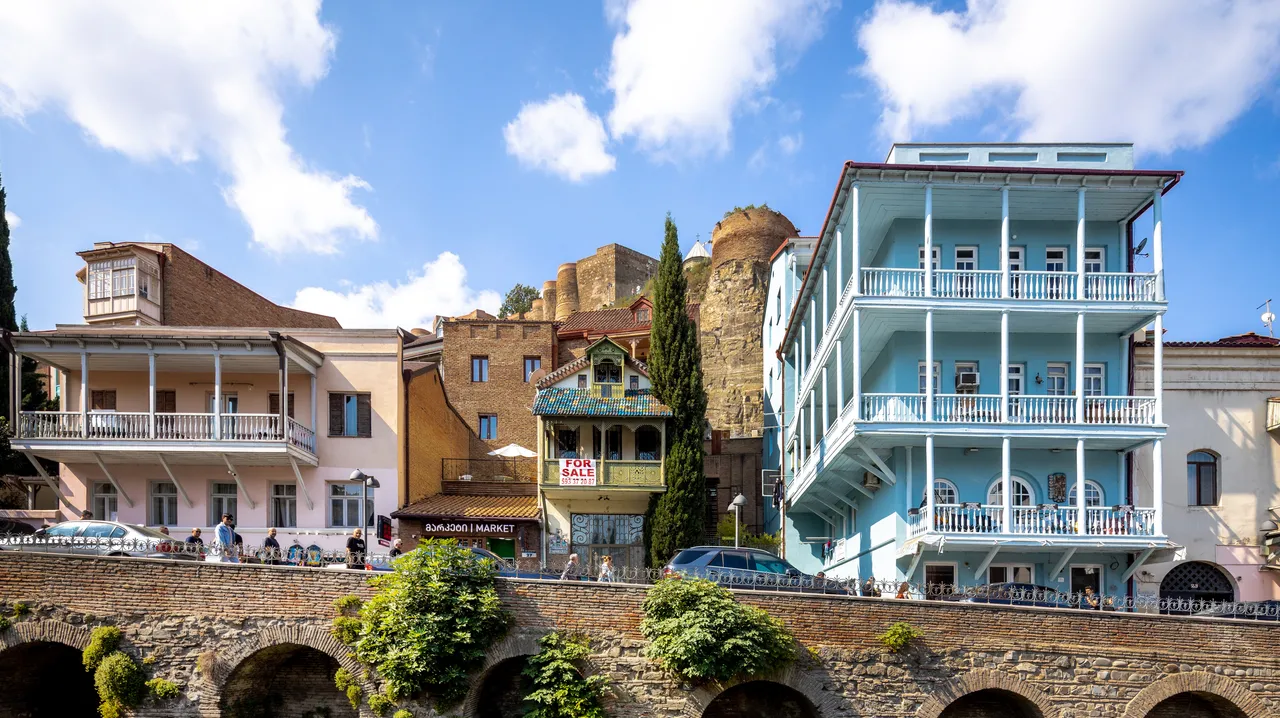
Photo: © A.Kobtsev -
Narikala
0.9 km from the startstop ≈30 min
Fortress under renovation: the interior and walls are closed, but the outdoor viewpoint and the Rike Park cable car (2.5 GEL) still run. 15-25 minutes on foot uphill.
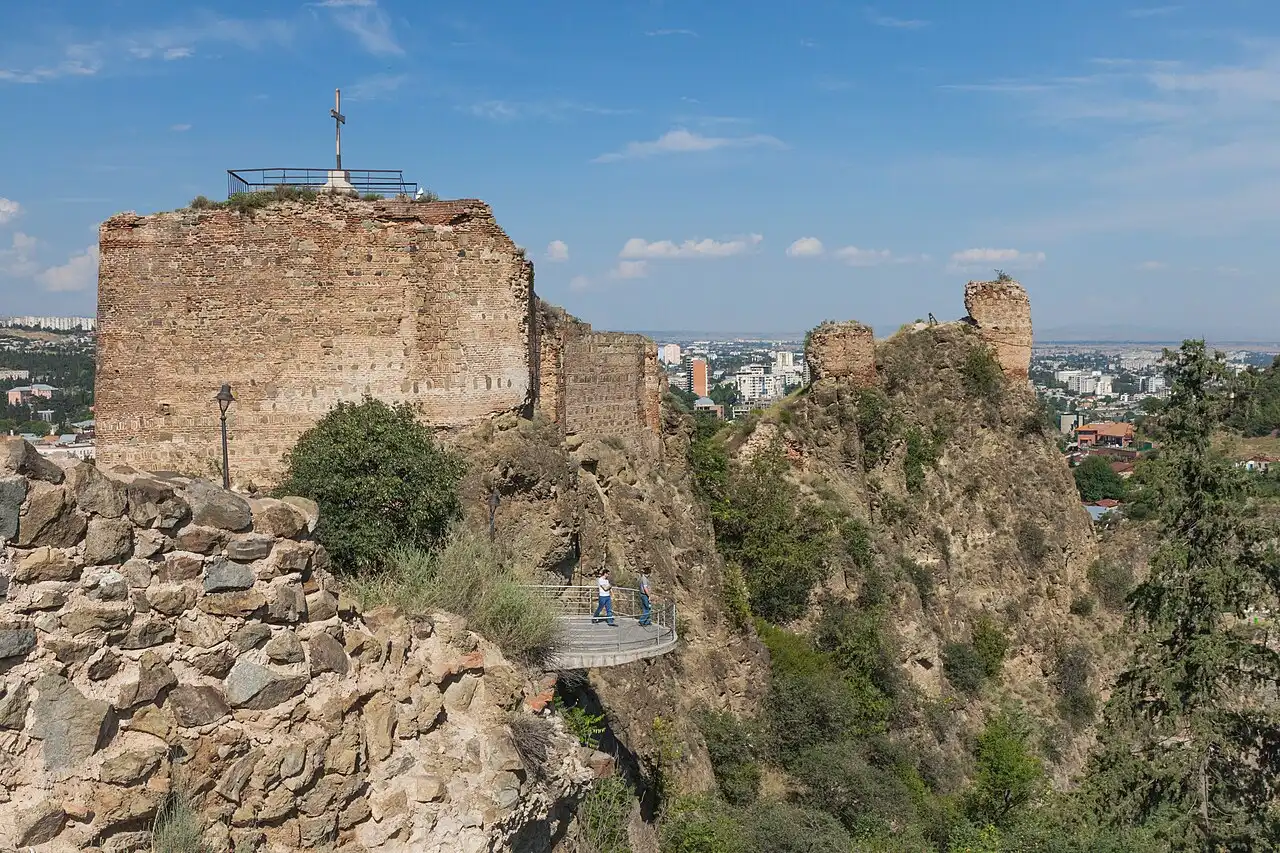
Photo: Marcin Konsek / Wikimedia Commons, CC BY-SA 4.0 ( source) -
Shardeni
1.8 km from the startstop ≈60 min
Pedestrian Jan Shardeni Street and nearby lanes: coffee, small shops and a slower pace after the fortress descent.

Photo: Andrew Milligan sumo / Wikimedia Commons, CC BY 2.0 ( source) -
Bridge of Peace / Rike
3.5 km from the startstop ≈30 min
Glass bridge and Rike Park - a clean finish, or your start if you take the cable car up to Narikala first.
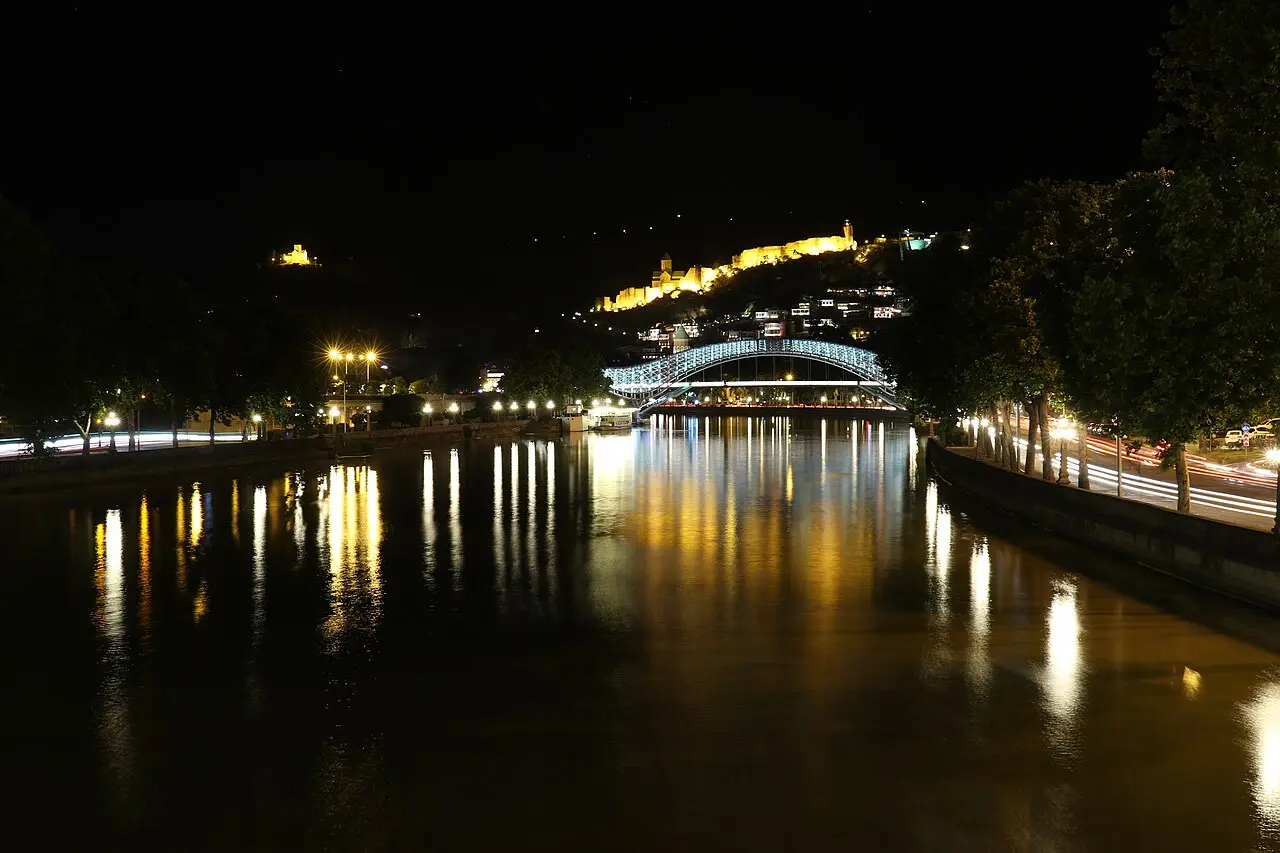
Photo: Peyman Zehtab Fard / Wikimedia Commons, CC BY 2.0 ( source)
Route map
The map with stops loads on click - to keep the page lightweight.
The map didn’t load. Check your connection and refresh the page.