
Where to Stay in Tbilisi: A Neighbourhood Guide
Which Tbilisi district to book: Old Town, Sololaki, Avlabari, Vera, Vake, Saburtalo - metro access, noise, hill climbs, prices and what to check first.
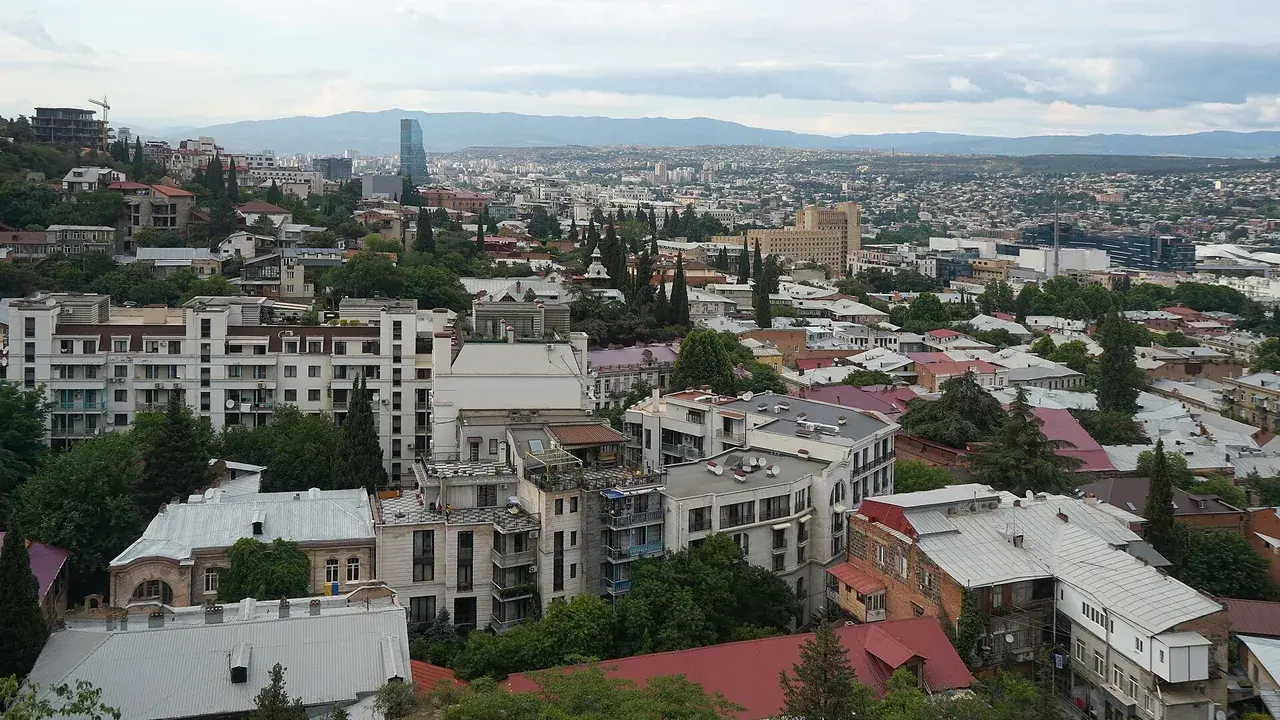
For a first trip of three to five nights, Sololaki or Avlabari are the calmest bets: the sulphur baths and the Bridge of Peace are ten minutes on foot from either, Narikala a quarter of an hour uphill from Sololaki and a little more from Avlabari. Nobody drinks under your window until three in the morning. Vera and Vake are greener and quieter but further from the views and pricier. Saburtalo is one of the cheapest beds still on a metro line. One address to avoid this autumn: Rustaveli Avenue itself, under a four-month rebuild since 23 July 2026 that runs around the clock and reopens to cars section by section; the first stretch, from Chovelidze to Javakhishvili Street, reopened on 11 September 2026.
Checked 04.08.2026. Fares come from the Tbilisi Transport Company, the bus timetable from the airport, the Rustaveli works from city hall statements of 21 and 29 July 2026; the 11 September reopening of the first stretch was added on 23.09.2026. The works and the bus diversions are temporary, so check before you travel whether they’re still on. Accommodation figures are indicative and swing with the season.
In short: which district suits which trip
| District | What you pay for | What gets in the way | Best for |
|---|---|---|---|
| Old Town (Kala) | everything on foot, a view from the window | bar noise, cobbles, higher prices | 2-3 nights, first visit |
| Sololaki | the same centre, quieter; art nouveau stairwells | steep climbs, no lifts | couples, 3-5 nights |
| Avlabari | metro plus the daytime airport bus | workaday, not photogenic | families, saving on the centre |
| Vera | greenery, cafés, museums nearby | Rustaveli roadworks until late November 2026 | repeat visit, a week plus |
| Marjanishvili, Chugureti | cheaper than the centre, metro next door | shabby streets | budget plus metro |
| Vake | quiet, a big park, restaurants | no metro at all | kids, longer stays |
| Saburtalo | one of the cheapest beds with a metro | nothing to look at | transit, work trips |
As a money marker for the centre: a hostel bed runs 8-10 € per person, a guesthouse room for two 30-50 €, a decent 3-4★ hotel 60-120 € a night. The left bank and Saburtalo sit a step below the right bank for the same quality, and there’s often a wider gap between July and November inside one hotel than between districts.
Old Town: right in the thick of it
Kala is the historic core on the right bank of the Kura. Narikala fortress sits above the quarter, the brick domes of the Abanotubani sulphur baths steam below it, and the Sioni and Anchiskhati churches and carved balconies fill the streets between. There’s one argument for staying here and it’s strong: you spend no time commuting. Walk out of the door and the sightseeing has started.
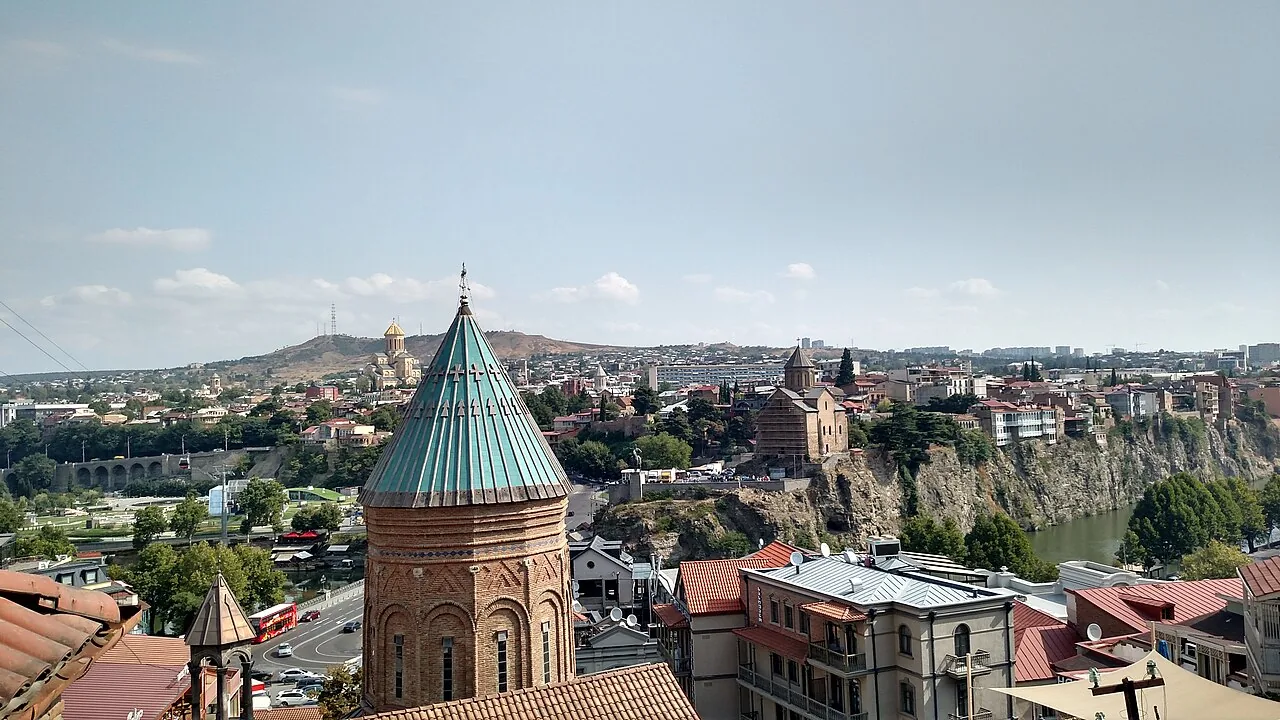
The drawbacks are three and all predictable. Sound: Shardeni and Erekle II streets are wall-to-wall bars with summer terraces, busy late. Cobbles and staircases, which wheeled luggage hates. And a postcard address carries a premium you won’t win back on food and taxis.
What helps is dull: open the map, see which street your room faces, then ask the host whether any windows give onto the courtyard. “Across from a bar” versus “courtyard side” matters more than three stars versus four.
Sololaki: the same centre, two blocks quieter
Sololaki begins where the Old Town ends, at the foot of the ridge with the Mother Georgia statue on top. This is the quarter of late-nineteenth-century apartment buildings: stairwells with stained glass, wrought-iron staircases, wooden galleries round the courtyards. Down towards Liberty Square come cafés, wine bars and small shops.
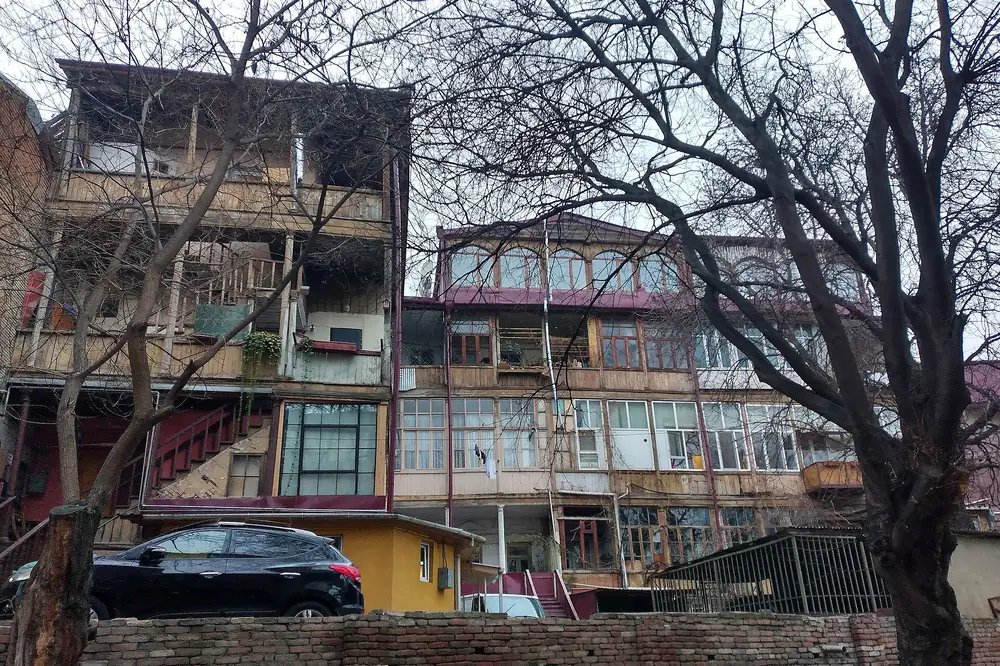
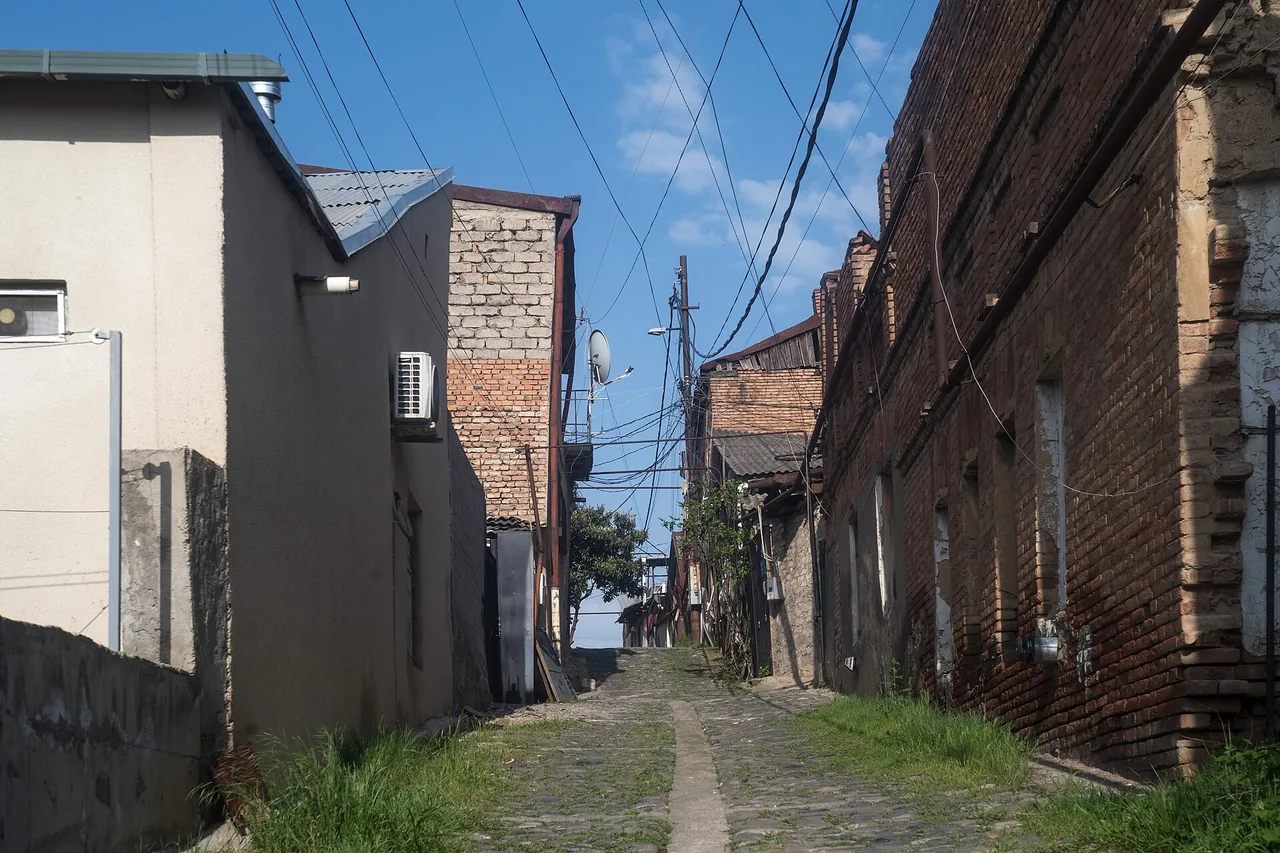
This is where listings hide their favourite trick. “Five minutes from the Old Town” in Sololaki often means five minutes uphill on broken paving, and the building has no lift, a fourth floor and an outdoor staircase. For two with backpacks that’s nothing. For a family with a pushchair it is a different trip. Ask about the floor and the lift, not the distance.
Avlabari: ten minutes from the Bridge of Peace, with its own metro
Avlabari is the left bank, historically the Armenian quarter, with Sameba cathedral above it and the lane down to Metekhi church at its edge. Ten minutes on foot from the Bridge of Peace, yet noticeably cheaper, because on the ground it’s an ordinary residential area of workshops, corner shops and washing on the balconies. The big hotel casinos of Tbilisi sit on Rustaveli and nearby - if that is part of the plan, pick the district with them in mind.
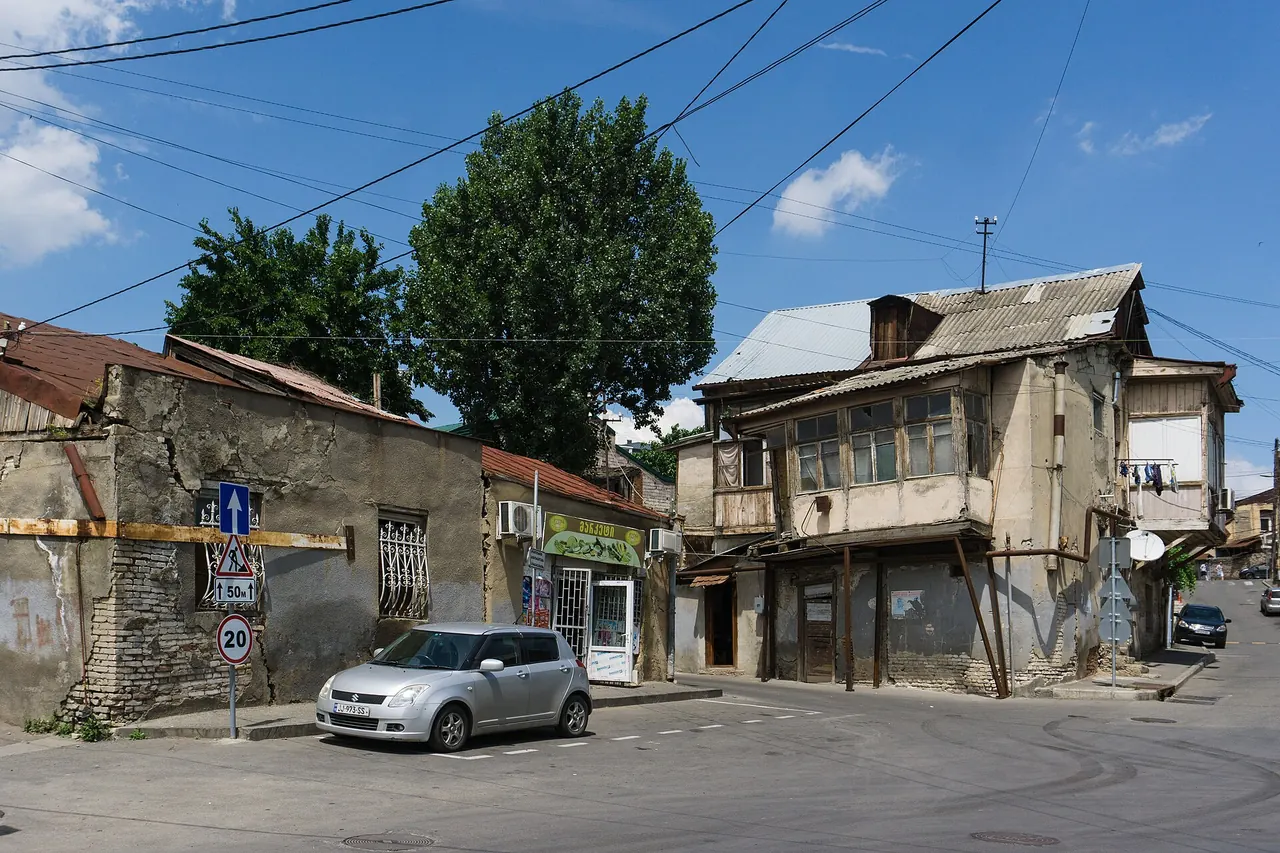
The practical case for Avlabari is transport. It has its own station on metro line 1, and airport bus 337 runs straight through the district: the standard routing is Kakheti Highway, Black Sea Street, Queen Ketevan Avenue, then Baratashvili Street, Rustaveli and Kostava to Station Square.
Two caveats stop you planning a journey around that bus. While the works are on, the 337 and some fifteen other routes are diverted off Meliqishvili Avenue via Heroes Square and the right bank of the Kura, so it isn’t using the avenue at all. More important: there is no night service. The airport publishes the timetable as 06:59 to 22:59, so a six a.m. departure or a one a.m. landing comes down to a taxi or a booked transfer. Avlabari also hosts one of the two counters that replace a damaged Metromoney card.
Vera and Rustaveli: the centre without the crowds, and a building site
Vera is the leafy central district between Rustaveli and the Vere river: quiet streets, coffee shops, wine bars, the main museums a short walk away. It’s the most genuinely urban option, with far fewer tourists than Kala and everything still walkable.
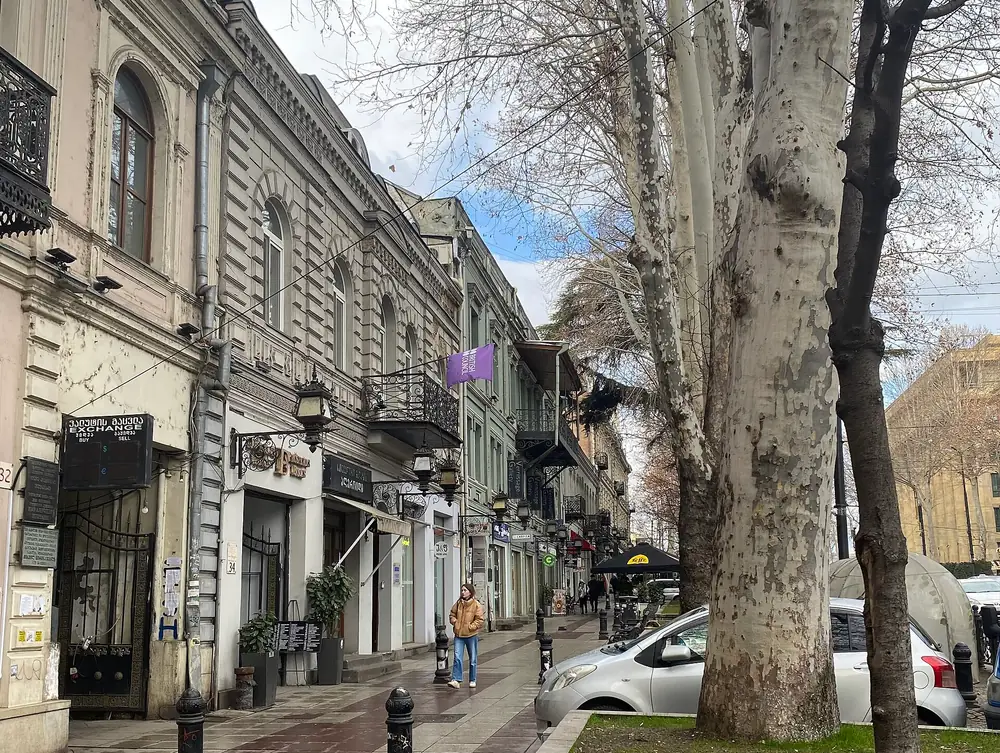
The caveat for this season is not optional. By a city hall decision of 21 July 2026, two kilometres of Rustaveli Avenue, from Tamar Chovelidze Street to Liberty Square plus part of Merab Kostava Street, were closed to traffic from 23 July while water, sewerage, drainage and gas are replaced. The avenue reopens section by section: where the works are on there are no cars, and on 11 September traffic returned to the first stretch, from Chovelidze to Mikheil Javakhishvili Street, once its underground networks had been replaced. The part that decides your booking: the work runs around the clock. The mayor confirmed it in late July, adding that demolished material gets hauled away at night. There is no quiet hour by the avenue.
Four months are scheduled, so the plan is late November 2026. Treat that with scepticism: the rebuild has been announced and postponed since 2023, and a hundred-odd days for two kilometres of buried utilities is optimistic. The stretch by parliament also sees daily protests: 3 August 2026 was day 613, and the Saturday marches now start from Avlabari metro.
In practice a room facing the roadway means machinery round the clock and crowds by evening, and a taxi won’t reach your door. City hall hasn’t published how pedestrian access and the station entrances work at each phase, so check on the ground. None of it rules out Vera: just take an address a block back.
Marjanishvili and Chugureti: the left-bank price
Across the river from Vera lies Chugureti, its spine Marjanishvili Street with a metro station of the same name, one stop from Rustaveli. The district is pointedly unpolished: peeling facades, vegetable stalls on the pavement, third-wave coffee shops between them. It’s also home to Fabrika, an arts complex in a former sewing factory with a hostel, studios and a courtyard where half of young Tbilisi drinks.
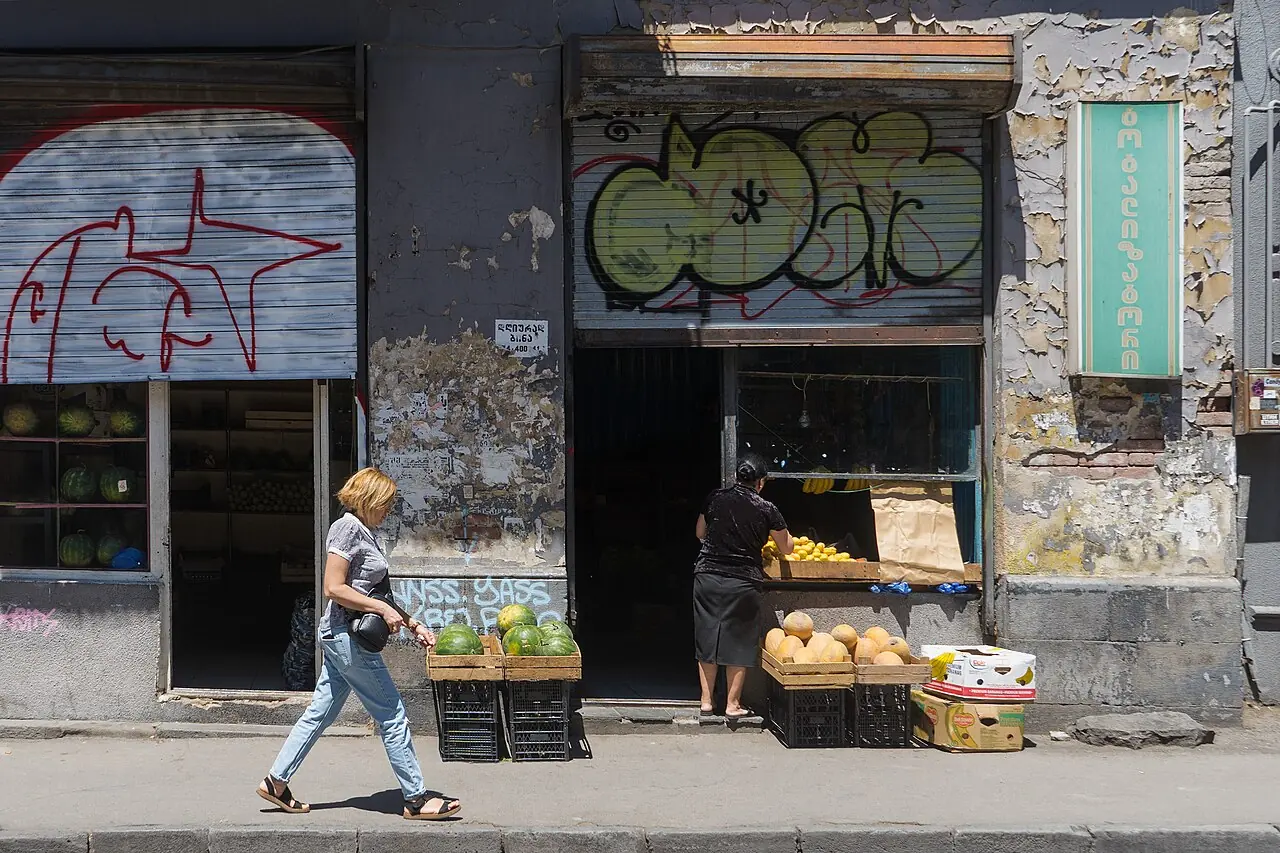
It’s the best compromise for anyone counting money who still doesn’t want a dormitory suburb: metro next door, two stops from the Old Town, a lower rate than the right bank. Accept that the entrance hall will look worse than the room behind the door.
Vake: the district the metro never reached
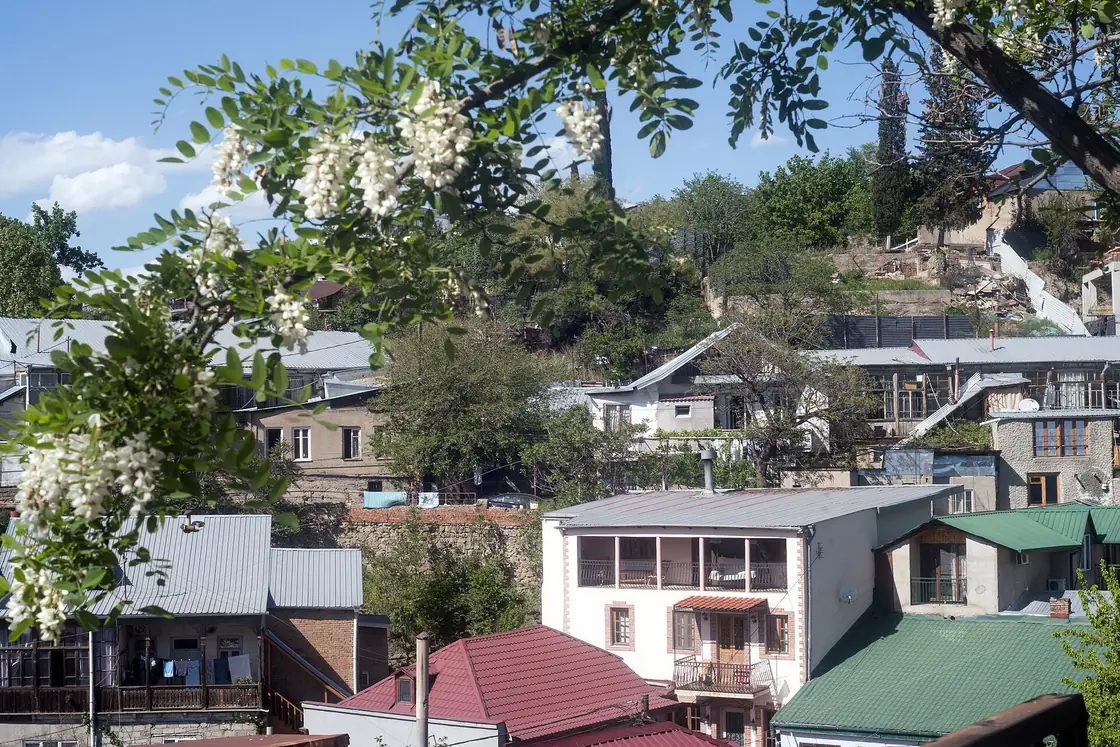
Vake is the smartest residential district in the city: a large park, coffee shops, restaurants, embassies, calm green streets. Visitors rarely base themselves here, and when they do there’s a reason: children, a long stay, or quiet after three days in Kala.
One detail the hotel map won’t tell you: there is no metro in Vake. A station of that name has sat in the plans for decades, but work never began, so you reach the centre by bus along Chavchavadze Avenue or by taxi. At rush hour you feel it. The only rail-type link is the ropeway from Vake Park to Turtle Lake, which runs away from the centre.
There are plans: in 2025 city hall announced a third line from Didube to Rustaveli via Saburtalo and Vake, seven stations over 8.5 km, funded from 2026 and estimated at seven years. It changes nothing for a trip soon, as no work had started by August 2026.
Saburtalo: cheap, dull and on the second line
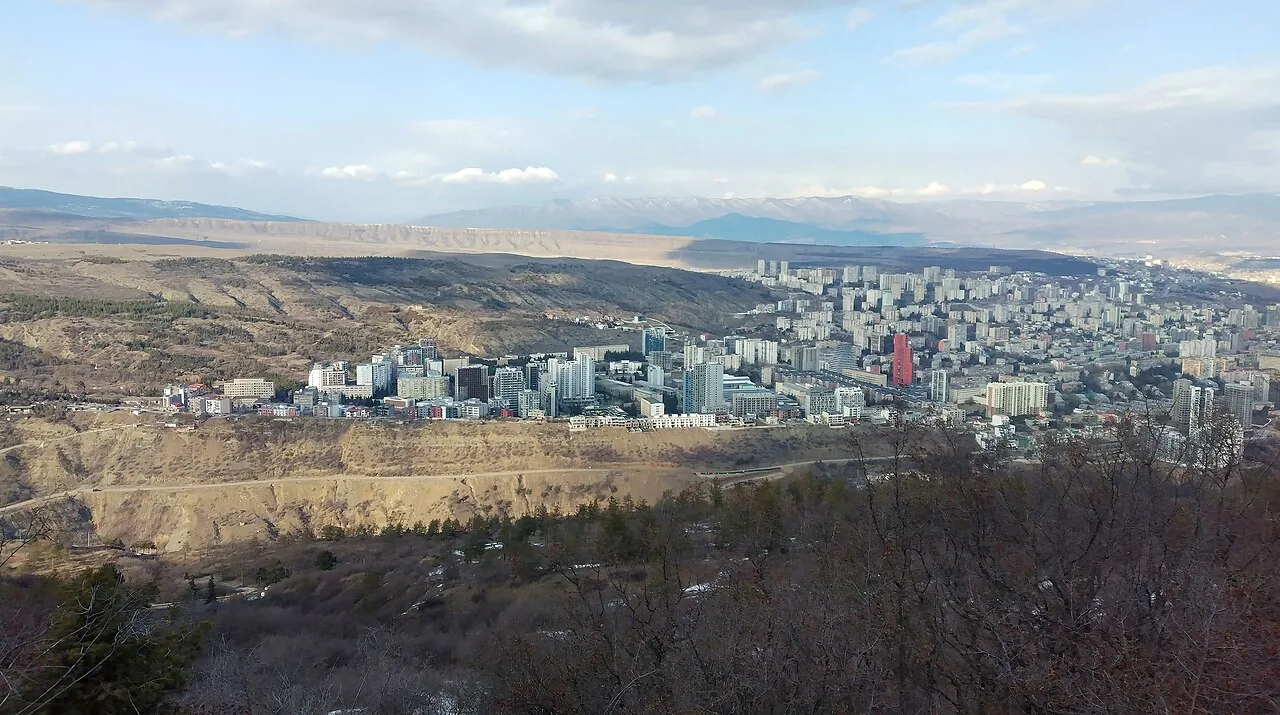
Saburtalo is the large modern district beyond the Vere river, business and residential at once. Nothing to look at, but it is one of the cheapest districts with a metro line of its own (Gldani and Varketili on line 1 are cheaper still, and further out): line 2, seven stations, including Technical University, Medical University, Delisi, Vazha-Pshavela and State University.
Note one quirk: the city has two lines and exactly one interchange between them, Station Square. Delisi in mid-Saburtalo to Liberty Square is four stops on line 2, the change, then three more on line 1. Fine for a work trip or a transit night, less fine when it eats an hour a day of a four-day holiday.
Fares: 1 lari buys 90 minutes, with three exceptions
Public transport is cheap and simple, but the tariff has catches most people discover after the fact:
- 1 ₾ is not a ride, it is 90 minutes. Transfer as often as you like between the metro, buses, municipal minibuses and the Bagebi-University ropeway.
- A Metromoney card costs 2 ₾, needs no ID and is sold at metro ticket offices. A contactless bank card works too.
- Exception one: pay by mobile app, or cash on a bus with a till, and the 90-minute package doesn’t apply. The operator spells this out in its tariff.
- Exception two: the Rike Park cable car up to Narikala isn’t part of the single fare. It costs 2.5 ₾ one way.
- Exception three: the Turtle Lake ropeway is separate too, 1 ₾ one way.
- Staying longer than a week? Passes are cheaper: 3 ₾ a day, 20 ₾ a week, 40 ₾ a month, travel card only.
The full breakdown is in our guide to getting around Tbilisi.
What to check in a listing before you book
- Floor and lift. In Sololaki, Kala and Avlabari a lift is the exception, and “third floor” may be counted from the basement.
- The climb. Check the height difference between the building and the nearest level street. If there’s a staircase in between, every trip out costs energy.
- Which way the windows face. Courtyard versus a street of bars decides whether you sleep.
- Air conditioning. July and August in the Kura basin are hard without it. Confirm it exists and works.
- Heating and hot water in winter. In the old housing stock that’s a conversation with the host, not a line in the ad.
- Parking, if you’re renting a car: in the Old Town there’s effectively none, Vake and Saburtalo far easier.
Getting to your district from the airport
Tbilisi airport sits about 17 km southeast of the centre. Bus 337 normally runs via Baratashvili Street, Rustaveli and Kostava to Station Square, covering every district here except Vake and Saburtalo. Two things to know: during the Rustaveli works it was diverted off the avenue via Heroes Square and the embankment (the city began reopening Rustaveli in stages on 11 September, so check the current routing), and it runs in daylight only, 06:59 to 22:59 according to the airport. Allow more than the usual 40-60 minutes while the diversion is on; a taxi does it in 20-30 and is the only option overnight. Full comparison in our guide to Tbilisi airport transfers.
Nearby / read next
- Our guide to Tbilisi covers what to see in each district, not just where to sleep.
- What a trip to Georgia costs puts accommodation into the wider budget.
- When to visit Georgia moves the nightly rate more than the district does.
- Long-term rentals is the one for six months rather than a week: other rules, deposits and contracts.
- Getting around Tbilisi and Mtatsminda Park cover transport and the climb for the panorama.
Read also

Before you go · 8 min read
Georgia in winter: weather, cities and ski season
Updated · September 3, 2026Winter in Georgia: Tbilisi averages 3.4 °C in January, days run nine hours, ski season from late December, sulphur baths and cheaper city rooms.

Before you go · 9 min read
Georgia vs Armenia: Where Should You Fly?
Updated · September 3, 2026Georgia or Armenia in 2026: visas, flights, Black Sea vs Sevan, published tariffs side by side, and when both countries beat picking one.

Before you go · 11 min read
Tbilisi or Batumi: Which One Should You Visit
Updated · September 11, 2026Tbilisi or Batumi: climate, rain, lodging and who each city suits. Batumi gets five times more rain than Tbilisi a year - it changes the choice.

Before you go · 11 min read
Rtveli 2026: when to harvest grapes in Georgia
Verified · August 17, 2026Kakheti harvest peaks mid-September to mid-October 2026. Where to base, which wineries named dates, and how to join without a ticketed festival.