
Georgia visa: do you need one and how to enter 2026
Do you need a visa for Georgia in 2026: visa-free entry for 96 countries and territories, most for up to 1 year, mandatory insurance from Jan 1.

Most travellers don’t need a visa for Georgia: the visa-free list in Government Ordinance N255 runs to 96 countries and territories, and almost all of them can stay for up to 365 days without one - one of the most generous visa-free regimes in the world. The big change for 2026 is that, from 1 January, travel medical insurance is mandatory on entry (for everyone, including visa-free visitors). You can enter by air, land or sea with a valid passport.
Checked 20 August 2026. This is reference information, not legal advice. Visa rules and entry requirements change quickly - before you travel, confirm your own case with the Consular Service of Georgia’s Foreign Ministry (geoconsul.gov.ge).

.jpg)
Do you need a visa: who enters without one
- 96 countries and territories - visa-free, almost all for up to 365 days. The list (Ordinance N255) includes all EU states, the UK, the USA, Canada, Australia, Japan, South Korea, Israel, Ukraine, the CIS countries and many more; the main exception is China, whose citizens get 30 days, tourism only. The exact stay for each passport is in the visa-free stays by nationality table. So there’s nothing “visa-related” to arrange in advance - a passport is enough (plus insurance, see below). Russians and Ukrainians have a dedicated checklist in the entry rules for 2026.
- It isn’t a “tourist visa”. Within the allowed period you’re free to travel, live, work remotely, open a bank account and register as a sole trader - more in the relocation section and the how to open a bank account guide.
- Citizens of countries not on the list need a visa in advance: online (eVisa) or at an embassy. Check your own case and the current list on geoconsul.gov.ge.
| Document | Needed on entry? |
|---|---|
| Passport (valid for the whole trip) | yes |
| Visa | no - for 96 countries and territories, most stays up to 365 days |
| Health insurance (coverage ≥ 30,000 GEL) | yes - from 1 January 2026, everyone |
| Accommodation booking / return ticket | may be asked at the border |
The visa-free list and document requirements can change - for accurate, current information see the Consular Service of Georgia’s website.
Mandatory health insurance from 2026 - the big change
From 1 January 2026 every foreign tourist must hold travel medical insurance for the whole trip. The essentials:
- coverage of at least 30,000 GEL, for the full period (entry to departure);
- the policy in English or Georgian - so it’s easy to check at the border;
- checks can happen at any border - airport, land or sea;
- the main consequence of arriving without one is refusal of entry; a fine (around 300 GEL) is mentioned by some outlets but not officially confirmed.
The legal basis is Government of Georgia Decree No. 602. The requirement is new, and details (amounts, how checks are run) may be refined, so buy a policy in advance rather than counting on sorting it out on arrival. How to choose the right policy is in the insurance section; the 30,000 GEL minimum, the consequences of arriving without a policy and what to show at the border are covered in mandatory travel insurance for Georgia entry.
How to enter: air, land, sea
- By air. The main airports are Tbilisi (the primary one), Kutaisi (a low-cost hub, Wizz Air) and Batumi. Which to choose and how to get from the airport into town is in the airports of Georgia overview and the transport section.
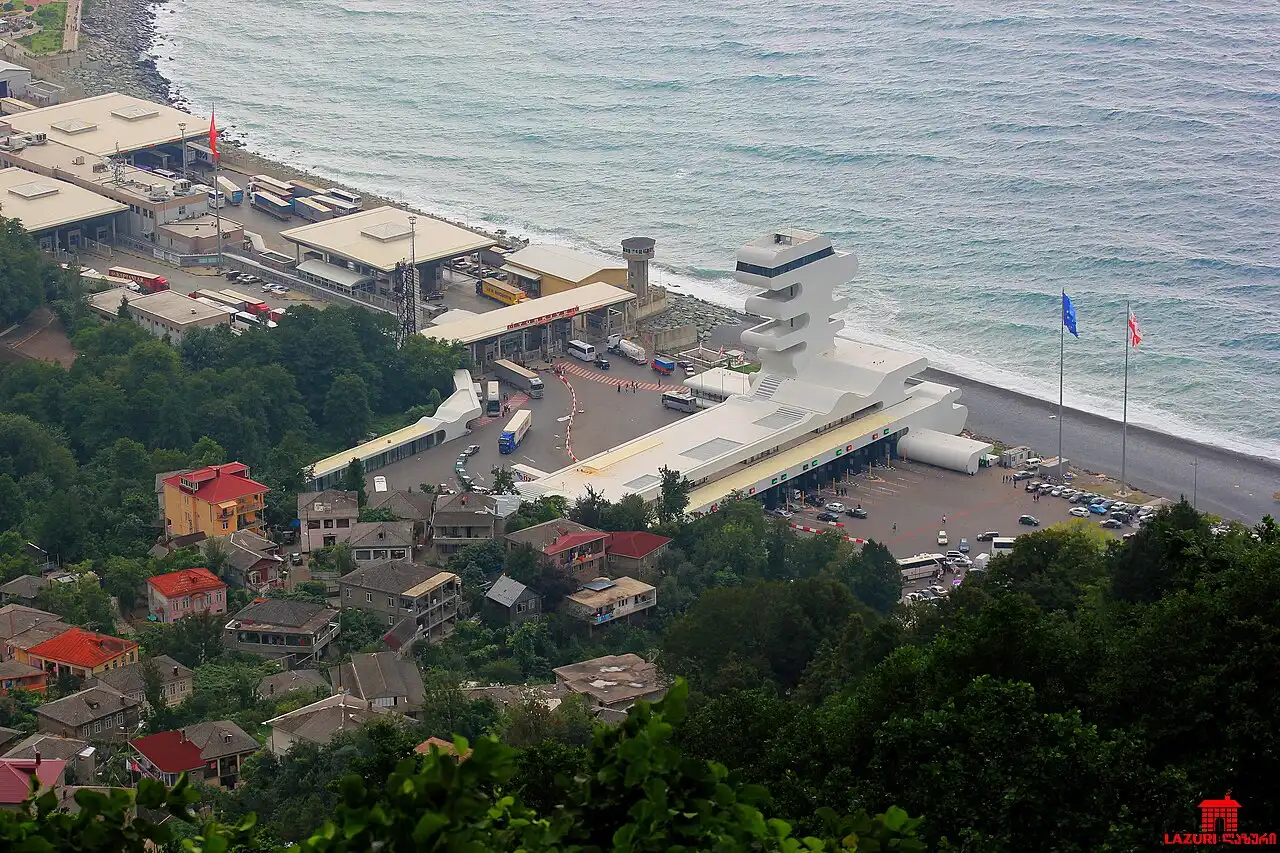
- By land. The main crossings are Sarpi (with Turkey, on the coast), Verkhny Lars (with Russia, on the Georgian Military Road) and the crossings with Armenia and Azerbaijan in the south. At a land border, insurance and documents are checked just as at the airport.
- By sea. Ferries call at Batumi and Poti (including from Turkish ports and across the Black Sea) - a niche but workable option.


Money at the border: what to declare
There’s no limit on how much cash you can bring into Georgia - you can carry any amount. But if it exceeds 30,000 GEL (or the equivalent in another currency, about US$11,400 at the National Bank of Georgia rate of 24 September 2026; the lari moves, so if you’re close to that, declare), you must declare it at customs, and the same rule applies when you leave. The Revenue Service also asks for a document showing where the money comes from and what it’s for, so carry one, and keep your entry declaration until you leave. There’s no “customs fee” on the currency itself - it’s only a declaration, but an undeclared sum over the threshold can cost a fine of 3,000 GEL or more, or the cash itself. Cards are widely accepted in Georgia, but keep some cash in lari for small towns and rural filling stations.
_entry_stamp.png)
Passport, registration and border notes
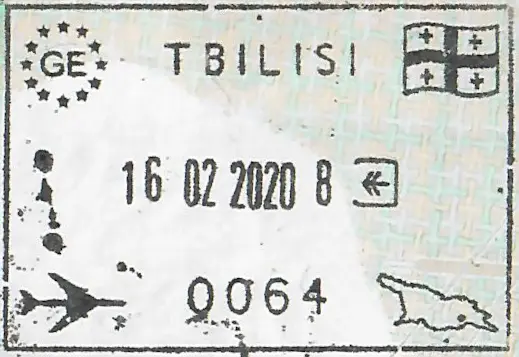
Your passport must be valid for the whole trip - there’s no strict “plus six months” rule as in some countries, but a small buffer is wise. Tourists don’t need any separate residence registration. At the border you may be asked for proof of accommodation for the first nights, a return or onward ticket, and sufficient funds for the trip - usually a formality, but worth having to hand. Land crossings with Turkey, Armenia and Azerbaijan operate normally; on the Russian direction (Verkhny Lars) there can be queues and special conditions - check current advisories and the crossing’s status before you travel.
How long you can stay
Visa-free entry gives you up to 365 days - enough for almost any trip. For a longer or permanent stay you apply for a residence permit (the subject of the relocation section). Remote workers also have the C5 digital nomad visa introduced in 2026 - it’s valid for up to five years, but the stay it allows is capped at one year in total, so if your passport already gets 365 days visa-free it adds legal certainty rather than extra time. “Visa runs” (a quick exit and re-entry to reset the clock) are technically possible, but relying on them is risky: border practice and the rules change, so plan around the legal limits and check the details in advance. Exactly how this period is counted and what a “visa run” really means we cover separately in how long you can live in Georgia visa-free.
Pre-trip checklist
- Passport valid for the whole trip.
- Health insurance with coverage ≥ 30,000 GEL bought in advance (in English or Georgian).
- Checked whether you personally need a visa - against the list on geoconsul.gov.ge.
- Decided how to get around: car rental or transport; where to go - routes and the Tbilisi guide.
- Clear on the currency and how to change money - lari, cash and cards.
Once entry is sorted, move on to the rest of the planning: decide when to go, arrange insurance, choose transport or a car rental, and plan a route. You can buy travel medical insurance for the 2026 requirement through the box below.
Read also

Before you go · 8 min read
Georgia in winter: weather, cities and ski season
Updated · September 3, 2026Winter in Georgia: Tbilisi averages 3.4 °C in January, days run nine hours, ski season from late December, sulphur baths and cheaper city rooms.

Before you go · 9 min read
Georgia vs Armenia: Where Should You Fly?
Updated · September 3, 2026Georgia or Armenia in 2026: visas, flights, Black Sea vs Sevan, published tariffs side by side, and when both countries beat picking one.

Before you go · 11 min read
Tbilisi or Batumi: Which One Should You Visit
Updated · September 11, 2026Tbilisi or Batumi: climate, rain, lodging and who each city suits. Batumi gets five times more rain than Tbilisi a year - it changes the choice.

Before you go · 12 min read
Rtveli 2026: when to harvest grapes in Georgia
Verified · August 17, 2026Kakheti's 2026 harvest peaked late September to mid-October. Where to base, which wineries named dates, and how to join without a ticketed festival.