
Verkhny Lars 2026: border, queues and winter
How to cross Verkhny Lars in 2026: documents, insurance, queues, car checks, cash rules and winter road restrictions.
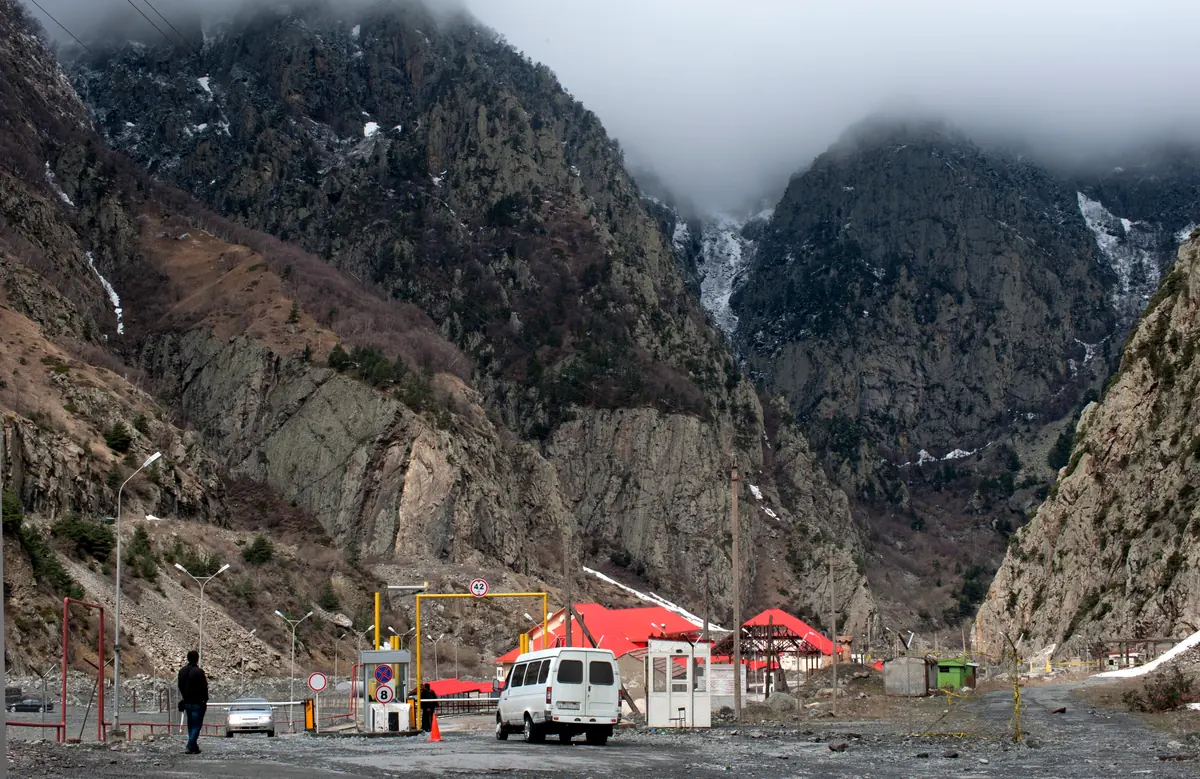
Verkhny Lars in 2026 is a usable but unpredictable land entry into Georgia via Russia’s Verkhny Lars checkpoint and Georgia’s Dariali/Kazbegi checkpoint. The practical preparation is clear: a valid passport, insurance with at least 30,000 GEL of cover, vehicle documents if you drive, extra time, and an official road check for the Mtskheta - Stepantsminda - Larsi road before departure. Queue times are not reliably forecast by an official timer, and in winter an open border checkpoint does not always mean the Gudauri - Kobi mountain section is passable.
Checked on 26.06.2026. This is general travel information, not legal advice and not a live queue report. Before travelling, verify your case on geoconsul.gov.ge, matsne.gov.ge, rs.ge and georoad.ge. Entry rules, insurance requirements, road restrictions and border practice can change faster than articles are updated.
Who Should Use Verkhny Lars
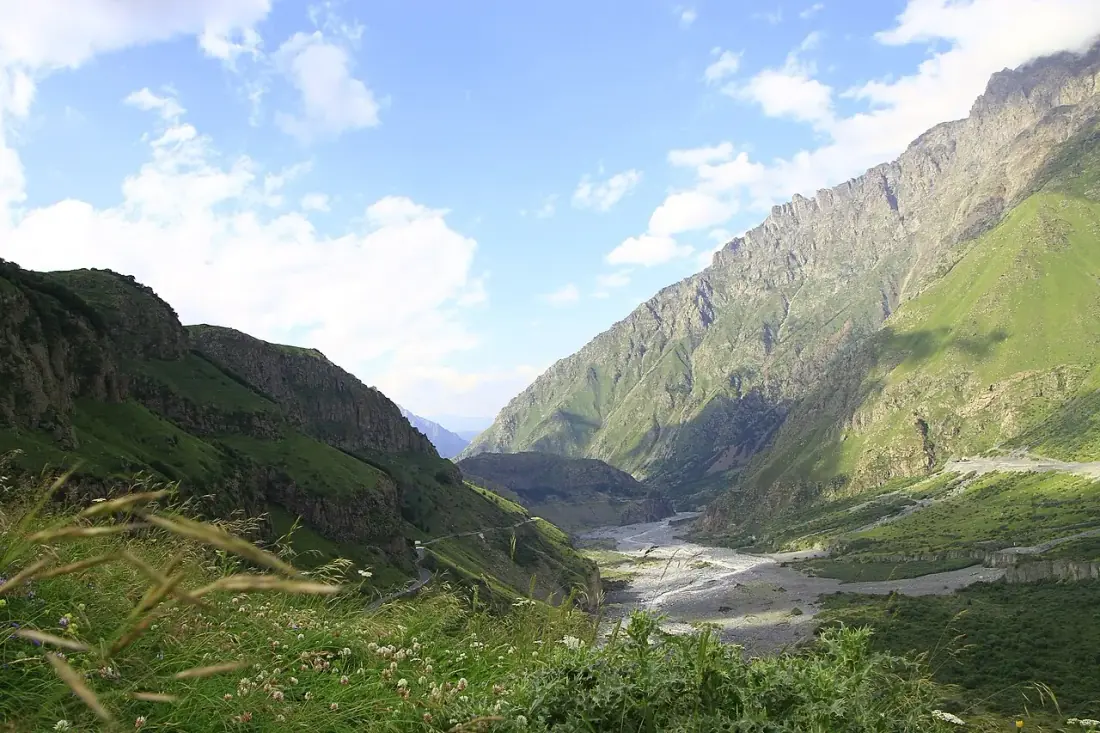
Verkhny Lars makes sense if you’re driving into Georgia, carrying a lot of luggage, travelling with a pet, or coming from Vladikavkaz by bus, taxi or transfer. It is the main land scenario for many travellers from Russia: after the Russian checkpoint the road enters the Dariali Gorge, reaches the Georgian side at Dariali/Kazbegi, then continues to Stepantsminda, Gudauri and Tbilisi along the Georgian Military Road - the same route with the Jvari Pass, just without the border queues. For Ukrainians and other nationalities the route can also be possible, but transit rules, carriers and documents need extra checking.
If predictability matters more than the car, flying is usually calmer. Don’t plan Verkhny Lars as a same-day connection to a flight, a paid tour or a non-refundable booking in Tbilisi. Treat it as a mountain border route: keep a buffer night in Vladikavkaz, Stepantsminda or Tbilisi, and be ready to change the plan if weather or traffic blocks the road.
Documents and Insurance
The basic 2026 checklist is:
| Item | What to check |
|---|---|
| Passport | valid for the whole trip; check carrier and transit requirements |
| Visa-free status or visa | verify your nationality on Geoconsul; many countries get up to 365 days visa-free |
| Insurance | from 01.01.2026, minimum 30,000 GEL for the whole stay |
| First-night address | booking, host address or a clear route |
| Cash | cash, checks and securities above 30,000 GEL or equivalent must be declared |
| Vehicle | registration, permission if needed, driving licence and required insurance |
The land crossing doesn’t replace normal Georgian entry rules. Border officers can ask about your purpose of travel, first address, insurance and onward route, just as they can at an airport. For the broader entry framework, see Georgia entry rules 2026.
Insurance deserves a separate check. Resolution No. 602 introduced mandatory health and accident insurance for tourists with a minimum insured amount of 30,000 GEL. Keep the policy offline as a PDF, preferably in English or Georgian, and do not buy the cheapest policy just to pass the border: mountains, driving, trekking and skiing may require extra cover. The detailed money-and-coverage guide is mandatory insurance for Georgia 2026.
How the Crossing Works
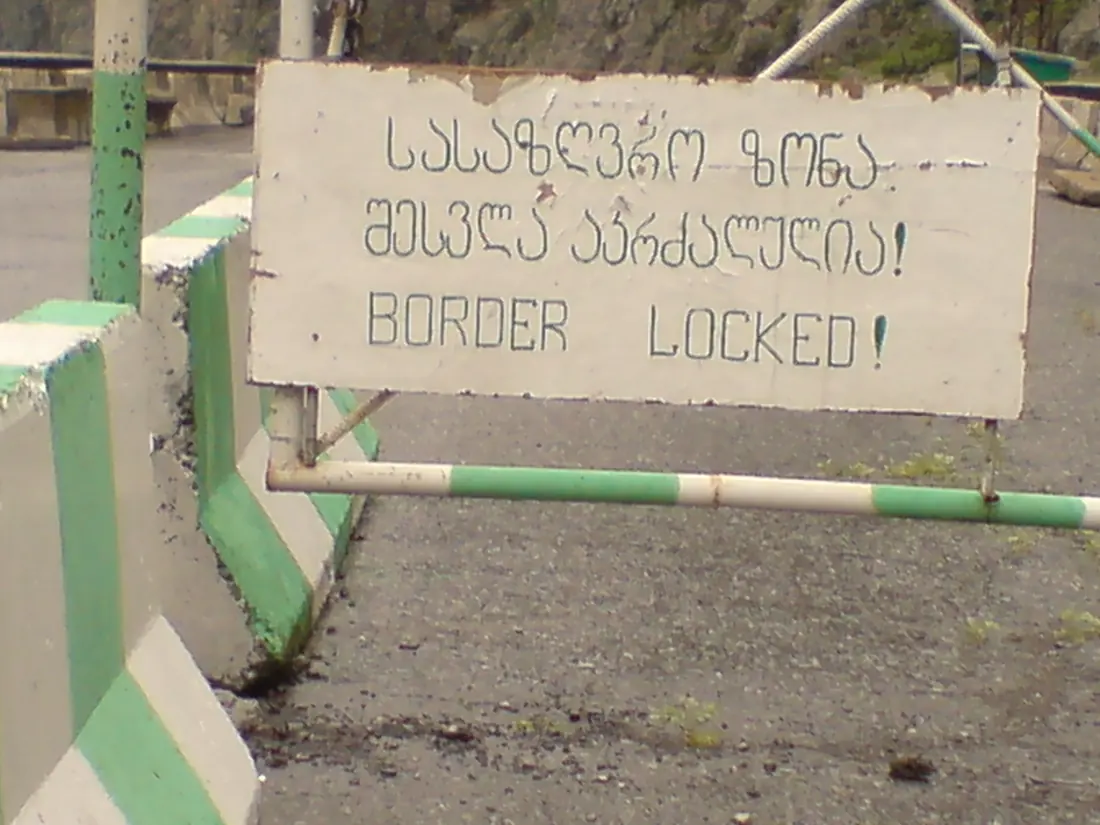
From the Russian side you approach Verkhny Lars, pass passport and vehicle checks, then continue to the Georgian Dariali/Kazbegi checkpoint. The exact lane and inspection order depends on vehicle type and current load, but the usual logic is: queue, passport control, vehicle or luggage inspection if requested, then entry into Georgia.
Don’t assume you can simply walk across. If you are not driving, you need a bus, taxi, transfer or a legal seat in a vehicle. Cyclists and motorcyclists should check current practice shortly before travel with carriers or official notices, because access rules and on-the-ground organisation can change.
Keep the useful documents within reach, not buried in the trunk: passport, insurance, accommodation proof, onward plan, vehicle papers and permission if the car isn’t yours. If you carry expensive equipment, goods for sale or significant cash, read the Revenue Service customs rules before you leave.
Queues Without Guesswork
There’s no single official public timer that reliably says “the wait is three hours now”. Queues depend on weekdays, holidays, freight traffic, weather, roadworks, inspections and the Russian-side situation. For that reason this guide avoids giving an average waiting time as fact: numbers from chats or old trip reports age quickly.
Plan around risk instead:
- avoid same-day flights or fixed meetings after the crossing;
- carry water, food, power banks, offline maps and working roaming or eSIM;
- plan for children, pets and medication during a long wait;
- check the whole road to Tbilisi, not only the border checkpoint;
- know where you will sleep if the route stalls.
After the border, don’t underestimate the drive. If you continue by public transport, read Tbilisi to Kazbegi without a car; if you stop for the night, use the Stepantsminda guide. After a tiring border day, sleeping in Kazbegi can be safer than driving the mountain road in the dark.
Winter Road Restrictions
In winter the main risk is the road, not the passport booth. The Roads Department of Georgia regularly publishes restrictions for the Mtskheta - Stepantsminda - Larsi international road, especially the Gudauri - Kobi section. Official notices may mention bans for trailers and semi-trailers, chain requirements, movement only through avalanche galleries, patrol police coordination or full closures during avalanche danger.
So “the checkpoint is open” and “I can definitely reach Tbilisi” are not the same. Snow, ice, fog and avalanche risk can stop traffic for hours or longer. For a winter crossing you need winter tyres, warm clothes, fuel, water, food, a power bank and a realistic overnight option. If you’ve summer tyres, a small child, no mountain-driving experience or no buffer day, postpone the trip or choose a flight.
Driving Your Own Car
Prepare vehicle registration, your driving licence, permission or power of attorney if the car is not yours, and the insurance required along your route. Georgian car insurance rules should be checked separately before travel. If you plan to keep driving around Georgia, the car rental and driving section and the Gudauri guide are useful because this mountain corridor often defines winter logistics.
Do not carry commercial goods “just in case” without understanding customs. Revenue Service guidance says cash, checks and securities above 30,000 GEL or equivalent must be declared when entering or leaving Georgia, with a document showing where the money comes from; an undeclared sum can cost a fine of 3,000 GEL or more, or the cash itself. That rarely affects an ordinary holiday, but it matters for relocation, car purchases and moving large amounts of belongings.
When Not to Cross
Postpone the land route if georoad.ge shows a closure or severe restriction on the Gudauri - Kobi - Larsi section, if you have no spare day, if your insurance doesn’t cover the whole stay, if the car documents are unclear, or if your route involves Abkhazia or South Ossetia through crossings not controlled by Georgia.
The last point is serious. Government travel advice warns about the occupied regions and unofficial crossings. For a tourist, the safer choice is to use recognised international entry points and avoid routes that Georgia may treat as illegal.
Departure Checklist
One day before Verkhny Lars:
- Check your nationality and visa-free status on Geoconsul.
- Save insurance with at least 30,000 GEL of cover offline.
- Check georoad.ge for the Mtskheta - Stepantsminda - Larsi road.
- Prepare car documents and permission if needed.
- Save accommodation proof and the first-night address.
- Review customs rules if carrying more than 30,000 GEL in cash or commercial goods.
- Add an overnight buffer, especially in winter.
Verkhny Lars isn’t a quick hole in the border. It’s a mountain border route. Prepare documents, avoid arguing at control, check the road and treat the queue as a risk to plan around.
Photos
Read also

Transport · 11 min read
Trains in Georgia: routes, tickets, express
Updated · September 13, 2026Georgian Railway in 2026: the Tbilisi-Batumi Stadler in about 4 hours from 35 GEL, how to buy on gr.com.ge, and which other routes still run.

Transport · 11 min read
Tbilisi to Gudauri 2026: Marshrutka, Taxi, Transfer
Updated · August 29, 2026Tbilisi to Gudauri for ski season: marshrutka 15 GEL, transfer 190-320 GEL per car, 120 km in 2-2.5h. Winter tyre law, closures, what to pick.

Transport · 10 min read
Tbilisi to Kutaisi 2026: train, bus, transfer
Updated · August 24, 2026Getting from Tbilisi to Kutaisi: train to Rioni station, marshrutkas from Didube, driving and transfers - times, prices and what to pick in 2026.

Transport · 9 min read
Tbilisi to Mestia 2026: Vanilla Sky 90 GEL, train+van
Updated · August 21, 2026Tbilisi to Mestia in 2026: Vanilla Sky from Natakhtari (90 GEL), day train to Zugdidi plus marshrutka, direct van or a transfer - what actually works.