
New Year in Georgia: Tbilisi, Batumi or the Mountains
Where to see in the New Year in Georgia: Tbilisi's New Year village and balcony fireworks, Batumi's gala, Gudauri's peak weeks, Christmas on 7 January.
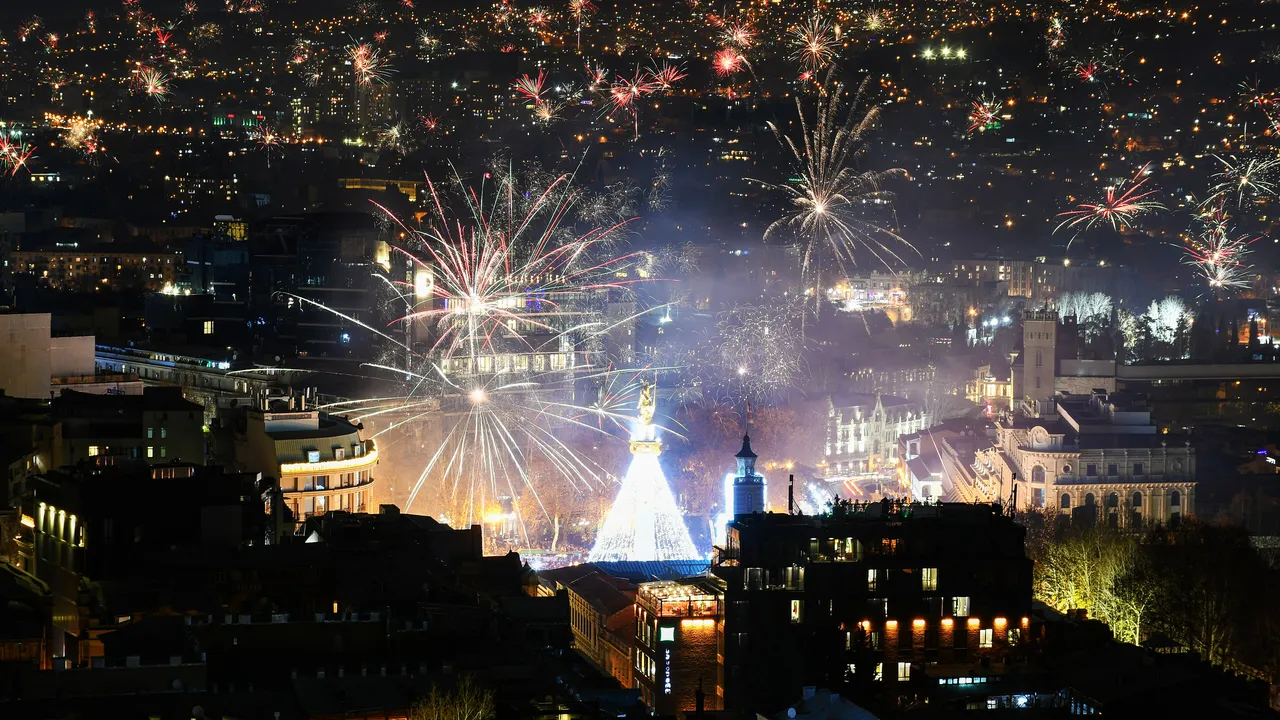
Tbilisi is the easy pick for New Year in Georgia. From mid-December the city runs an open-air New Year village with a market, an ice rink and concerts every evening; at midnight the sky fills with fireworks launched from thousands of balconies; and on New Year’s night 2025-26 the metro and city buses ran free until 03:00. Batumi holds its own party on Europe Square, and Gudauri is the snowy option, at the resort’s annual peak, when prices run significantly higher. Before you book, know this: the 2026-27 programmes are still unannounced (checked 3 October 2026), so every programme detail below comes from the 2025-26 season and is dated as such.
There’s one more thing Western visitors tend to miss. Christmas here falls on 7 January, so the holiday season doesn’t end on New Year’s Day. It runs well into January.
What’s announced for 2026-27 (not much yet)
Nothing official so far, and that’s normal for October. The 2025-26 paper trail gives you the clock. A City Hall statement about a “New Year City” running from 12 December 2025 to 14 January 2026 was reported on 10 November; the main tree went up in lights on 12 December; and the day-by-day concert list appeared on tbilisi.gov.ge on 13 December. Batumi lit its tree later, in the second half of December. If the pattern holds, you’ll get dates in November and performers in mid-December.
The city has put up a main tree in the centre every year since at least 2018, so you can safely book flights and a room for the holidays now. What you shouldn’t do is pay extra because a website promises a named headliner for New Year 2027: as of 3 October 2026 the city had not announced any programme for the season.
Tbilisi’s New Year village
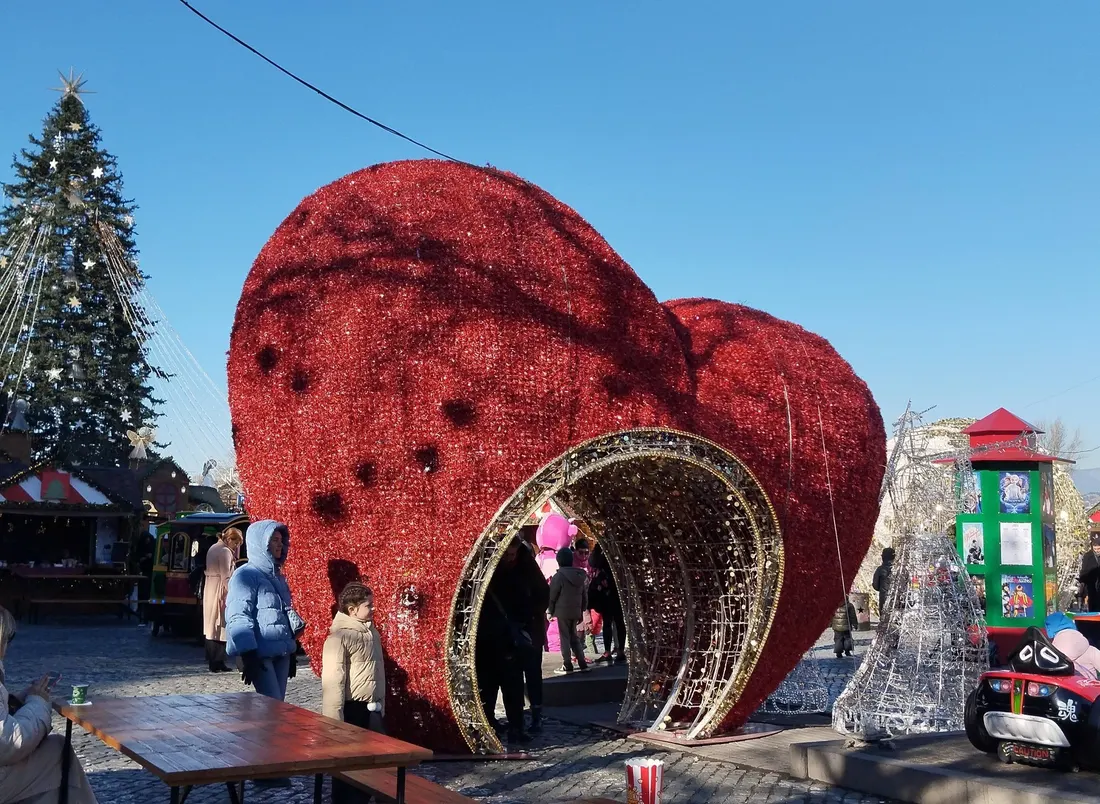
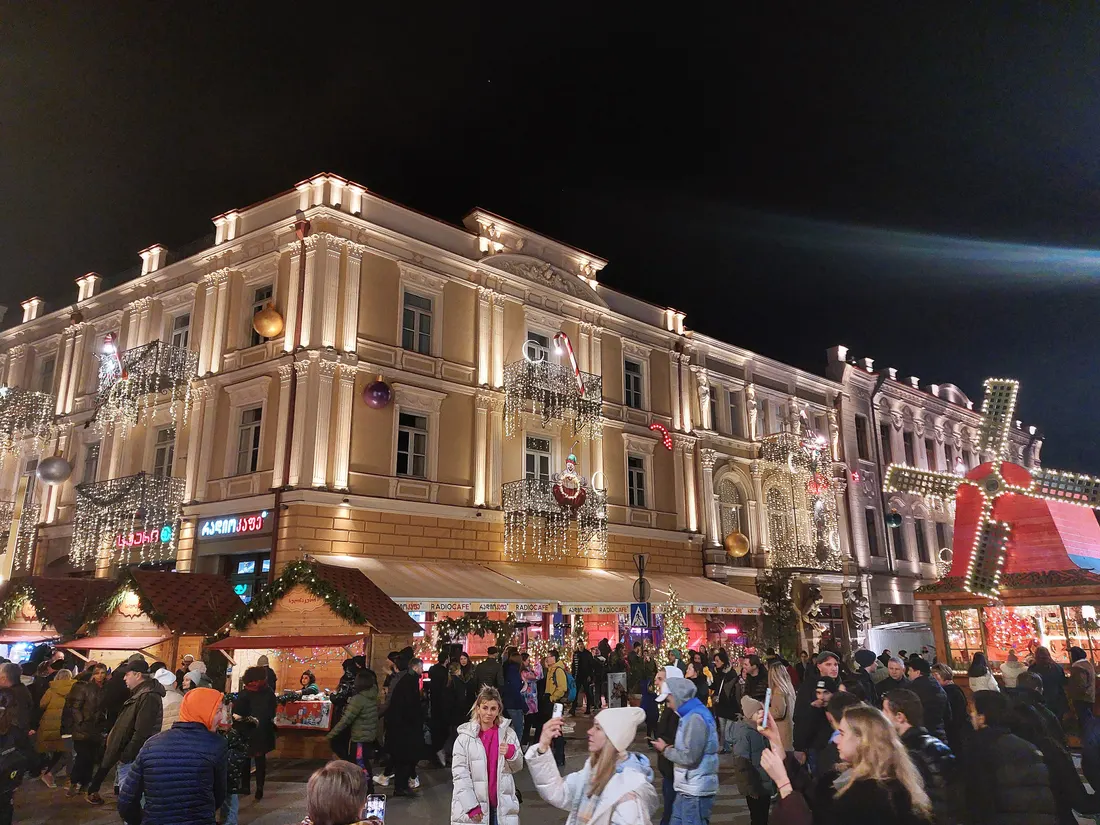
In 2025-26 the festivities sat on First Republic Square, at the western end of Rustaveli Avenue. The city called it a New Year Village: a food and makers’ market, a Christmas bazaar, cooking masterclasses, an open-air cinema, an ice rink, fairground rides, a little “city train” and Santa’s house. Every day had a lunchtime slot for families, usually a concert and now and then a show, plus an evening concert at 20:00. The village was due to close on 7 January, but on 2 January the mayor extended it to 14 January, citing high demand, which matched the date the tree and the rink had been planned to come down all along.
The main tree stood in front of Parliament, on Rustaveli, from 2019 to 2024; in 2025 it moved to First Republic Square, as it had once before in 2018. The pavement outside Parliament had been a daily protest site for more than a year, Radio Free Europe’s Georgian service noted in December 2025. If you’d rather keep your evening festive and nothing else, the village end of the avenue is the one to head for, and our Georgia safety guide has the current picture.
What about New Year’s Eve itself? City Hall’s November statement promised “a grand New Year gala concert” for 31 December 2025, without naming a place or a time. The village schedule published on 13 December listed a concert by Nutsa’s School at 13:00 and the band Kvevri at 20:00 for that date, and it doesn’t give a slot for the gala. So don’t build your night around a stage. Build it around dinner and a view.
One logistics point matters more than any line-up. From 20:00 on 31 December to 08:00 on 1 January 2026, Rustaveli Avenue, First Republic Square and Sandro Inashvili Street were closed to all cars. A taxi won’t get you to a restaurant door on the avenue that night, so book somewhere you can walk to, or ride the metro.
Midnight belongs to the balconies
Tbilisi doesn’t wait for an official countdown. Wander-Lush, a travel blog that covers Georgia in depth, puts it bluntly: “There is not really an official fireworks display, but rather everyone chips in by sending off their own fireworks purchased from markets and corner stores.” The noise starts days early, with crackers going off every night in the run-up to 31 December, and it peaks right after midnight, when the whole bowl of the city lights up at once.
The geography is what makes it. Tbilisi sits in a valley ringed by hills, so any high point turns the night into a panorama: you’re watching thousands of small launches instead of one big show. Narikala above the Old Town is the obvious spot, and on New Year’s night 2025-26 the Rike-Narikala cable car ran until 03:00 on 1 January instead of closing at 22:00, its usual winter hour. The city’s notice didn’t say the ride was free, so expect to pay the usual fare. The walk up and the fortress itself are covered in Narikala Fortress.
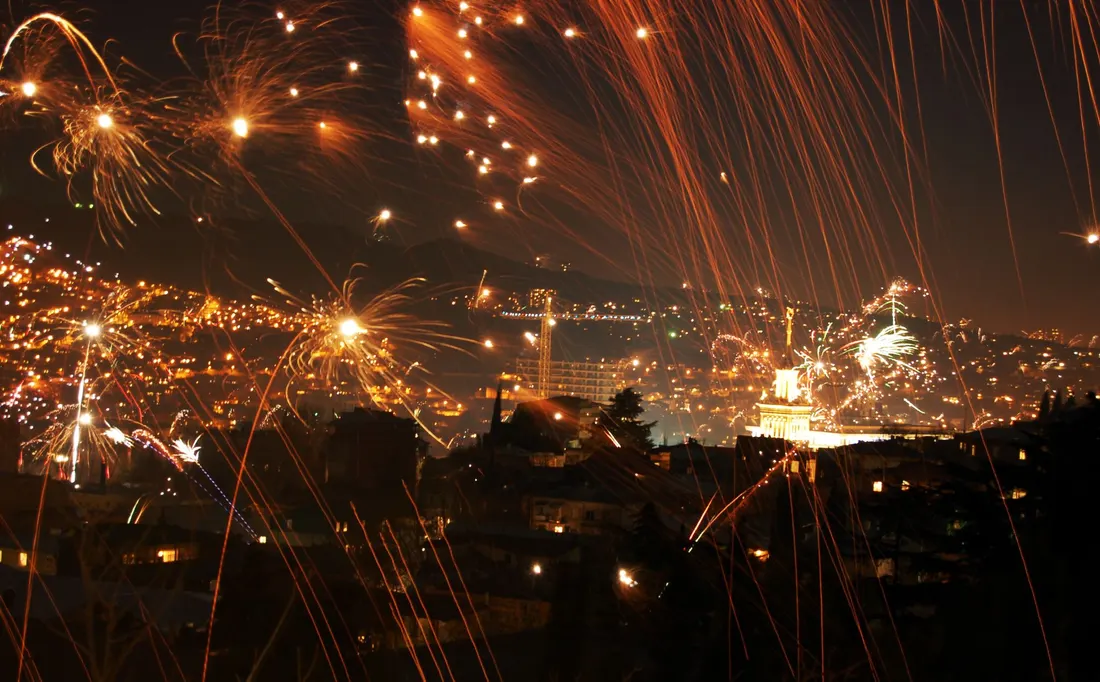
A word of common sense: these are amateur launches, often in tight streets. Watch from a viewpoint, a roof terrace or a balcony, keep children back from anyone with a box of rockets, and if you’re travelling with a dog, plan for a loud hour indoors.
The free ride home
On an ordinary night the metro stops around midnight (normal hours are on the Tbilisi public transport page). On New Year’s night 2025-26 the city ran it free, along with the buses: the metro until 03:00 on 1 January, and buses until 03:00 rather than stopping at 23:00 on the 31st. City Hall described the longer timetable as a tradition, and it did the same on Christmas night, opening the metro from 00:00 to 03:00 on 7 January, again free.
Put that next to the road closures and the plan writes itself: stay near a metro station, walk to dinner, ride home. If you’re in Old Tbilisi or Sololaki, you can walk both ways. Neighbourhood by neighbourhood, where to stay in Tbilisi helps you pick.
Batumi: the same night by the sea
Batumi does New Year on Europe Square. In 2025-26 the main tree was lit there in the second half of December (the public broadcaster 1TV reported it on 21 December), together with a New Year’s Village of food and craft stalls, children’s activities and concerts. At the lighting the city announced a gala concert to see in the New Year and a Christmas concert to close the programme on 7 January.
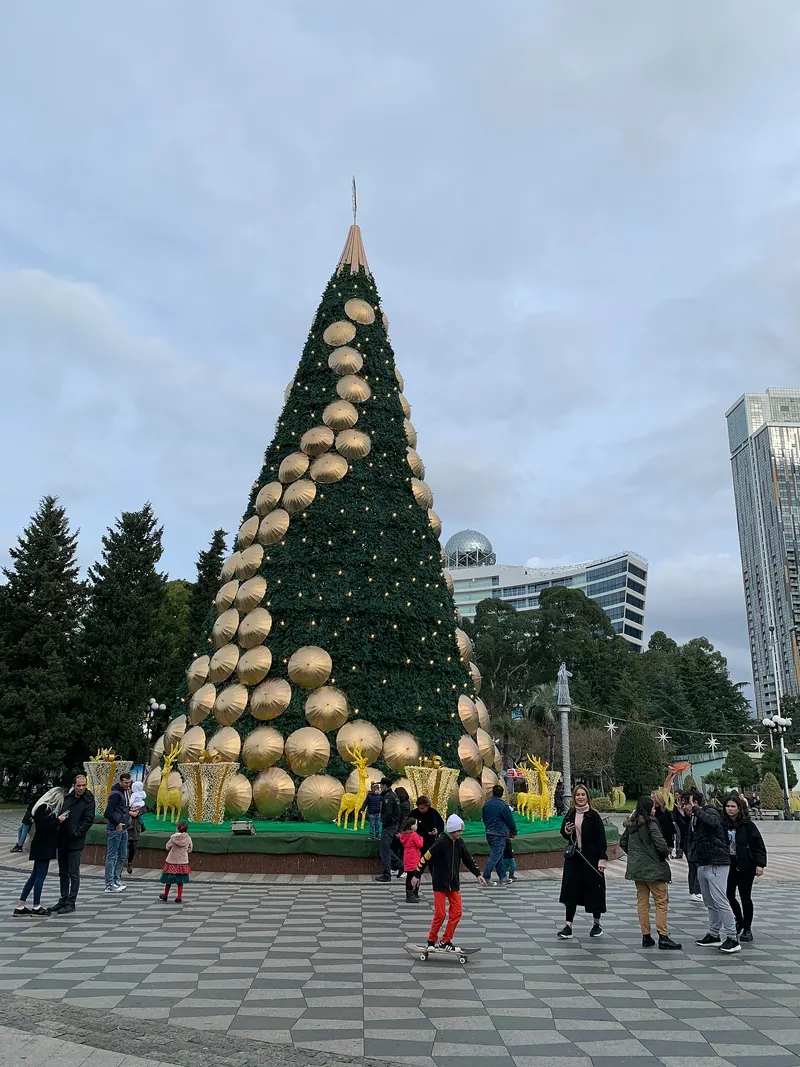
Batumi makes sense if you’re flying into its airport, if you’d like a seaside base with a hotel party on the night, or if you’ve done Tbilisi before. Just remember the beach is out of season. The city itself is covered in Batumi, and neighbourhoods in where to stay in Batumi.
Gudauri for a snowy midnight
For a ski New Year, Gudauri on the Georgian Military Road is the classic choice, and it isn’t a cheap one. Georgia’s National Tourism Administration calls the end of December and the first half of January the resort’s busiest time of year, and tells anyone planning New Year there to book at least two months ahead and expect significantly higher prices. Count back from 31 December and the deadline is the end of October.
The other unknown is the snow. Lift dates come from the state operator, the Mountain Trails Agency, close to the season. In 2025/26 it announced them on 17 December, and Gudauri’s lifts started on 27 December, running 10:00-17:00. When we checked its press page on 3 October 2026, nothing had been posted for 2026/27. A New Year booking is a bet that the season will be open by then. Snow also shuts the pass road on some days, so keep a spare day before your flight home; driving rules and winter tyres are in Tbilisi to Gudauri and Georgia in winter, and the resort comparison is in skiing in Georgia.
| Base | 31 December, as it went in 2025-26 | Suits | Watch out for |
|---|---|---|---|
| Tbilisi | New Year village on First Republic Square, fireworks from every hill and balcony, free metro and buses until 03:00 | First trip, food, walking the centre | Rustaveli closed to cars 20:00-08:00 in 2025-26 |
| Batumi | Tree and village on Europe Square, a gala concert announced for the night | A seaside base, flights into Batumi | Off-season coast, no swimming |
| Gudauri | Resort hotels at their annual peak | Skiers and snowboarders | Book two months ahead; lift dates come in December |
If you’re invited to a Georgian table
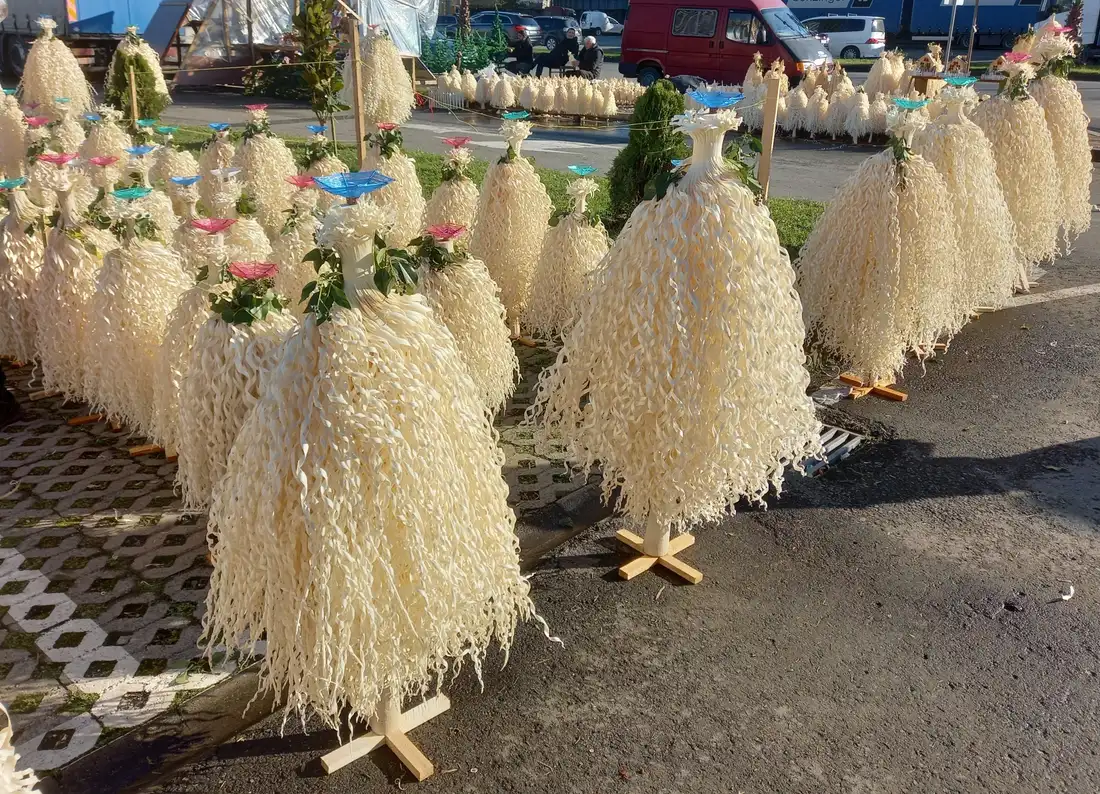
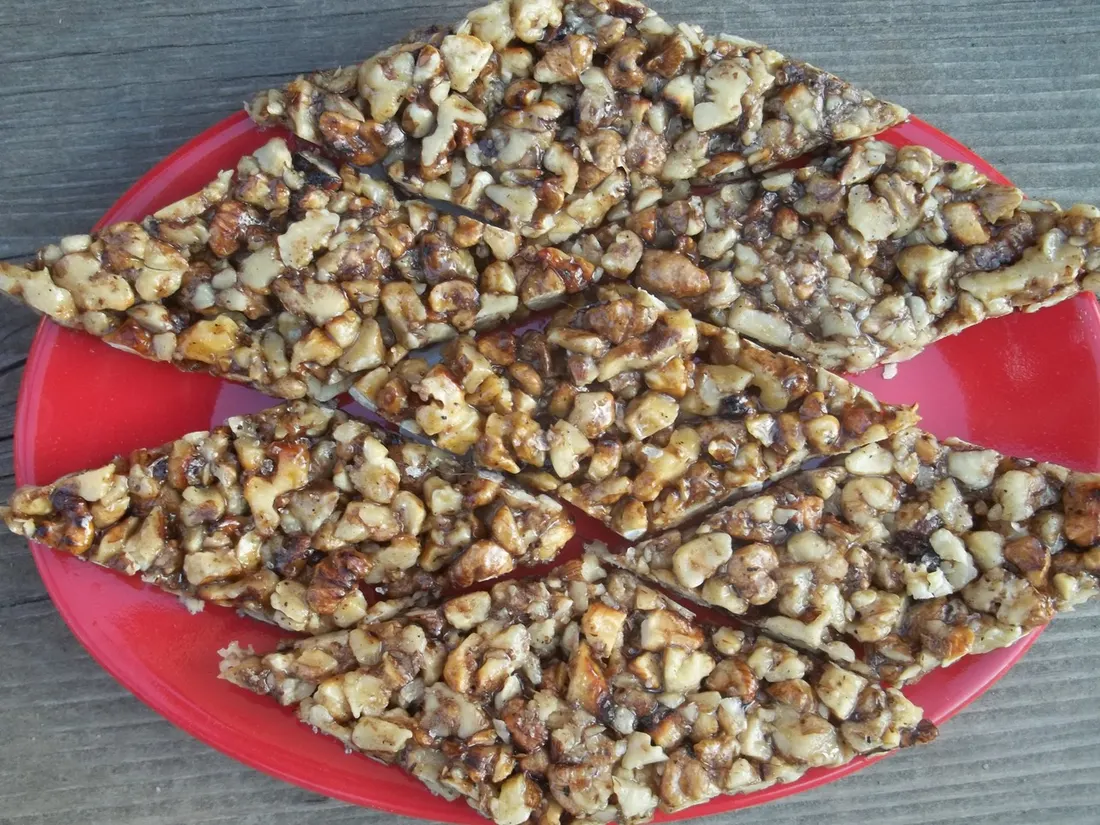
New Year is a home holiday here, and it’s built around the supra. The National Tourism Administration describes the New Year table as more abundant than an ordinary one, with turkey in satsivi (a walnut sauce) at the centre and gozinaki, walnuts set in honey, as “the ending symbol of Georgian New Year”. Many homes also put up a chichilaki: a small tree of hazelnut wood shaved into curly white ribbons, decorated with fruit and sweets. In the last days of December you’ll see them stacked for sale at markets.
The custom a guest needs to know is the mekvle, the first person to cross the threshold in the new year. Families believe their luck for the year follows that visitor, so families choose that visitor with care, and the mekvle arrives with sweets so that abundance stays in the house. If you’re asked to come round soon after midnight, take it as an honour and don’t turn up empty-handed: a box of sweets is exactly right.
2 January has a name of its own, Bedoba. The tourism board’s line is that “how you spend this day is how you’re destined to spend the rest of the year”, which makes it a day for good food and good company rather than errands.
Christmas comes after New Year here
Georgia’s Orthodox calendar flips the Western order. Under article 30 of the Labour Code, the public holidays in this stretch are 1 and 2 January, 7 January (Christmas) and 19 January (Epiphany). 25 December is an ordinary working day, and Old New Year on 14 January isn’t a day off either, though plenty of families still mark it. In 2027, 1 January falls on a Friday and 2 January on a Saturday, which makes for a long, slow weekend: both are official days off under the Labour Code, so check opening hours before you plan a museum day on the 1st.
On 7 January Tbilisi’s Christmas procession, Alilo, takes over the centre. In 2026 it set off from First Republic Square at 14:00 and ran until 16:00, finishing at Sameba Cathedral, with roads closed along the way. Participants collect sweets, clothes and toys that later go to orphanages and care homes. The rest of the winter’s dates are in our Georgia events calendar.
That leaves a useful window if 31 December doesn’t suit your dates. In 2025-26 the first two weeks of January still had the village, the tree and the rink, plus Christmas, Alilo and Old New Year. For the capital as a whole, start with Tbilisi.
A planning clock from October
- October: book flights, and for Gudauri book the room too; the tourism board’s two-month rule puts the deadline at the end of the month.
- November: watch for City Hall’s dates and venue. In 2025 the statement surfaced on 10 November.
- Mid-December: the tree lighting and the day-by-day concert list (12 and 13 December in 2025). Batumi’s tree followed later in the month.
- Shortly before the lifts turn: the Mountain Trails Agency posts season dates; in 2025 that was 17 December.
- 31 December: dinner you can walk to or reach by metro, a viewpoint for midnight, and the night metro home if the city runs it free again.
- 7 January: Alilo in the afternoon, then the village while it’s still up.
Read also

Entertainment · 11 min read
Tbilisoba 2026: 3-4 October, Five Venues and What's On
Verified · September 24, 20263-4 October (Sat-Sun), free entry: Tbilisoba 2026 is at Rike Park, Orbeliani and Gudiashvili squares, Leghvtakhevi, Europe Square and Metekhi Bridge.

Entertainment · 6 min read
Argo Batumi cable car 2026: 39 GEL tickets, hours
Updated · August 14, 2026Argo cable car Batumi: adult round-trip 39 GEL, kids 5-12 pay 9 GEL, under 5 free. Hours 10:00-00:00, 1 Bako St. From argo-batumi.ge, Aug 2026.

Entertainment · 9 min read
Batumi Aquarium 2026: 5 GEL ticket, hours, worth it?
Verified · August 21, 2026Batumi Aquarium: 5 GEL ticket, hours 10:00-17:30 (KA lists 18:00). Separate from dolphin show. From dolphinarium.ge, 21 Aug 2026.

Entertainment · 9 min read
Kakheti Wine Tours from Tbilisi: Prices Compared
Verified · September 17, 2026Kakheti wine tours from Tbilisi: real prices from two operators, private vs small group, what a day includes, and the self-drive alternative.