
Batumi: beaches, boulevard, what to see and where to stay
 Verified · June 15, 2026 against the operator’s own page 12 min read
 Batumi, Georgia's Black Sea resort: beaches, the palm boulevard, Alphabet Tower, Piazza and skyscrapers. What to see, where to stay and how long.
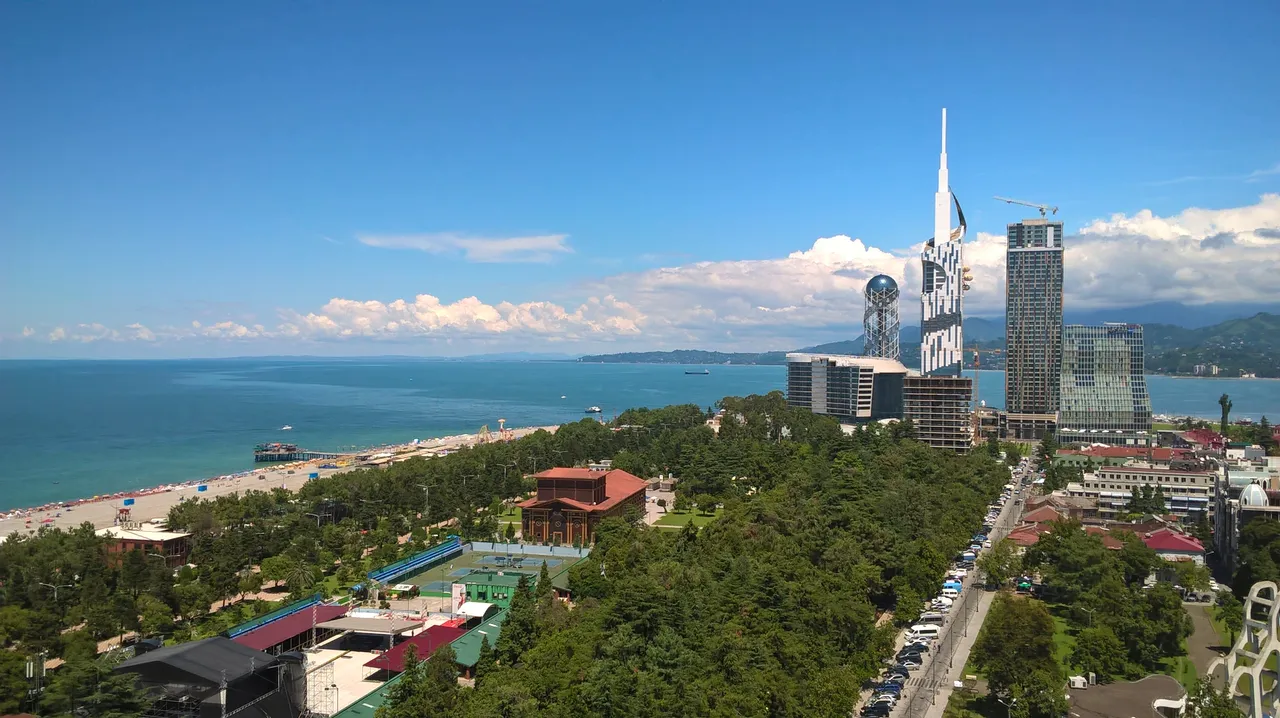
Batumi is the capital of Adjara and Georgia’s main seaside resort on the Black Sea. The city sits right by the water, about 20 km north of the border with Turkey, and feels nothing like the rest of the country: instead of medieval towers there’s a palm-lined seafront, glass skyscrapers and beaches. It’s Georgia’s second-largest city - around 235,000 people - and at the same time a resort, a port and a business centre. For a summer holiday and for arriving from the Turkish side, Batumi is the main gateway to the country’s southwest.
That mix of roles decides who it suits: beach-seekers happy with a resort week, weekenders escaping Tbilisi, arrivals crossing from the Turkish side, groups drawn to the nightlife, and families filling a rainy boulevard afternoon at the Batumi Aquarium.
A little history
A settlement here has been known since antiquity: the Greeks called it Bathys (Bathys - “deep harbour”). After the fragmentation of Georgia the city long fell to the Ottoman Empire, which finally secured it in 1703. Under the Treaty of San Stefano in 1878 Batumi passed to Russia and was occupied in August of that year.
The city’s later fate was shaped by oil: the Batumi-Tiflis-Baku railway (1883) and the Baku-Batumi pipeline (1907) turned it into a major oil port on the Black Sea. Batumi got its modern look only in the 2000s: after 2004 a huge building boom got under way here, earning the city the nickname “the Las Vegas of the Black Sea”.
A long history on the border has made Batumi unlike the rest of Georgia. In neighbouring streets you’ll find an Orthodox cathedral, a neo-Gothic church, a synagogue and a mosque, while Adjaran and Turkish cuisine mingle with a seaside resort spirit. This is the country’s most “southern” city in character - subtropical, many-faced and loud in season.
What to see
The seafront, the colonnades and the Seaside Park
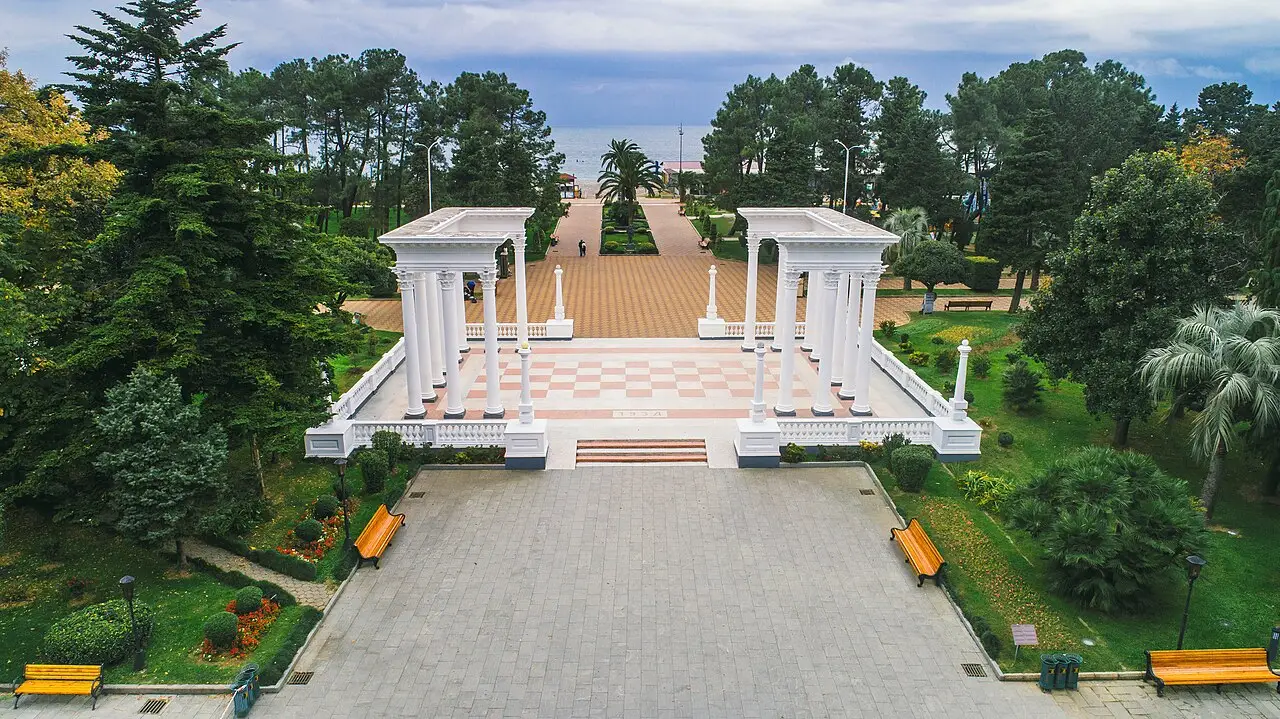
The city’s main axis is its long seafront promenade, Batumi Boulevard: several kilometres of palms, cycle paths, cafés, sculptures and singing fountains right by the water. A walk along the boulevard is the best way to get a feel for the city, and almost all its recognisable landmarks stand along it. One symbol of the seafront is the white colonnades with their chessboard square, while closer to the port the old lighthouse from the 1880s survives - one of the oldest on the Georgian coast.
The Alphabet Tower and “Ali and Nino”
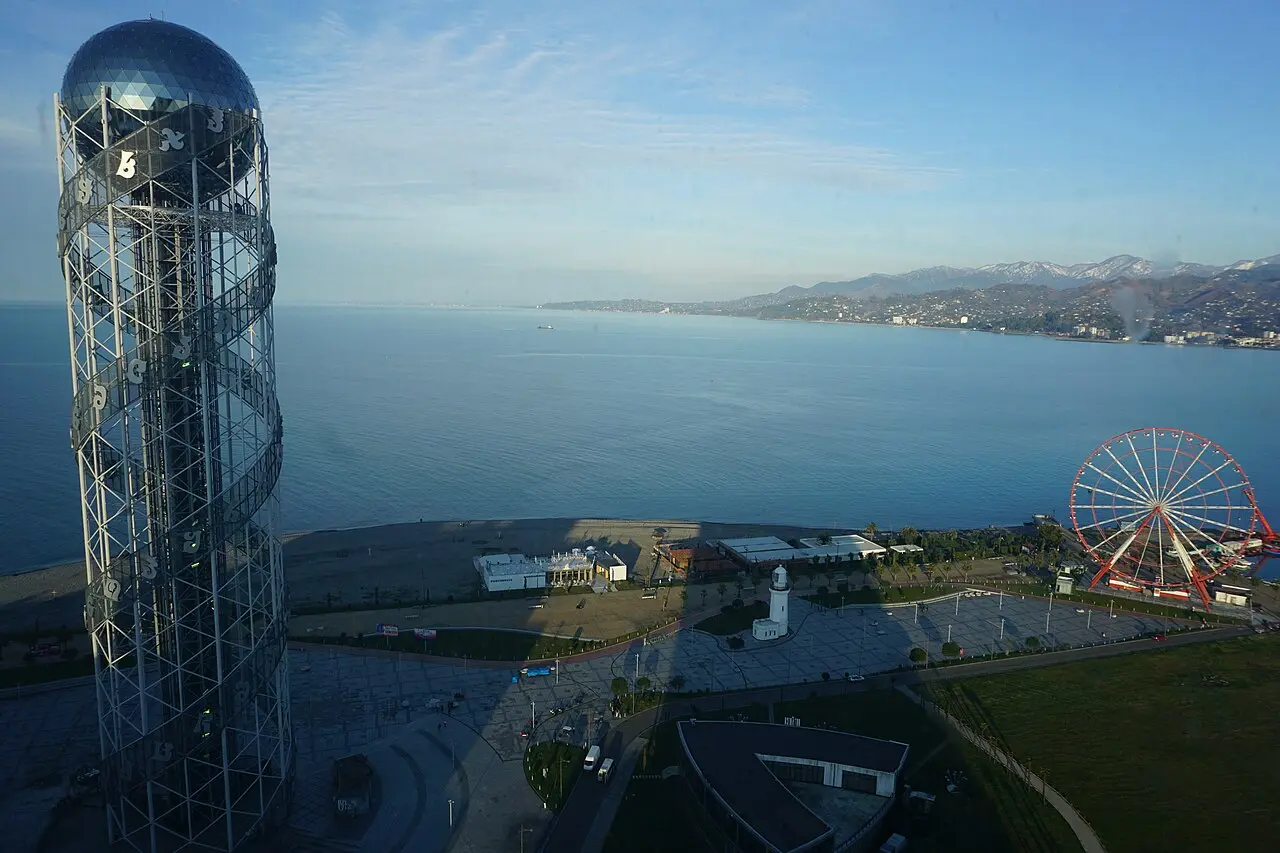
The lacy Alphabet Tower, 130 metres high, is dedicated to Georgian script: its letters wind up a double helix resembling DNA. Nearby, by the water, is Tamara Kvesitadze’s moving sculpture “Ali and Nino” (2010): two metal figures slowly come together and pass through each other, symbolising a love divided by borders. A Ferris wheel turns alongside, and in the evening this whole stretch of the seafront lights up.
Europe Square and the Piazza
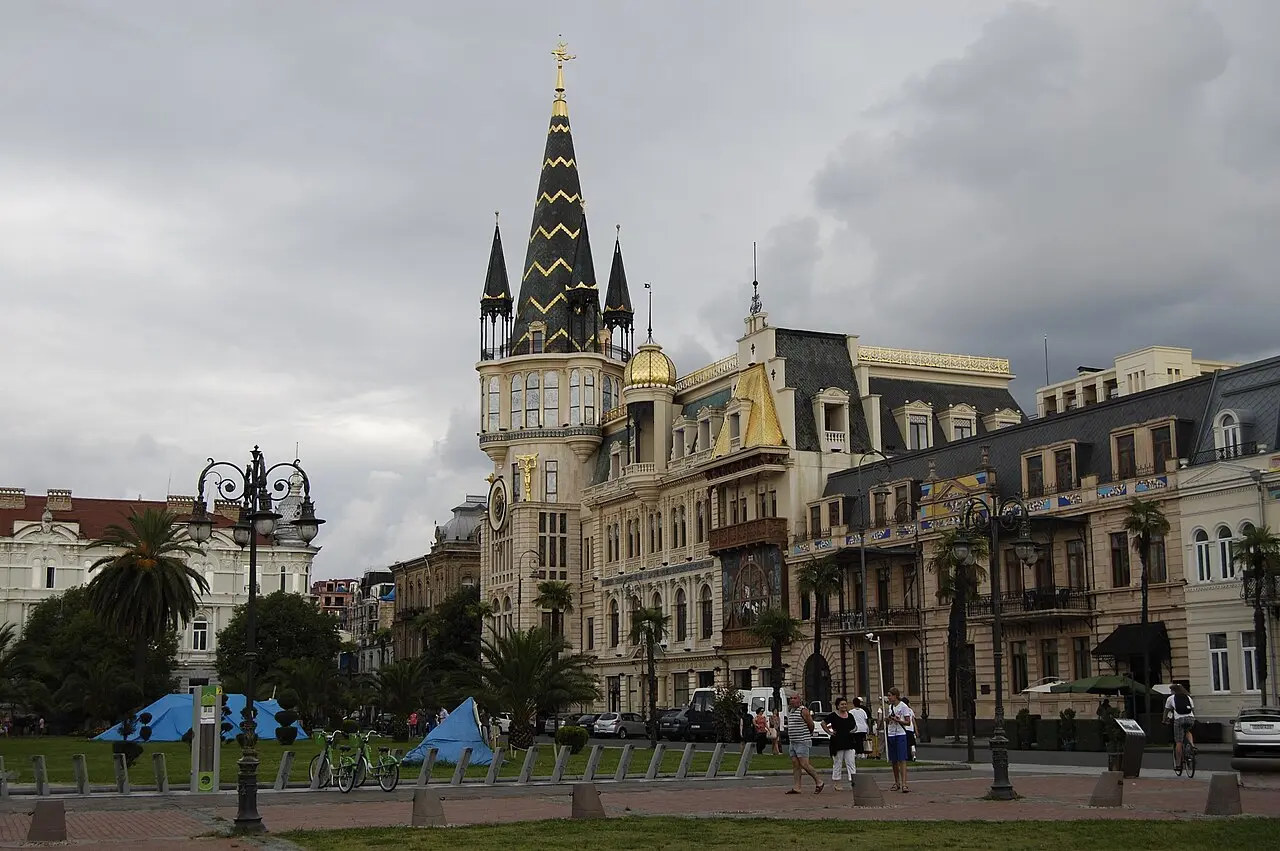
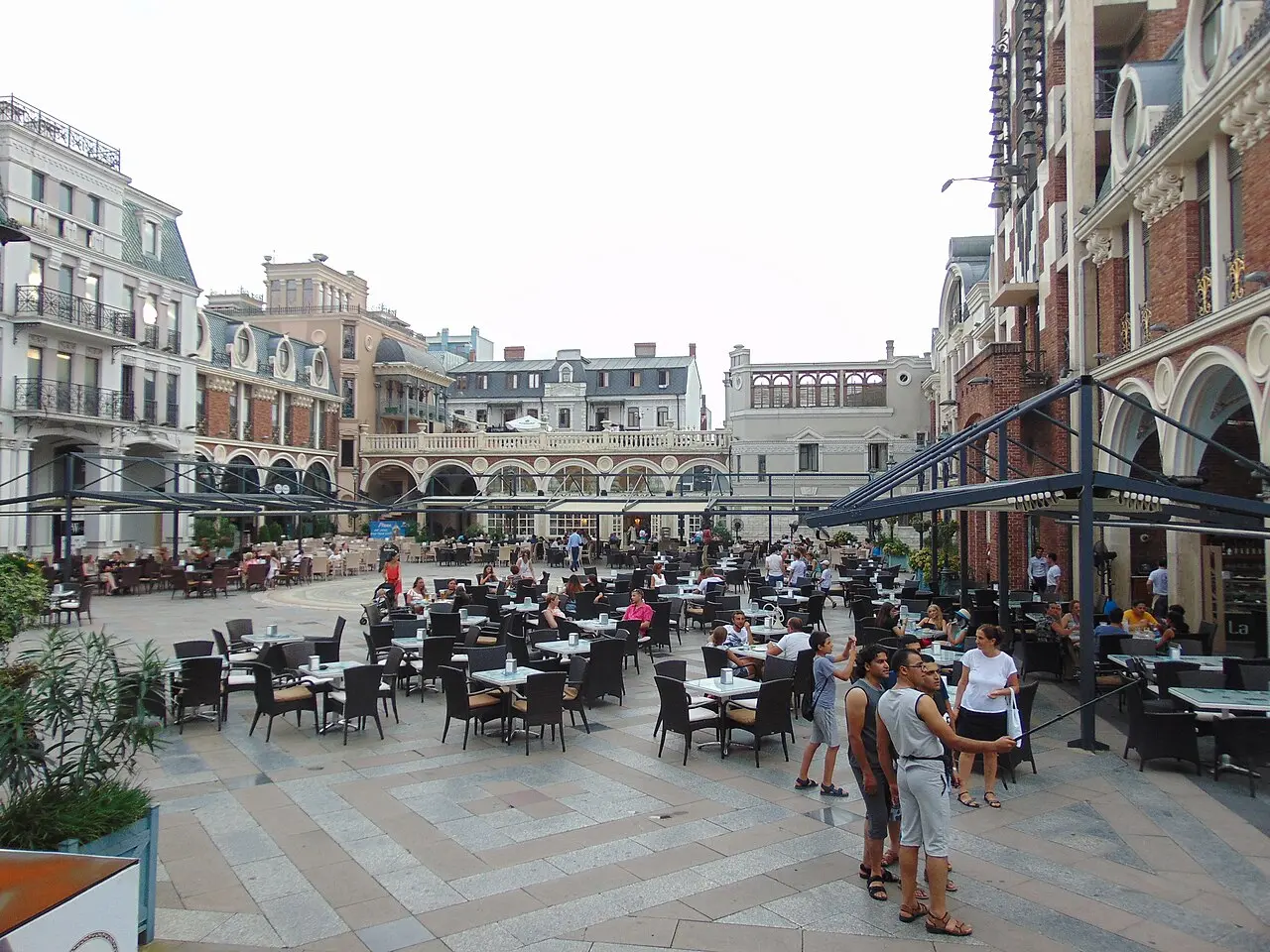
Europe Square is dominated by a column with a statue of Medea holding the Golden Fleece - a nod to the myth of the Argonauts who sailed to Colchis. The square itself is ringed by ornate, eclectic buildings with turrets, balconies and gilded domes, among them a building with an astronomical clock. A couple of steps away hides the Venetian-style Piazza: mosaics, a campanile tower, cafés and restaurants under arches. This is the city’s grandest, most postcard-perfect corner, especially beautiful in the evening.
The old town and Batumi in the evening
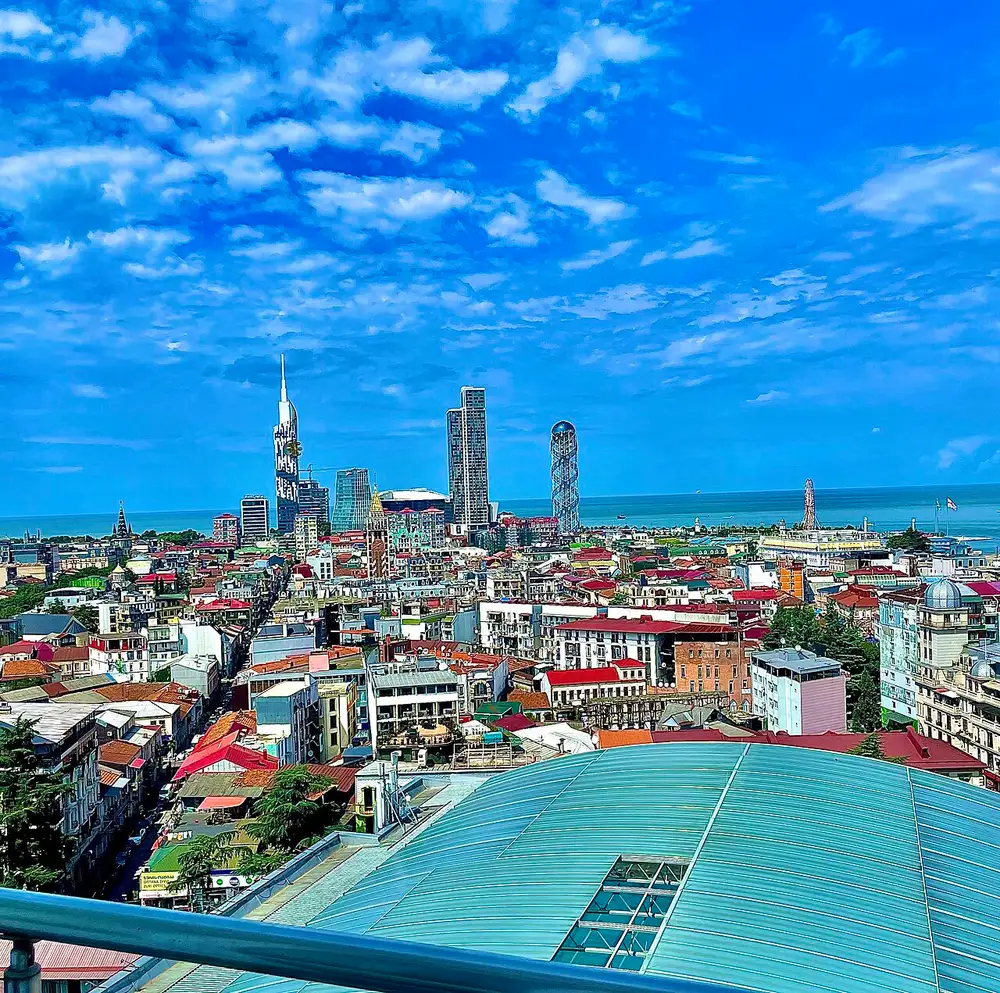
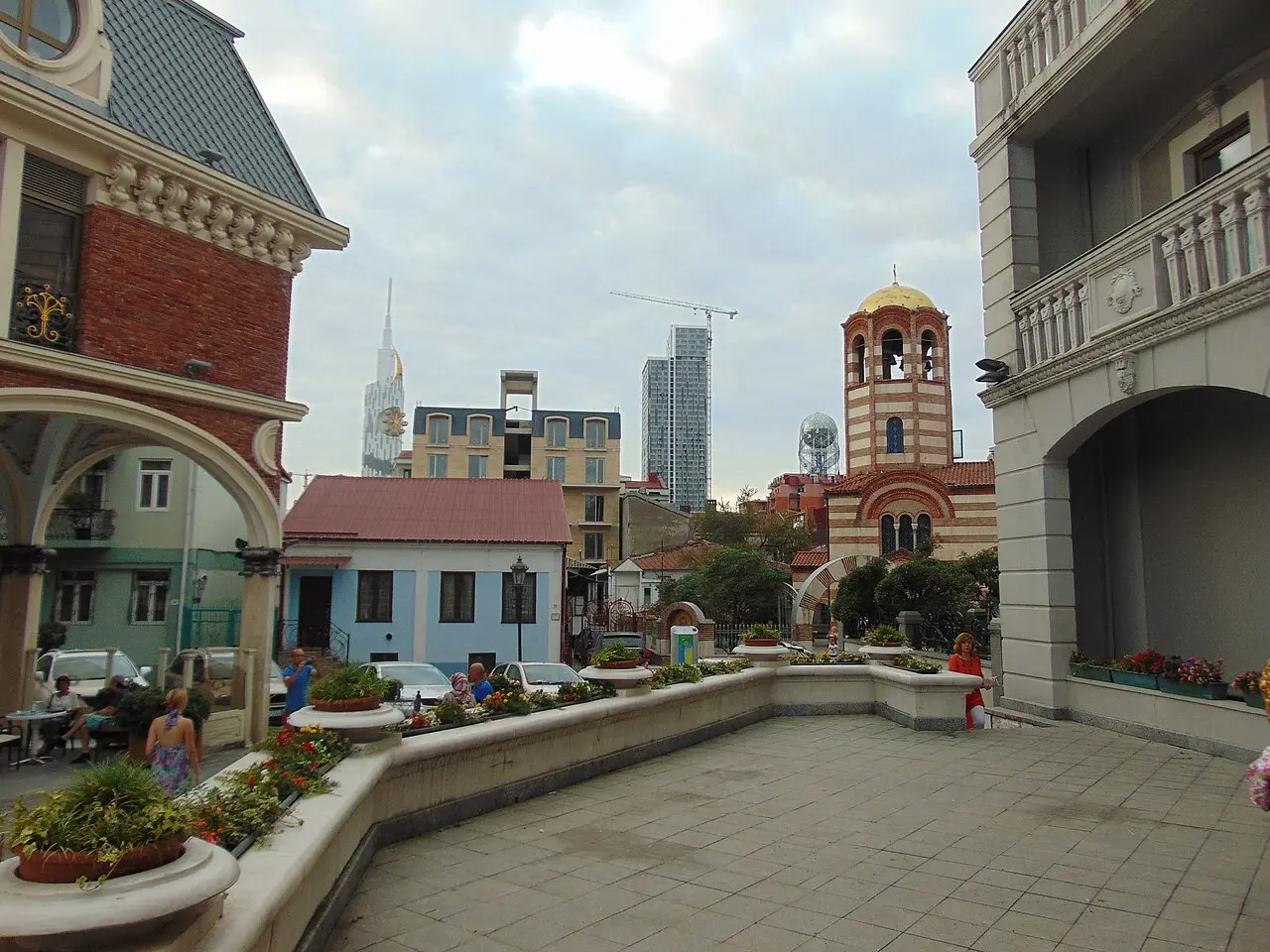
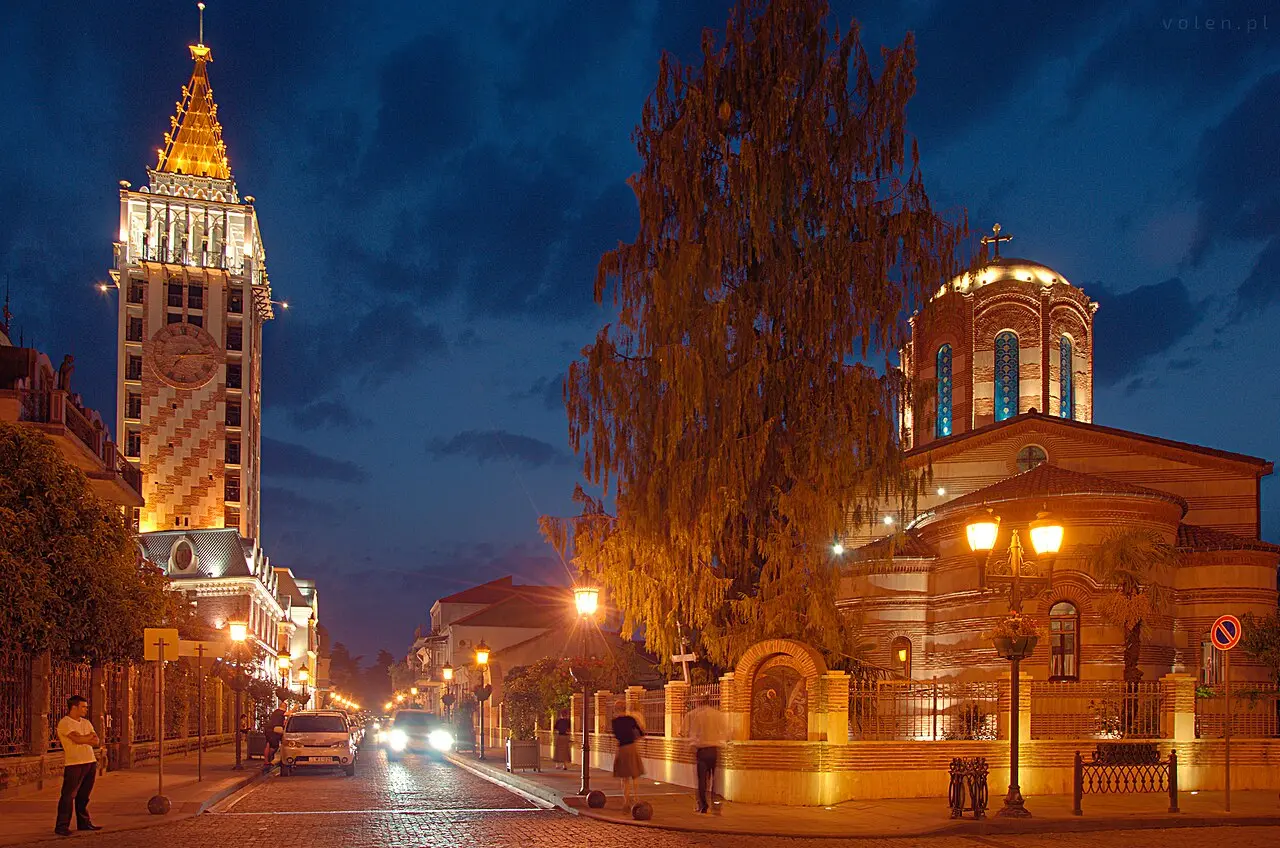
In the old quarters of Batumi you’ll find historic 19th-century buildings, street clocks and green squares; among them is the Cathedral of the Nativity of the Virgin, unusually for Georgia built in the neo-Gothic style. Narrow streets like Parnavaz are especially lovely in the evening, when the lamps come on and the towers are floodlit. Here the old and the new city stand literally side by side: glass skyscrapers peer out from behind the 19th-century tiled roofs.
From the lower station by the boulevard the Argo cable car climbs the hill above the city, where a panorama of the city, the port and the sea opens up - especially striking at sunset.
New Batumi: skyscrapers and nightlife
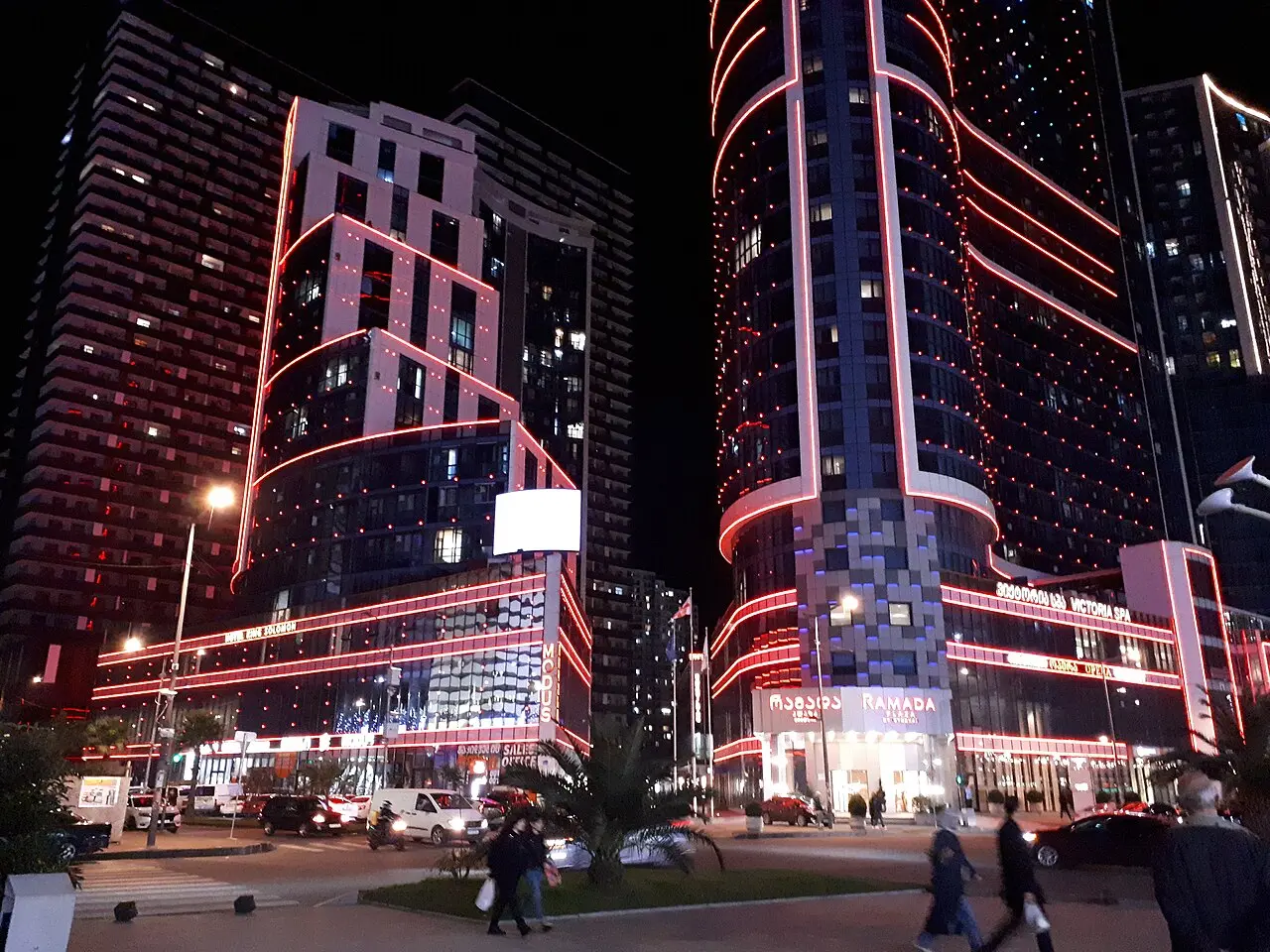
The modern seaside part is all glass towers, hotels, water parks and casinos - the very things that earned the city its nickname, “the Las Vegas of the Black Sea”. After dark new Batumi blazes with lights, and the seafront, the squares and the skyscrapers turn into one of the liveliest night-time zones in Georgia. For more on the gambling side of the resort, see our piece on casinos in Batumi, and for club nights and shows, our guide to the Teatro nightclub in Batumi. The city’s biggest live-music date is the Black Sea Jazz Festival, three summer nights on the seafront tennis courts that pull soul, funk and R&B names to the coast; the exact dates move each year, so check before you plan around them.
Beaches, climate and greenery
Batumi is above all a seaside resort: the beaches here are pebbly, and the swimming season peaks from July to mid-September. The sea is still about 21 °C in October, but the crowds and the water-sports operators thin out (Georgia’s national tourism portal, checked 17 October 2026; month by month in our guide to when to swim in Georgia). The city has a distinctive climate - humid subtropical; it’s the rainiest city in Georgia and the whole Caucasus (around 2,435 mm of rainfall a year). But it’s exactly to that moisture that Batumi owes its lush greenery: palms, magnolias and bamboo grow right along the streets, and the hills to the north hold the famous Batumi Botanical Garden, with views over the coast. The garden itself lies about 9 km north of the centre, on Cape Mtsvane-Kontskhi: entry for foreign visitors is 25 GEL, and the cheaper rates belong to Georgian citizens and permanent residents on production of an ID. The garden’s own site shows 09:00-18:30 (checked 24 October 2026; it showed 09:00-19:00 in September), and its closing time moves with the season, so check bbg.ge before a late-afternoon visit - the ticket conditions, the three parks and the free-entry days are in our Batumi Botanical Garden guide.
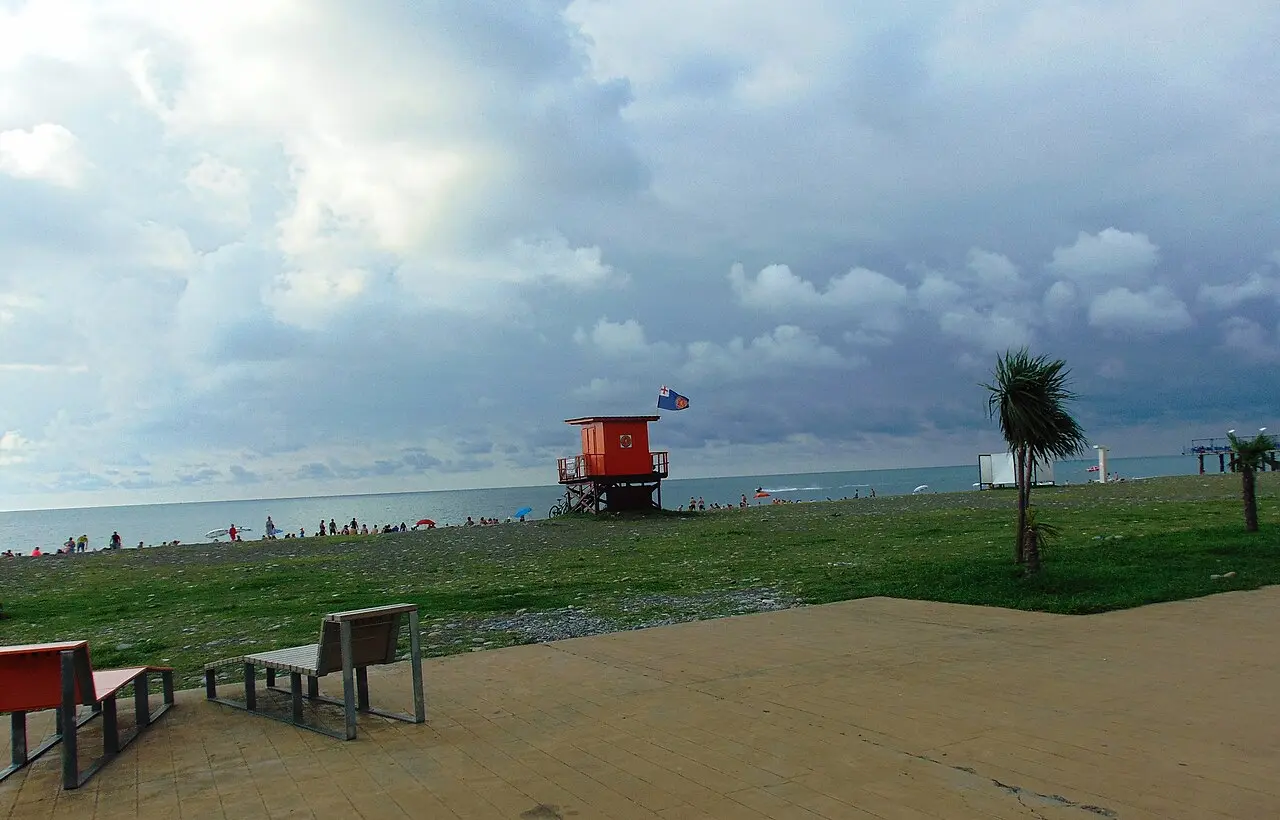
A detailed look at the city beach and the coast nearby - from Makhinjauri to Sarpi on the Turkish border - is in our overview of the beaches of Batumi and the coast; to choose a beach along the whole Black Sea coast, see the best beaches in Georgia guide.
The districts of Batumi
Batumi is compact, and it’s easy to split into a few zones.
Old Batumi - the historic part with the Venetian-style Piazza, Europe Square and its statue of Medea, narrow 19th-century streets and the neo-Gothic cathedral. The Old Boulevard by the sea is here too.
New Batumi - the modern seaside part with its glass skyscrapers, the Alphabet Tower, hotels, casinos and the nightlife that earned the city its nickname, “the Las Vegas of the Black Sea”.
Batumi Boulevard (the seafront) - the long seaside axis between the old and new parts: palms, cycle paths, singing fountains, cafés and beaches.
The suburbs and beaches - resort villages stretch along the coast: Makhinjauri just to the north, and to the south Gonio with its ancient fortress, Kvariati and Sarpi right on the Turkish border. These are beaches within a radius of roughly 50 km of the city - more in our overview of the beaches of Batumi and the coast, and on picking a seaside base in resorts near Batumi.
What to keep in mind
The best time for a beach holiday is July and August, but keep the rain and the humidity in mind: a short downpour can sweep in even at the height of summer. Batumi is a dynamic resort city with a lively nightlife, so in season it’s crowded and noisier than the rest of Georgia. And be sure to try the local cuisine: the Adjaran khachapuri “boat” with egg and cheese is different from the khachapuri found in other regions of the country.
Bear in mind the renovation of the seafront, too: in 2026 the authorities began demolishing some of the cafés, bars and clubs along the Old Boulevard by the sea - as their leases expire - to clear and redevelop the seaside strip. Some of the seafront’s familiar venues have closed, and the look of this zone is changing, so it’s best to check what’s actually open before your trip.
How many days and where to stay
Give the city itself two or three days: enough to walk the boulevard end to end, ride the Argo cable car, cover the old town with the Piazza and Europe Square, and get in at least one swim. If you plan trips into mountain Adjara, to waterfalls and fortresses, or a slow beach rhythm with kids, add another two or three.
Where to stay depends on why you came. The old town wins on atmosphere and on having everything on foot - restaurants, squares, bars; the trade-off is that it stays noisy late in season. New Batumi and the boulevard suit those who want the sea outside the window, modern hotels and a skyscraper view, and they sit closest to the beach. Quieter and cheaper is Makhinjauri, just north: a couple of trains a day cover the short hop to Batumi-Central in about five minutes, without the night-time buzz. For a full breakdown of each area - noise, price, the sea view, what the 2026 boulevard works mean for a booking - see where to stay in Batumi; for specific listings, see the box below.
Batumi is compact, and the centre is genuinely walkable: it’s about twenty minutes along the sea from the Piazza to the Alphabet Tower. For longer hops and the hill, city buses and the boulevard’s bike hire do the job, while the “Argo” cable car is both transport up the hill and a viewpoint in one. A car is more of a burden in town - parking in season is a headache - but it’s invaluable for trips along the coast and into the mountains; where to pick one up and what to check is in the renting a car in Batumi guide.
Nearby and beyond
From Batumi it’s easy to head out along the coast and into mountain Adjara - to waterfalls, old arched bridges and fortresses; for trips like these the car hire section comes in handy. The nearest major city inland is Kutaisi, from where the caves and canyons of Imereti are within easy reach. For where to try Adjaran food, see our where to eat in Batumi selection; for a calm family outing with boats and an aquarium, head to 6 May Park by Lake Nurigeli; with children in tow, our Georgia with kids guide sorts the sandy family resorts from the pebble beaches, and Batumi with kids maps a one-day loop of dolphinarium, aquarium and boulevard; for more things to do, see the entertainment section, the country’s other cities in the cities section, and the full list of places in Georgia in the things to see section. Still deciding between the sea and the capital? Our Tbilisi or Batumi guide compares the climate, the rain, hotel prices and what to do if the weather turns. For how to get there, see the Tbilisi → Batumi route and the transport section.
Photos
On the map
The map loads on click - to keep the page lightweight.
The map didn’t load. Check your connection and refresh the page.
Distance
- Tbilisi ≈370 km · ~5.5 h train, car or plane
- Kutaisi ≈150 km · ~2.5 h car or train along the coast
- Batumi The main sea gateway to the southwest: an international airport, trains and buses; the land border with Turkey (Sarpi) is nearby
Read also

Cities · 10 min read
Ureki: black magnetic sand and a shallow sea
Updated · July 20, 2026Ureki, Guria's sandy resort: black magnetic sand, a shallow warm sea and easy family beaches. Where to stay, when to go and how to get there.

Cities · 10 min read
Borjomi town: the spa resort and a mountain base
Updated · June 16, 2026Borjomi spa town in its wooded gorge: the mineral-water park, the Likani palace, the old railway and a base for Bakuriani and Borjomi-Kharagauli.

Cities · 4 min read
Gori: Stalin Museum and the Uplistsikhe cave city
Updated · June 14, 2026Gori in Shida Kartli, where the Kura meets the Liakhvi: a hilltop fortress, the Stalin museum and the Uplistsikhe cave city nearby.

Cities · 8 min read
Kutaisi: what to see, where to eat, how to get there
 Verified · June 15, 2026
 Kutaisi - Georgia's third city and ancient capital of Colchis: Bagrati Cathedral, the Colchis Fountain, the Rioni. What to see in and around.