
Georgia Events Calendar: Festivals Month by Month
What happens in Georgia and when: fixed public holidays, ticketed summer festivals, the rtveli harvest and city days - and where the real dates appear.
Upcoming events
- September 27-28, 2026 Alaverdoba
- Dushetoba
- Lasharoba, with horse races
All upcoming dates by month (19)
September 2026
- September 27-28, 2026 Alaverdoba
- Dushetoba
October 2026
- Lasharoba, with horse races
- Mtskhetoba-Svetitskhovloba (public holiday)
November 2026
- Iliaoba, the grape pressing at the Ilia Chavchavadze museum
- Mandarinoba
- Giorgoba (public holiday)
January 2027
- January 1-2, 2027 New Year (public holidays)
- Orthodox Christmas and the Alilo procession
- Epiphany (public holiday)
April 2027
- Day of National Unity (public holiday)
- April 30 - May 3, 2027 Orthodox Easter holidays (Friday to Monday)
May 2027
- Kutaisoba (Gviriloba)
- National day of Georgian wine
- Independence Day, with a parade
August 2027
- Didgoroba
- Bakhmaro horse races (doghi) on the Feast of the Transfiguration
- Mariamoba (public holiday)
Dates marked "to be confirmed" follow the previous edition: the organiser had not announced the new ones when we last checked.
Dates checked: July 31, 2026
Georgia’s event calendar rests on three dense stretches. July holds three ticketed festivals: Tbilisi Open Air by Lisi Lake, Black Sea Jazz in Batumi and Art-Gene in Tbilisi. Late September and October belong to the grape harvest, the city days and classical music at Tsinandali. January is Christmas on the 7th and Epiphany on the 19th, when half the country stops working. Everything else is village feasts whose dates are set locally.
Booking a trip around one specific date is the risky part, and Tbilisoba proves it. Since 2018 the city festival had landed on the first weekend of October, then in 2025 it ran on 20-21 September because local elections were called for 4 October. Anyone who had booked the October weekend arrived to an ordinary city. That’s why people here pick a week by season and confirm the exact date a month out.
Three kinds of events, and why they behave differently
Public holidays are fixed in law and don’t move, apart from the Easter block. For a visitor they mean closed banks and closed offices.
Church and folk holidays, and city days, follow the church calendar or a mayor’s decision. Dates get announced a few weeks ahead, usually in Georgian and in local channels; English-language listings pick them up late, if at all.
Ticketed festivals run to their own rhythm: dates land one or two months ahead, the line-up later. Sales are online and there’s no single box office - Art-Gene, Black Sea Jazz and Tsinandali use tkt.ge, Tbilisi Open Air used eventix.am in 2026. Look up the organiser’s page, not a generic ticket search.
January and February: Christmas, snow and almost no listings
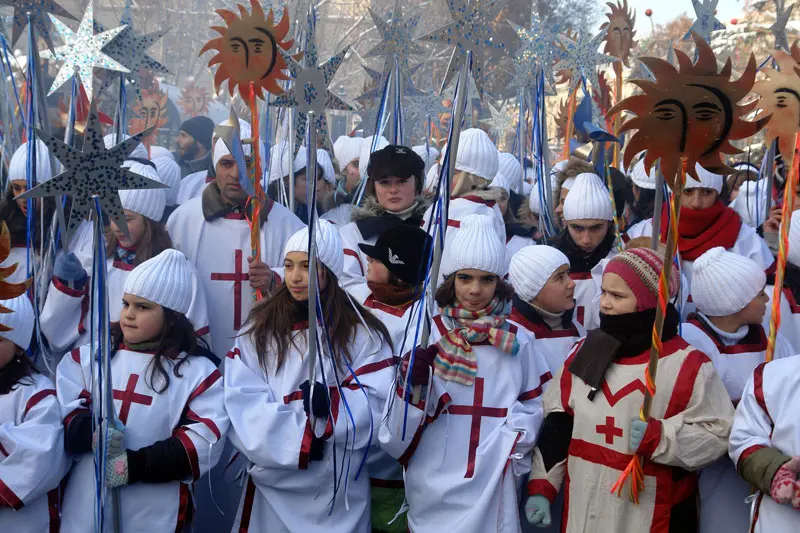
New Year closes the country on 1 and 2 January, then 7 January is Christmas. That afternoon the Alilo procession crosses Tbilisi: a column of children in white capes sets off at 14:00 from First Republic Square and walks up Rustaveli to Sameba Cathedral, closing roads as it goes. The tradition was revived in 2000 with the Patriarch’s blessing, and it’s the easiest way into a Georgian Christmas: watch from the pavement, buy nothing.
19 January is Epiphany, also a public holiday. After that the listings thin out until spring, and the main event of winter is a season, not an event. In 2025/26 Bakuriani opened first, the Kokhta area running from 20 December; Gudauri, Goderdzi and both areas above Mestia, Hatsvali and Tetnuldi, started their lifts on 27 December, 10:00 to 17:00, pistes opening as the snow came. You can’t plan far ahead: the Mountain Trails Agency announced it on 18 December, two days before Bakuriani opened, and no 2026/27 dates by late July.
February brings Lamproba to Svaneti, a torch procession in memory of the dead. The date is slippery: some calendars say mid-February, others the last weekend, and villages settle the day themselves. Worth chasing only if you’re already in Mestia in winter and ready to ask around.
March, April, May: an empty month, Easter and wine
March is the thinnest month of the year. Mother’s Day on the 3rd and Women’s Day on the 8th are public holidays, but they’re family occasions rather than something a visitor watches.
Easter reshuffles the whole spring. In 2026 the Easter block fell on 10-13 April; in 2027 Orthodox Easter is 2 May, five weeks after the Western date of 28 March. Georgia takes the four days from the Friday before Easter to the Monday after, so in 2027 that block runs 30 April to 3 May, with the 9 and 12 May holidays less than a week behind it. April adds the 9th, the Day of National Unity.
May’s the best month for wine outside autumn. On 2 May Kutaisi celebrates Kutaisoba, also called Gviriloba, handing out daisies with concerts through town. The festival calendar puts Zero Compromise, the natural wine event, in early May in Tbilisi, entry around 30 GEL; the national day of Georgian wine on 8 May; and a free young wine festival at Mtatsminda Park on 9 May. 26 May is Independence Day, with a parade.
Summer: big stages on the flat, horse races in the mountains
June is fair season: the festival calendar puts the WinExpo wine fair in Tbilisi and the cheese festival at Mtatsminda Park in the first week. Tusheti opens around then too: the road over the Abano Pass works only from June to September, and the exact day depends on the snow: in 2026 there was so much of it that the Roads Department was still clearing the pass in June. Frost closes it again until the following summer, and even in season it takes an off-road vehicle.
July is the peak, and in 2026 it was full from end to end. Tbilisi Open Air ran on 4-5 July by Lisi Lake, headlined by Slowdive. Black Sea Jazz took Batumi on 10-12 July: three consecutive nights on the tennis courts, tickets 120-440 GEL a night. Art-Gene followed on 23-26 July at the Ethnography Museum in Tbilisi, 60 GEL a night in the first sales phase, 90 GEL in the second, 145 or 190 GEL for a pass. Neither had named 2027 dates by late July, though the window holds year to year. The contrast is the useful part: the jazz festival buys international touring acts and prices accordingly, while Art-Gene’s entirely Georgian and costs about what a dinner with wine does.
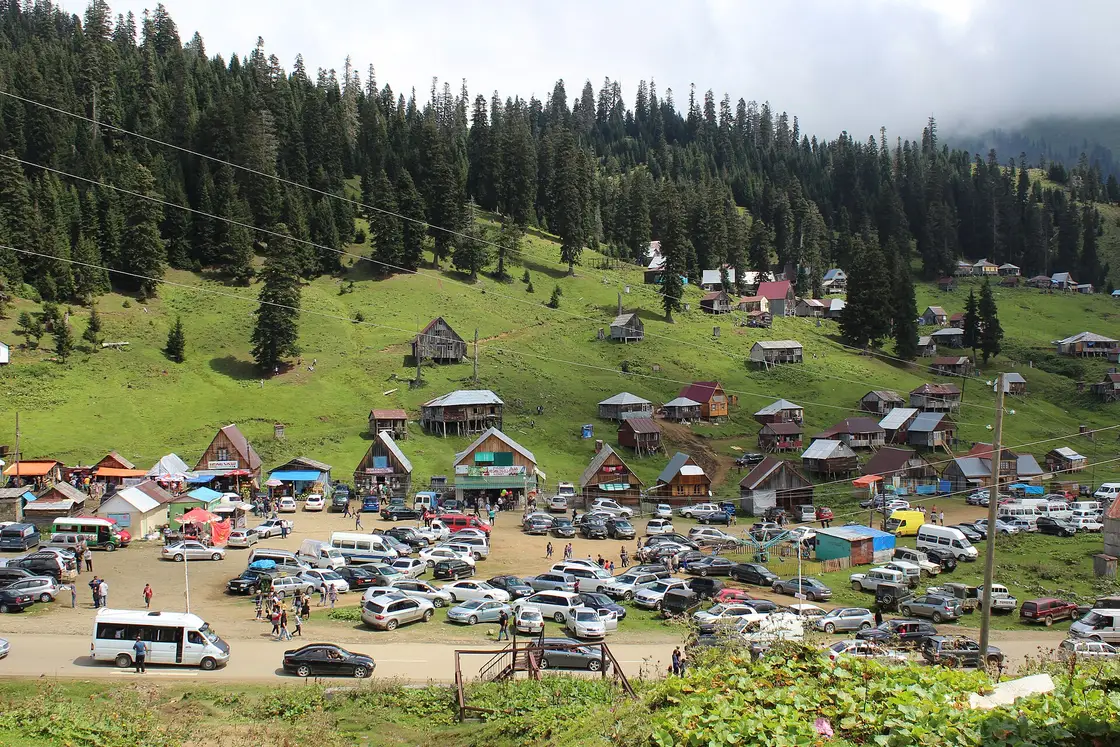
A second, invisible programme runs alongside it. On 15 July Zugdidi marks Vlakernoba, the feast of the Robe of the Virgin. Atengenoba, in Khevsureti, Pshavi and Tusheti, falls in late July and August by the festival calendar, but hasn’t got a single date: each village sets its own day. In early August mountain Adjara gathers at Beshumi for Shuamtoba, an ethnographic fair that ends with a horse race; 12 August is Didgoroba at Tetritskaro, marking the battle of 1121; and on 19 August, the Feast of the Transfiguration, the races run at Bakhmaro, known locally as doghi.
One Caucasus traditionally runs in August, the festival in Kvemo Kartli that puts Georgian, Armenian and Azerbaijani musicians on one bill; entry is free and so is the bus from Tbilisi, but it paused in 2025 and the organisers had not published 2026 dates by late July. 28 August is Mariamoba, a public holiday.
September and October: if you only pick one month, pick this one
September opens with classical music. The Tsinandali Festival ran 3 to 13 September 2026 at the estate in Kakheti: Gianandrea Noseda opened with Lisa Batiashvili, Pinchas Zukerman played on the 6th, Rafael Payare conducted Mahler’s Second on the 9th, and Nikolaj Szeps-Znaider closed on the 13th. Listings don’t always agree on the dates, so for the next edition check the programme on the festival’s own site. Early September also brings Batumoba to Batumi, and Dushetoba to Dusheti on the 28th.
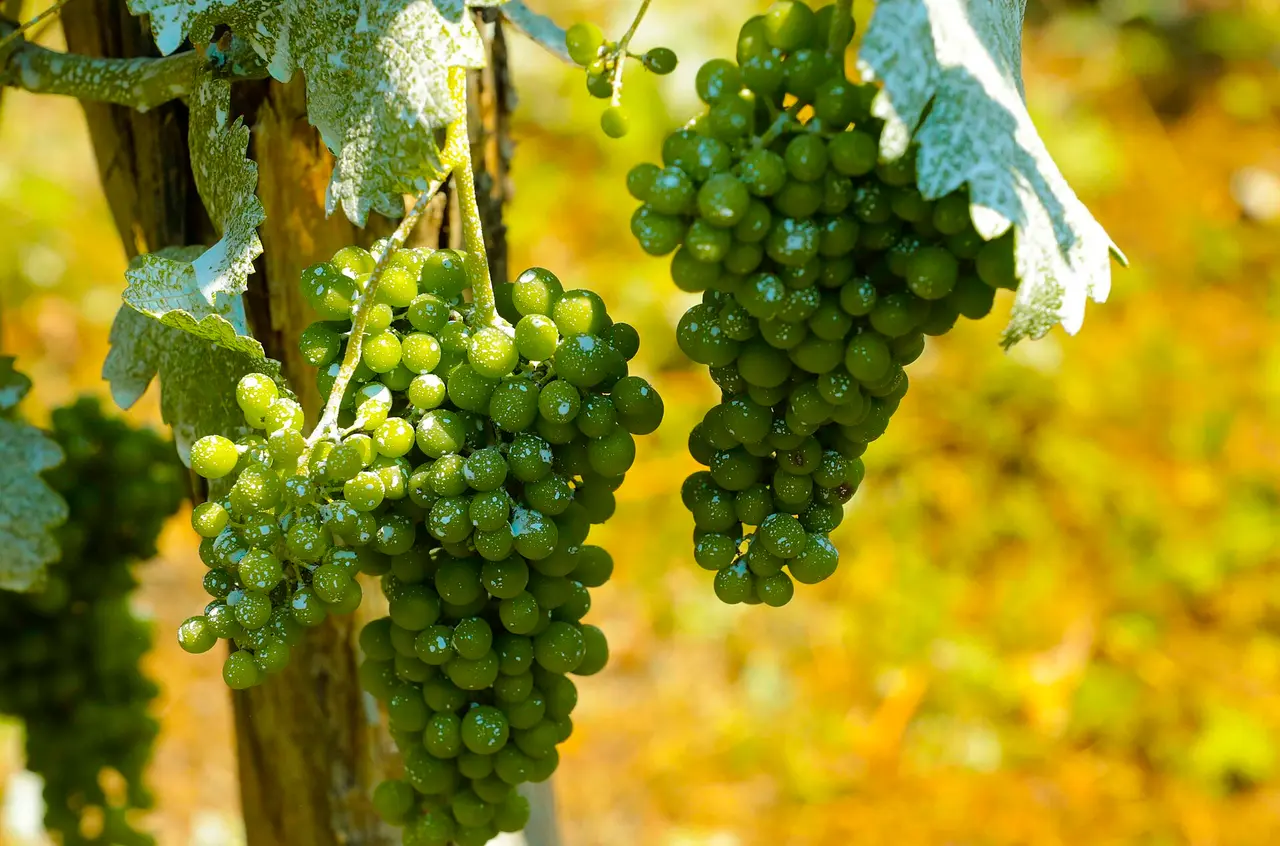
Then the real season starts. Rtveli, the grape harvest, is a window rather than a date: it begins in Kakheti and finishes in the mountain regions, usually filling September and October. The state numbers show the scale: in 2025 the government bought 145.7 million kg of grapes from growers for 241 million GEL. If the crop is oversized again and private buyers stay away, a state company takes the surplus at the set 2026 prices: 1.30 GEL a kilo above 20% sugar, 0.80 GEL at 17-20%, Saperavi 1.50 GEL above 22%. Those are grower prices, not visitor prices, but they explain why the whole of Kakheti is working in September and why you’ll want to book Kakheti wine trips well ahead.
The church holidays that grew out of the harvest sit beside it. Alaverdoba at Alaverdi Monastery falls over several days in late September, peaking on the feast of St Joseph of Alaverdi (sources differ on whether that’s the 27th or the 28th); the historical version, known as the First, Middle and Last Alaverdoba, ran three weeks from 28 or 29 September with a market that grew through the 19th century. Lasharoba, with horse races, falls on 1 October in Pshavi and Khevsureti. 14 October is Mtskhetoba-Svetitskhovloba, a public holiday centred on Mtskheta.
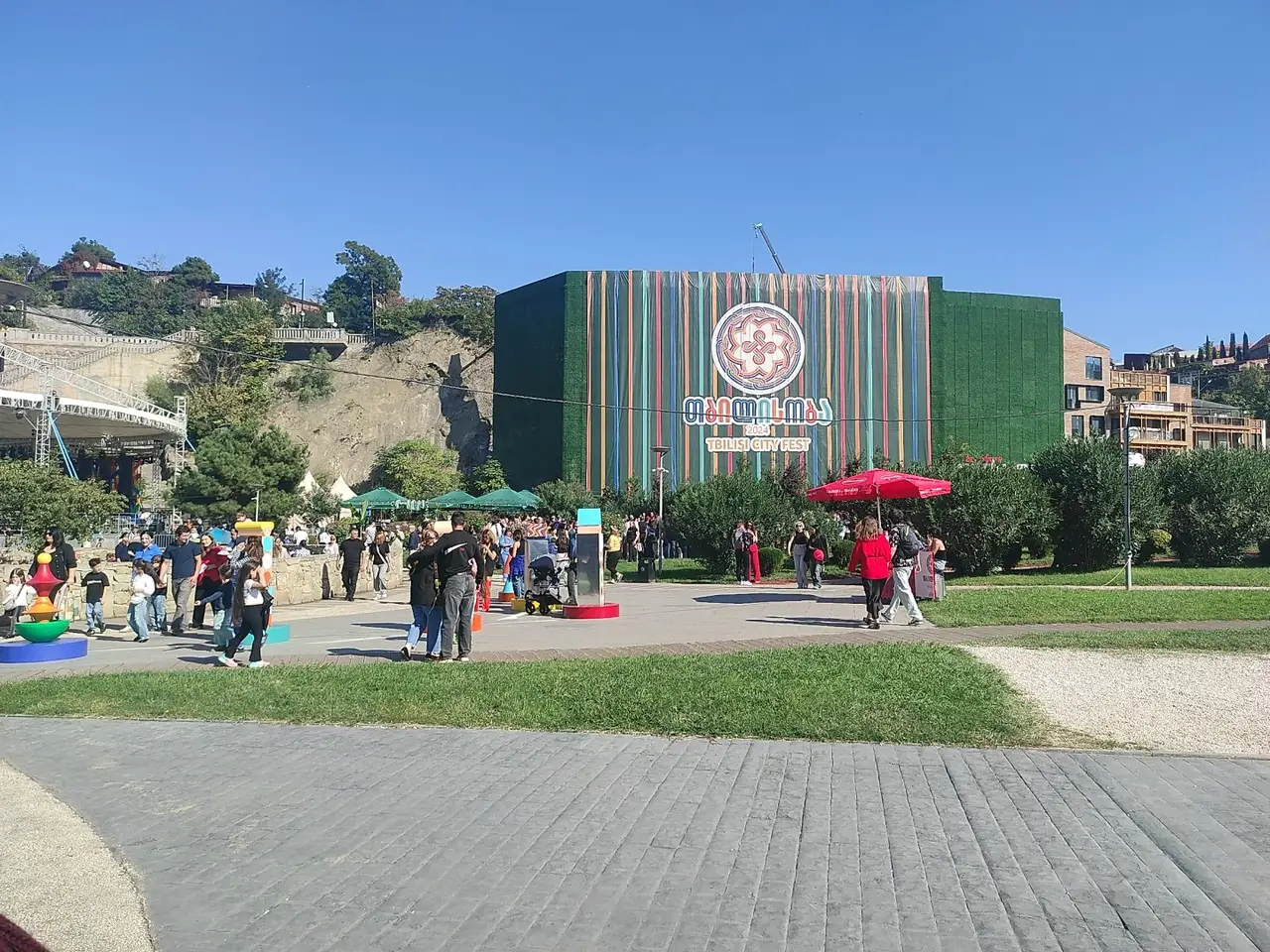
Tbilisoba has landed on the first weekend of October since 2018, with three exceptions: the pandemic years 2020 and 2021, and 2025, when it moved to 20-21 September for municipal elections. The dates usually surface a month or more ahead through City Hall’s procurement filing, but the detailed programme doesn’t appear until a few days before the festival starts. In 2025 City Hall planned to spend around 3.4 million GEL; the festival ran at Rike Park, Orbeliani Square and Abanotubani. For 2026, the dates and a preliminary budget became known on 27 August: 3-4 October, around 3.1 million GEL. On 22 September City Hall named the locations; our Tbilisoba 2026 guide lists them with what’s on.
Smaller town festivals close October: Kaspoba in Kartli in the third week, Phazisoba in Poti on the last weekend.
November and December: village feasts, film and the season opening
On 8 November Kvareli holds Iliaoba, when the Ilia Chavchavadze museum presses Rkatsiteli and Saperavi as it does every year. Adjara then picks its mandarins and celebrates Mandarinoba at Tsikhisdziri, which the festival calendar pencils in for the 21st, itself marked unconfirmed; the organiser, the Castello Mare hotel, ran it on 16-17 November in 2024 and had announced nothing for 2026 when we checked, so treat the November date as a window, not a booking. 23 November is Giorgoba, a public holiday for St George. Feasts like these have no tickets and no programme online.

December puts the city back to work. The Tbilisi International Film Festival traditionally takes the first week: the 26th edition ran 1 to 7 December 2025 at the Amirani cinema, announced that November. The Christmas market goes up in central Tbilisi around the same time, and the mountains open their season.
Public holidays: what is closed
Under the Labour Code the days off are 1 and 2 January, 7 January, 19 January, 3 March, 8 March, 9 April, the four Easter days, 9 May, 12 May, 26 May, 28 August, 14 October and 23 November. Banks and government offices close; cafes, shops and transport keep running, but changing money or filing paperwork is a lost cause. The official list is article 30 of the Code.
Where the dates you can trust actually appear
The order is simple: organiser’s site first, ticket platform second, third-party calendars last. For festivals that means artgeni.ge, tbcconcept.ge and tsinandalifestival.ge, with tickets mostly on tkt.ge. For Tbilisoba it’s Tbilisi City Hall. For the ski season it’s the Mountain Trails Agency. For village feasts none of that helps: ask at your guesthouse or the municipality once you’re there.
International calendars get it wrong regularly, and not out of malice - they carry last year’s dates while Georgian organisers publish late. In 2026 at least two large travel sites listed Art-Gene for 7-14 July when it ran on the 23rd to the 26th. A fortnight of error is a missed trip.
Choosing a month for your own trip
If you want big names, a stage and tickets bought in advance, take July and base yourself in Tbilisi or Batumi. The obvious cost: that’s the hottest and priciest stretch on the coast, as our price guide shows.
If you want to see the country rather than a stage, come at the end of September. Rtveli, Alaverdoba, weather without the heat and a Kakheti that’s genuinely working beat any concert, and Tsinandali covers the culture. On the balance of everything else it’s the strongest month of the year - our guide to the best time to visit Georgia weighs the seasons against each other.
On a tight budget, look at the village feasts, where entry is always free. You pay in other ways: a car, a flexible schedule and tolerance for programmes that start an hour late with nobody announcing it. The Bakhmaro races and Shuamtoba at Beshumi aren’t festivals in the European sense, they’re villages that half of Georgia drove up to.
And the one that needs a caveat: timing a flight around Tbilisoba on its own works better than it used to, now that the dates usually surface a month or more ahead, but the detailed programme still only shows up days before, and the festival itself is a city fair rather than a headline act. Hence the rule that covers the rest: book the room ahead of the exact date rather than after it, in Tbilisi in autumn and in Kakheti for rtveli alike. If you’d rather have an event without the scramble, quieter cities exist: Kutaisi and its Kutaisoba in May fill up for a day, not for a week.
Photos
Good to know
Two peaks a year: July for the ticketed festivals, late September and October for the harvest and the city days. Almost every date is reset annually, and village feasts are fixed locally and never reach listings sites. The dates here are the ones sources confirmed as of 31 July 2026 - check the organiser before you book.
Details checked: July 31, 2026
Read also

Entertainment · 11 min read
Tbilisoba 2026: 3-4 October, Five Venues and What's On
Verified · September 24, 20263-4 October (Sat-Sun), free entry: Tbilisoba 2026 is at Rike Park, Orbeliani and Gudiashvili squares, Leghvtakhevi, Europe Square and Metekhi Bridge.

Entertainment · 6 min read
Argo Batumi cable car 2026: 39 GEL tickets, hours
Updated · August 14, 2026Argo cable car Batumi: adult round-trip 39 GEL, kids 5-12 pay 9 GEL, under 5 free. Hours 10:00-00:00, 1 Bako St. From argo-batumi.ge, Aug 2026.

Entertainment · 9 min read
Batumi Aquarium 2026: 5 GEL ticket, hours, worth it?
Verified · August 21, 2026Batumi Aquarium: 5 GEL ticket, hours 10:00-17:30 (KA lists 18:00). Separate from dolphin show. From dolphinarium.ge, 21 Aug 2026.

Entertainment · 9 min read
Kakheti Wine Tours from Tbilisi: Prices Compared
Verified · September 17, 2026Kakheti wine tours from Tbilisi: real prices from two operators, private vs small group, what a day includes, and the self-drive alternative.