
Planning a Trip to Georgia Yourself: Steps + Checklist
Plan an independent trip to Georgia in 2026: entry rules and insurance, budget, transport, SIM, where to stay, a route skeleton and packing list.
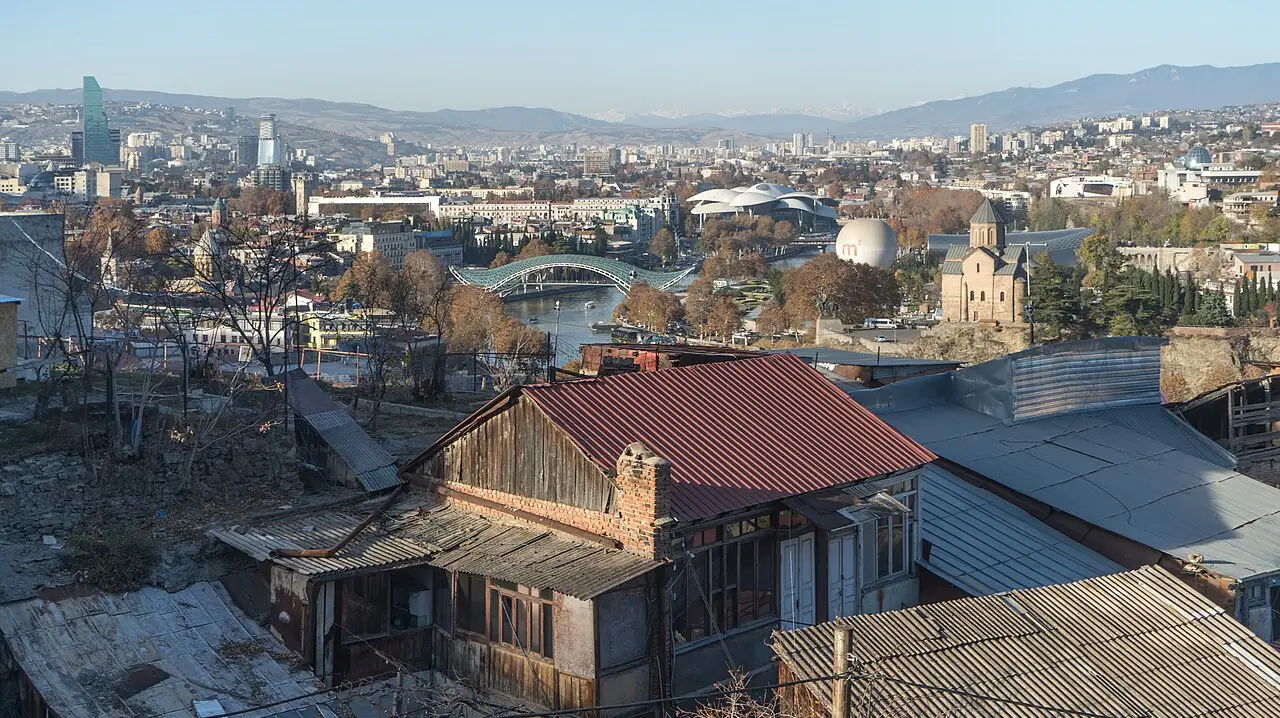
You can plan an independent trip to Georgia in an evening, and skipping a tour operator works out cheaper. The order is simple: check entry (visa-free up to 365 days, but since 1 January 2026 you need travel insurance), sketch a budget, sort transport and a SIM, book a couple of bases, and rough out a route. Below is the whole plan step by step, a short take on each point with a link to the detailed guide, plus a packing checklist at the end. Treat this as a navigator page: it doesn’t replace the individual guides, it strings them into one chain of decisions.
Current as of 03.07.2026. This is general reference information, not legal advice. Visa and insurance rules can change without a long transition period - check your own case on geoconsul.gov.ge and matsne.gov.ge before you leave.
Step 1. Entry: visa-free and mandatory insurance
Citizens of most countries - including the US, EU, UK, Ukraine and Russia - need no visa for tourism: per Georgia’s consular portal, the visa-free stay is up to 365 days per entry, and the counter resets each time you cross the border again. For a holiday, a winter stay or a “do I want to live here” scouting trip, that’s plenty.
The big change for 2026 applies to everyone, no exceptions. From 1 January 2026, every tourist must hold a health and accident insurance policy covering at least 30,000 GEL (about US$11,500) for the full length of the stay, including arrival and departure days. The U.S. Embassy in Georgia confirms this, citing government regulation No. 602. The policy can be paper or electronic, in Georgian or English, issued by a Georgian or a foreign insurer; it’s checked at both the airport and land borders. Visa-free travellers are covered by the rule too.
Don’t buy a policy just to clear the desk. Georgia means mountains, switchback roads and outdoor activity, which basic policies often exclude - how to pick real coverage is in the guide on choosing travel insurance. For the fine print of the 2026 requirement itself, see the mandatory entry insurance.
Step 2. Budget: what to set aside per day and per week
Georgia is a place where a budget is easy to hold and just as easy to blow, depending on your style. Costing it from tariffs beats any “national average” figure. For two people, flights excluded, the lines that do have a published price - city transport, the ride to the coast, a group day tour, a tourist SIM - come to about 312-432 GEL over 3 days, 464-584 GEL over 5 days and 734-944 GEL over a week (roughly US$119-165, US$177-223 and US$280-360 at the National Bank of Georgia rate for 03.09.2026: 1 USD = 2.6205 GEL). Lodging and food sit outside that, and deliberately so: no operator publishes a price list for either, so you only see the number on your own dates.
Two things aren’t in those numbers: the international flight (it depends on your city and the season) and two non-negotiables - insurance and mobile data. Keep the lari-to-dollar rate handy; it’s shown in the site header, and prices drop noticeably in spring and autumn versus peak beach summer. The full breakdown by lodging, food, transport and tours is in how much a trip to Georgia costs.
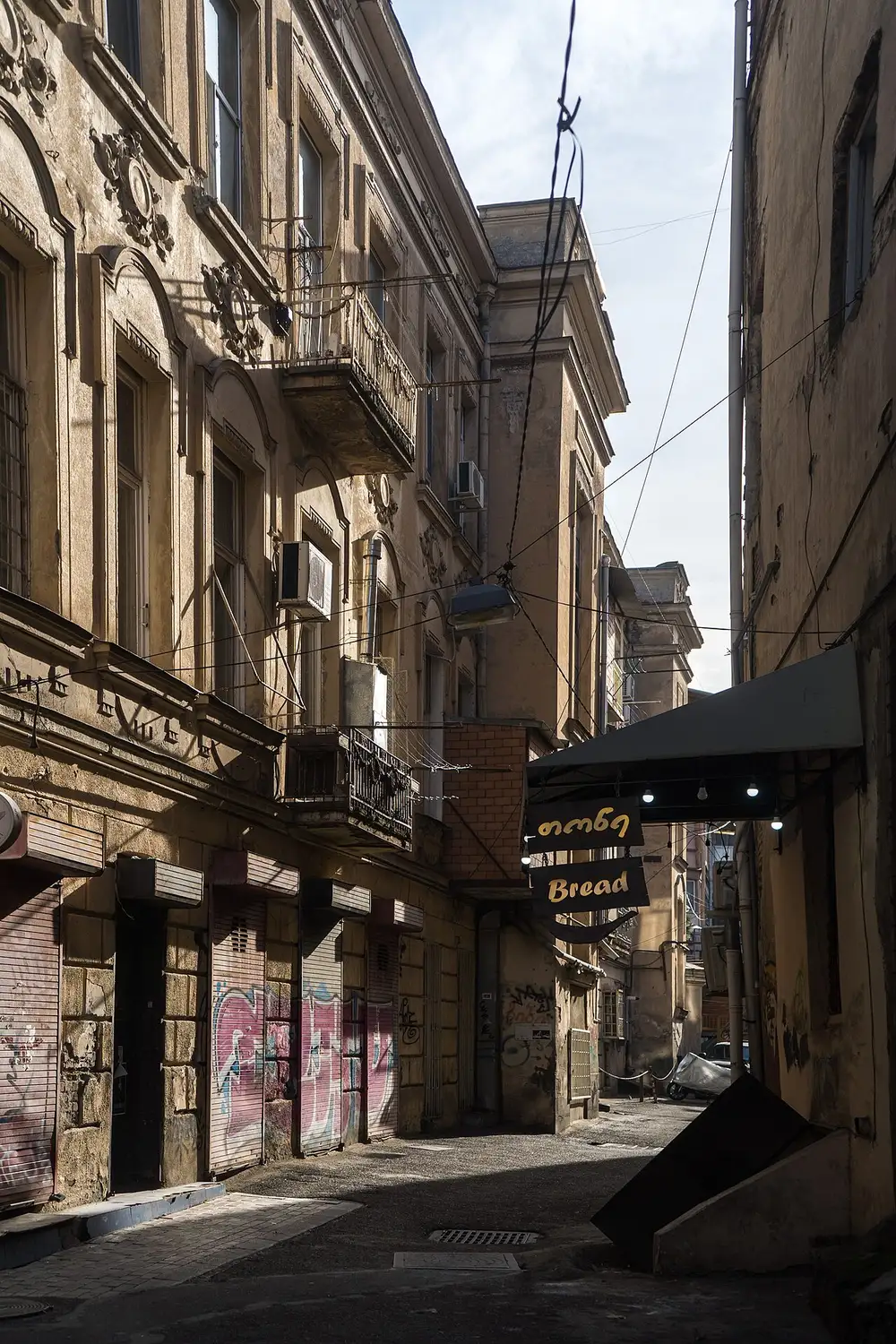
Step 3. Getting around the country
Without your own car, Georgia moves on two things - marshrutkas and trains - and for most routes that’s enough.
Marshrutkas are minibuses that connect nearly every town and village. You pay cash in lari to the driver or at the desk; cards aren’t accepted. Most intercity trips cost 10-25 GEL: Tbilisi to Kazbegi, for example, is about 15-20 GEL (sources vary, and spring 2026 nudged fares up on fuel - check locally). The downsides are honest: cramped, they often leave when full rather than on a timetable, and mountain roads are bumpy. But they’re cheap and they go everywhere.
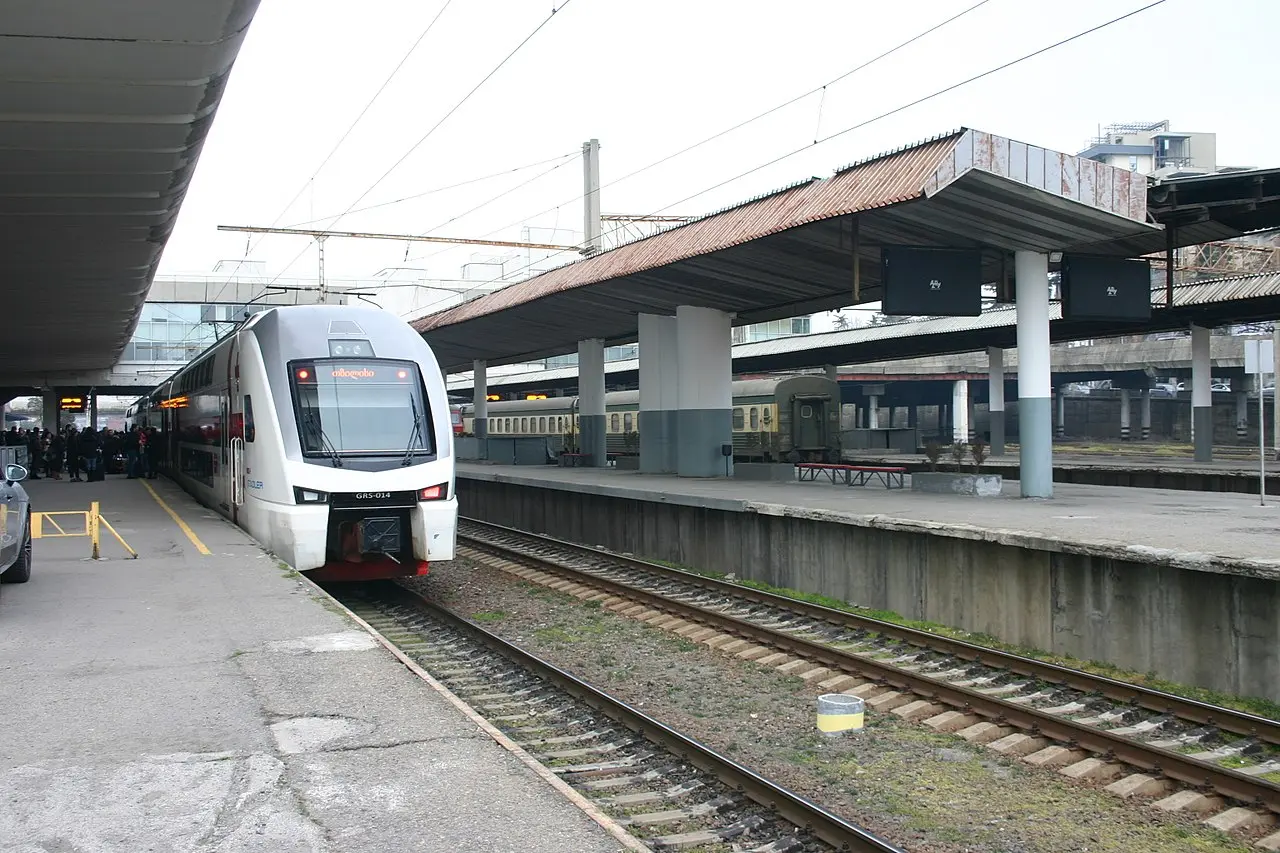
The train is the comfortable pick for the long haul to the coast. The double-decker Swiss Stadler from Tbilisi to Batumi takes about 4 hours (sped up in August 2026 after track modernisation, down from five and a half), runs year-round at least twice a day, with extra services in summer. Fares in Georgian Railway own booking system for 10 and 19 September 2026: 2nd class 35 GEL, 1st class 75 GEL (no business class was on sale for those dates); carriages have air conditioning, Wi-Fi and power sockets. Book online ahead, especially in summer. A comparison of every way to reach the sea is in the Tbilisi-Batumi guide, and getting to the mountains without a car is in Tbilisi-Kazbegi.
Renting a car isn’t for everyone, but it frees you up in Kakheti and the mountains, where marshrutkas are sparse. You’ll need a passport, a driving licence and a credit card for the deposit (usually US$100-300, refunded after inspection). An International Driving Permit (IDP) isn’t asked for if your licence is in the Latin alphabet (EU, US, UK); for a Cyrillic licence, bring an IDP. The minimum age is usually 21-23. What the rental insurance covers and where the deposit catch is are in renting a car in Georgia and renting without a deposit.
Step 4. SIM and mobile data
Sort connectivity in your first hour on the ground, and don’t overpay for it. There are three operators: Magti, with the best coverage (it works even in mountain villages where the others drop out), Silknet (strong in Tbilisi, Batumi and tourist hubs like Kazbegi and Sighnaghi), and budget Cellfie, which is weak outside cities. At Tbilisi and Kutaisi airports Magti’s Welcome Package includes the SIM card itself, and the operator sells two packs: 15 GEL for 5 GB or 30 GEL for 3 GB plus 30 minutes of international calls, both valid 15 days. A month of unlimited data on the operator’s own tariff page costs 35 GEL.
If you’d rather not hunt for a shop, load an eSIM ahead of time and connect the moment you step off the plane. One thing worth knowing in advance: cheap international eSIMs (Airalo among them) often run on the Cellfie network in Georgia, which is less reliable in the mountains - for Kazbegi or Svaneti a local Magti SIM wins. A full comparison of the operators and their packs, with prices, is in SIM and internet in Georgia.
Step 5. Where to stay: two or three bases, not daily moves
The logic is simple: don’t relocate every day - set up a few “bases” and travel out and back from them. Two or three points cover most itineraries.
- Tbilisi - the main base. Stay in the old town, Sololaki or Vera: it’s walking distance to the sights and close to transport. What to see and where to eat is in the Tbilisi guide.
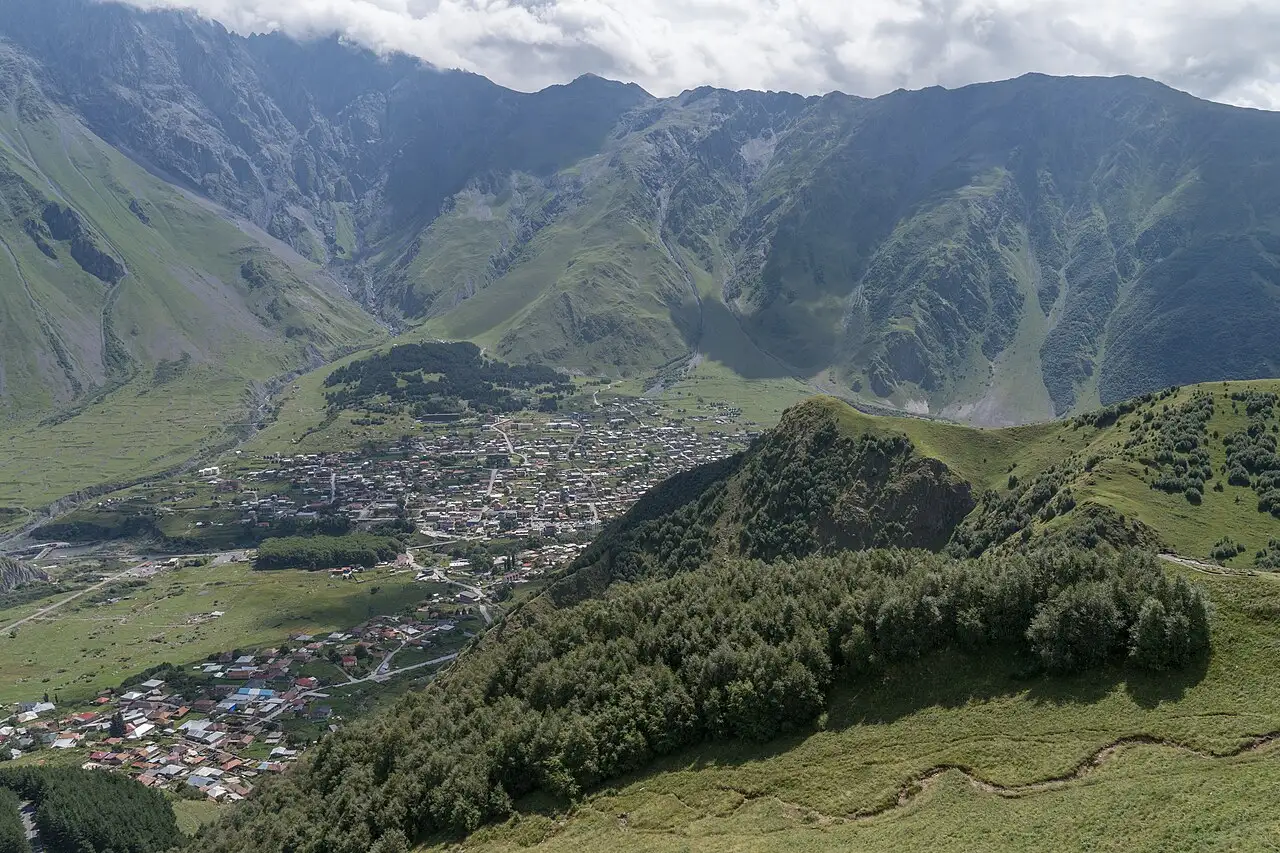
- Kazbegi (Stepantsminda) - a base for 1-2 nights for the mountains and the Gergeti church. Sleeping there beats racing up and back in a day.
- Kakheti - Telavi or Sighnaghi as a base for wine and monasteries.
- Batumi - for the sea and subtropics; easy to reach by train and a good place to end the trip. Details in the Batumi guide.
Book ahead only in high season and on weekends; off-season it’s often cheaper to find a room on the spot. A hostel bed is 8-10 € per person, a guesthouse room 30-50 € for two.
Step 6. A route skeleton for 7-10 days
A classic first route is built around Tbilisi with one hop to the coast. Stretch the days to your own pace. How many days to set aside in total and what actually fits into 3, 5, 7 or 10 days is covered in the how many days in Georgia hub.
- Tbilisi, 2-3 days. Old town, the sulfur baths, the cable car to Narikala, markets and food. It’s also an easy half-day out to Mtskheta.
- Kazbegi, 1-2 days. The Georgian Military Road, the climb to Gergeti Trinity Church, views of Mount Kazbek. The drive is scenic but mountainous - leave time.
- Kakheti, 1-2 days. Telavi and Sighnaghi, Bodbe Monastery, tastings. In autumn there’s rtveli - the grape harvest and wine festivals. What and where to taste is in the Kakheti wine guide.
- Batumi and the coast, 2-3 days. By train from Tbilisi - sea, the boulevard, subtropics. A good place to finish light.
If you travel in spring or autumn, some of the high country may still be under snow or already cold - what’s open when is covered in the best time to visit Georgia. Ready-made routes with stops and logistics are in the routes section.
Step 7. Money and exchange
The currency is the Georgian lari (GEL). In cities you can pay by card almost everywhere, but cash is needed for marshrutkas, markets and mountain villages that may have no terminal. Change money at city exchange offices and banks rather than at the airport on arrival, where the rate is usually worse. Keep a small stash of lari for day one. How exchange works, where to find a good rate and whether to bring dollars is in the guide to the Georgian lari. One border note: cash, cheques and securities over 30,000 GEL must be declared at customs, on entry and on exit, with a document showing where the money comes from.
Step 8. Safety
For a traveller, Georgia is a calm destination: violent crime is low, and most trips pass without incident. The U.S. State Department advises “normal precautions” across the country - the same common sense you’d use at home.
One hard exception: stay out of Abkhazia and South Ossetia. These regions are occupied, the risk is real, there are landmines near the boundary lines, and consular help isn’t available. Georgia treats entering the country through them from the Russian side as illegal, and it causes serious trouble at the border. On the everyday side: in the mountains respect the weather and don’t overrate yourself on the trails, and with unmetered taxis agree the price up front or call a Bolt.
Step 9. What to pack: a short checklist
- Passport valid for the whole trip, plus a scan or photo saved offline on your phone.
- Insurance policy with at least 30,000 GEL of cover, in Georgian or English - a printout or a separate PDF.
- Bank card and a small amount of cash in lari for the first day.
- eSIM or SIM - get connected right after landing.
- Layers and comfortable shoes: the mountains are cool even in summer, and evenings are fresh.
- A plug adapter (type C/F, 220 V) and offline maps on your phone for weak signal in the gorges.
- An International Driving Permit (IDP) if you plan to rent and your licence isn’t in the Latin alphabet.
In short: a plan in one evening
You can put an independent Georgia trip together on a simple chain: check entry and sort insurance → sketch a budget → settle transport and a SIM → pick two or three bases → rough out a route → pack to the checklist. From there, fill in the detail in the topic guides: how much a trip costs, SIM and internet, renting a car and routes across the country. Prices, the exchange rate and timetables change - check current ones before you go.
For the security picture before you go, see Is Georgia safe?.
Read also

Before you go · 8 min read
Georgia in winter: weather, cities and ski season
Updated · September 3, 2026Winter in Georgia: Tbilisi averages 3.4 °C in January, days run nine hours, ski season from late December, sulphur baths and cheaper city rooms.

Before you go · 9 min read
Georgia vs Armenia: Where Should You Fly?
Updated · September 3, 2026Georgia or Armenia in 2026: visas, flights, Black Sea vs Sevan, published tariffs side by side, and when both countries beat picking one.

Before you go · 11 min read
Tbilisi or Batumi: Which One Should You Visit
Updated · September 11, 2026Tbilisi or Batumi: climate, rain, lodging and who each city suits. Batumi gets five times more rain than Tbilisi a year - it changes the choice.

Before you go · 12 min read
Rtveli 2026: when to harvest grapes in Georgia
Verified · August 17, 2026Kakheti's 2026 harvest peaked late September to mid-October. Where to base, which wineries named dates, and how to join without a ticketed festival.