
When to swim in Georgia: sea temperature by month
Black Sea water temperature in Georgia month by month, plus rain and sunshine, the best swimming window and which coast to pick. Checked July 2026.
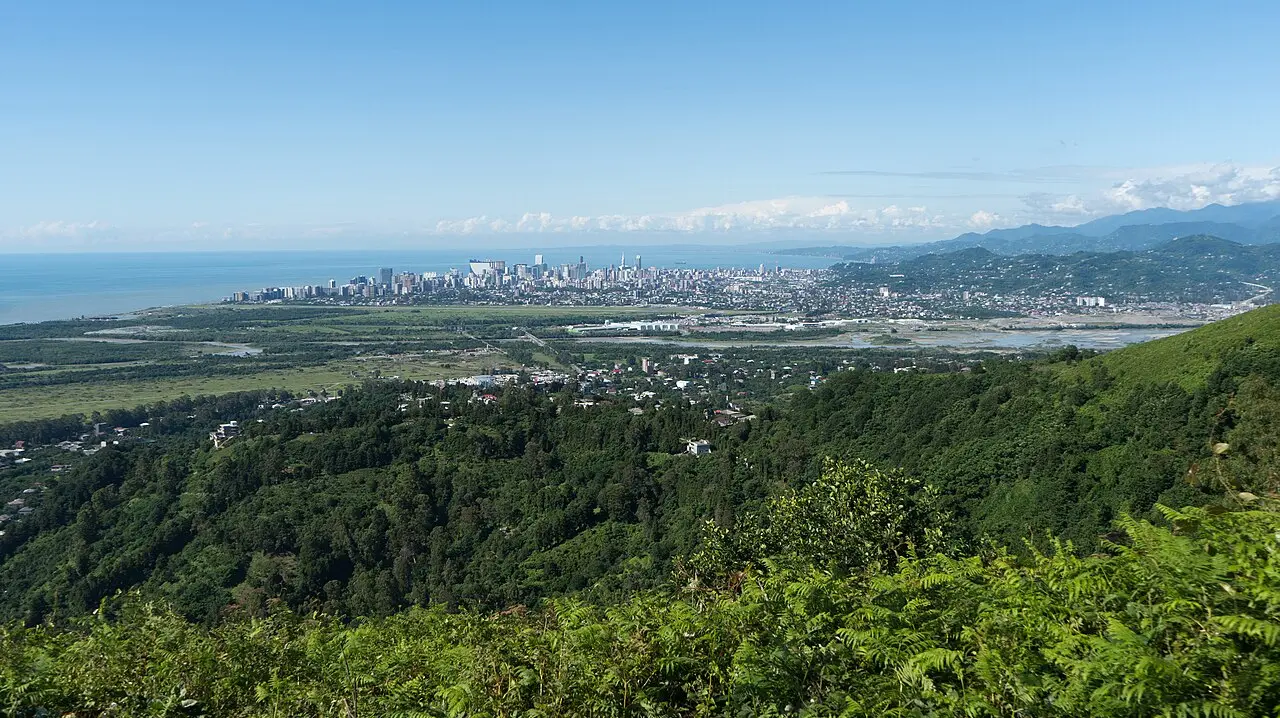
The swimming season on the Georgian coast peaks from July to mid-September (Georgia’s national tourism portal, checked 24 October 2026): the sea reaches roughly 22 °C in June, peaks near 27 °C in August and the October average slips back to about 21 °C. August has the warmest water, but the best trade-off between a warm sea and half-empty beaches is the first two or three weeks of September, when the water still holds around 25 °C. If sunshine matters more to you than swimming, aim for June instead.
The catch is that warm water and good weather don’t arrive together here. Batumi is the rainiest city in Georgia and in the whole Caucasus, with about 2,435 mm of rain a year, and the wettest stretch lands exactly on the late-season weeks when the sea feels best. So the month is worth picking on two numbers at once: water and rain.
Sea and air temperature month by month
The figures below are long-term averages for the southern half of the coast (Batumi, Kobuleti): water from seatemperature.net, air and rainfall from the 1991-2020 Batumi climate normals, sunshine from Batumi records.
| Month | Sea | Daytime air | Sunshine hours |
|---|---|---|---|
| May | ~16 °C | 20.2 °C | 199 |
| June | ~22 °C | 24.3 °C | 235 |
| July | ~26 °C | 26.5 °C | 214 |
| August | ~27 °C | 27.5 °C | 223 |
| September | ~25 °C | 24.8 °C | 201 |
| October | ~21 °C | 21.3 °C | 176 |
Look at July through September: sea and air are essentially level. That is the thing that throws people who are used to the Mediterranean - here the water doesn’t so much cool you down as take the stuffiness off.
The same source gives identical month-by-month values for Batumi and Kobuleti, so hunting for a resort where the water is “two degrees warmer” is a waste of effort: the sea warms up almost uniformly along the whole coast. What actually differs between stretches of shore is the depth close in, the seabed and how clear the water stays.
Rain: why 262 mm in September is not what it looks like
Monthly rainfall in Batumi goes like this: April 113 mm, May 108, June 142, July 168, August 205, September 262, October 277, November 312. In other words, September, the month with the best water, gets two and a half times more rain than May. The annual record doesn’t belong to September at all, it belongs to November, but by then nobody is swimming.
The good news is that the number of rainy days doesn’t move: 11.5 in August against 11.1 in September. So those 262 September millimetres don’t fall as month-long drizzle, they arrive as short, violent downpours - ninety minutes of solid water, then sun again and steam rising off the pavement. September still logs 201 hours of sunshine, more than October’s 176.
And the sunniest month on the coast is June: 235 hours of sun, only 142 mm of rain, and the sea already at 22 °C. That’s the window most people skip while chasing the warmest possible water.
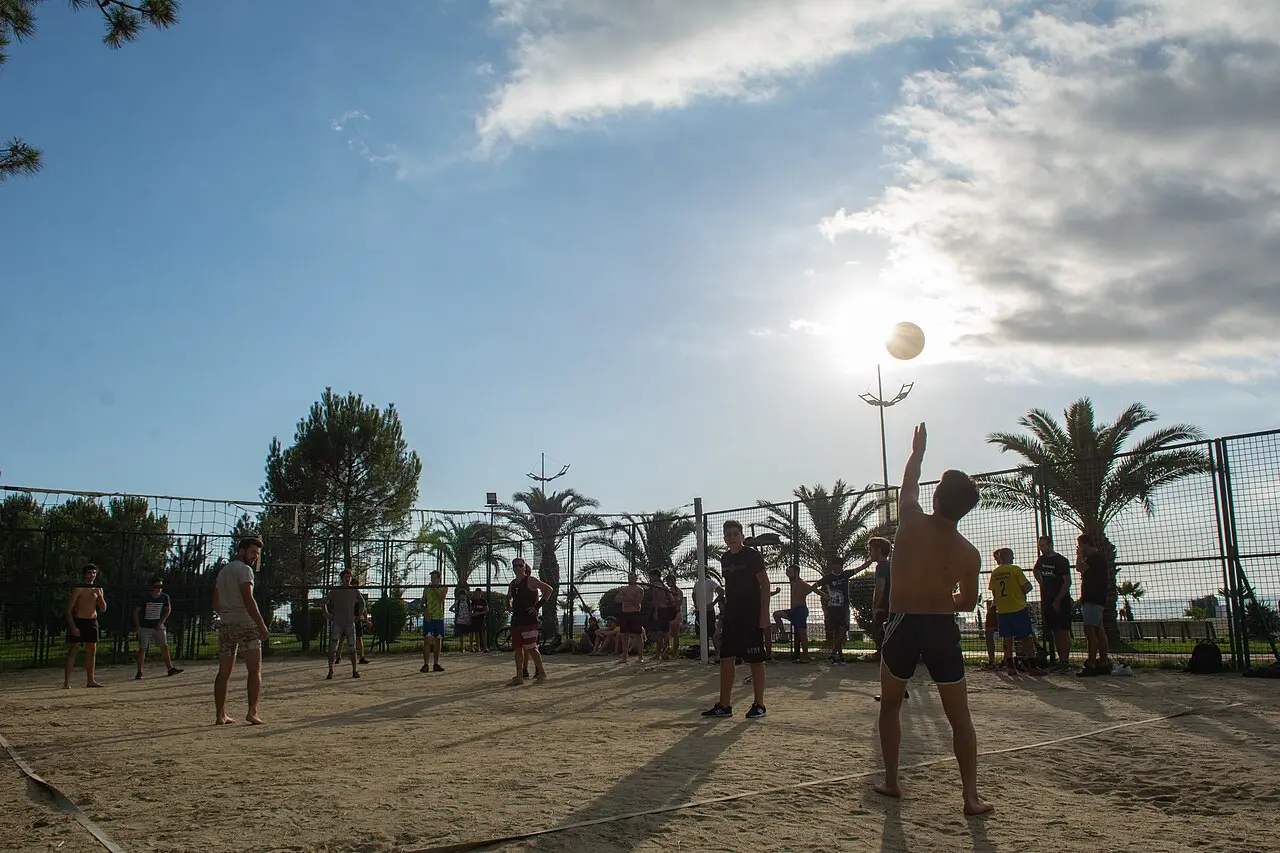
One more detail, and it breaks a piece of advice you will read everywhere: going north doesn’t get you out of the rain. Poti, up on the northern shore, is genuinely drier over a year, around 2,068 mm against Batumi’s 2,435. The seasonal shape, though, is the same. Poti’s wettest month is also September (270 mm) and its driest is also April (85 mm). So the sandy north (Ureki, Shekvetili, Grigoleti, Anaklia) wins on the annual total but is no refuge in autumn: the downpours land there in the same weeks. Pick a stretch of coast for its sand, its depth and its crowds, not in the hope of dodging a storm.
May: empty, cheap and cold
At about 16 °C the sea is for the hardened or the very determined. May is, however, the driest month of the year on the coast (108 mm, just under April’s 113), prices are low, beaches are deserted and everything is in flower. It works if the sea is a backdrop for walks, the botanical garden and trips inland into Adjara rather than the main event.
June: the best month if you do more than lie on a beach
At 22 °C the water is comfortable for almost everyone except those who really feel the cold. Air sits around 24 °C, the humidity has not started pressing down yet, and there’s more sun than in any other month. The season is only warming up: rooms cost less than in August, cafe queues are shorter, and there are free sunbeds even in central Batumi. For a trip that mixes the beach with day trips around Adjara or a run up into the mountains, June is the sensible pick.
July and August: warm sea, everything else pricier
The sea climbs to 26-27 °C and daytime air sits around 27 °C. There is no Tbilisi-style furnace here: 30 °C is rare in Batumi, and, oddly, it shows up more often outside high summer, in May, June or September, when the wind swings round off the interior. What the humidity does to those 27 degrees is another matter, and sticky is the word. Beaches fill up, seafront rooms get expensive, and August adds rain on top: 205 mm against July’s 168. These months make sense if you’re tied to school holidays or you actually want the full resort crush, which Batumi delivers at maximum volume in July and August. Real numbers for rooms, food and transport are broken down in our guide to how much a trip to Georgia costs.
September: the window worth booking
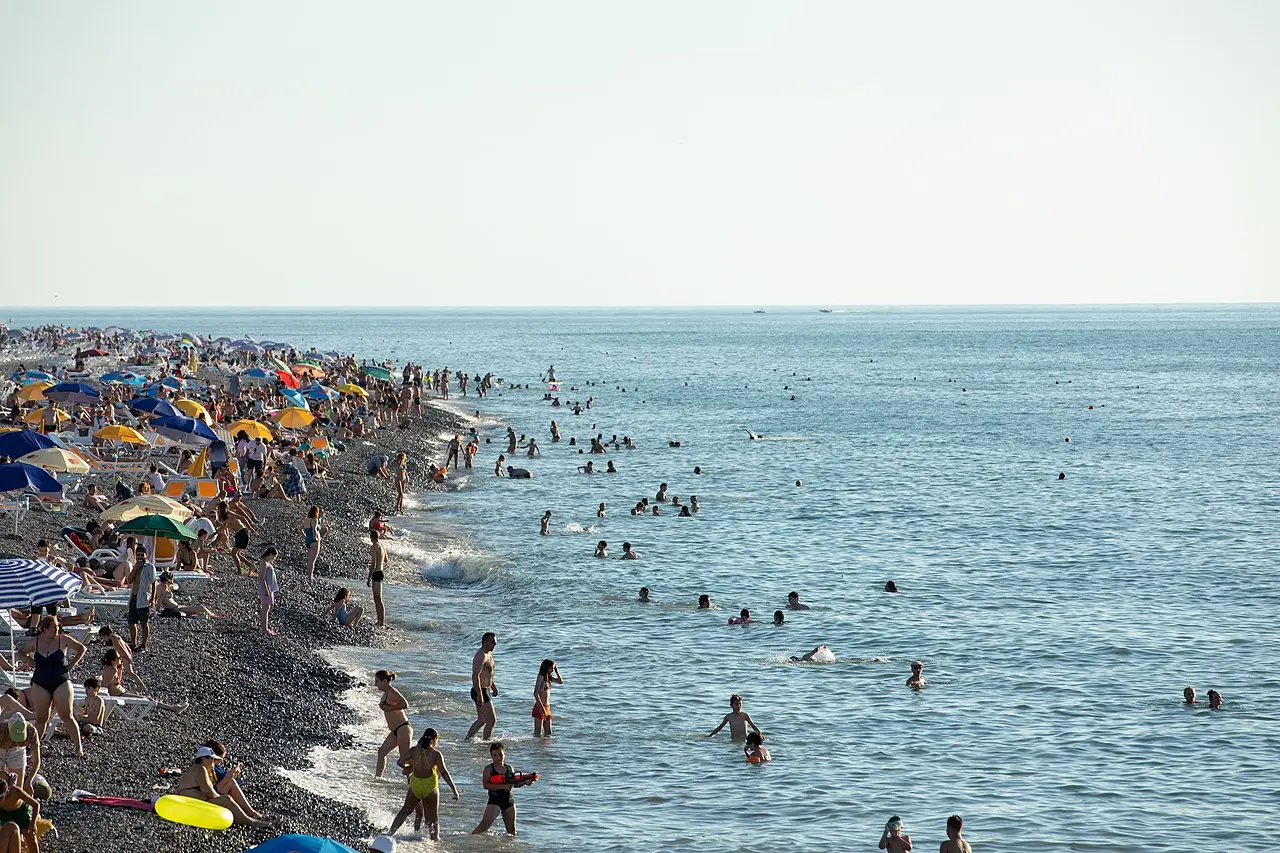
The sea is still 25 °C, the air has dropped to a pleasant 24-25 °C, and the crowd left with the end of the school holidays. The first half of the month is the best time for the sea in Georgia, and that’s arithmetic rather than taste: warm water, comfortable air, 201 hours of sunshine and prices well below August.
The price you pay is the downpours. September rain arrives as a wall, often in the evening or overnight, and clears within an hour or two. The practical response is simple: never put the beach and your one long day trip on the same day, and keep a nearby fallback such as the resorts south of Batumi, half an hour away, for mornings when it’s hammering down.
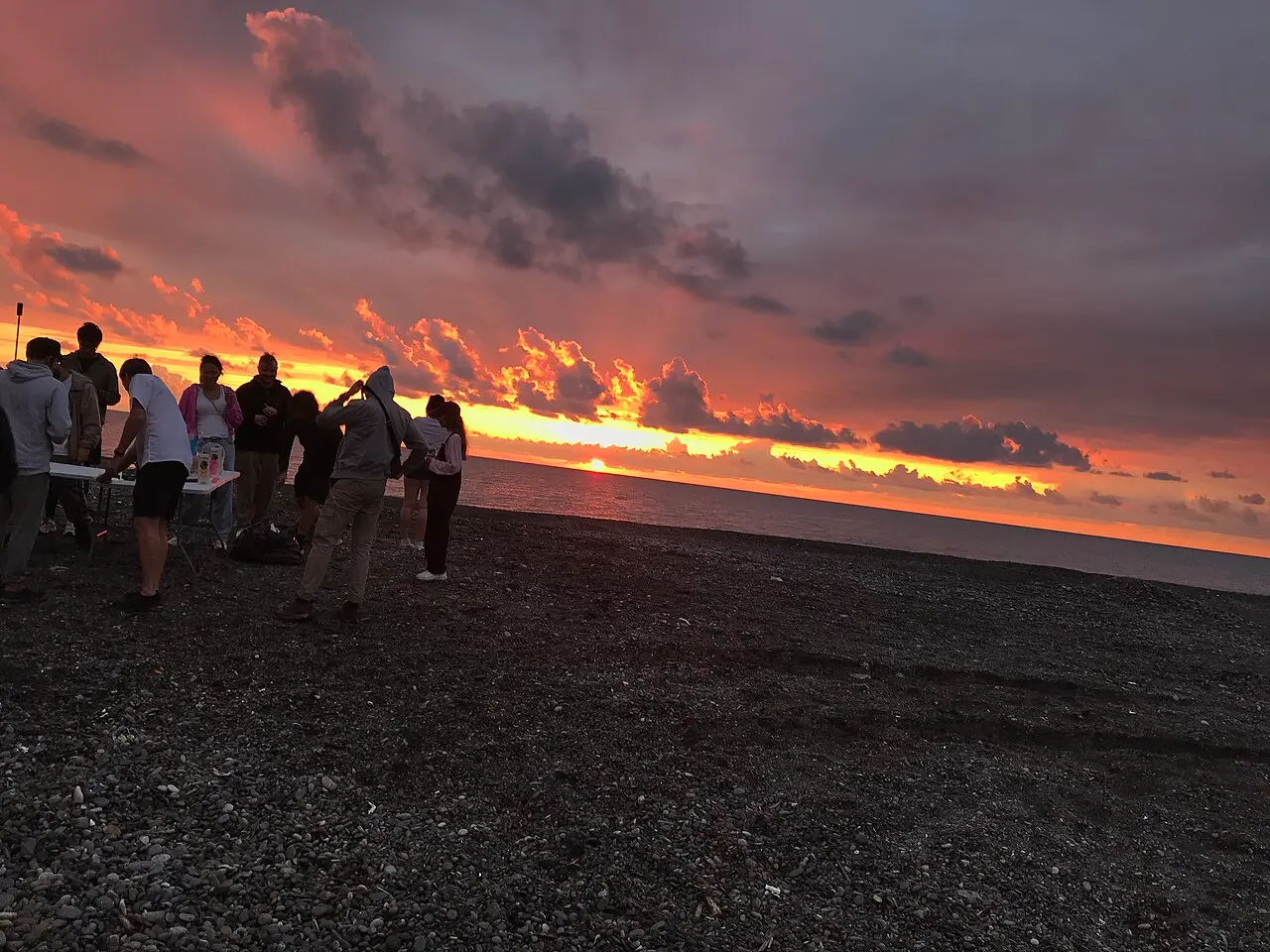
October: the first ten days only
In early October the sea still holds about 21 °C and a swim on a warm day is fine. After that both water and air drop fast, it rains more than in September (277 mm) and half the beach infrastructure packs up. Treat October as a bonus on a trip built around something else - wine, mountains, cities - rather than as a beach month.
North or south: what each stretch gives you
Water temperature is the same everywhere; almost everything else changes as you move along the shore:
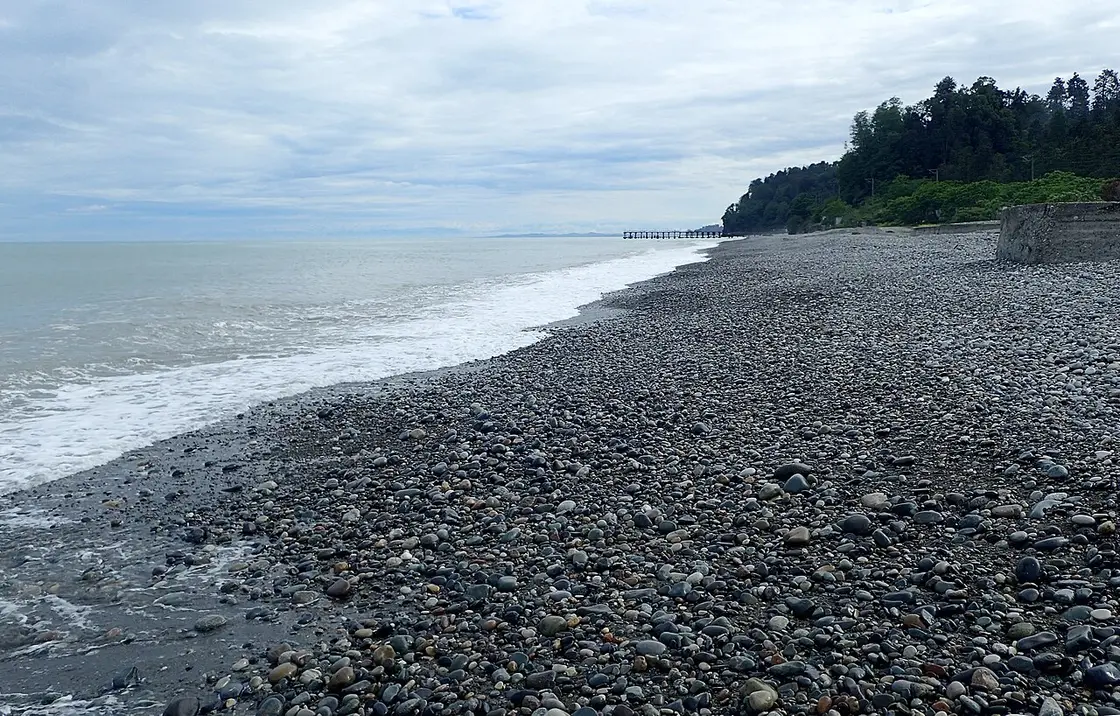
- The sandy north (Ureki, Shekvetili, Grigoleti) has dark magnetic sand, a gentle entry and shallows that warm faster and hold heat longer. That’s the main reason to head north in June, or if you are travelling with small children. Georgia’s national tourism portal puts the Ureki season briefly: June to mid-September. More about the resort and its sand is in our guide to Ureki and its magnetic sand. Further north still, near the Abkhazia boundary, lies Anaklia - a beach of dark pebbles fading to fine sand at the waterline, with more space and fewer people, but none of Ureki’s family-resort infrastructure.
- Kobuleti and Batumi mean pebbles, full infrastructure, promenades and the largest crowds. Kobuleti is the same sea but quieter, cheaper and without the city buzz; Batumi is the exact opposite. A breakdown of the individual city beaches is in beaches in Batumi.
- Southern Adjara (Gonio, Kvariati, Sarpi) has the clearest water on the coast, with underwater visibility of roughly 5-10 metres. This is where people go snorkelling and diving, and September is the best month for it because the sea is calmer.
If you’ve not settled on a stretch of coast yet, start with our overview of the beaches of Georgia, which sorts the shore by who it suits.
What spoils a swim and how to get around it
Three things people usually find out only once they are there.
Silt after a downpour. Rivers wash clay and debris into the sea, so the water near their mouths stays murky for a day or two after heavy rain. It shows most at the Chorokhi south of Batumi and the Rioni near Poti. The fix is to move a few kilometres away from the river mouth, or drive south towards Kvariati and Sarpi.
Pebbles. Most of the southern coast is coarse shingle: painful barefoot and slippery on the way in. Rubber beach shoes cost next to nothing at any seafront stall and are the first thing to buy on arrival.
Swell and storms. The Black Sea off Adjara can get up in a couple of hours: flat at breakfast, metre-high sets and red flags by lunch. Swimming gets closed on those days, and that’s not a formality - the backwash off a steep pebble beach knocks people over.
The short version: which month to take
- Warmest possible water - August, 27 °C, with crowds, humid heat and rain.
- Warm water without the crowd - the first half of September, 25 °C.
- Maximum sun and an active itinerary - June, 235 hours of sunshine, sea at 22 °C.
- Travelling with small children - June or early September on the sandy north coast.
- On a tight budget - May and October: cheap and empty, but swimming is marginal.
For the seasonal picture across the whole country rather than just the coast, see the best time to visit Georgia: in the same months when the coast peaks, the snow is only clearing in the mountains and the grape harvest is starting in Kakheti.
Read also

Before you go · 8 min read
Georgia in winter: weather, cities and ski season
Updated · September 3, 2026Winter in Georgia: Tbilisi averages 3.4 °C in January, days run nine hours, ski season from late December, sulphur baths and cheaper city rooms.

Before you go · 9 min read
Georgia vs Armenia: Where Should You Fly?
Updated · September 3, 2026Georgia or Armenia in 2026: visas, flights, Black Sea vs Sevan, published tariffs side by side, and when both countries beat picking one.

Before you go · 11 min read
Tbilisi or Batumi: Which One Should You Visit
Updated · September 11, 2026Tbilisi or Batumi: climate, rain, lodging and who each city suits. Batumi gets five times more rain than Tbilisi a year - it changes the choice.

Before you go · 12 min read
Rtveli 2026: when to harvest grapes in Georgia
Verified · August 17, 2026Kakheti's 2026 harvest peaked late September to mid-October. Where to base, which wineries named dates, and how to join without a ticketed festival.