
Ureki: black magnetic sand and a shallow sea
Ureki, Guria's sandy resort: black magnetic sand, a shallow warm sea and easy family beaches. Where to stay, when to go and how to get there.
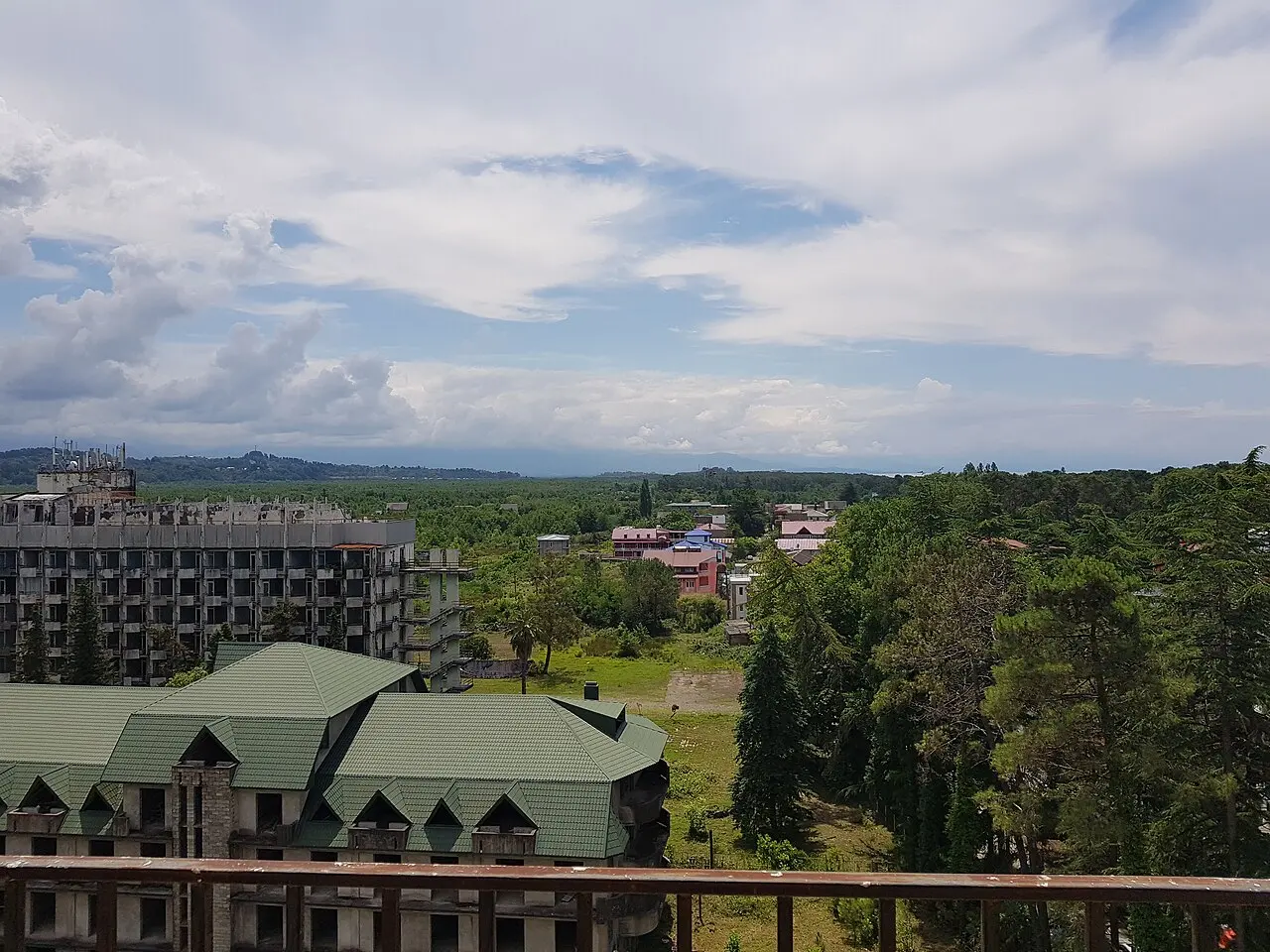
Ureki is Guria’s main sandy resort and one of the rare spots on the Georgian coast where the sea is shallow and warm and the dark sand underfoot genuinely sticks to a magnet. People come here mostly with small children: the water shelves gently, the sea warms up early, and cafés, ice cream and a pharmacy are all a short walk from the beach. The resort is compact and a bit loud at the height of summer, but you can manage here without a car - Ureki has its own railway station on the Tbilisi-Batumi line.
The town sits about 60 km north of Batumi, in the Ozurgeti district, and by Georgian standards it’s tiny, with a bit over a thousand permanent residents. The name is usually translated as “deep forest”: the whole coast around here was once dense woodland where hunting was impossible. What’s left of that forest are the pines that come almost down to the water and give the shade you actually want when travelling with kids in July.
Why the sand is magnetic, and about those sand baths
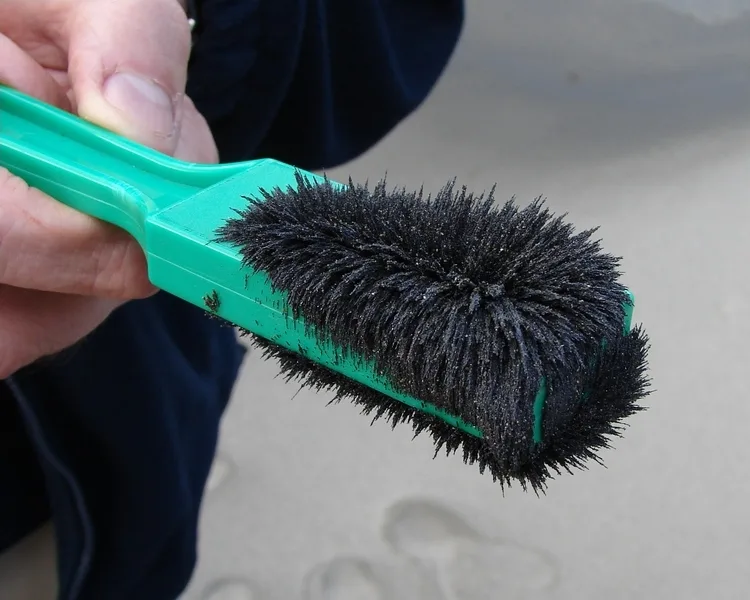
Ureki’s dark, almost black sand isn’t dirt or volcanic ash but magnetite, an iron oxide. Various measurements put the sand at around 5% magnetite plus titanomagnetite, monazite and zircon, and that’s enough to create a weak natural magnetic field along the shore. The clearest party trick, which kids adore: hold a magnet to the dry sand and a spiky “brush” of black iron grains stands straight up on it.
The magnetic sand comes with the local tradition of sand baths. A person is buried in sun-warmed sand, and the warmth, together with the weak magnetic field, is said to help joints, blood vessels and nerves; sanatoriums offer the procedure for a small fee. Treat this as resort folklore rather than medicine: solid scientific evidence is thin, while the risks of deep heating are real - cancer, tuberculosis, blood disorders, severe asthma and heart problems are all reasons to skip it. If you or your child have any chronic condition, ask a doctor first, and there’s no point burying yourself “for your health” with nothing to treat. As ordinary warm beach sand under small feet, the magnetic shore is good without any of the mysticism.
The sea and the beach: what you actually come for
Ureki’s best feature hides not in the sand but in the shape of the seabed. The shore is sandy and shallow, the bottom drops away slowly, so “knee-deep” stretches a long way out - exactly what you want when you let a three-year-old splash and can stop clutching your chest. For the same reason the shallow water warms faster: in June, when the pebble bays down south are still bracing, Ureki is already swimmable.
There’s a flip side, and it’s fairer to say it up front. Ureki is a busy resort, not a postcard: the shore is densely built up, it gets crowded in high season, and after storms the shallow water can turn murky and wash up seaweed. If you picture an empty pine-backed shore with turquoise water, that’s not here - it’s next-door Grigoleti or the clear-water south of Adjara. Ureki earns its place for something else: warm shallows, soft sand, and everything you need within a couple of minutes’ walk.
What the resort itself is like
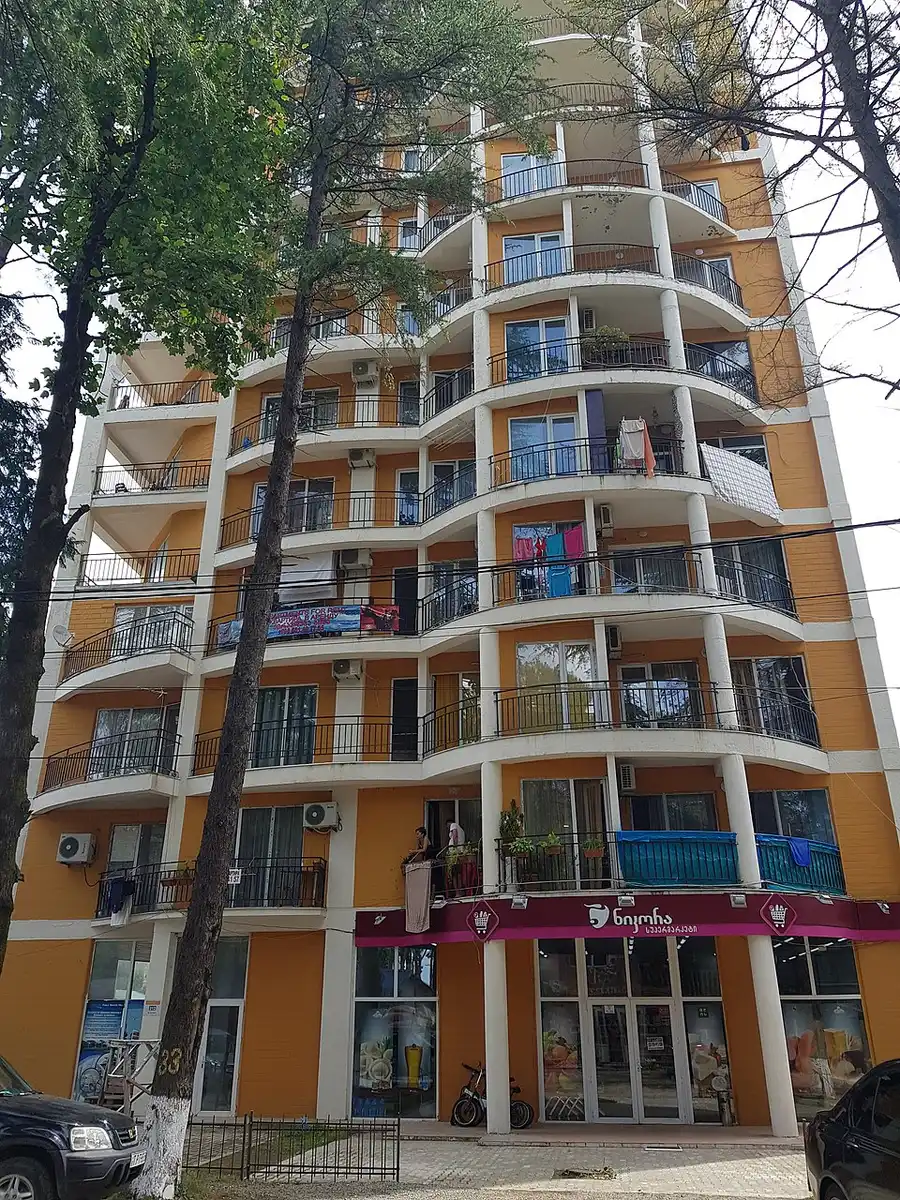
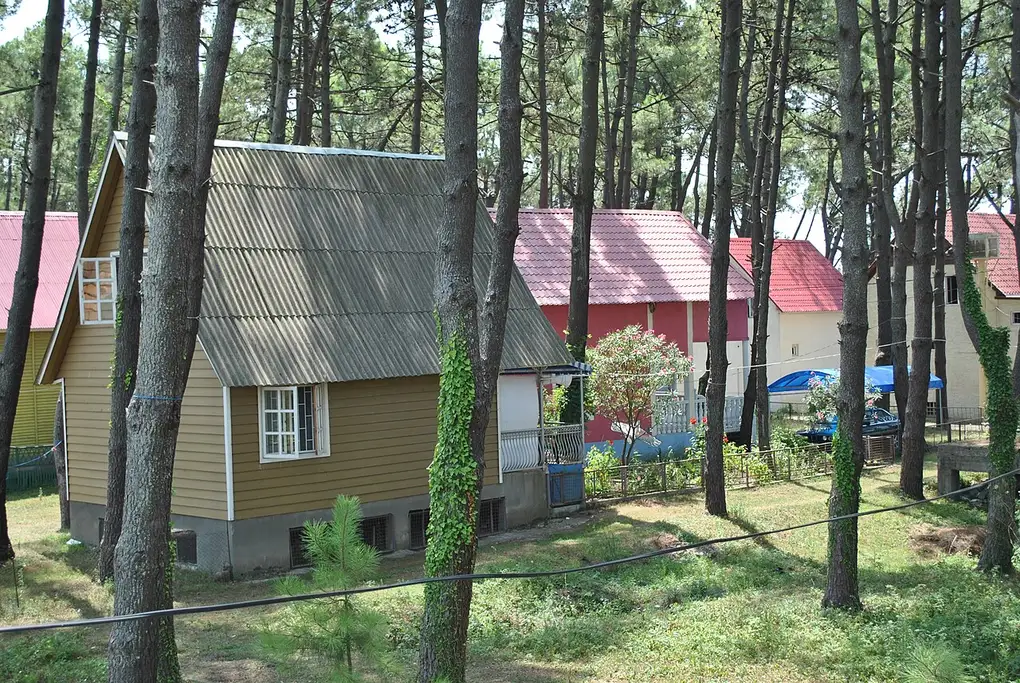
Ureki is essentially one dense strip of guesthouses, small hotels and Soviet-era sanatorium blocks, wedged between the highway and the sea. There’s lodging for every budget, from a room in a private house to blocks with a pool, and almost everywhere is a five-minute walk to the sand. A real plus for a car-free family: groceries, cafés, a pharmacy and a market are all within walking distance, so you don’t have to drive anywhere for dinner.
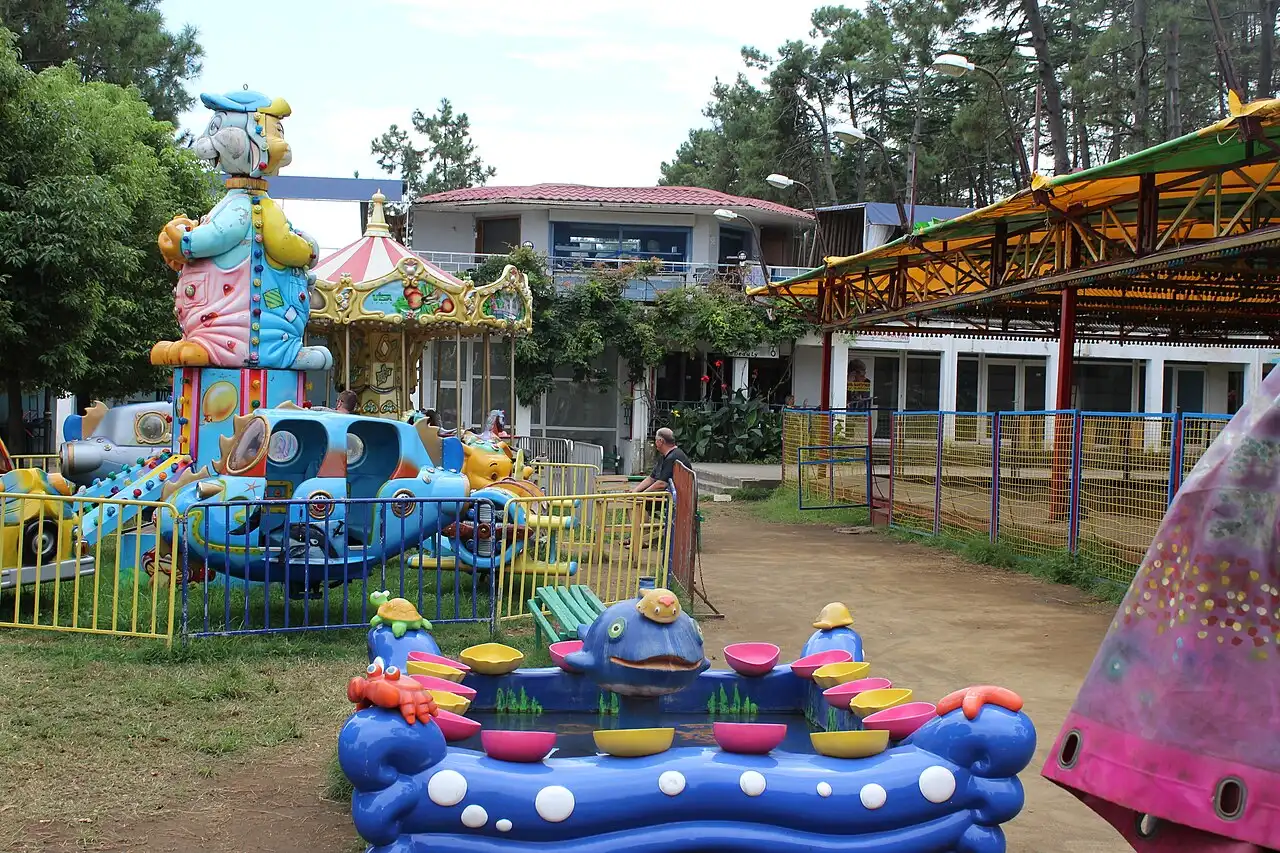
The entertainment is simple and child-sized: a small funfair with carousels and toy cars, candy-floss stalls, quad-bike rides on the sand. It’s not a high-tech park but a village fairground mood, which small children usually like more than the adults do.
Ureki, Grigoleti or Shekvetili: which to pick
The magnetic-sand shore isn’t only Ureki: the same black sand runs for a few kilometres through the village of Magnetiti to Shekvetili, and each of the three neighbours has its own character. The choice is easier than it looks.
Ureki - if you want a bit of buzz and everything to hand: more lodging, cafés and people, easy without a car. Grigoleti - the quiet opposite a couple of kilometres away: the pine forest reaches almost to the water, there are no parks and no crowds, just shade, soft sand and calm; people come here for restful days built around a child’s afternoon nap. Shekvetili - the same sand plus attractions: the country’s biggest funfair, Tsitsinatela, the Black Sea Arena concert venue and a shady arboretum, so there’s somewhere to go even when the sea palls.
For how the whole coast compares - from the sandy north to the clear water by the Turkish border - see the best beaches in Georgia guide, and if you’re travelling specifically with small children, the Georgia with kids guide weighs each northern resort against a base in Batumi and points to the best months.
How to get there
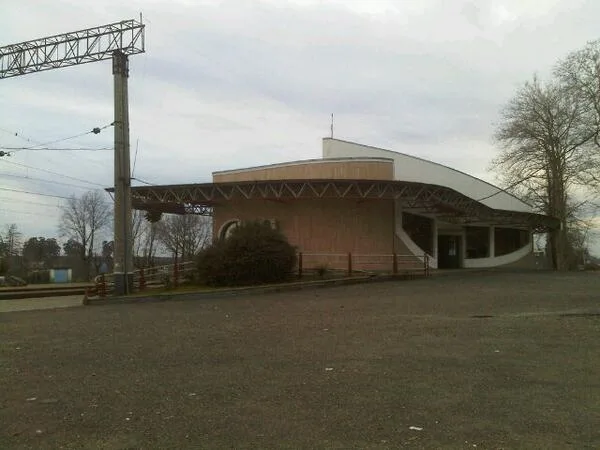
The handy thing about Ureki is that it’s easy to reach without a car. The Tbilisi-Batumi railway runs through the town, and the fast train, which stops only a handful of times between the two cities, calls at Ureki. The station stands about a kilometre and a half from the beach - from there it’s on foot, by taxi or a local minibus.
The nearest airport is Kutaisi (Kopitnari), the region’s low-cost hub: the train stops right by the terminal, and Ureki is about an hour from there. It’s arguably the easiest way to reach the Guria beaches on a budget flight. The alternative to the train is the marshrutkas that run along the coast highway and drop passengers in Kobuleti, Shekvetili and Ureki; from Batumi the ride takes about an hour. From Kutaisi Airport you usually flag a Batumi marshrutka from the roadside opposite the terminal.
Batumi, 60 km away, is a convenient entry point by plane or train, an hour up the coast from Ureki. If you want the freedom to compare several beaches in one trip, it’s simpler to take a car: how that works in Georgia is covered in the car hire section.
When to go
Ureki’s swimming season runs from June to mid-September (Georgia’s national tourism portal, checked 24 October 2026), with the warmest water in July and August. Thanks to the shallows the water warms earlier here than on the pebbly south, so early June is an underrated window: the sea already lets you swim, and the crowds and prices haven’t spiked yet. A rough guide to sea temperatures on the southern coast:
| Month | Sea temperature | Swimming with kids |
|---|---|---|
| May | ~16 °C | still cool for most children |
| June | ~22 °C | pleasant, quieter - a good window |
| July | ~26 °C | warm, but hot, busy and pricey |
| August | ~27 °C | warmest water, peak crowds |
| September | ~25 °C | warm sea, fewer people |
| October | ~21 °C | swim only in early October |
The second calm window is the first half of September: the water still holds its warmth and the guesthouses empty out. For more on seasons and weather by region, see the breakdown of when to visit Georgia, and for month-by-month water and the best swimming window along the whole coast, when to swim in Georgia. The water figures are approximate - check for the specific year.
Around Ureki: Guria and the tea country
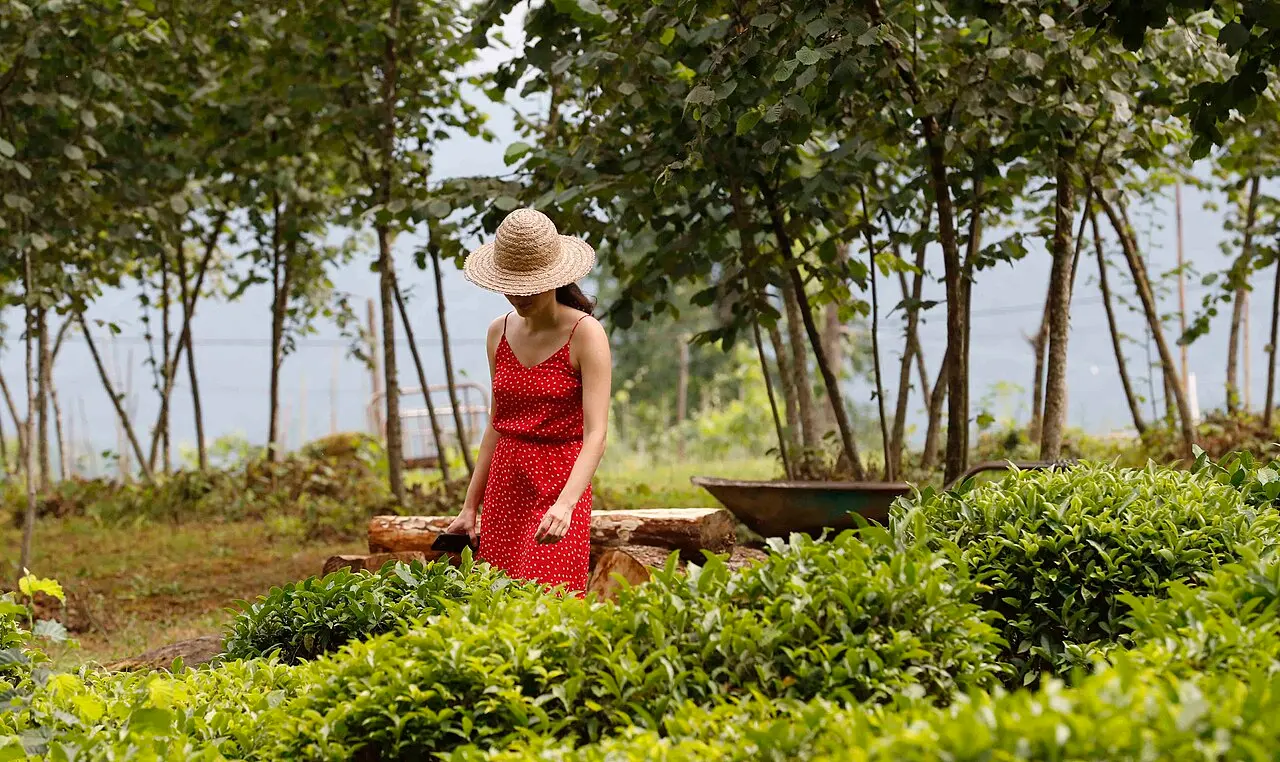
Ureki sits in Guria, a green, rainy region that historically lived on tea. Drive inland from the shore and the guesthouses give way to tea plantations: back in Soviet times Guria was one of the main tea districts, and today small farms are slowly bringing the old plantations back.
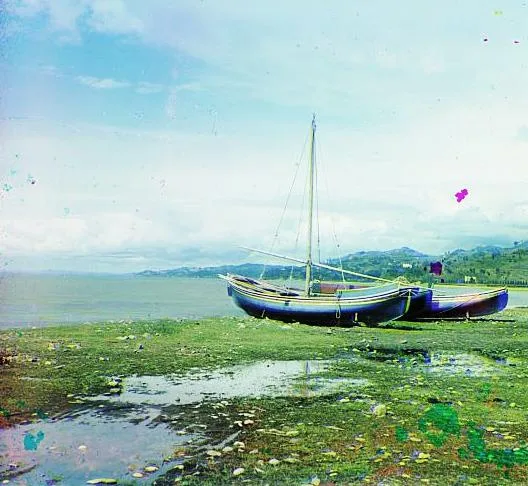
The sea and fishing fed this coast long before the resorts: there are even early-20th-century colour photographs of this shore, taken by the colour-photography pioneer Prokudin-Gorsky.
For a city with a seafront, restaurants and evening life, take a trip to Batumi - an hour up the coast, with Kobuleti and Shekvetili to stop at on the way. Ureki works best as a calm base by a shallow sea, one you can easily slip out of, into the city or up into mountain Adjara.
What to pack and keep in mind
Good news: the water shoes you can’t do without on the southern pebbles are barely needed in Ureki - the sand is soft. What’s in short supply is shade: there are few trees on the open beach, so bring an umbrella or book a place with a pine in the yard, and keep beach time to the morning and late afternoon. Midday here’s harsh.
In July and August the guesthouses fill up and prices peak - book ahead; in June or September the choice is far wider and cheaper. Changing rooms and toilets aren’t everywhere on the village beach, and access to public beaches is free - you only pay for loungers and umbrellas at the bars.
To boil it down: Ureki is warm shallow water, black magnetic sand and everything you need on foot, ideal for a holiday with little ones. Want it quieter - neighbouring Grigoleti; want attractions by the same sand - Shekvetili; want a city - Batumi is an hour away.
Photos
On the map
The map loads on click - to keep the page lightweight.
The map didn’t load. Check your connection and refresh the page.
Distance
- Tbilisi ≈300 km · ~4.5 h the Tbilisi-Batumi train makes a stop in Ureki
- Kutaisi ~1.5-2 h By car or marshrutka via Samtredia; the fast train from Kutaisi Airport also stops in Ureki (about an hour)
- Batumi ≈60 km · ~1 h train or marshrutka along the coast
Read also

Cities · 10 min read
Borjomi town: the spa resort and a mountain base
Updated · June 16, 2026Borjomi spa town in its wooded gorge: the mineral-water park, the Likani palace, the old railway and a base for Bakuriani and Borjomi-Kharagauli.

Cities · 12 min read
Batumi: beaches, boulevard, what to see and where to stay
 Verified · June 15, 2026
 Batumi, Georgia's Black Sea resort: beaches, the palm boulevard, Alphabet Tower, Piazza and skyscrapers. What to see, where to stay and how long.

Cities · 4 min read
Gori: Stalin Museum and the Uplistsikhe cave city
Updated · June 14, 2026Gori in Shida Kartli, where the Kura meets the Liakhvi: a hilltop fortress, the Stalin museum and the Uplistsikhe cave city nearby.

Cities · 8 min read
Kutaisi: what to see, where to eat, how to get there
 Verified · June 15, 2026
 Kutaisi - Georgia's third city and ancient capital of Colchis: Bagrati Cathedral, the Colchis Fountain, the Rioni. What to see in and around.