
Best time to visit Georgia: seasons & weather
The best time to visit Georgia by season - weather, crowds and prices across spring, summer, autumn and winter, plus beaches, skiing and wine.
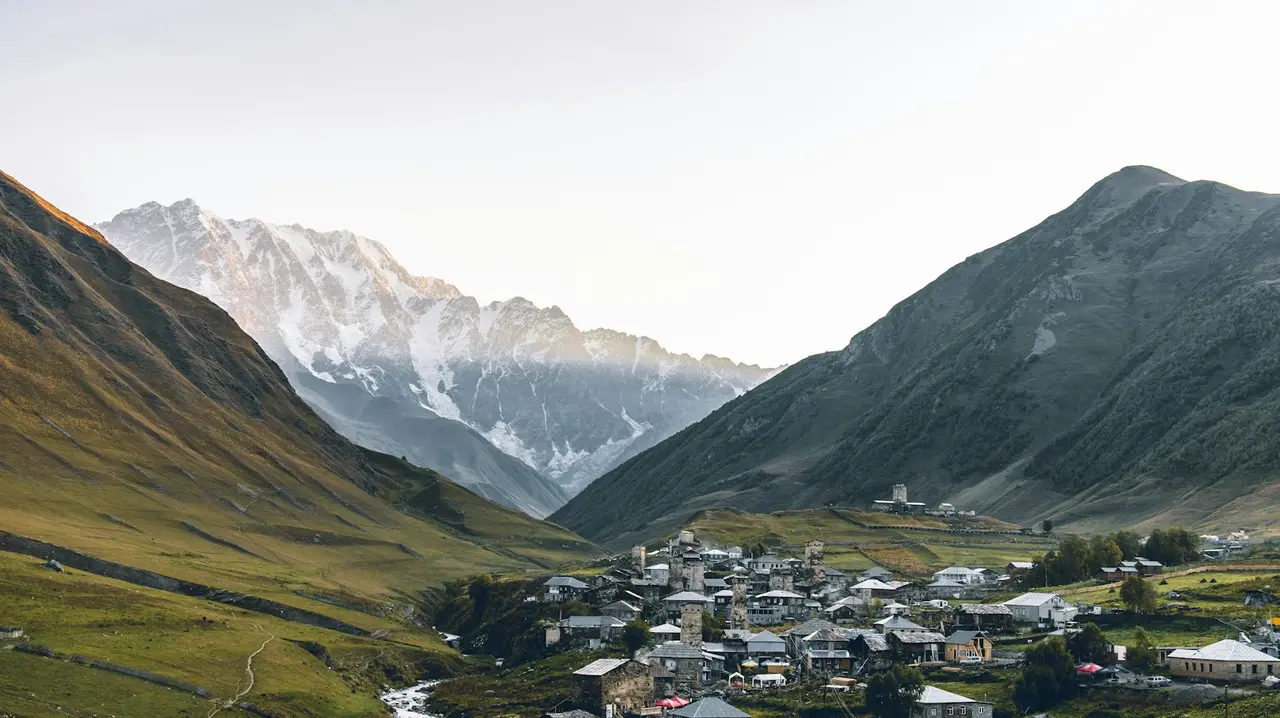
The short answer: the nicest times to visit Georgia are May-June and September-October - mild weather, nearly everything open, and fewer crowds than mid-summer. But there’s no single “best” month: the country is small, and its seasons run in parallel. While people swim on the Black Sea coast, snow still lingers in the mountains; while Tbilisi bakes, Svaneti stays cool. So pick your dates not “in general” but around what you’re coming for: the sea, the mountains, wine, or the cities.
In short: when to go for what
- Beach and the Black Sea - July-August (warm water, 26-27 °C); the swimming season peaks from July to mid-September.
- Mountains, trekking, Kazbegi and Svaneti - July-September, once the snow clears the passes.
- Skiing - late December to April (Gudauri, Bakuriani).
- Wine and the harvest (rtveli) - September-October, especially in Kakheti.
- Cities, sightseeing, churches - May-June and September-October: warm but not hot.
- Budget and crowd-free - late autumn, early spring and winter (outside the ski resorts).
Spring (March-May)
Spring arrives fast in Georgia: by March daytime highs reach around +15 °C, though the start of the season is rainy and changeable. The sweet spot is mid-April and May, when the rain eases off, everything is in bloom, and the valleys and foothills are ideal for walks and sightseeing. High-altitude trails (Kazbegi, Svaneti) are still partly under snow into May, and the sea is cool - only the boldest swim. On the upside, prices and crowds are lower than in summer.
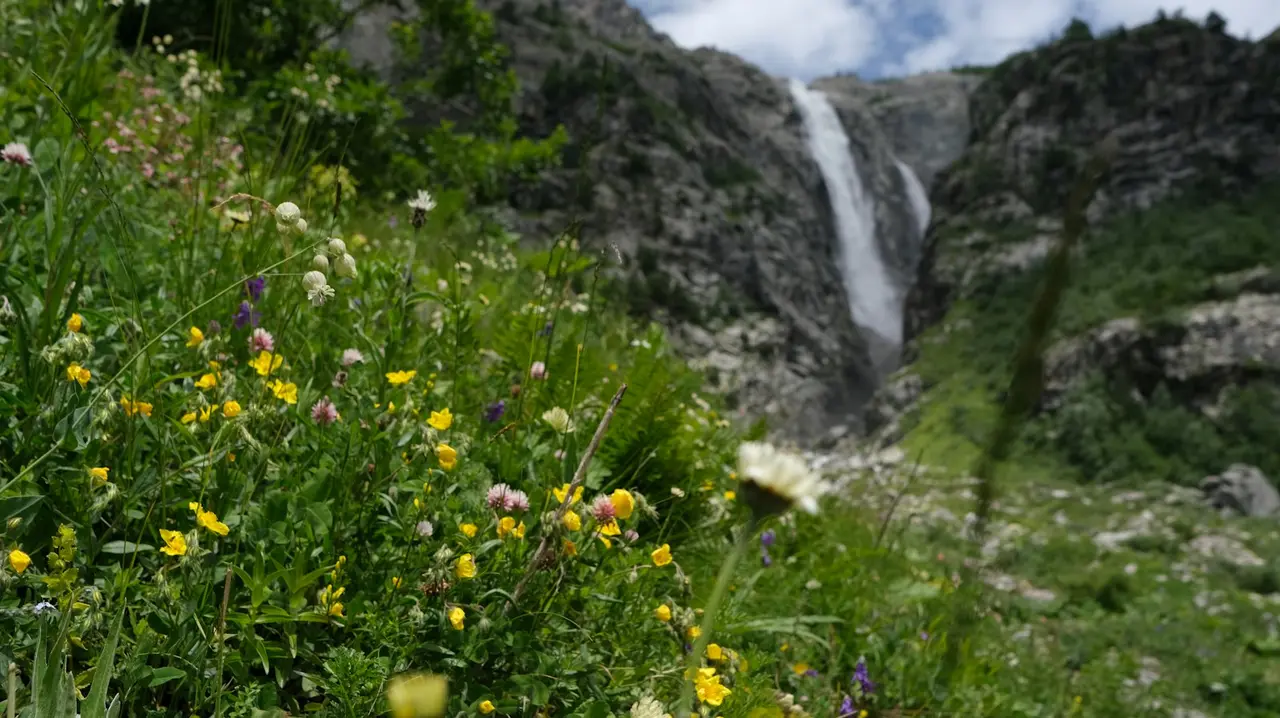
Summer (June-August)
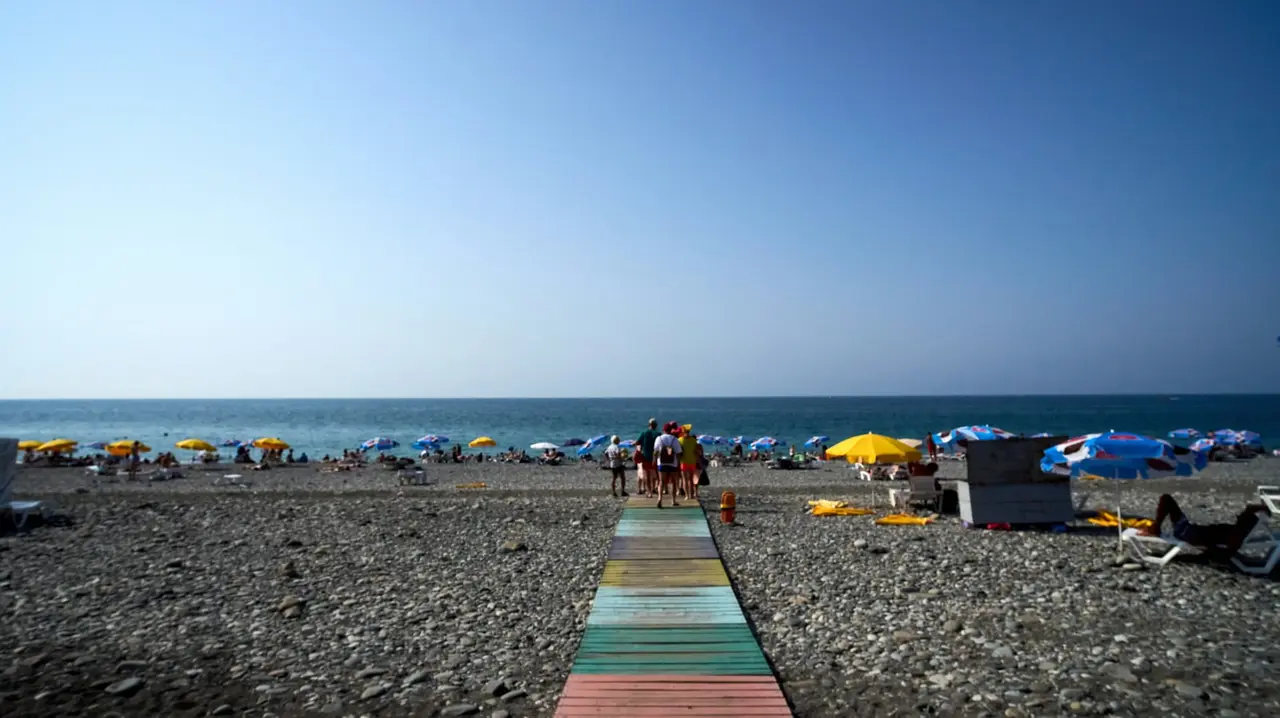
Summer is peak season. On the coast the swimming season peaks from July to mid-September; from June to October the water stays above 20 °C, and in July-August it warms to 26-27 °C - the best window for Batumi and the beaches of Georgia. By July-August the snow has cleared the mountains and trekking opens up. The downside is the heat: Tbilisi and the lowlands can be muggy and above +35 °C, so in summer many people head “up” - to Borjomi, Bakuriani, Kazbegi and Svaneti, where it’s cooler. It’s also the busiest and priciest period: book seaside stays well ahead.
Tbilisi’s summer is more deceptive than it looks: intuition says the coast should be hotter, but climatestotravel.com’s 1991-2020 normal puts the average August high in the capital at 31.9 °C against Batumi’s 27.5 °C, and the thermometer occasionally clears 35 °C, sometimes even 40 °C (the record is 40.6 °C, set in July 2021). So heading to the coast to escape the heat doesn’t work because it’s cooler there. It works because it’s drier, without the lowland mugginess. We’ve broken down monthly water temperatures, rainfall and the best swimming window for the whole coast, not just the peak months, in a separate guide: when to swim in Georgia.
Autumn (September-November)
For many, autumn is Georgia’s best season. September and October hold a comfortable +15…+20 °C in the cities, the summer crowds thin out, and in Kakheti the rtveli grape harvest begins, with wine festivals across the country around it (the harvest ripens a little later in the west than in the east). Which ones and when is in our month-by-month events calendar. It’s the ideal time for wine and food, unhurried city walks and late-season treks while the autumn colours hold. Closer to November it cools down and snow returns to the mountains.
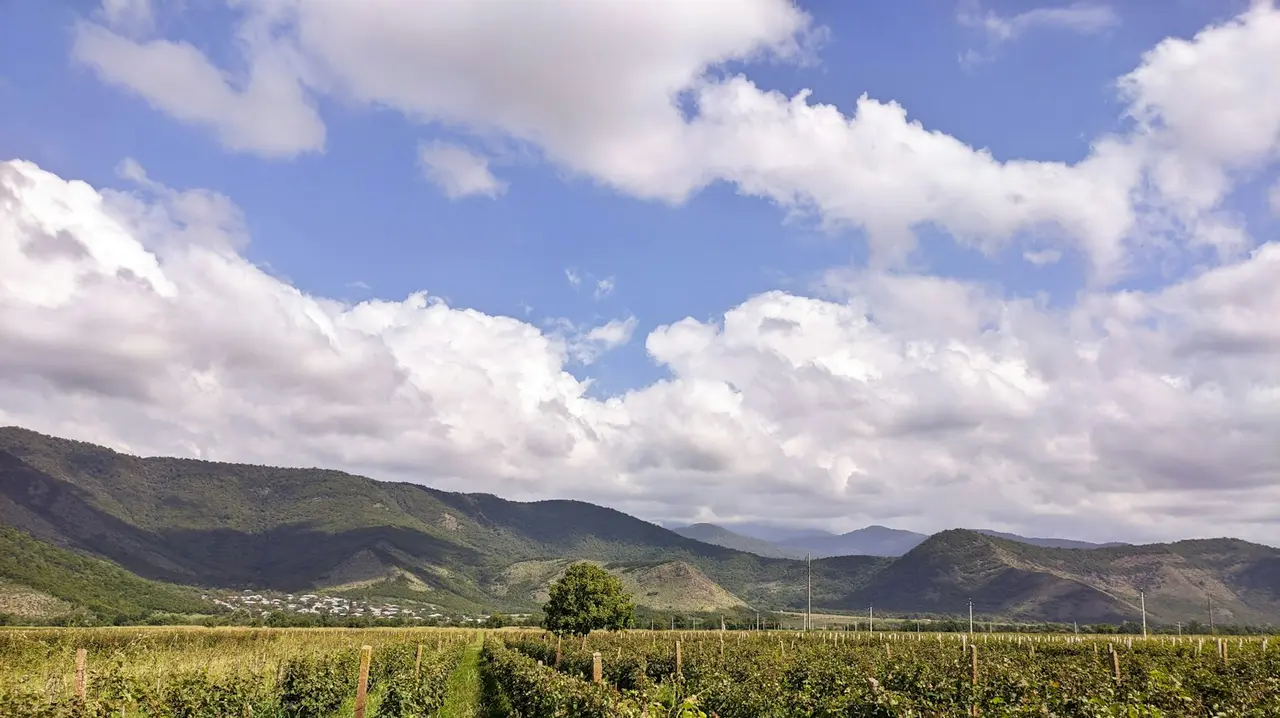
Rtveli isn’t one date for the whole country. It’s a process that runs across three months. Georgia’s official tourism portal (georgia.travel) puts it simply: the harvest starts in September with Rkatsiteli grapes in Kakheti and doesn’t wrap up until December, when Chkhaveri comes in from Guria and Adjara in the west. So there’s still a chance of catching some village mid-harvest as late as November. Each village’s exact date moves with the weather and the sugar content of the grapes, not the calendar, so if the goal is the harvest itself, not wine in general, our separate grape harvest guide has the regional detail.
Winter (December-February)
Winter is low season everywhere except the mountains. Cities are mild (often around +5…+10 °C), tourists are few and prices drop - but daylight is short and some high mountain roads are closed. The flip side is the ski season: in 2025/26 Gudauri runs roughly from December 27 to April 19, while Bakuriani’s Kokhta area opens earlier, on December 20; lifts usually run 10:00-17:00. Snow holds in the mountains from December through February and beyond. Opening dates shift year to year with the snow - check before you go.
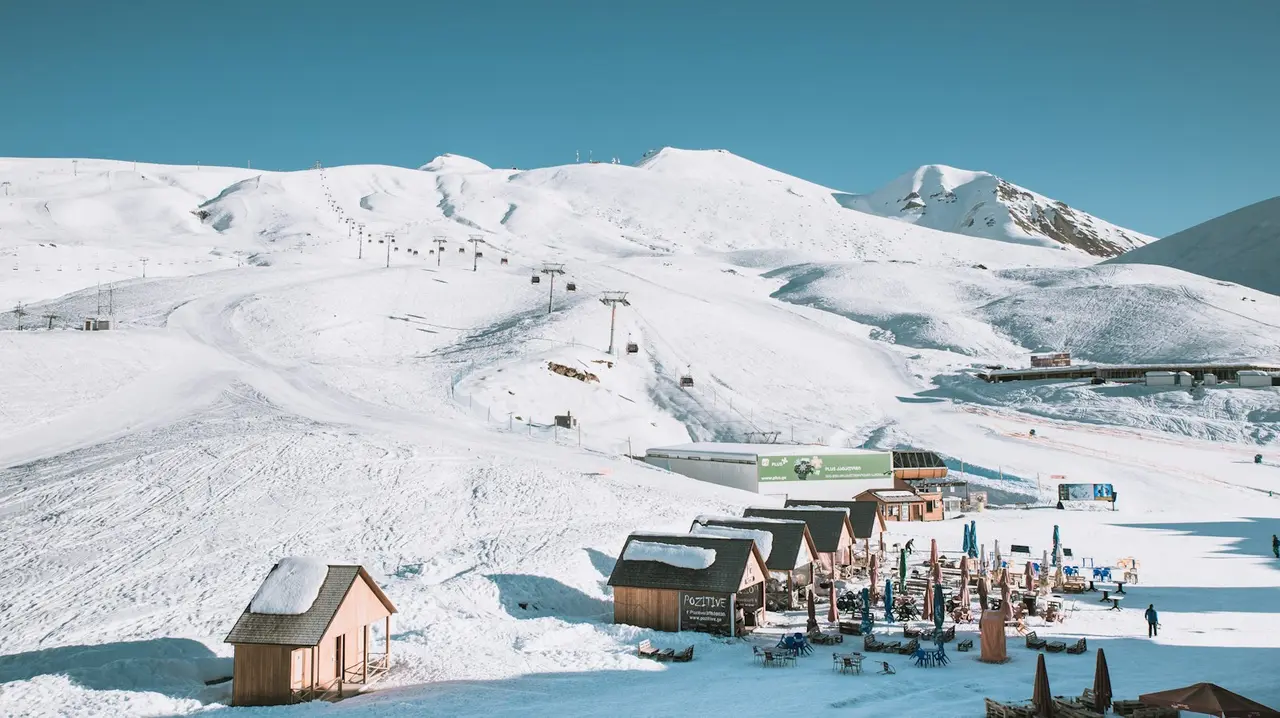
Both resorts are government-run: the season is officially declared by the Mountain Trails Agency under Georgia’s Ministry of Economy, which also runs the lift network. Bakuriani sits lower and milder than Gudauri, at around 1,700 m, which is why its Kokhta zone relies on artificial snow and opens first each year. The single most expensive week in the mountains isn’t in beach-going August, either: it’s the New Year period. Georgia’s official tourism portal recommends booking a Gudauri New Year stay at least two months out and budgeting well above the season’s usual prices. Late March swings the other way, cheaper but with less reliable snow.
The mountains: three different rules of access under one word
“The mountains” in Georgia isn’t one zone with one season. It’s at least three separate access patterns, and mixing them up costs real time on a trip.
The Georgian Military Highway to Stepantsminda is paved and runs year-round: its high point, the Krestovy (Cross) Pass at roughly 2,379 m, never formally closes, though winter avalanche control sometimes halts traffic on one stretch for a few hours. The full route and its stops are in our Georgian Military Highway guide and the Stepantsminda city guide. Svaneti works the same way in miniature: the paved road to Mestia carries cars year-round, but the stretch beyond it, toward Ushguli and Lentekhi, gets buried in snow and hit by avalanches in winter. For a trek or a road trip without surprises, plan for July through early October, as laid out in our Svaneti guide.
Tusheti is a different case entirely. The Abano Pass (2,826 m, passable only in a proper 4x4) is open roughly from late May to October and sits under snow in the other months, as both our own Tusheti 4x4 route and the Tusheti Protected Landscape Administration (tushetipl.ge) say. Outside that window, the only way in is by helicopter. Planning a trip for May or November? Keep this in mind: part of the country is simply unreachable by road in those months, no matter how good the forecast looks in Tbilisi.
When it’s cheaper and quieter
The lowest prices and fewest tourists come in winter outside the ski resorts and in early spring (March to early April), plus late autumn (November). In the shoulder seasons both lodging and flights are noticeably cheaper - if your trip isn’t tied to the sea or skiing, that’s a good-value window. For the full winter picture - cities, baths, hotels and a ski overview - see Georgia in winter; for Gudauri vs Bakuriani use skiing in Georgia; the Gudauri resort page stays the single-resort deep dive. More on the mountains and snow is in our Gudauri ski resort guide.
One more thing sits at the crossroads of planning and visas: Georgia’s visa-free entry has nothing to do with Schengen. Most passports, including the EU, the US, the UK and Canada among the 96 nationalities on the official list, get up to 365 days in Georgia with no reference to the Schengen 90-in-180 clock at all. If a trip links Georgia with Europe, the two clocks get counted separately, not as one. Details are in do you need a visa and insurance to enter.
Bottom line
- All-rounder: May-June and September-October.
- Sea: July-August (peak of the swimming season July to mid-September) - see Batumi.
- Skiing: late December-April - see Gudauri.
- Mountains (trekking): July to early October on the trails of Svaneti and around Kazbegi; Tusheti has its own window, late May to October - see the Tusheti route.
- Wine: September-October - what to eat and drink in Georgia.
- Cheap: winter and the shoulder seasons.
Settled on dates? Check whether you need a visa and insurance to enter and the currency and how to change money, then put the rest together with the step-by-step plan for an independent trip, and you’re ready to plan the route.
Read also

Before you go · 8 min read
Georgia in winter: weather, cities and ski season
Updated · September 3, 2026Winter in Georgia: Tbilisi averages 3.4 °C in January, days run nine hours, ski season from late December, sulphur baths and cheaper city rooms.

Before you go · 9 min read
Georgia vs Armenia: Where Should You Fly?
Updated · September 3, 2026Georgia or Armenia in 2026: visas, flights, Black Sea vs Sevan, published tariffs side by side, and when both countries beat picking one.

Before you go · 11 min read
Tbilisi or Batumi: Which One Should You Visit
Updated · September 11, 2026Tbilisi or Batumi: climate, rain, lodging and who each city suits. Batumi gets five times more rain than Tbilisi a year - it changes the choice.

Before you go · 12 min read
Rtveli 2026: when to harvest grapes in Georgia
Verified · August 17, 2026Kakheti's 2026 harvest peaked late September to mid-October. Where to base, which wineries named dates, and how to join without a ticketed festival.