
Tbilisi to Batumi 2026: train, bus, car or flight
Tbilisi to Batumi: Stadler train from 35 GEL (4h), coach from 40 GEL, the new Rikoti highway by car, or a 45-min flight - checked Sept 2026.

Tbilisi and Batumi sit about 360 km apart by road on the country’s busiest domestic corridor - the capital to the Black Sea coast. You’ve got four real ways to cover it: the Stadler express train (about 4 hours, tickets from 35 GEL), a coach or marshrutka out of Tbilisi’s bus yards (from 35 GEL by marshrutka, from 40 GEL by coach, up to 6 hours), driving yourself on the newly finished Rikoti highway, or a 45-minute Georgian Airways flight a few days a week. Batumi’s nightlife, led by Teatro starts late, so there’s no harm in arriving after dark on any of them.
| Option | Time | Price (2026) | Good for |
|---|---|---|---|
| Stadler train | ~4h01 | from 35 GEL (~$13) | comfort, scenery, no traffic |
| Coach (Omnibus, City Bus, Metro Georgia) | up to 6h | from 40 GEL (~$15) | more seats and legroom than a marshrutka |
| Marshrutka from Didube | 5-6h | around 35 GEL (~$13) | cheapest, most frequent departures |
| Driving (own or hired car) | ~5-6h | fuel + hire | freedom to stop along the way |
| Private transfer | ~6h | from ~$220 a car | groups, luggage, late arrivals |
| Flight (Georgian Airways) | 45 min air | from ~$107 one way | speed, if the day matches your dates |
Prices and schedules were checked 11 September 2026 against tkt.ge, kiwitaxi.com and the airline’s own fare calendar, and the train times again on 13 September 2026 against Georgian Railway’s own booking system (gr.com.ge). Marshrutkas are cash-only at the ticket desk; everything else sells online.
The Stadler train
Georgian Railway runs double-decker Stadler (KISS) sets on this line, and every run out of Tbilisi takes 4h01 (heading back from Batumi, it’s 4h00-4h03). Year-round there are two: train 802 leaves Tbilisi Central at 08:05 and pulls into Batumi-Central at 12:06, and 804 leaves at 17:10 and arrives at 21:11. In summer the railway adds seasonal runs on top - 806 at 06:30 and 808 at 10:15 - and takes them off again as the season winds down: in the booking calendar we checked on 13 September 2026, 806 was on sale only up to 15 September, while 808 (and its return, 807) ran for the last time on 9 October 2026, the end date the operator’s notice of 5 June 2026 had announced: when we checked on 10 October 2026, only 802 and 804 were on sale out of Tbilisi. An announced end date can still come early, though: a night pair from the same notice, announced to 30 September, left the booking calendar in mid-August. A date shows up there once it’s inside the 20-day sales window, so check the live timetable for your own date rather than counting on more than the two daily trains. That’s a real change from a year or two back, when the same ride took closer to 5.5 hours - a new twin-bore tunnel and upgraded signalling on the western line brought it down to about four, and today’s live timetable already reflects the faster schedule. Level crossings further down the line, in Guria, were also fenced and fitted with cameras as speeds went up, so don’t be surprised by a slower crawl through a few small towns. The train has economy, first and business classes, air conditioning and power sockets. Economy starts at 35 GEL (about $13); first and business cost more, and the exact fare for your date shows up on the booking screen instead of a fixed list price. In season the train sells out, so it’s worth booking ahead on ticket.railway.ge or tkt.ge, or at the station counter, instead of counting on a free seat on the day. For the wider network - other western routes, classes and how to buy - see trains in Georgia.

Marshrutka and bus
The busiest and cheapest way out of Tbilisi is still the minibus and coach yard at Didube station. A marshrutka (shared minibus) runs about 35 GEL, cash only, and takes 5-6 hours with a short stop partway; vans leave roughly every hour from around 7:15am, or as soon as they fill up, with the last one close to midnight. Seats aren’t numbered, so for legroom or space for a big bag, get to the ticket desk early instead of boarding last.
If you’d rather book a numbered seat and a fixed departure time, the bigger coach operators - Omnibus, City Bus, Metro Georgia and Georgian Bus - all sell through tkt.ge, the country’s own transport-ticketing platform, with fares starting at 40 GEL (about $15) and journeys running up to 6 hours, depending on stops and traffic. These leave from three different points around town - Ortachala Central Bus Station, the Didube area or Station Square - so it’s worth checking which one your ticket actually names before you head out. Some of the operators time departures around flight arrivals, which helps if you’ve just landed at Tbilisi International and want to keep moving toward the coast.

By car
By car it’s the same ~360 km, and the road itself changed a great deal right at the end of 2025. The old, winding route over the Rikoti Pass is gone: a new four-lane highway - 52 km long, with 51 tunnels and 97 bridges - was inaugurated in full on 29 December 2025, shaving roughly 8 km off the route. The prime minister said at the opening that it roughly halves driving time on this stretch; in practice a routing app now gives about 5 hours of pure driving for those 360-odd km, and Kiwitaxi, which drives it daily, quotes around 6 hours door to door - so plan on 5-6 hours, not the 4-4.5 that rental-company blogs promise. It wasn’t a smooth build - a landslide shut one of the new tunnels for over a week in 2023, and engineers spent months reinforcing the most exposed sections before the road was declared finished - so this isn’t a road to push through in heavy rain or snow just because it’s new and wide. Kutaisi still sits right on the way, along with Gori and the cave city of Uplistsikhe, and the spa town of Borjomi, known for its mineral water. For the capital link on the same corridor, see Tbilisi to Kutaisi. For a trip like this, the car hire section will come in handy.

Private transfer
A booked private transfer sits between a marshrutka and driving yourself: no timetable to chase, and the car drops you at an actual address in Batumi instead of a bus yard. Kiwitaxi’s live quote for this route starts at roughly $220 (about ₾575 at the National Bank rate) for a standard sedan, priced per car rather than per seat, with larger minivans costing more. For three or four people that’s still well above the coach: at 40 GEL a seat they’d pay 120-160 GEL between them. What the car buys - especially after a late flight into Tbilisi - is a door-to-door ride at a time you choose, with the luggage in the boot and no wait at Didube. Book it with a firm pickup address and time; arranging one the night before beats hunting for a taxi outside a dark, half-empty arrivals hall.
By plane
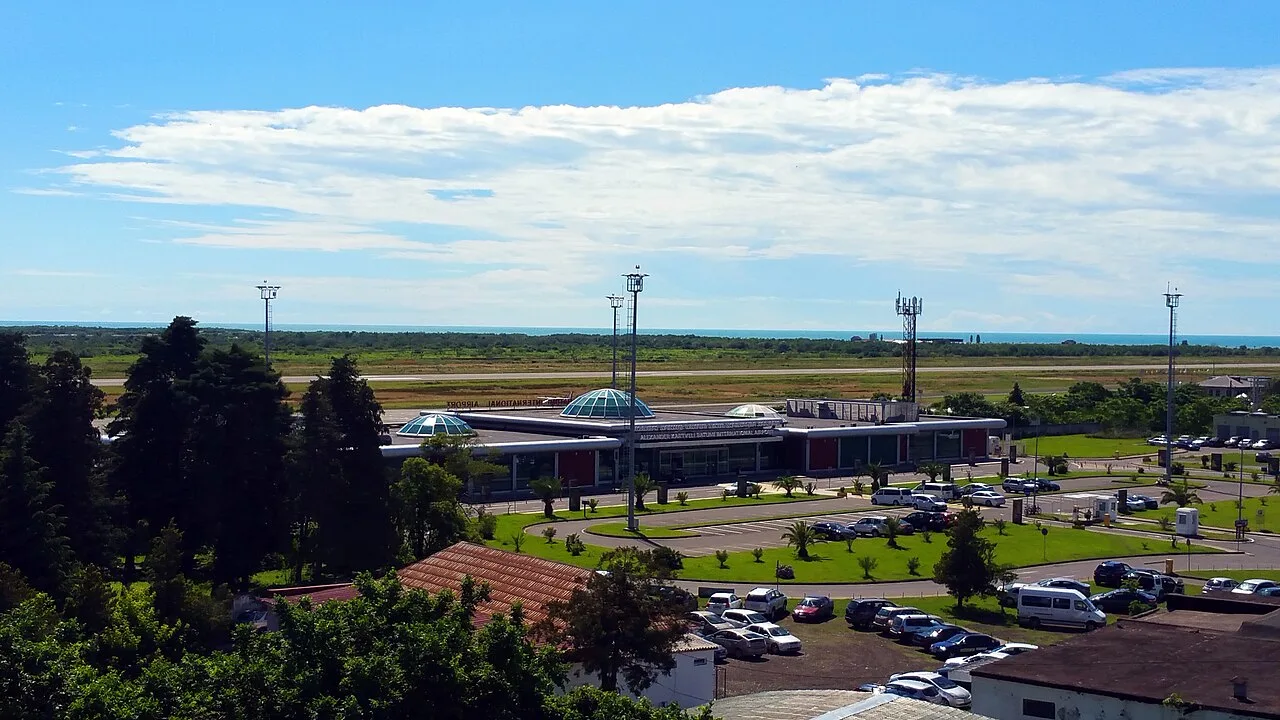
Georgian Airways is currently the only airline flying nonstop between Tbilisi and Batumi. The route launched on 25 June 2026 and runs four days a week - Tuesday, Thursday, Saturday and Sunday - departing Tbilisi at 09:00 and landing 45 minutes later; the return leaves Batumi at 19:30. It isn’t a strict “summer only” window the way the launch announcement framed it: the airline’s own booking calendar was still selling seats for both September and October 2026 at the time of writing, from around $107 one way. That’s not far off a private transfer once you add a taxi to and from each airport, so it’s worth weighing how much the saved time is really worth on your travel day - and always check the day’s actual schedule before you build a plan around it, since four flights a week doesn’t leave much room to change your mind. Both airports sit a short taxi ride from their city centres, and both handle plenty of international traffic too, so flying this leg can make sense as part of a longer, multi-city trip, not just as a one-off Tbilisi-Batumi hop.
What to choose
- Train - the best mix of comfort, price and views from the window; two year-round departures a day plus summer extras, book ahead in season.
- Coach or marshrutka - cheapest and most frequent; tkt.ge now lets you book an assigned seat if you don’t want the shared-van scramble at Didube.
- Car - the finished Rikoti highway makes this a realistic 5-6 hours, plus the freedom to stop at Gori, Borjomi or Kutaisi.
- Private transfer - a fixed price and a fixed time, worth it for groups or a late arrival.
- Flight - fastest in the air, but only four days a week, and it saves less time than it looks once you count both airport runs.
For what to do once you arrive, see our guide to Batumi and our overview of the beaches of Batumi and the coast; for stop ideas along the way, see the things to see and cities sections.
Photos
Read also

Transport · 13 min read
Kutaisi Airport to Gudauri 2026: 4 h, Shuttle, Transfer, Car
Verified · October 24, 2026Kutaisi airport to Gudauri: 309-310 km, about 4 h by road. A 30 GEL coach to Tbilisi and a marshrutka, a transfer timed to your flight, the winter bus.

Transport · 12 min read
Trains in Georgia: routes, tickets, express
Updated · October 17, 2026Georgian Railway in 2026: the Tbilisi-Batumi Stadler in about 4 hours from 35 GEL, how to buy on gr.com.ge, and which other routes still run.

Transport · 12 min read
Tbilisi to Gudauri 2026: Marshrutka, Taxi, Transfer
Updated · August 29, 2026Tbilisi to Gudauri for ski season: marshrutka 15 GEL, transfer 190-320 GEL per car, 120 km in 2-2.5h. Winter tyre law, closures, what to pick.

Transport · 10 min read
Tbilisi to Kutaisi 2026: train, bus, transfer
Updated · August 24, 2026Getting from Tbilisi to Kutaisi: train to Rioni station, marshrutkas from Didube, driving and transfers - times, prices and what to pick in 2026.