
Kakheti region guide: Telavi, Sighnaghi, monasteries
Kakheti mapped: Telavi vs Sighnaghi as bases, Alaverdi, Bodbe and Gremi, season, and how a day trip or 2-day wine route fits.
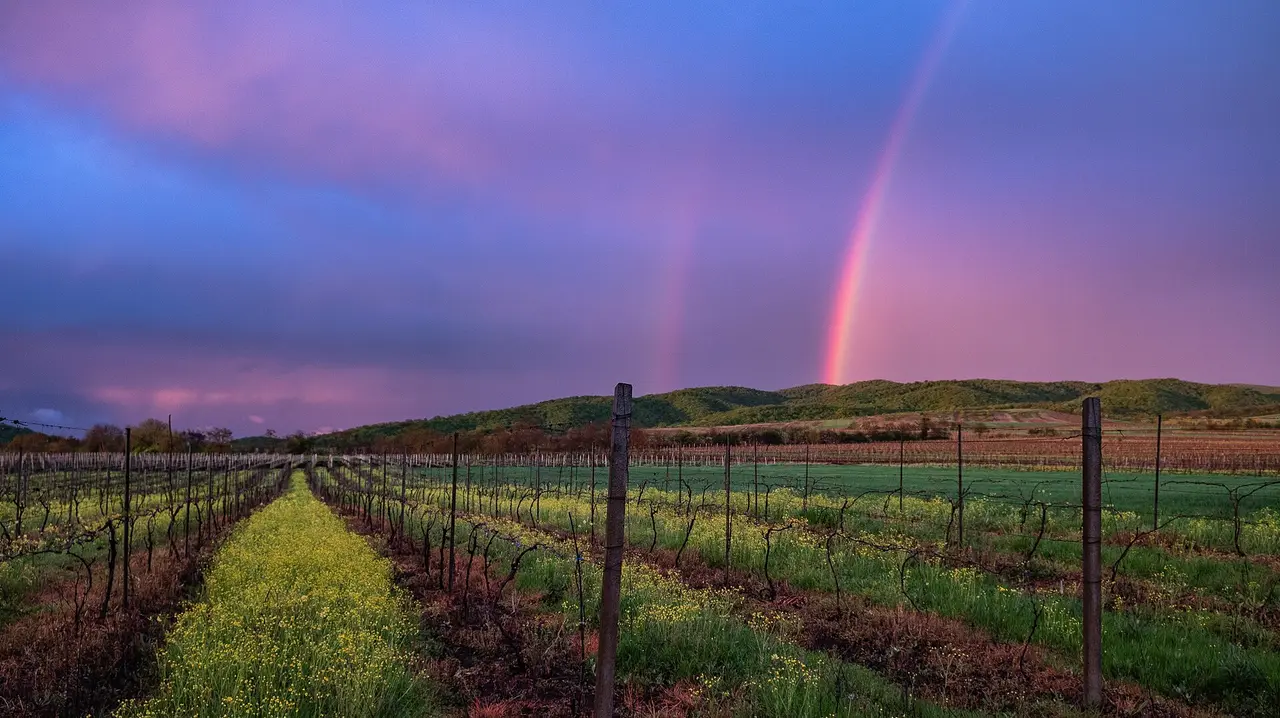
Kakheti doesn’t start at Tbilisi’s ring road. It starts on the far side of the Gombori range. The short drive to Telavi is about 96 km over the pass; Sighnaghi is about 113 km out on a different highway, with none of those hairpins. Telavi is the regional capital, Sighnaghi is the hill town people call the city of love, and the monasteries sit on opposite sides of the Alazani Valley - they don’t collapse into one afternoon. Tour prices and operators live on the Kakheti wine tours page. Timed loops live on Kakheti in one day and the two-day wine route. This page is the map: which approach, which base, which monastery belongs to which.
The usual way to waste a day is to treat the region as one town because the map paints it as one wine country. It isn’t. From Tbilisi you get two arrivals. The Gombori Pass dumps you at Telavi. The Sighnaghi road climbs the southern rim. Driving between those towns along the Alazani is a separate hour, not another street.
Two roads, one valley
Kakheti is Georgia’s eastern mkhare, 11,310 km². To the north it hits the Greater Caucasus and the Russian border; to the east and south, Azerbaijan. Telavi is the administrative centre. There are eight municipalities, from Akhmeta and Kvareli on the northern valley floor down to Dedoplistskaro and Sighnaghi in the south.
The Tsiv-Gombori range splits the region. East of it, along the Alazani, is Inner Kakheti - the postcard of vines with snow on the horizon. West and south, along the Iori, is Outer Kakheti: drier, closer to steppe, and not the landscape people mean when they say they’re going for the wine. Georgia’s official tourism site also flags the David Gareja semi-desert and Lagodekhi, the country’s oldest protected areas. That’s Kakheti on paper. It is not the same day as Telavi and Sighnaghi.
The shortest road into the heart of the region crosses Gombori. Georgia.travel puts the Vaziani-to-Telavi stretch at 65 km, the high point at km 45 at 1,620 m, and the drive at about 1 hour 50 minutes. The road is paved and listed as year-round; in autumn you can hit fog or snow on the pass, which just means you slow down. The Sagarejo-Gurjaani bypass adds about 40 minutes and skips the switchbacks. Wikipedia gives that longer highway roughly 156 km against about 96 km over the pass.
Sighnaghi barely uses that fork. You reach it on its own road - about 113 km, 1 hour 40 minutes on the official guide’s clock. So “a trip to Kakheti” with no town attached doesn’t plan anything. You’ll either drop into Telavi off the pass or climb into Sighnaghi from the south.
Telavi and Sighnaghi are not interchangeable
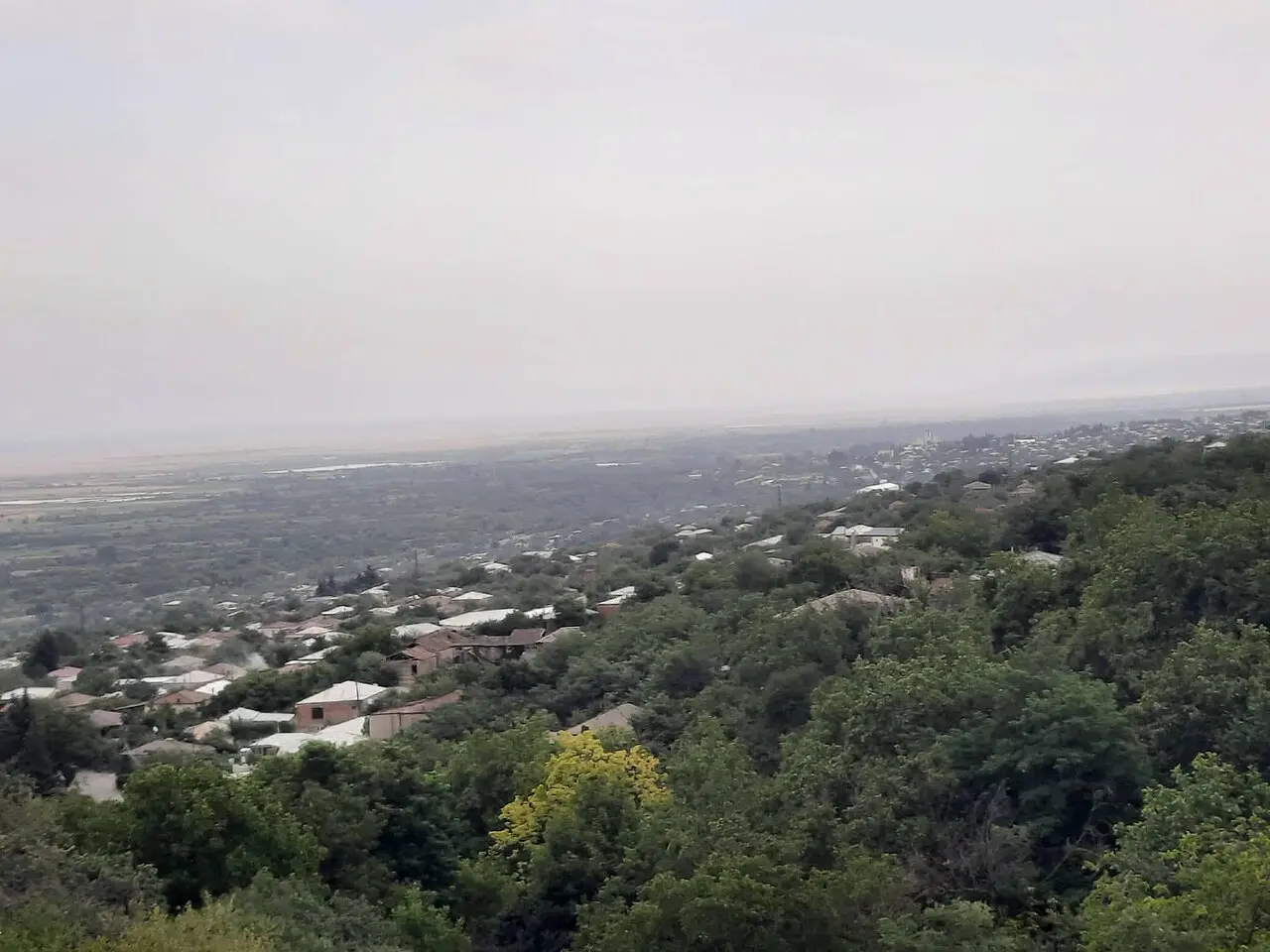
Telavi is the working capital. Geostat’s 1 January 2026 estimate puts the town at about 20,000. The town sits on the Tsiv-Gombori slopes: 490 m in the infobox, 500-800 m along the hillside. That’s the natural hub for the northern monastery arc - Alaverdi, Gremi, Nekresi, Ikalto, Shuamta. In the centre is Batonis Tsikhe and the palace of King Erekle II, the only surviving royal palace in Georgia (17th-18th centuries). Nearby is a plane tree about 900 years old: around 40 m high, trunk about 11 m around. This isn’t a one-hour photo stop. It’s a town with a market, marshrutkas further down the valley, and a sane overnight if you’re going to work the north.
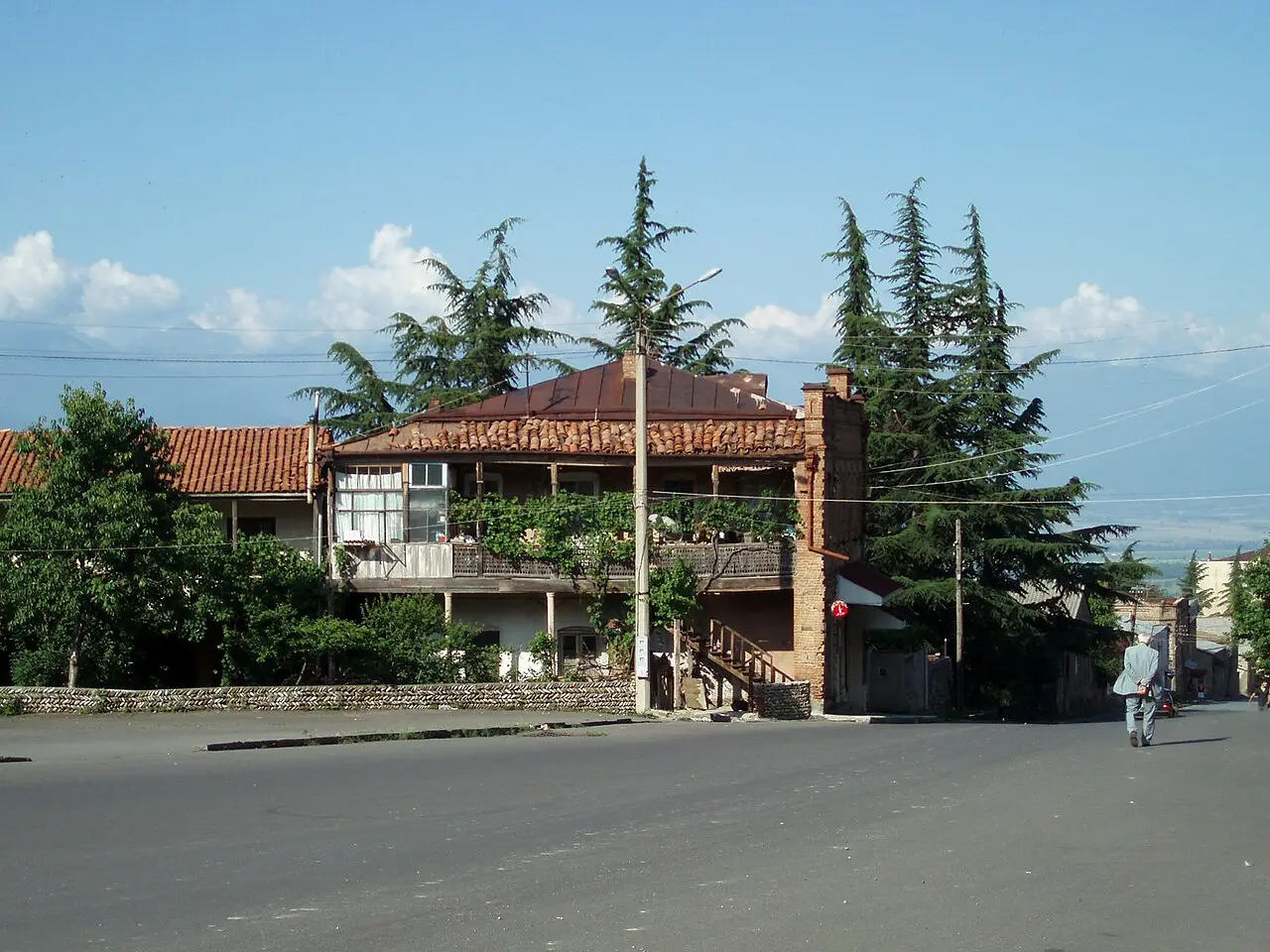
Sighnaghi is an order of magnitude smaller: Geostat’s 1 January 2026 estimate is about 1,650 people. It sits higher - about 790-836 m - and looks at the same Alazani from the southern rim. King Erekle II built the wall in 1762 as a refuge from raids: 4 km, 6 gates, 23 towers, with a tourist path along part of the rampart. The marriage hall runs around the clock, which is where the “city of love” nickname actually comes from, not a brochure. Two kilometres out is Bodbe Monastery, where people come for the relics of St Nino. Sighnaghi works as a lookout and as a base for the southern valley. As a hub for Alaverdi and Gremi it’s weaker than Telavi: you’d drop into the valley first and only then head north.
Don’t pick between them on which is prettier. Telavi wins if the overnight is about radius. Sighnaghi wins if you want the wall, the view and Bodbe, and you’re willing to leave the northern monasteries for another trip.
Monasteries, mapped to a base
The northern arc hangs off Telavi. Alaverdi is about 20 km: a 6th-century monastery, the present Cathedral of St George from the 11th. Height figures disagree - “up to 50 m” in the Georgian Encyclopaedia, “over 55 m” on English Wikipedia. What matters is the rank: one of the tallest medieval churches in the country, and it held that title until Tbilisi’s Sameba was consecrated in 2004. The cathedral sits on the valley floor, not on a ridge. You drive to it as a point on the plain, not as a viewpoint.
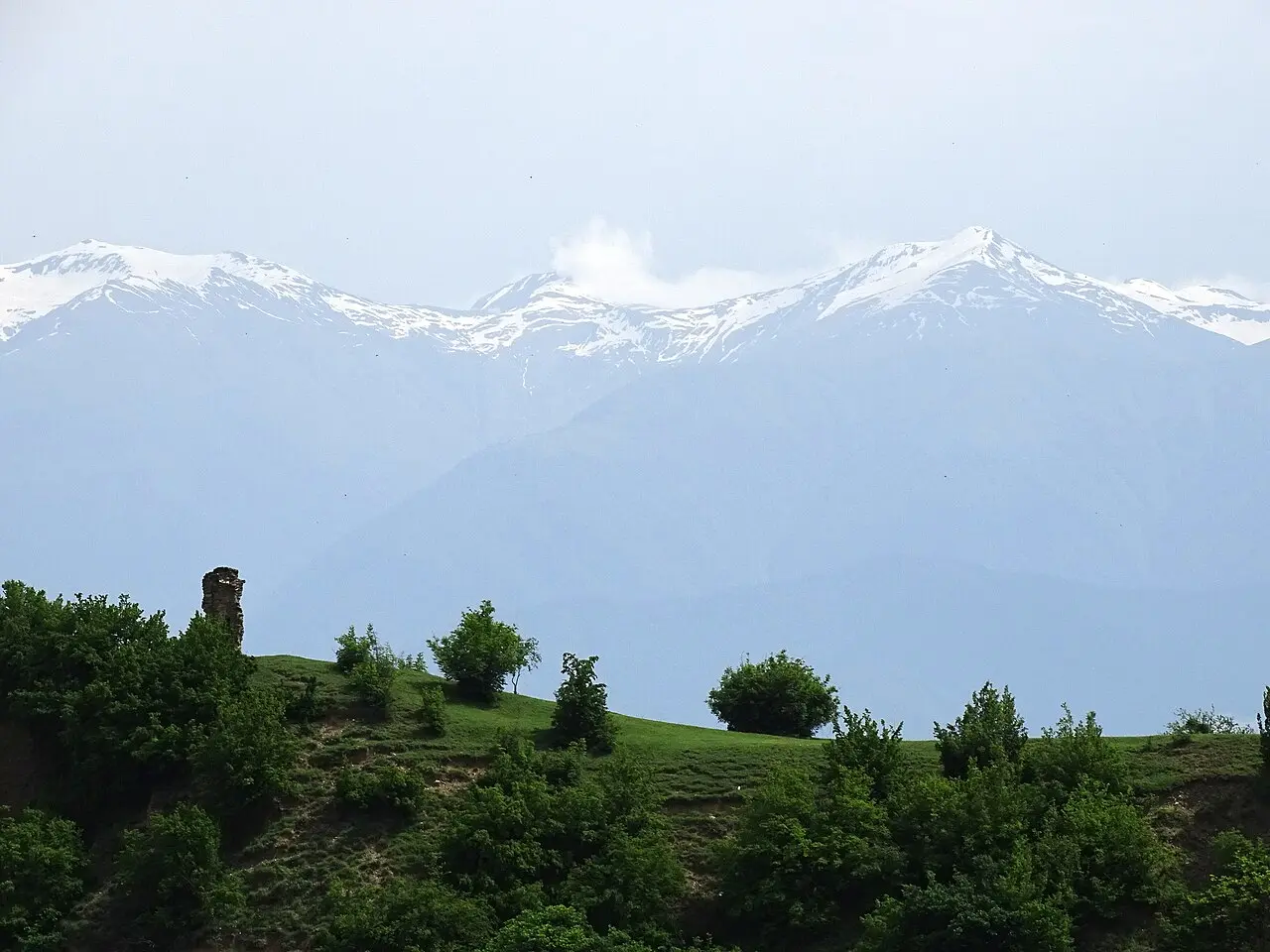
Gremi is 15-20 minutes along the Kvareli road. In the 16th and 17th centuries it was the capital of the Kingdom of Kakheti; the Church of the Archangels went up in 1565 under King Levan. Shah Abbas I burned the town in 1615, and the capital moved to Telavi. What’s left on the ridge is a citadel, not “another church by the road”. Budget a real stop, not two minutes from a car window.
Further north, on a ridge above the valley, is Nekresi - an early monastic complex you don’t squeeze in “between tastings” if the day is already full. Closer to Telavi itself: Ikalto, an 11th-12th-century teaching centre, and Shuamta seven kilometres out, “among the mountains” at the foot of Tsiv-Gombori. Both clip neatly onto a northern base. They don’t clip neatly onto Sighnaghi.
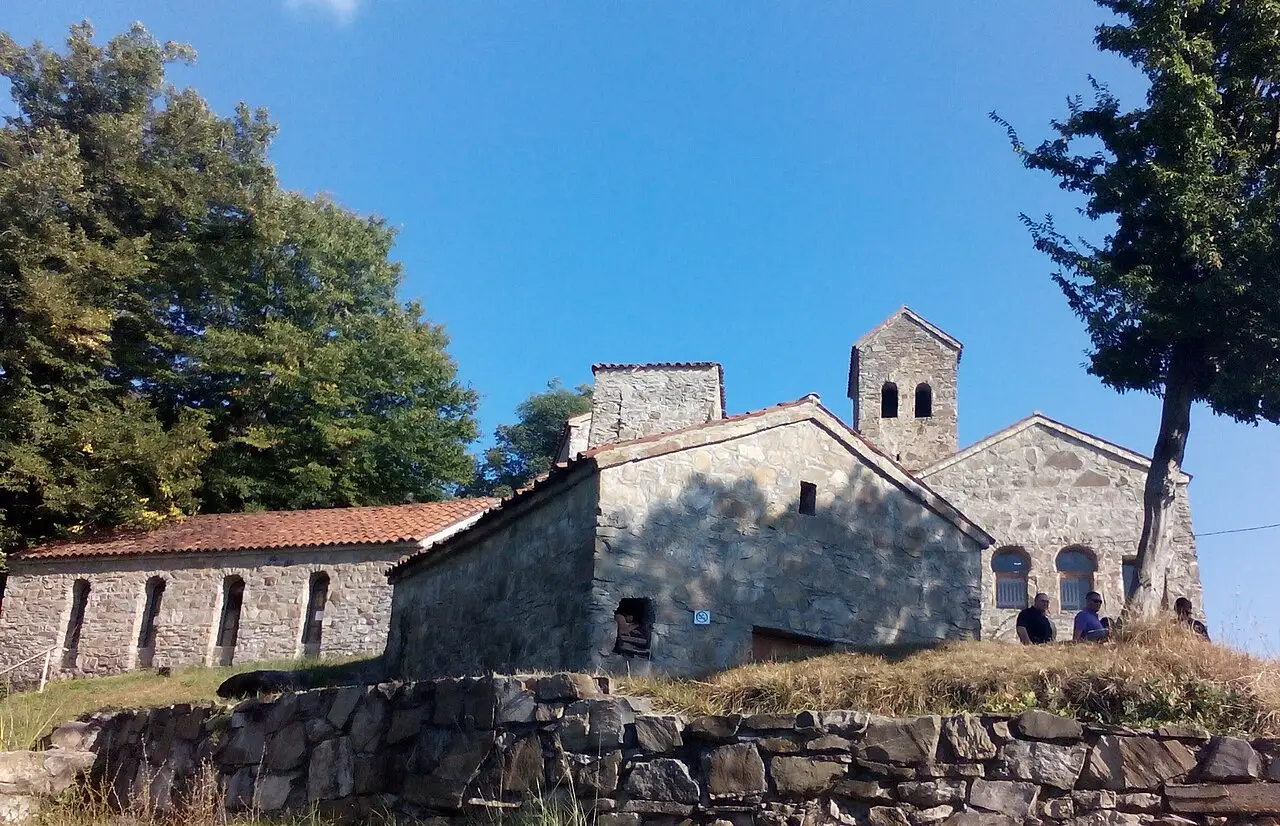
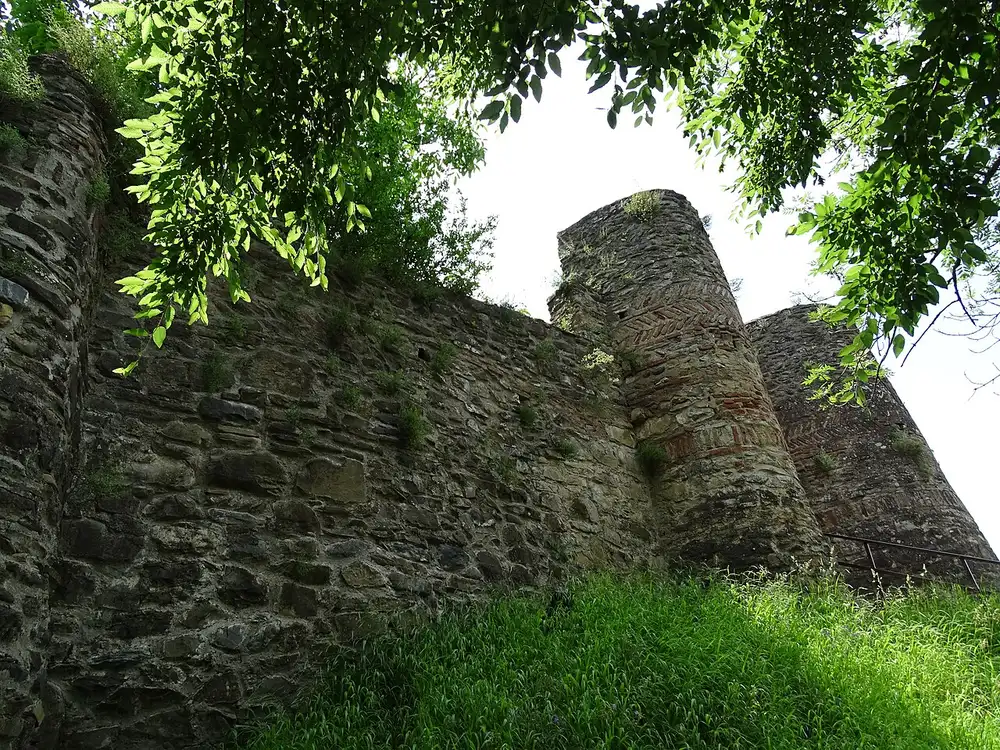
The southern point is Bodbe, next to Sighnaghi. Don’t bolt it onto Alaverdi the same day: the valley you’d like to draw a diagonal across is sitting between them.
David Gareja is a separate problem. The cave-monastery complex runs about 25 km through semi-desert - a different landscape and a different day, even though it’s Kakheti on the map. Tacking it onto Sighnaghi “since you’re nearby” is the fastest way to ruin both the wall and Gareja.
Winery hours and tasting slots don’t belong here. They move with the season; they live on the tours page and with the estates themselves. Grape varieties and why qvevri matter are in the Kakheti wine primer.
Where to sleep
Three honest setups. None of them involve sleeping over a clay vat.
Stay in Tbilisi and go out for the day. That works if the target is Sighnaghi and Bodbe - that’s the day trip. You won’t close the northern arc from the capital in daylight without racing the pass twice.
Sleep in Telavi. That’s the base if you want Alaverdi, Gremi, Tsinandali, Ikalto and a morning start that isn’t two hours back from the capital. The town is alive in the evening. In the morning you’re already in the valley.
Sleep in Sighnaghi. Worth it for the wall at dusk and Bodbe without a bus timetable. For the northern arc it’s an extra transfer: down first, then an hour along the Alazani, and only then the monasteries around Telavi.
Spreading nights “across wineries” sounds better than it drives if you’ve got one car and nobody staying sober. Wine as a bought day with a guide belongs on the tours page; wine as a self-drive overnight loop belongs on the two-day route.
When to go
The official guide singles out Gombori in autumn, when the slope changes colour. For the valley itself, May-June and September-October are the comfortable window: warm, without Telavi’s peak heat (July-August mean maxima around 30 °C in the 1991-2020 NCEI series). Rtveli, the grape harvest, falls in September-October - when to go and where to join a pick; roads and rooms get tighter then; it isn’t a quiet season. Winters in the towns are mild, but the days are short, and you don’t rush the pass after snow. The country-wide frame is in best time to visit Georgia.
A day trip, two days or a tour from Tbilisi
If you’ve got one day from the capital and you don’t want to drive, look at ready-made tours: they cover one slice of the region, not “all of Kakheti”. If you are driving and you’ve got one day, take Sighnaghi and Bodbe - not Telavi “plus Alaverdi”. If you can overnight, the two-day wine route splits north and south across two days of light. You need this page before that one, so the loop makes sense and a day trip isn’t asked to impersonate the whole region.
Kakheti doesn’t have to fit in one run. Pick a rim of the valley, pick a base that matches it - and leave the other rim for next time.
Read also

Before you go · 8 min read
Georgia in winter: weather, cities and ski season
Updated · September 3, 2026Winter in Georgia: Tbilisi averages 3.4 °C in January, days run nine hours, ski season from late December, sulphur baths and cheaper city rooms.

Before you go · 9 min read
Georgia vs Armenia: Where Should You Fly?
Updated · September 3, 2026Georgia or Armenia in 2026: visas, flights, Black Sea vs Sevan, published tariffs side by side, and when both countries beat picking one.

Before you go · 11 min read
Tbilisi or Batumi: Which One Should You Visit
Updated · September 11, 2026Tbilisi or Batumi: climate, rain, lodging and who each city suits. Batumi gets five times more rain than Tbilisi a year - it changes the choice.

Before you go · 11 min read
Rtveli 2026: when to harvest grapes in Georgia
Verified · August 17, 2026Kakheti harvest peaks mid-September to mid-October 2026. Where to base, which wineries named dates, and how to join without a ticketed festival.